Artwork
Șatră de țigani
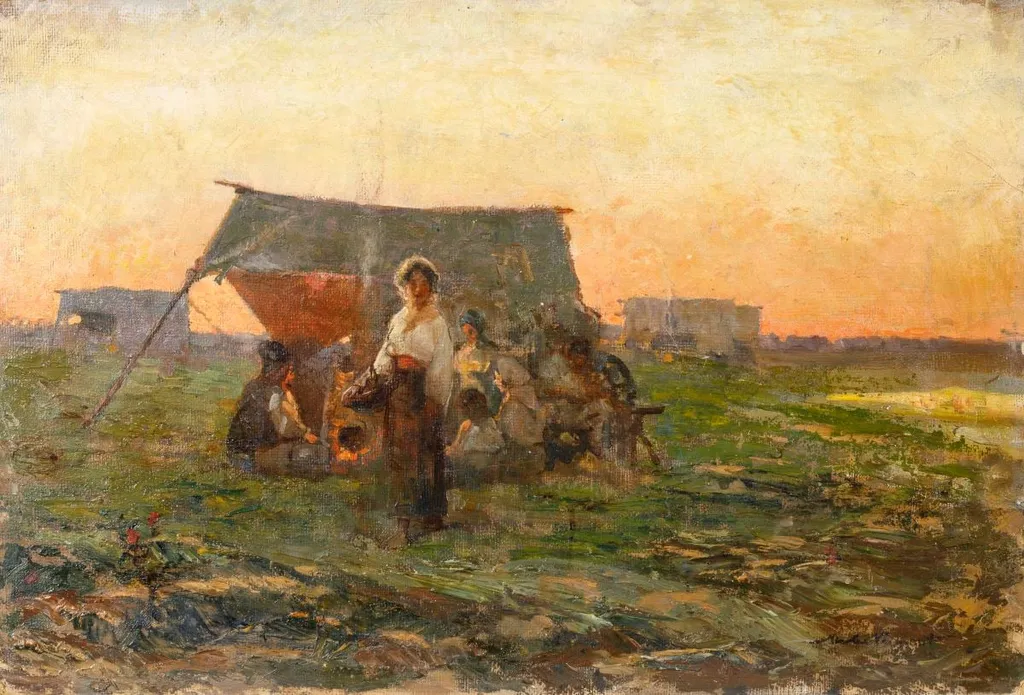
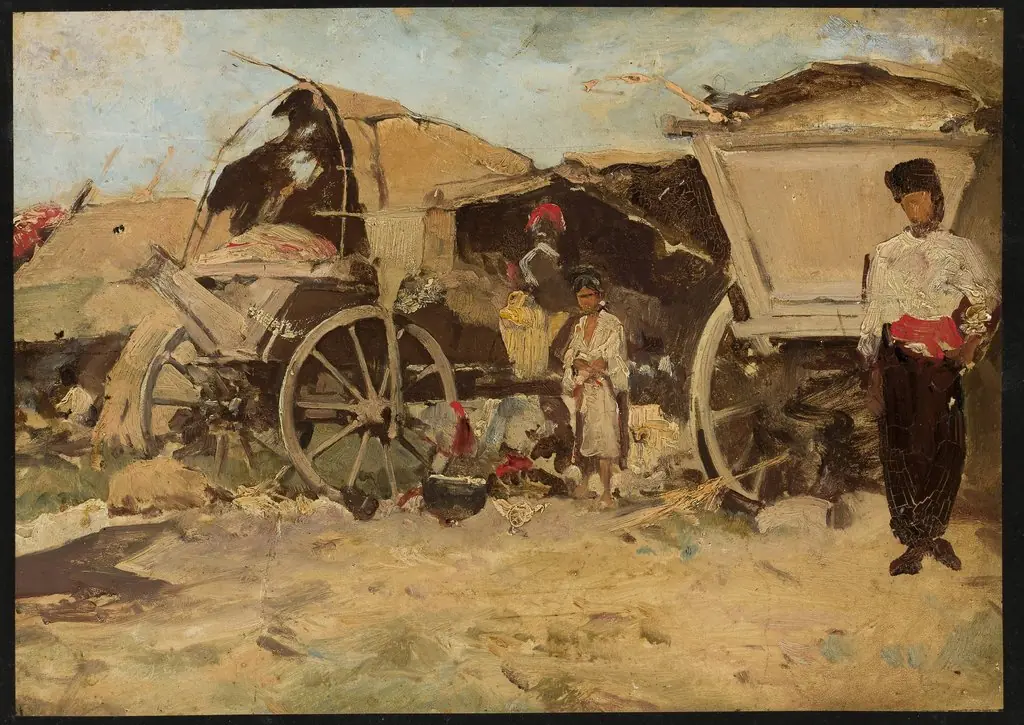
Șatră de țigani is an unspecified painting by Nicolae Vermont. It dates from 1850 and is held in the collection of the National Museum of Art of Romania.
About this work
Overview
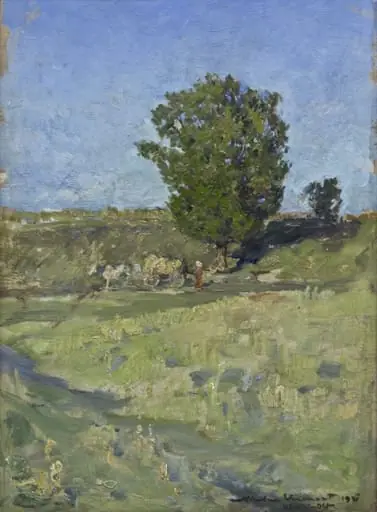
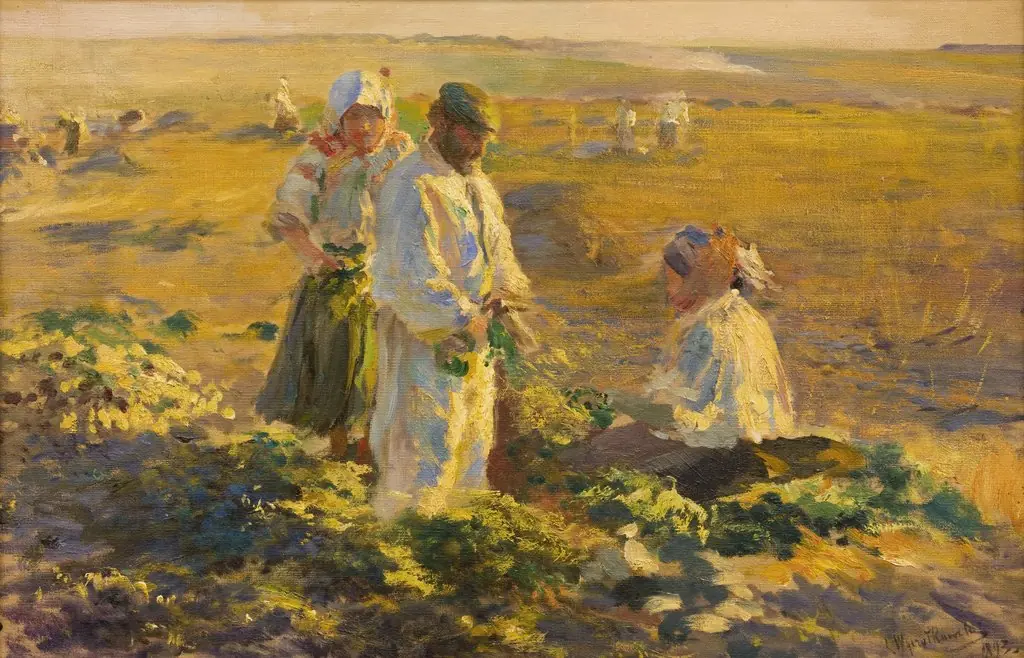
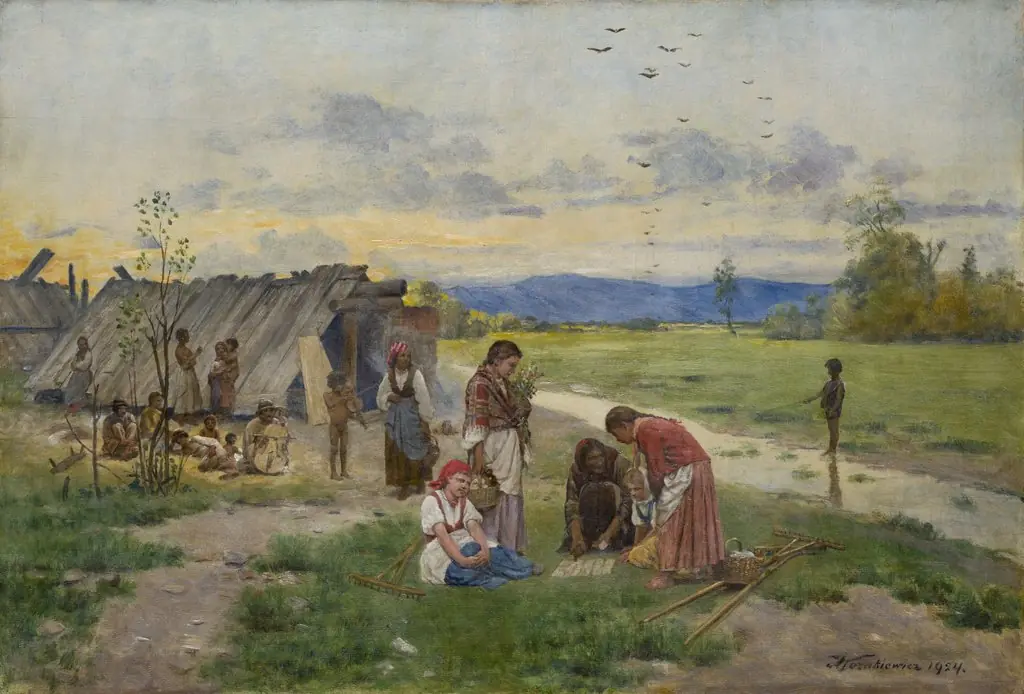
Nicolae Vermont’s mid‑nineteenth‑century canvas, dated around 1850, portrays a modest gathering of Romani figures beside a dark‑tented shelter. Set in an open, grassy plain with distant structures, the composition is rendered in a restrained palette of greens, browns and muted yellows, emphasizing the everyday character of the scene.
Subject & Meaning
The work focuses on a small community engaged in quiet activity: a central male figure in a white shirt and dark trousers stands while others sit or stand nearby. The arrangement suggests a moment of communal pause, perhaps a market or a social meeting, reflecting the artist’s interest in documenting rural life.
Technique & Style
Vermont employs chiaroscuro to model forms, using contrasts of light and shadow to give the figures and tent a three‑dimensional presence. The brushwork is relatively smooth, and the limited colour range reinforces a naturalistic tone, aligning the piece with the realist tendencies emerging in Romanian painting of the period.
History & Provenance
Created circa 1850, the painting’s early ownership record is sparse, but it has been identified as part of Vermont’s oeuvre documenting Romanian folk scenes. It entered public collections in the twentieth century, where it has been referenced in studies of nineteenth‑century genre painting.
Context
During the 1850s, Romanian artists began to turn toward local subjects, moving away from academic historicism. Vermont’s depiction of a Romani encampment fits within this broader shift, offering a visual record of marginalized groups within the rural landscape of the time.
Artist & collection
Artist
If you like scenes of daily life painted with a quiet eye, try Nicolae Vermont’s work.