Artwork
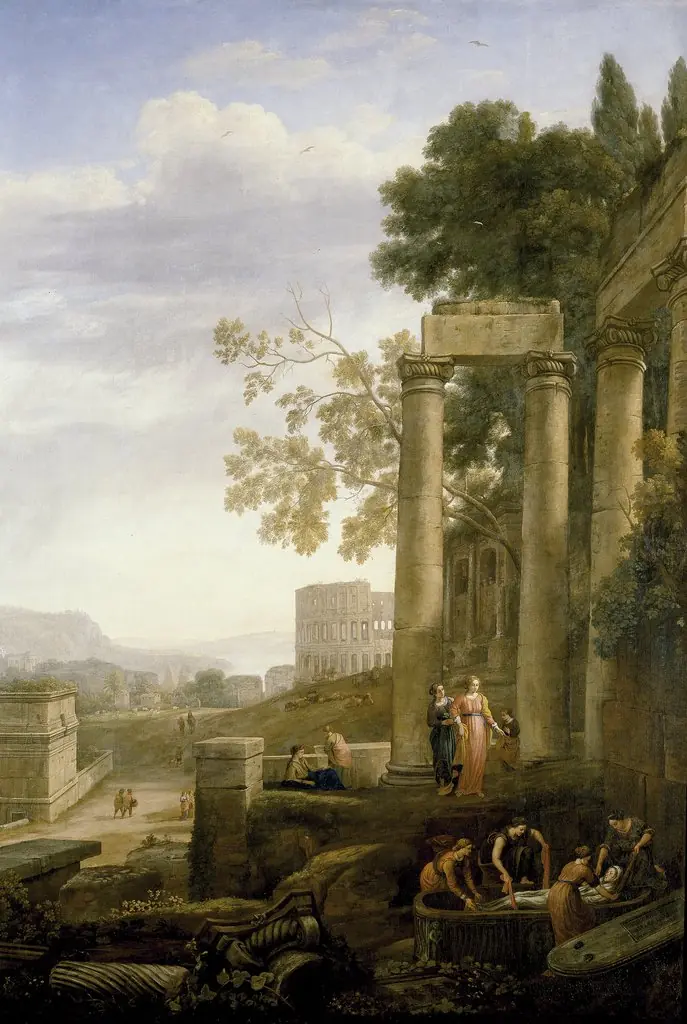
Peisaj cu ruine și sarcofagiu
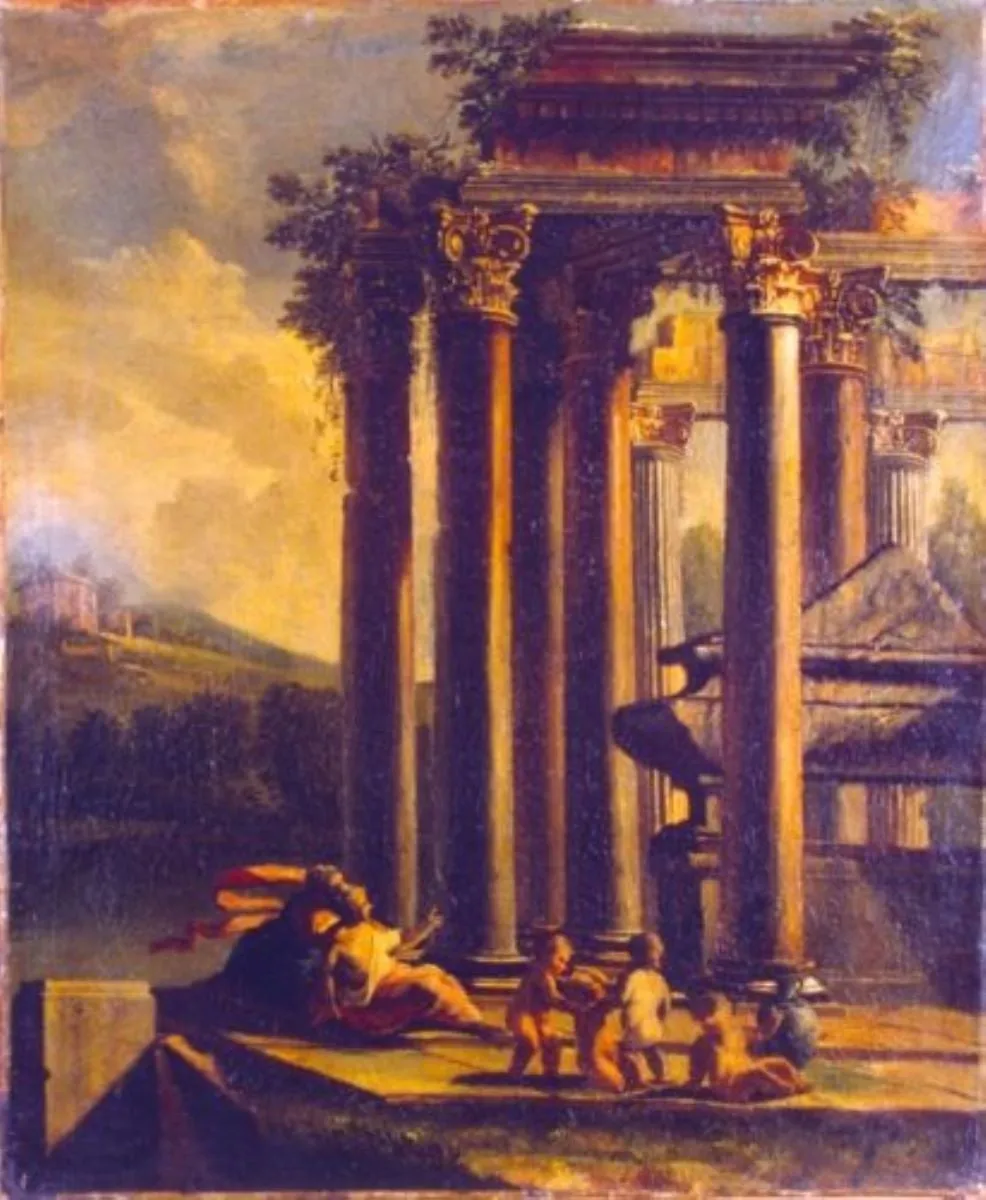
Peisaj cu ruine și sarcofagiu is an unspecified painting by http://data.europeana.eu/place/37512. It dates from 1750 and is held in the collection of the National Museum of Art of Romania. The work depicts an abandoned temple whose towering, gilded columns rise above a dilapidated roof.
About this work
Overview
The work depicts an abandoned temple whose towering, gilded columns rise above a dilapidated roof. In the lower foreground a solitary figure reclines on a stone slab, clutching a small object, while a carved sarcophagus bearing two diminutive figures stands nearby. The scene is bathed in a warm, hazy light that softens the crumbling architecture.
Subject & Meaning
The composition juxtaposes the grandeur of ancient architecture with the intimacy of a lone individual, suggesting a meditation on mortality and the passage of time. The sarcophagus, a traditional symbol of death, reinforces the theme of decay, while the gentle illumination imparts a contemplative, almost reverent atmosphere.
Technique & Style
The artist employs a subtle chiaroscuro, allowing light to model the columns and the figure with delicate gradations of tone. The palette is dominated by warm, muted hues that enhance the sense of fading daylight, while the rendering of texture—rough stone, polished gold, and smooth marble—creates a tactile contrast within the scene.
Context
The painting reflects a 19th‑century fascination with antiquity and the romanticized ruins of classical civilization. By integrating a solitary human presence within a monumental, decayed setting, the work aligns with contemporary explorations of the sublime and the transience of human achievement.
Artist & collection

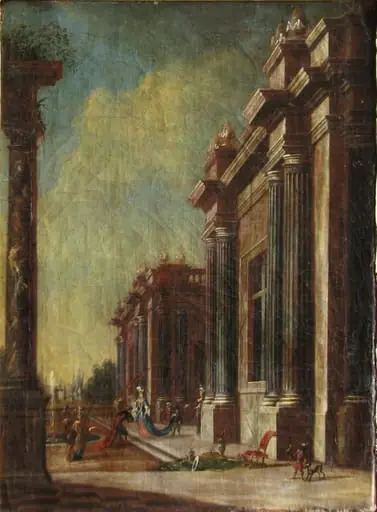 Clădire cu coloane în ordin doric ; pandant: Clădire cu coloane în ordin toscan
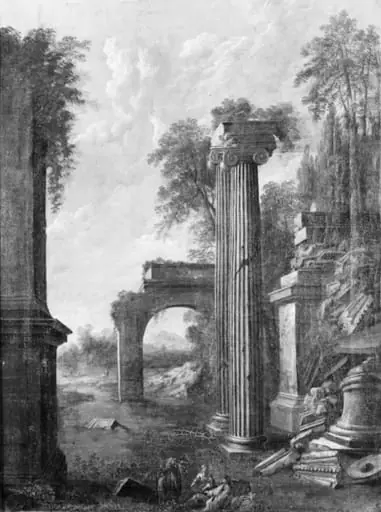 Roman Ruins and Gravemonuments
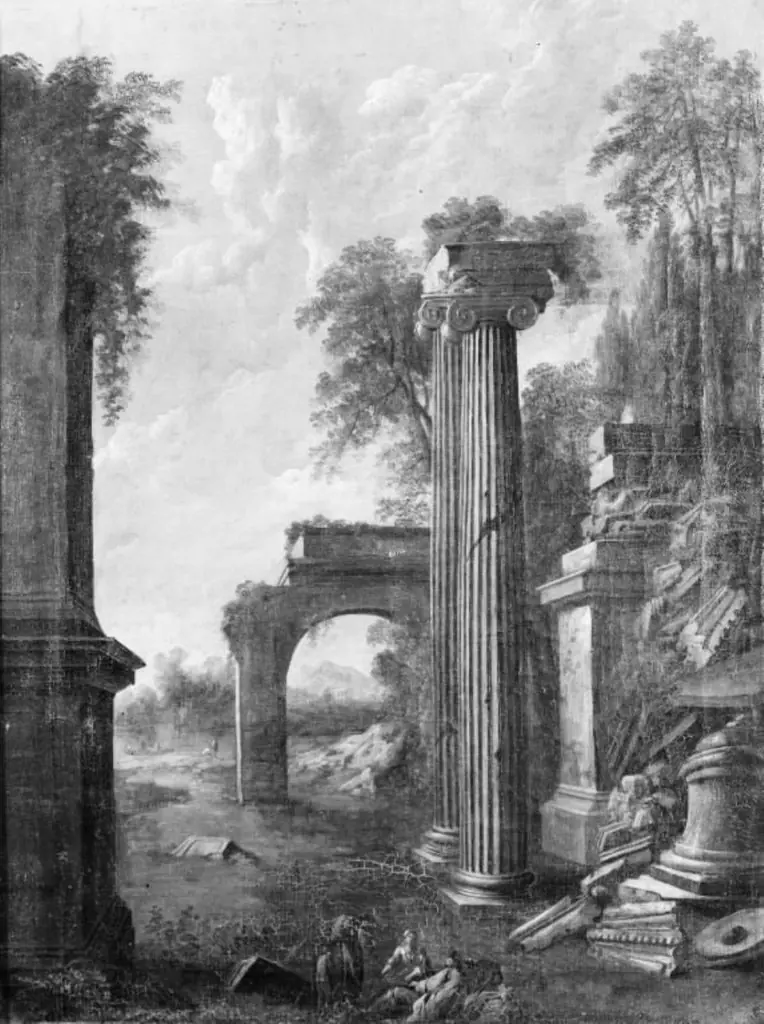 Roman Ruins and Gravemonuments
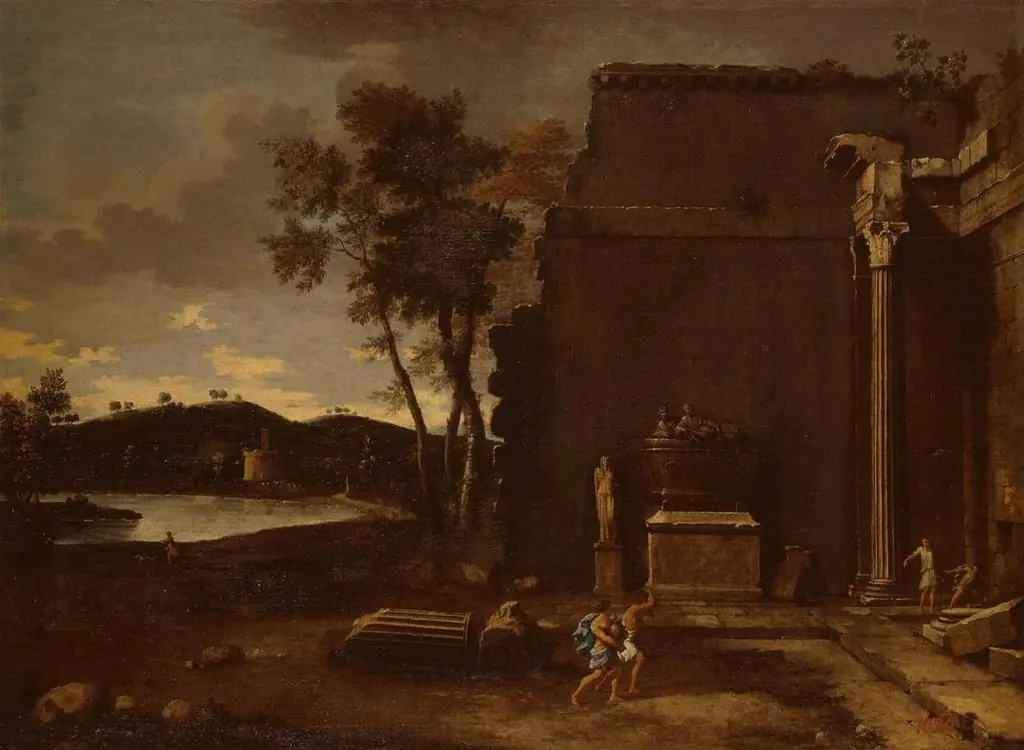 Landscape with sarcophagus
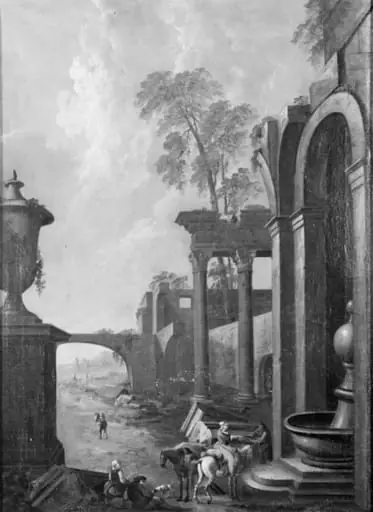 Ruins in a Landscape
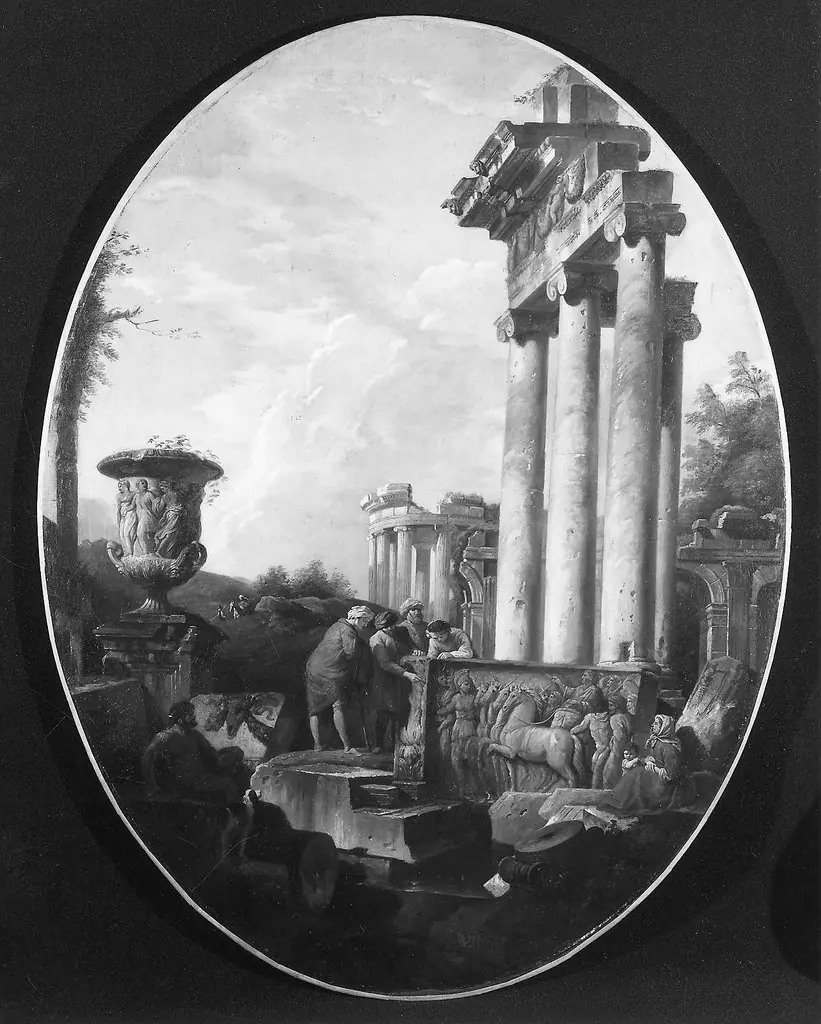 Capriccio of Roman Ruins with a Bas-Relief of a Charioteer
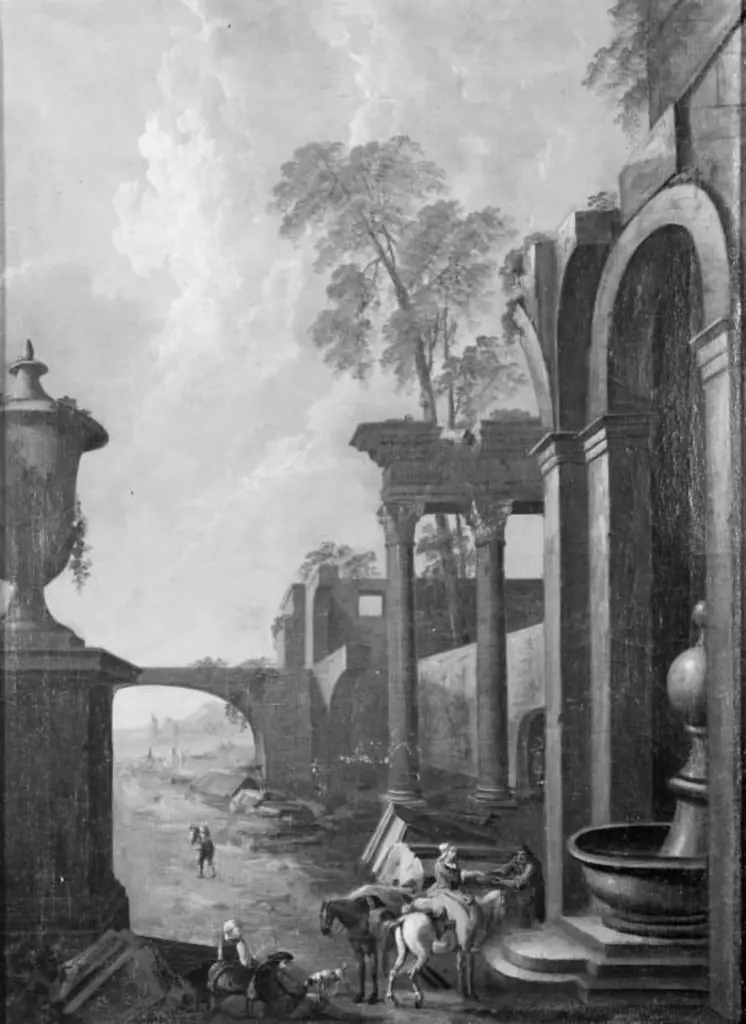 Ruins in a Landscape
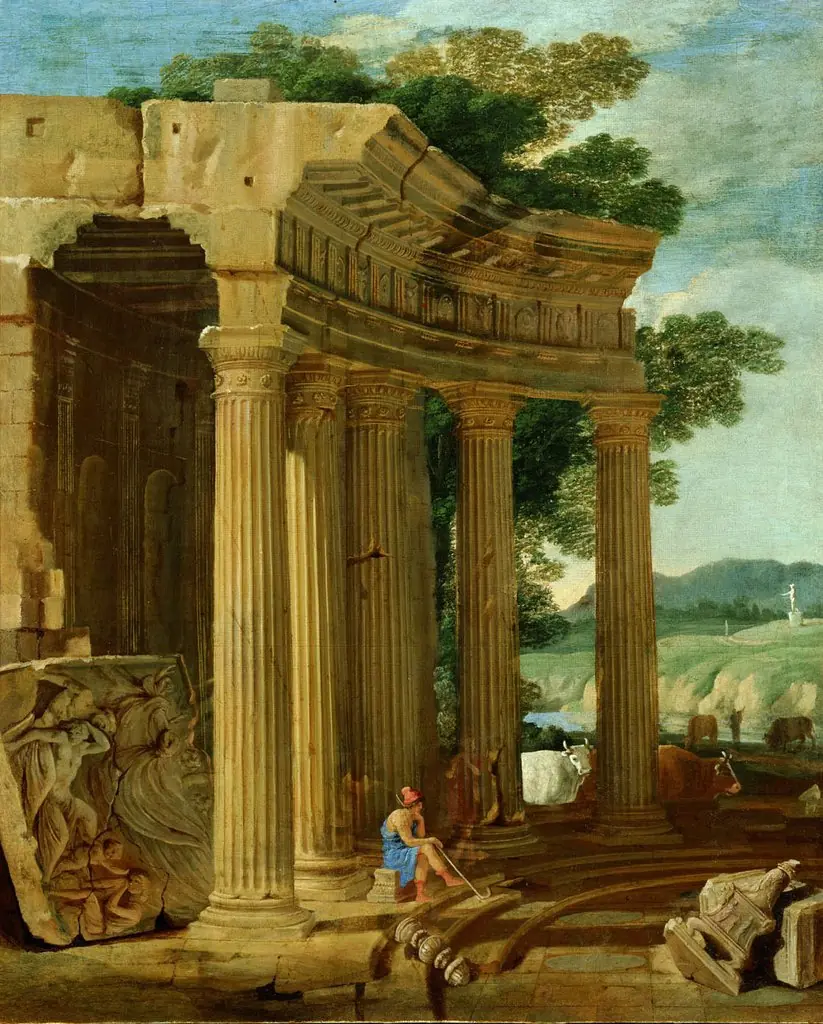 Ruinenlandschaft mit Hirten
 Landscape with the Burial of Saint Serapia