Artwork
Peisaj cu ruine, personaje și animale
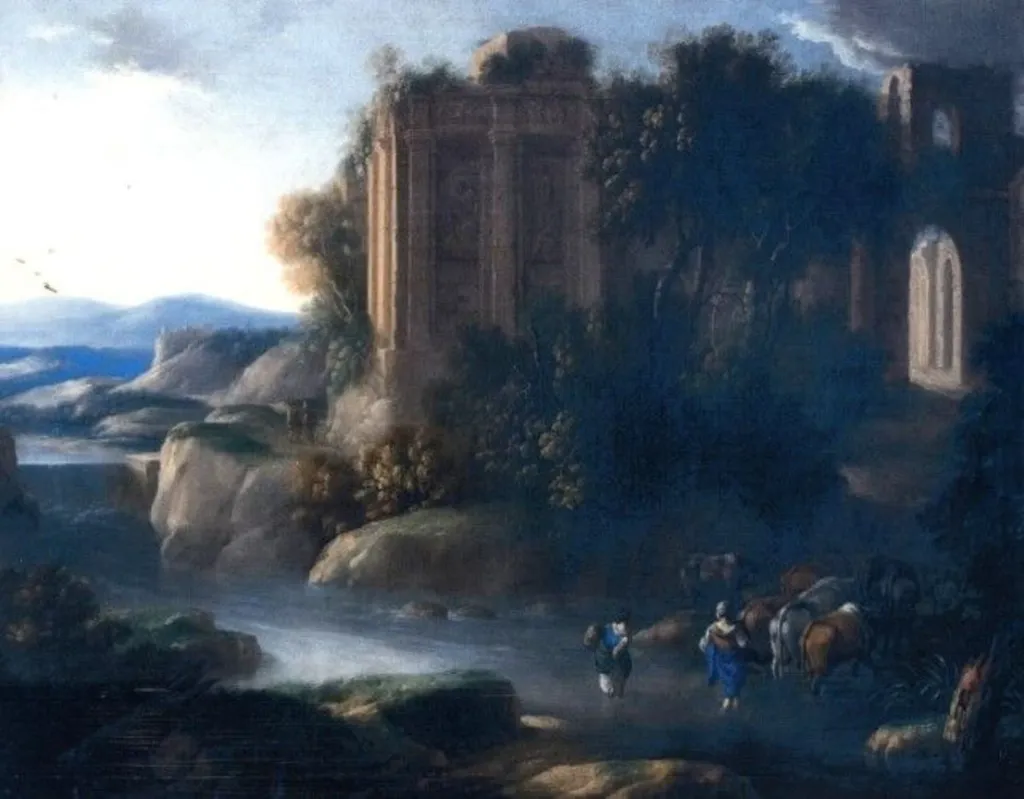
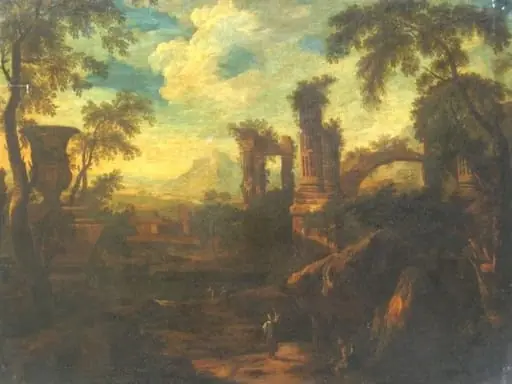
Peisaj cu ruine, personaje și animale is an unspecified painting by Antoine Benoît Dubois. It is held in the collection of the National Museum of Art of Romania. This landscape depicts a quiet, rural scene centered on ancient stone ruins partially reclaimed by nature.
About this work
Overview
The composition emphasizes stillness and the quiet passage of time, with human activity appearing incidental to the enduring presence of the ruins.
This landscape depicts a quiet, rural scene centered on ancient stone ruins partially reclaimed by nature. A winding path descends from the hillside toward a river, where three figures and two animals move calmly through the environment. The pale sky and gathering clouds suggest a subdued, transitional moment in the day. The composition emphasizes stillness and the quiet passage of time, with human activity appearing incidental to the enduring presence of the ruins.
Subject & Meaning
The crumbling architecture, overgrown and unremarked upon by the figures below, suggests abandonment and the slow erosion of human presence by nature. The travelers, absorbed in their journey, show no engagement with the ruins, reinforcing a theme of indifference to the past. The horse and cow imply daily labor, grounding the scene in ordinary life, while the ruins stand as silent witnesses to earlier times, now detached from contemporary experience.
Technique & Style
The artist employs chiaroscuro to model forms with soft transitions between light and shadow, enhancing the three-dimensionality of the rocks, trees, and ruins. Highlights glow gently against deep, muted tones, creating a hazy, atmospheric effect. Brushwork is restrained, avoiding sharp edges, which contributes to the sense of quiet decay and natural integration between built and wild elements. The palette is subdued, favoring earthy grays, greens, and pale blues.
History & Provenance
The painting’s origins are not well documented, but its style aligns with 19th-century European landscape traditions that favored contemplative, unidealized nature. It likely emerged from a period when artists increasingly turned to rural and ruinous subjects as reflections on time and memory. Its early ownership remains unclear, and it has not been widely exhibited, suggesting a private or regional reception rather than public acclaim.
Context
Created during a time when industrialization reshaped rural Europe, the painting reflects a broader cultural interest in landscapes marked by decline and quiet endurance. Unlike romanticized ruins of earlier centuries, this scene avoids drama or heroism, instead presenting decay as an unremarkable part of the everyday. It resonates with emerging realist tendencies that valued observation over narrative or sentiment.
Legacy
Though not widely known, the work contributes to a quiet lineage of landscape painting that prioritizes atmosphere and subtle narrative over spectacle. Its understated treatment of ruins and human indifference influenced later regional artists who sought to capture the passage of time through unembellished natural settings. The painting remains a quiet testament to the persistence of nature over human imprint.
Artist & collection
Artist
Antoine Benoît Dubois painted scenes full of life—ruins, people, and animals together in quiet, everyday moments.

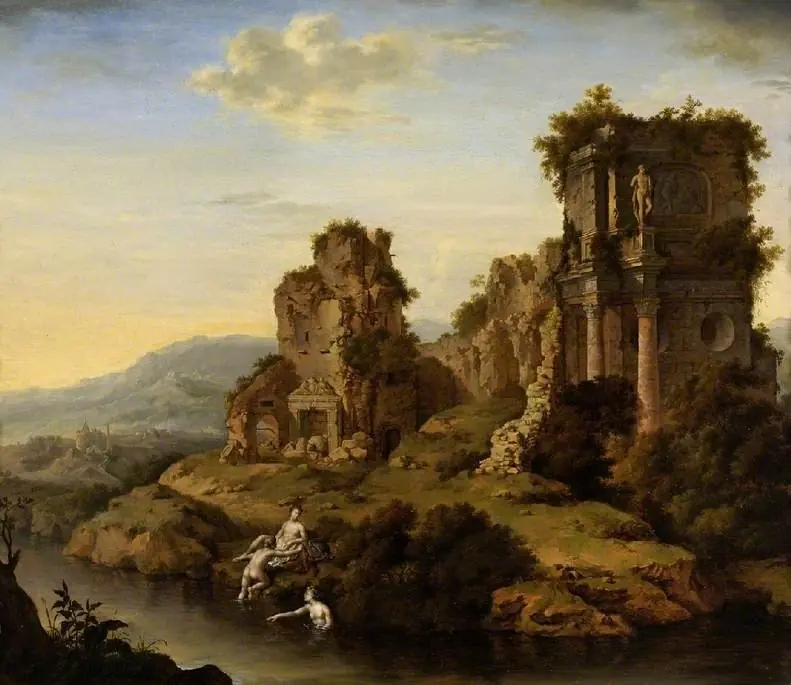 Landscape with ruins, nymphs bathing
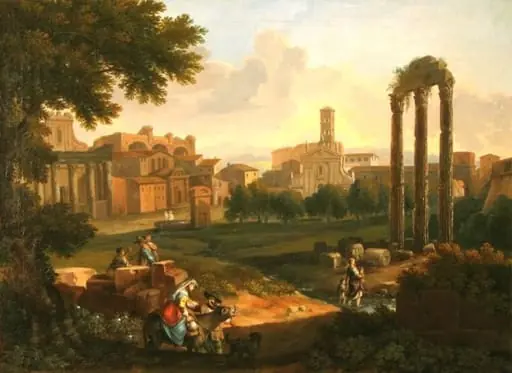 Vedere din Roma Veche (Roma cu columnele templului lui Jupiter)
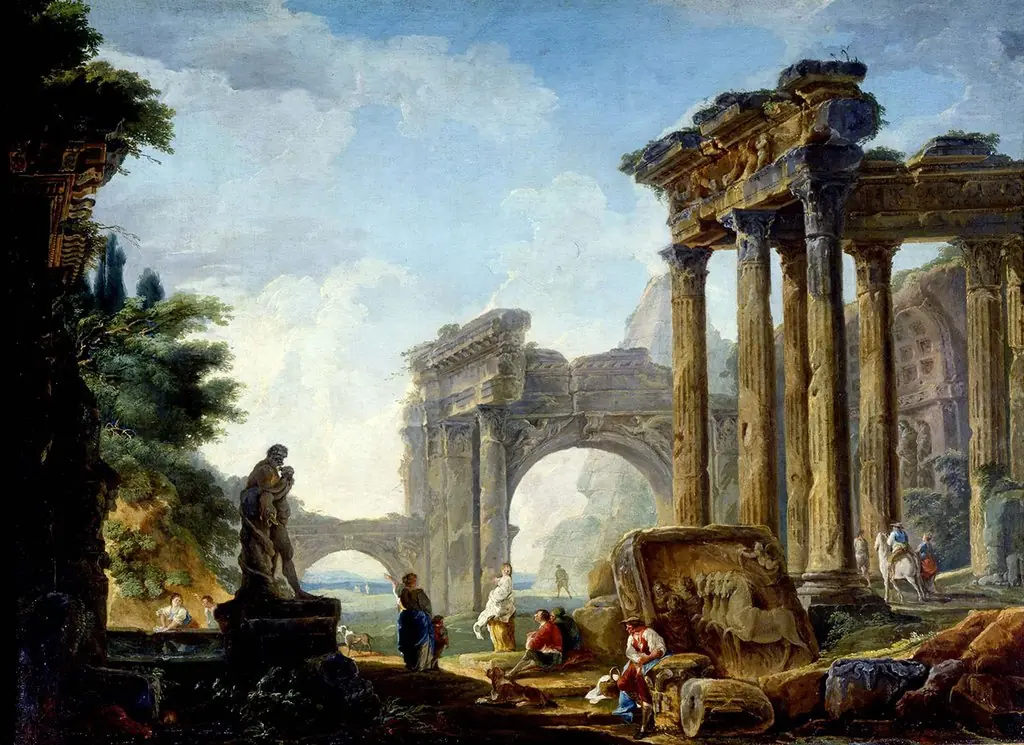 Paysage avec ruines romaines
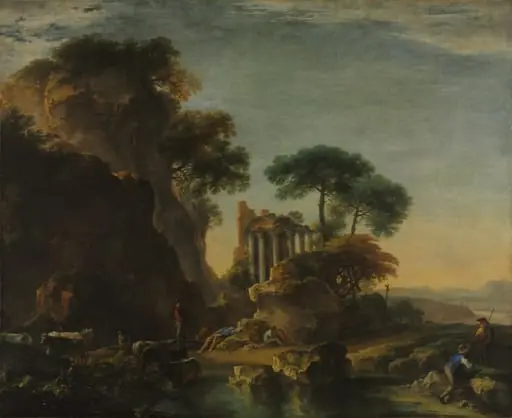 Ruins in a Rocky Landscape
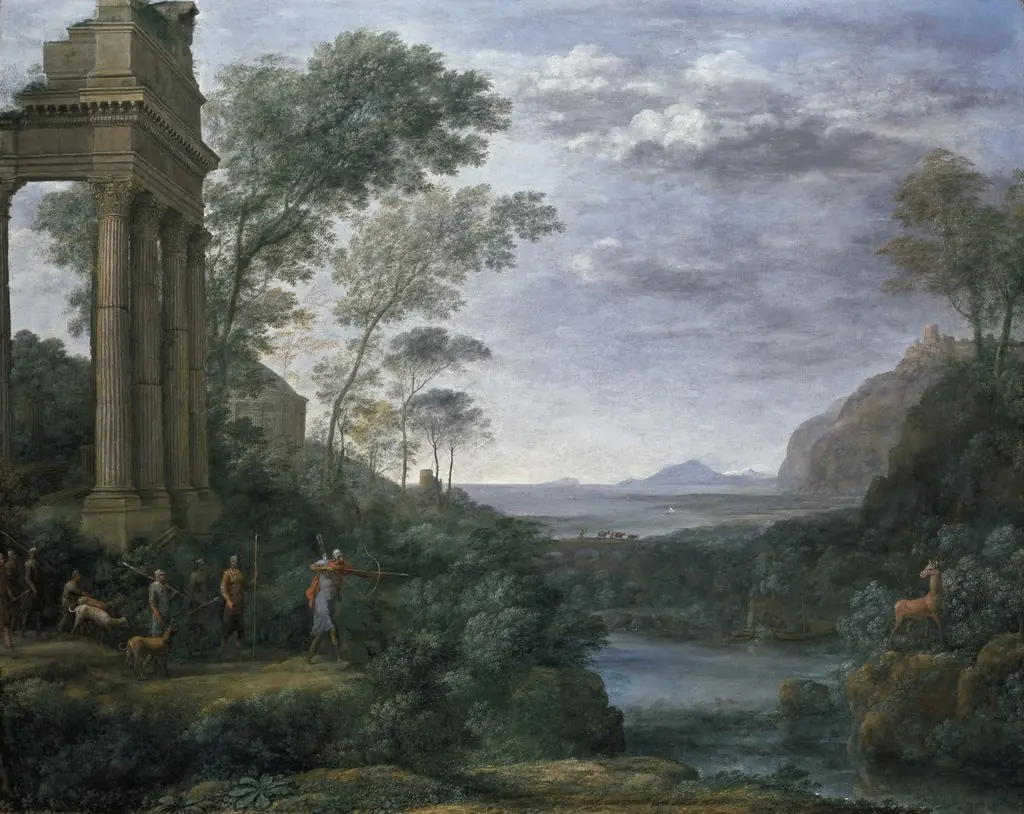 Ascanius Shooting the Stag of Sylvia
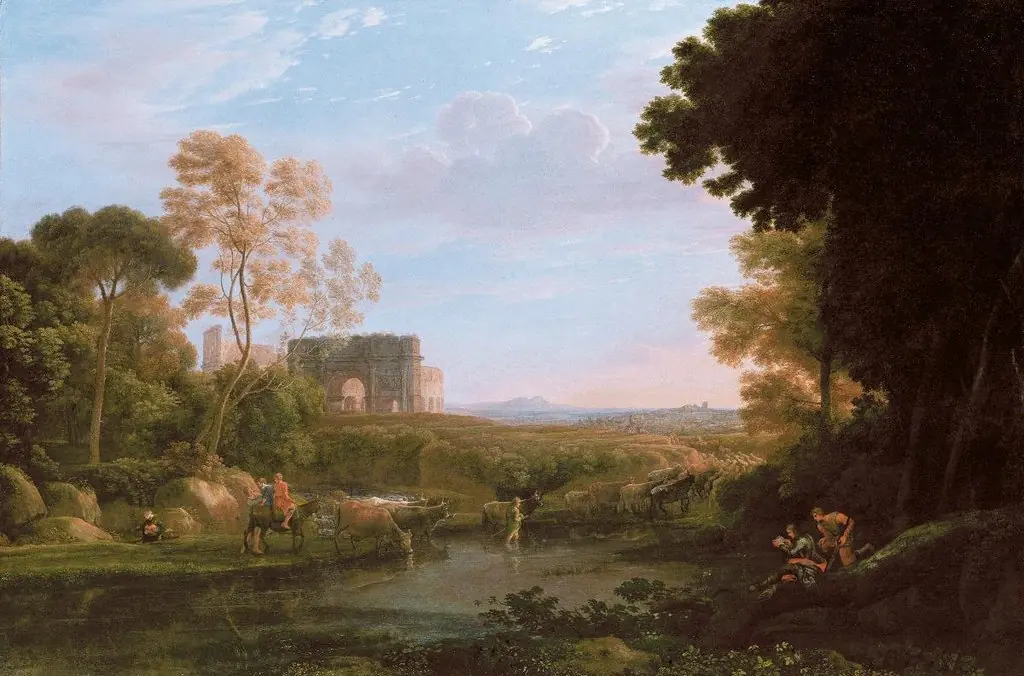 Pastorale avec l’Arc de Constantin
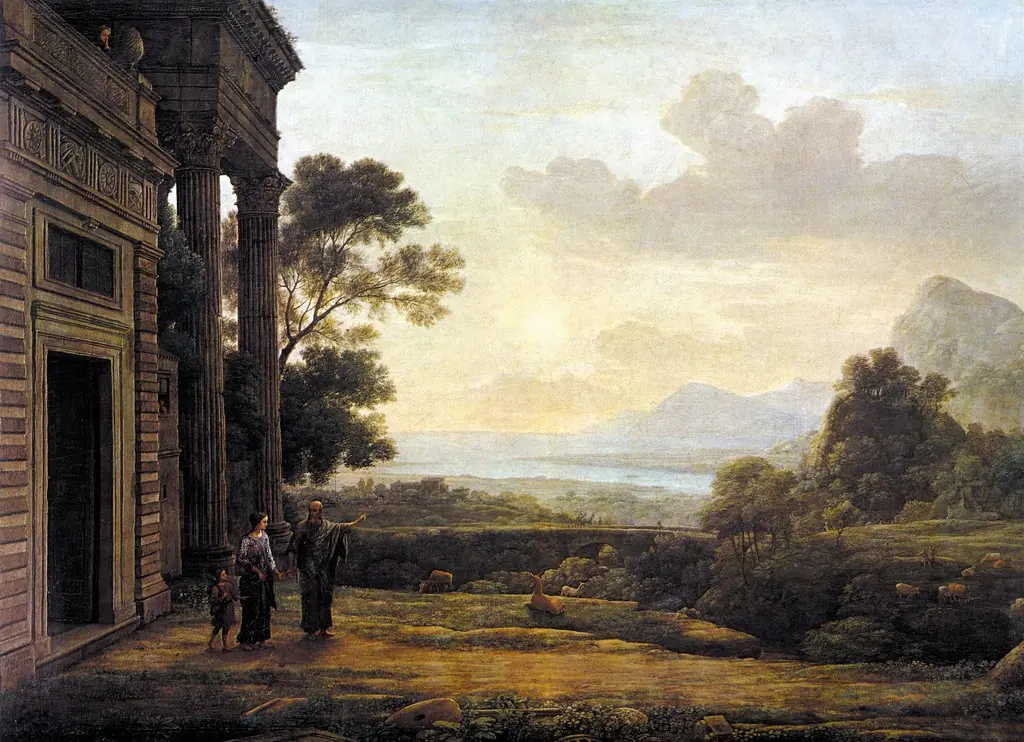 The Banishment of Hagar
 Landscape: A classical composition
 Ideal Landscape with Temple Buildings
 Ruinenlandschaft mit Christus und dem kanaanäischen Weib
 Capriccio con rovine romane
 Peisaj cu ruine antice