Artwork
Roman Ruins and Gravemonuments
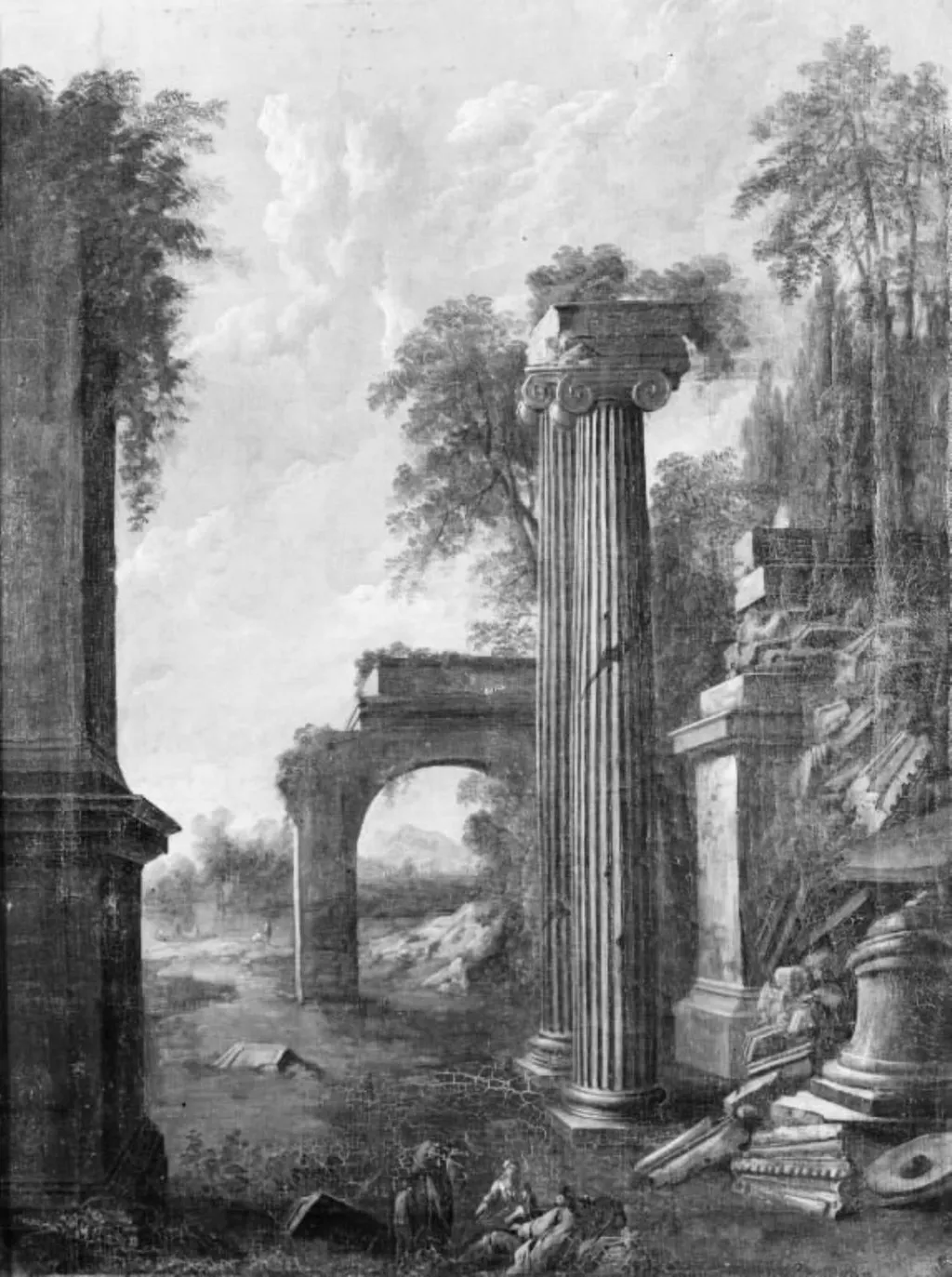
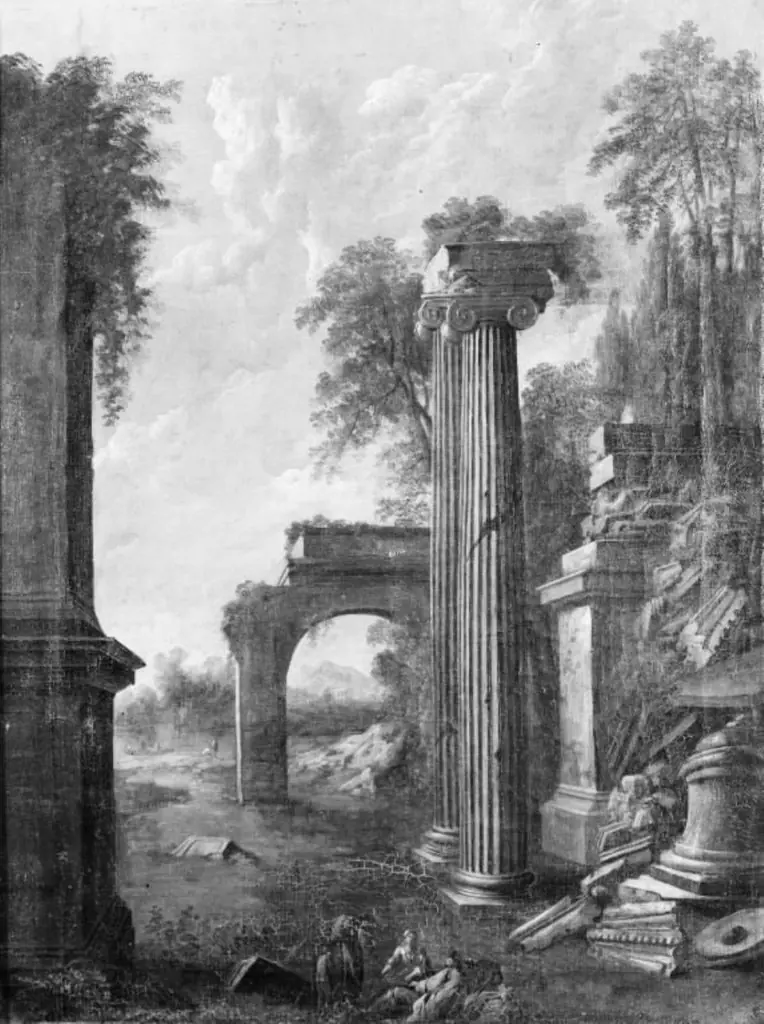
Roman Ruins and Gravemonuments is a photography by Unknown. It dates from 1750 and is held in the collection of the Statens Museum for Kunst. Created around 1750, this image depicts the remnants of ancient Roman architecture nestled in a quiet, overgrown landscape.
About this work
Overview
Created around 1750, this image depicts the remnants of ancient Roman architecture nestled in a quiet, overgrown landscape. The work is held in the collection of the Museum of Ethnography and captures a scene of decay and quiet endurance. No human figures are present; the focus lies entirely on the weathered stone structures and their integration with the natural environment.
Subject & Meaning
The image evokes contemplation of impermanence rather than celebrating grandeur, aligning with 18th-century interests in antiquity and melancholy.
The scene presents fragments of what were once monumental structures—leaning columns and a crumbling arch—suggesting the passage of time and the erosion of human achievement. The presence of trees and uneven earth implies nature’s reclamation of human ruins. The image evokes contemplation of impermanence rather than celebrating grandeur, aligning with 18th-century interests in antiquity and melancholy.
Technique & Style
The composition employs chiaroscuro to emphasize the play of light and shadow across the broken stonework, enhancing the texture of weathered surfaces and the depth of the surrounding vegetation. Soft, diffused lighting suggests an overcast sky, contributing to a subdued, introspective mood. The rendering favors atmospheric effect over precise architectural detail, prioritizing emotional resonance.
History & Provenance
The work is attributed to an artist identified as 37444_person, though little is known about their background. It entered the Museum of Ethnography’s collection in the 19th century, likely as part of a broader interest in documenting ancient sites. Its origins as a study or travel record remain unconfirmed, but its preservation suggests it was valued for its documentary and aesthetic qualities.
Context
Produced during a period when European travelers and artists frequently visited Roman ruins, this image reflects a growing fascination with antiquity as a source of reflection rather than mere inspiration. Unlike grand archaeological reconstructions, this work focuses on decay, aligning with emerging Romantic sensibilities that found beauty in ruin and solitude.
Legacy
The image contributes to a visual tradition that treats ancient ruins not as relics to be restored, but as quiet witnesses to time’s passage. Its preservation in an ethnographic museum, rather than an art or archaeology collection, underscores its role as a cultural artifact reflecting 18th-century perceptions of history, nature, and memory.
Artist & collection

 Domestic Scene
 Giacomo and Cardinal Marco, investing Andrea, Abbot of San Zeno, with his Benefice
 The Nymph of Fontainebleau
 Portrait of a Woman
 Madonna and Child with Saints in the Enclosed Garden
 Venus and Minerva
 Family Group of Four on Sofa
 Wall painting from Room H of the Villa of P. Fannius Synistor at Boscoreale
 Classical Ruins with Soldiers
 Ruins in a Landscape
 Ruins in a Landscape
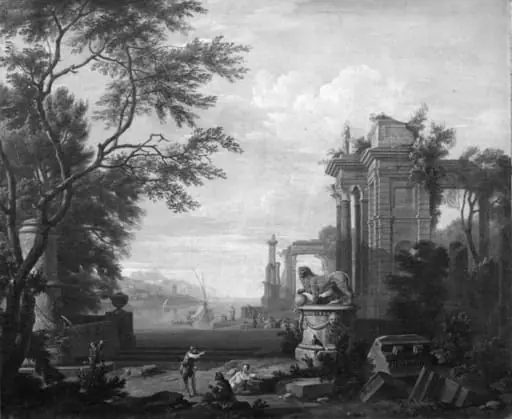 Southern Harbour
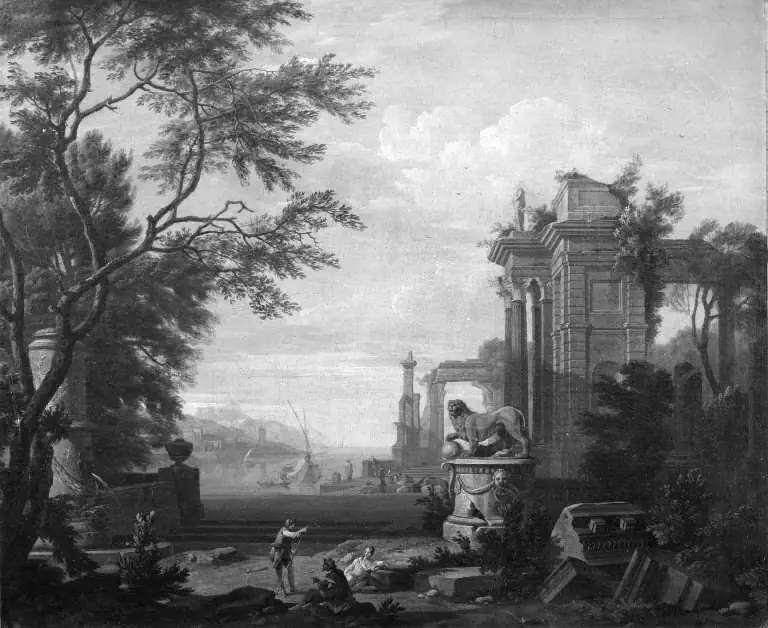 Southern Harbour
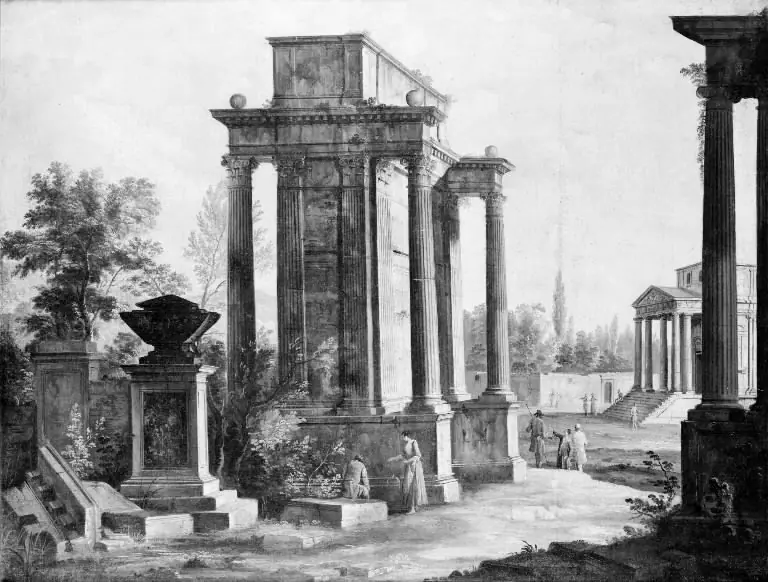 Imaginary Architectural Monuments
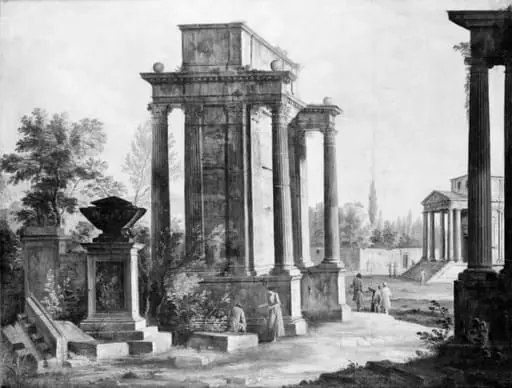 Imaginary Architectural Monuments
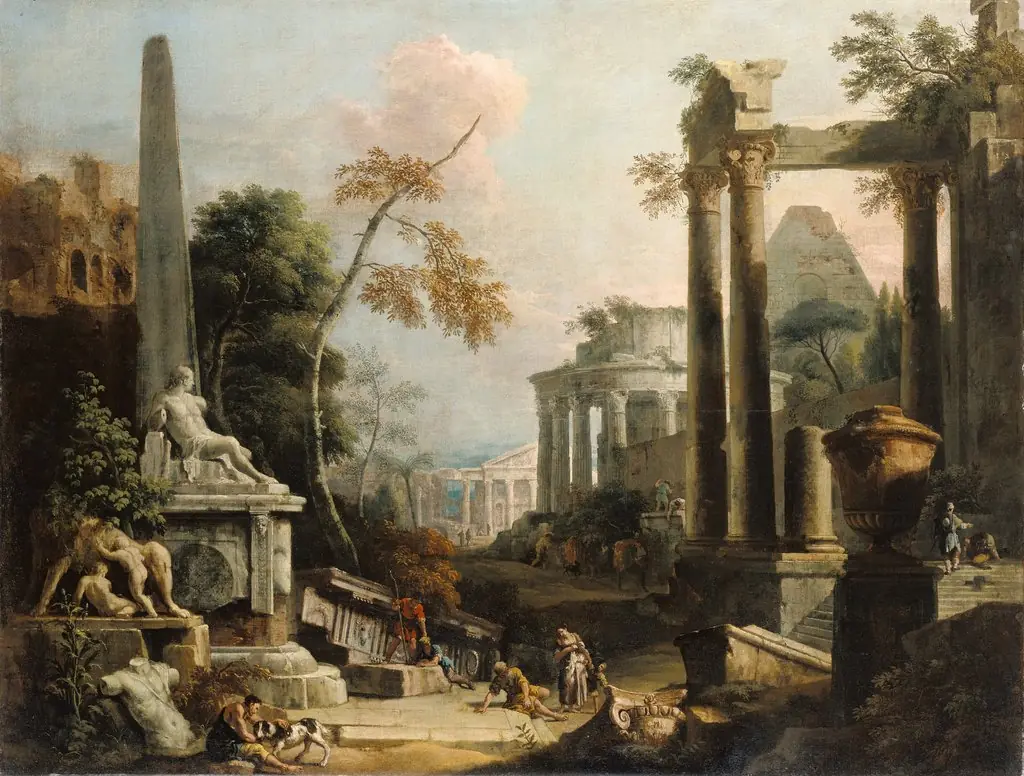 Landscape with Classical Ruins and Figures
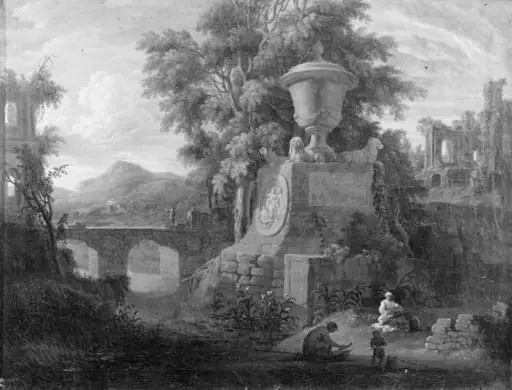 River Landscape
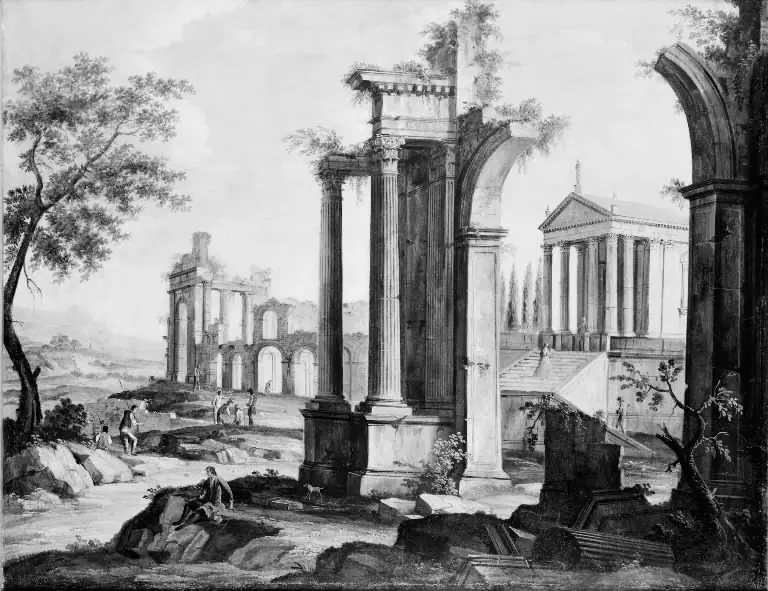 Decorative Painting with Imaginary Architecture
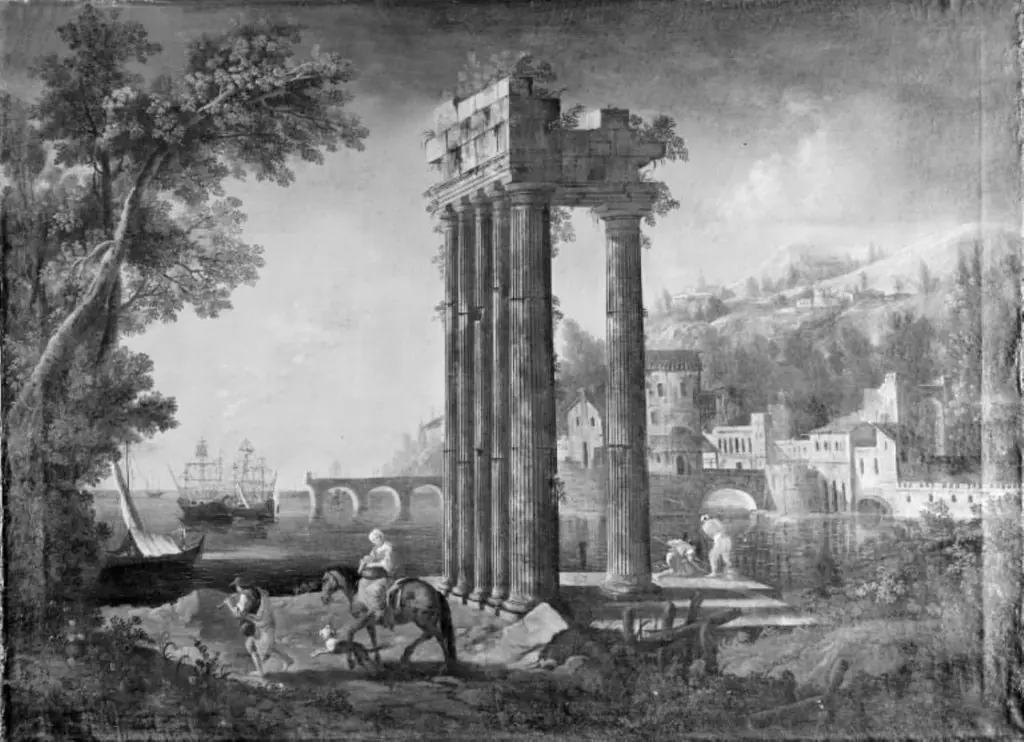 Et mådeligt maleri, forestillende en venetiansk søhavn
 Roman Ruins and Gravemonuments