Artwork
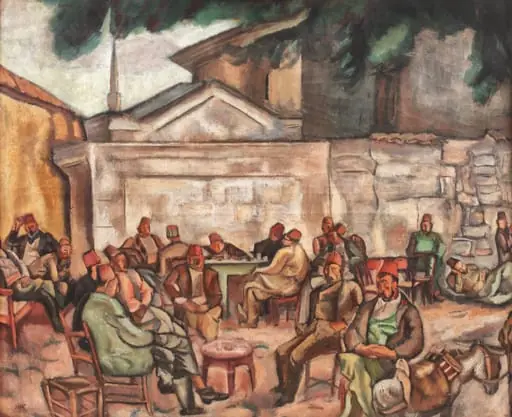
Εσωτερικό καφενείου
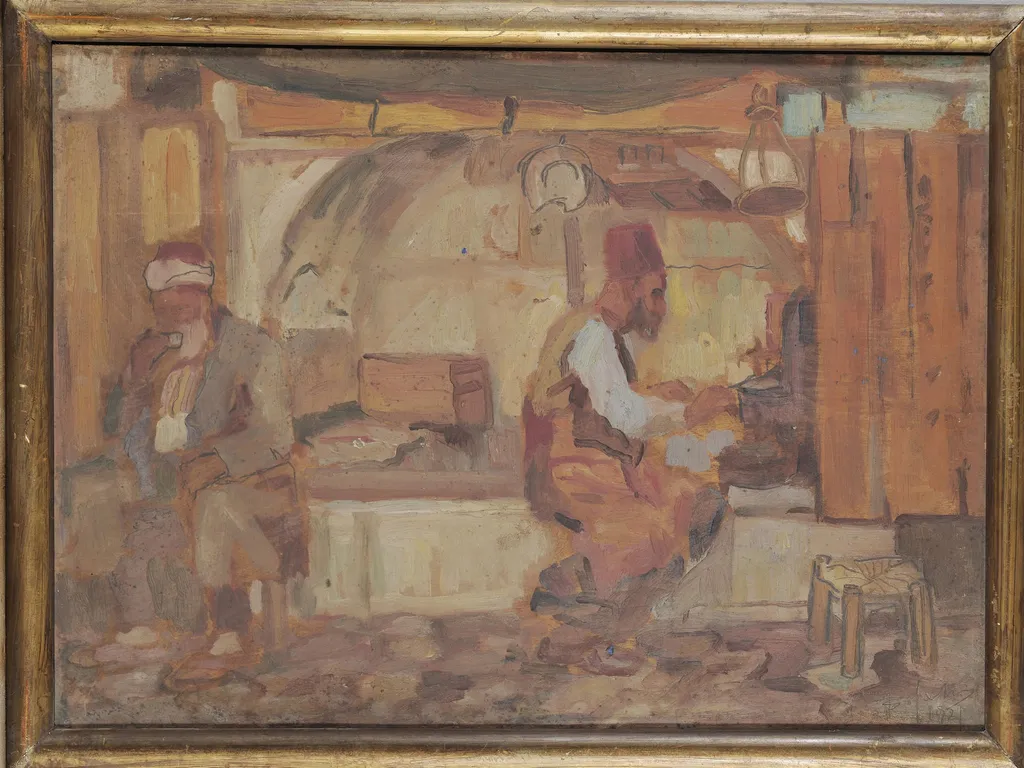
Εσωτερικό καφενείου is an unspecified painting by Vyzantios Periklis. It dates from 1921 and is held in the collection of the Historical & Ethnological Society of Greece. Painted in 1921 by Periklis Vyzantios, this interior scene captures a quiet moment in a Greek coffeehouse.
About this work
Overview
Painted in 1921 by Periklis Vyzantios, this interior scene captures a quiet moment in a Greek coffeehouse. The work is part of the Museum of Ethnography’s collection and reflects early 20th-century social life through a restrained, observational lens. Rather than depicting action, it focuses on stillness, using subtle lighting and muted tones to convey a sense of suspended time.
Subject & Meaning
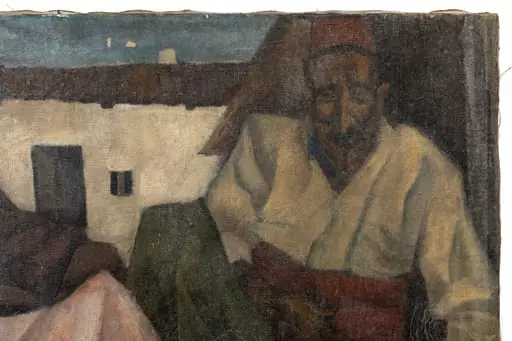
Two men sit at a wooden table, each absorbed in private thought. Their attire—a white cap and gray jacket on one, a red fez and white shirt on the other—hints at regional or class distinctions common in interwar Greece. The absence of conversation or interaction suggests solitude within companionship, a quiet meditation on routine and the rhythms of daily life in a communal space.
Technique & Style
Vyzantios employs soft, blended brushwork and a limited palette of earth tones to evoke warmth and intimacy. Light pools gently around the figures, emerging from an unseen source, casting faint shadows that deepen the room’s quietude. Details like the bell and wooden box on the wall are rendered with care but without flourish, reinforcing the painting’s unembellished realism.
History & Provenance
Created in 1921, the painting entered the Museum of Ethnography’s holdings early in its history, likely as part of a broader effort to document everyday Greek culture. Its preservation reflects institutional interest in vernacular life during a period of national redefinition after the Asia Minor Catastrophe. No significant changes in ownership are recorded.
Context
In post-war Greece, coffeehouses served as vital social hubs where men gathered to discuss politics, news, and personal matters. Vyzantios’s depiction aligns with a growing artistic interest in ordinary spaces, moving away from grand historical narratives toward intimate, domestic scenes that revealed the texture of lived experience.
Legacy
The painting remains a quiet reference point in Greek modernist art for its understated portrayal of social ritual. While not widely exhibited beyond institutional circles, it continues to inform scholarly studies on gender, class, and public space in early 20th-century Greece, valued for its unromanticized observation.
Artist & collection
Artist
Museum
Historical & Ethnological Society of Greece
Continue through works from the same source collection.