Artwork
Φως
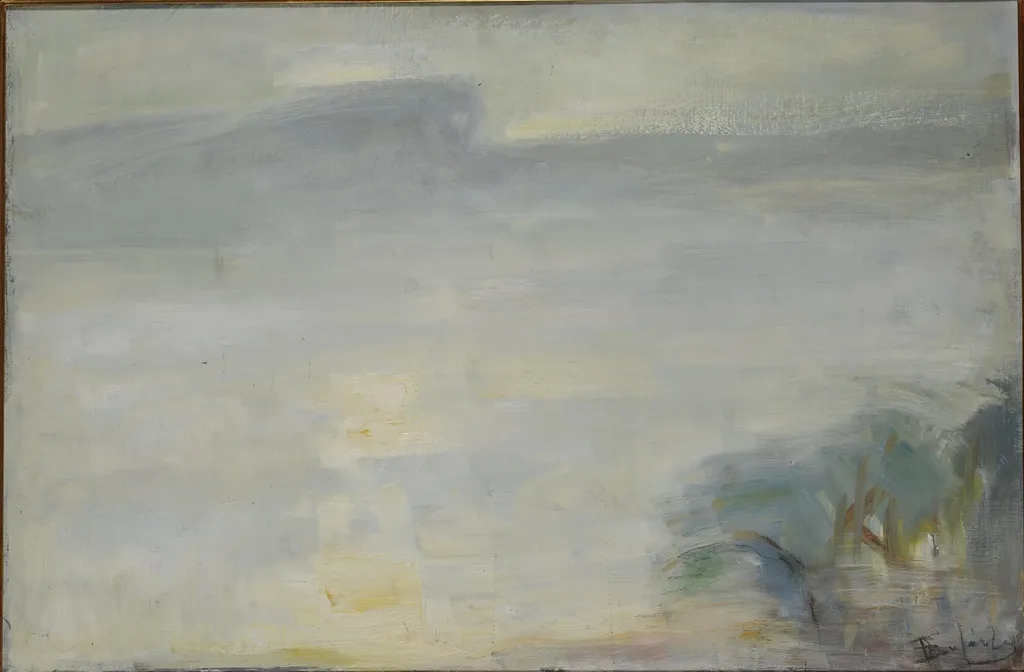
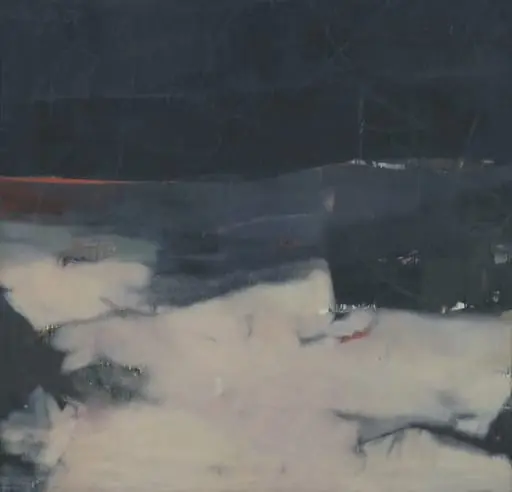
Φως is an unspecified painting by Vyzantios Periklis. It dates from 1969 and is held in the collection of the Historical & Ethnological Society of Greece.
About this work
Overview
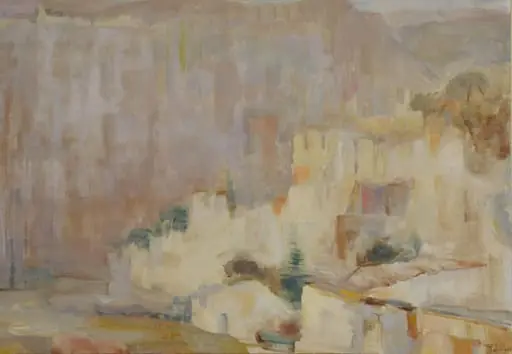
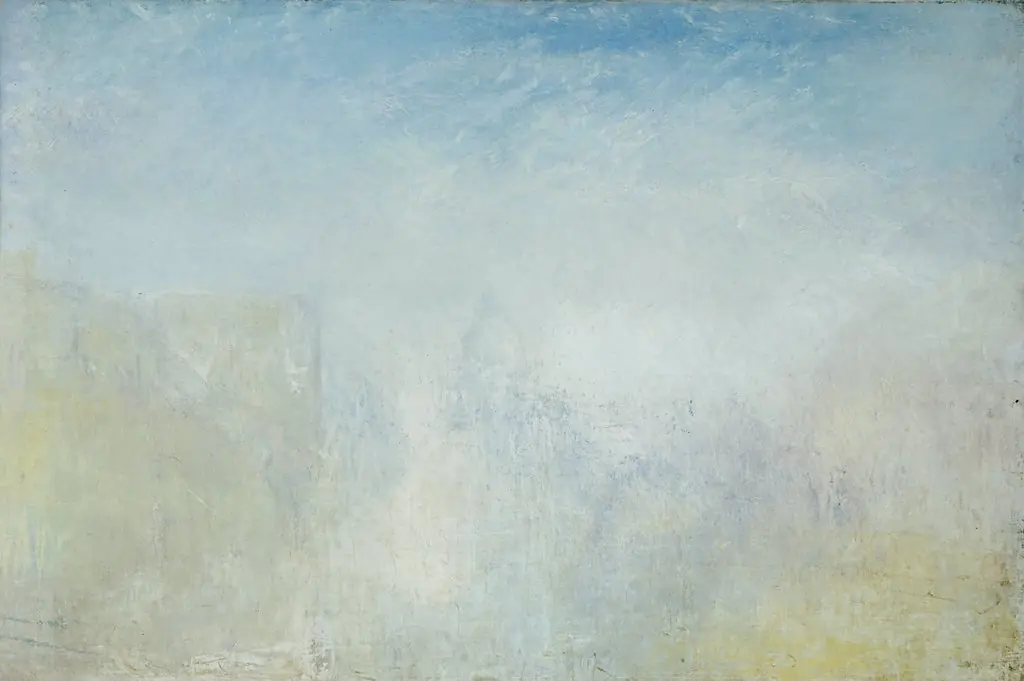
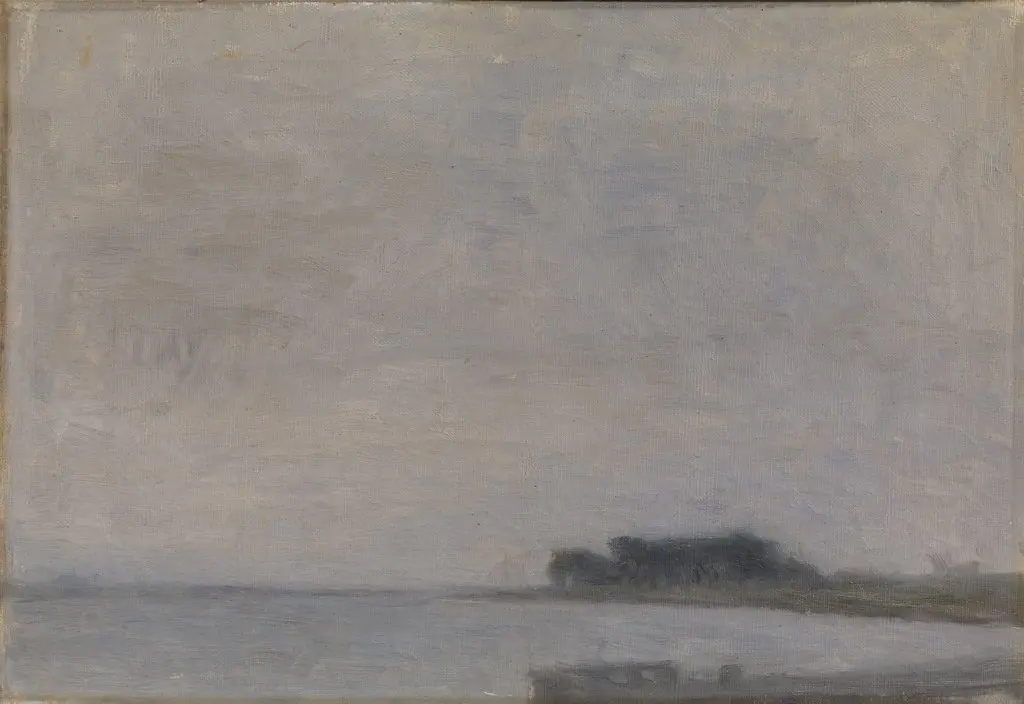
Created in 1969 by Greek painter Vyzantios Periklis, the work titled Φως (Light) is part of the permanent collection of the Museum of Ethnography. The piece is an oil painting that presents a muted, atmospheric scene dominated by pale tones and a sense of visual softness, inviting viewers to contemplate the effect of illumination on form.
Subject & Meaning
The composition suggests an ambiguous landscape rendered in a veil of mist, where indistinct silhouettes—perhaps trees or low structures—emerge faintly in the lower right. The lack of defined edges and the overall haziness evoke a contemplative mood, hinting at the transitory nature of light and the way it can both reveal and obscure the world.
Technique & Style
Periklis employs a delicate layering of translucent paint, allowing underlying hues to glow through the surface. Brushwork is loose and almost smudged, resembling soft pencil strokes rather than precise lines. The palette is restrained to whites, grays and pale blues, while occasional darker strokes provide minimal contrast, reinforcing the painting’s ethereal quality.
History & Provenance
The artwork was completed in 1969 and subsequently entered the Museum of Ethnography’s holdings, where it remains on display. Its acquisition reflects the museum’s interest in mid‑20th‑century Greek visual culture and the artist’s contribution to the period’s exploration of light and atmosphere.
Context
During the late 1960s, Greek artists were increasingly experimenting with abstraction and atmospheric effects, moving away from strict figurative representation. Periklis’s Φως aligns with this trend, emphasizing mood over narrative and employing a subtle, almost impressionistic approach that mirrors broader European movements toward lyrical abstraction at the time.
Artist & collection
Artist
Museum
Historical & Ethnological Society of Greece
Continue through works from the same source collection.