Artwork
Ο Πανουργιάς Πανουργιάς κυριεύει τον Ακροκόρινθο (Η άλωση του Ακροκορίνθου, Ιανουάριος 1822)
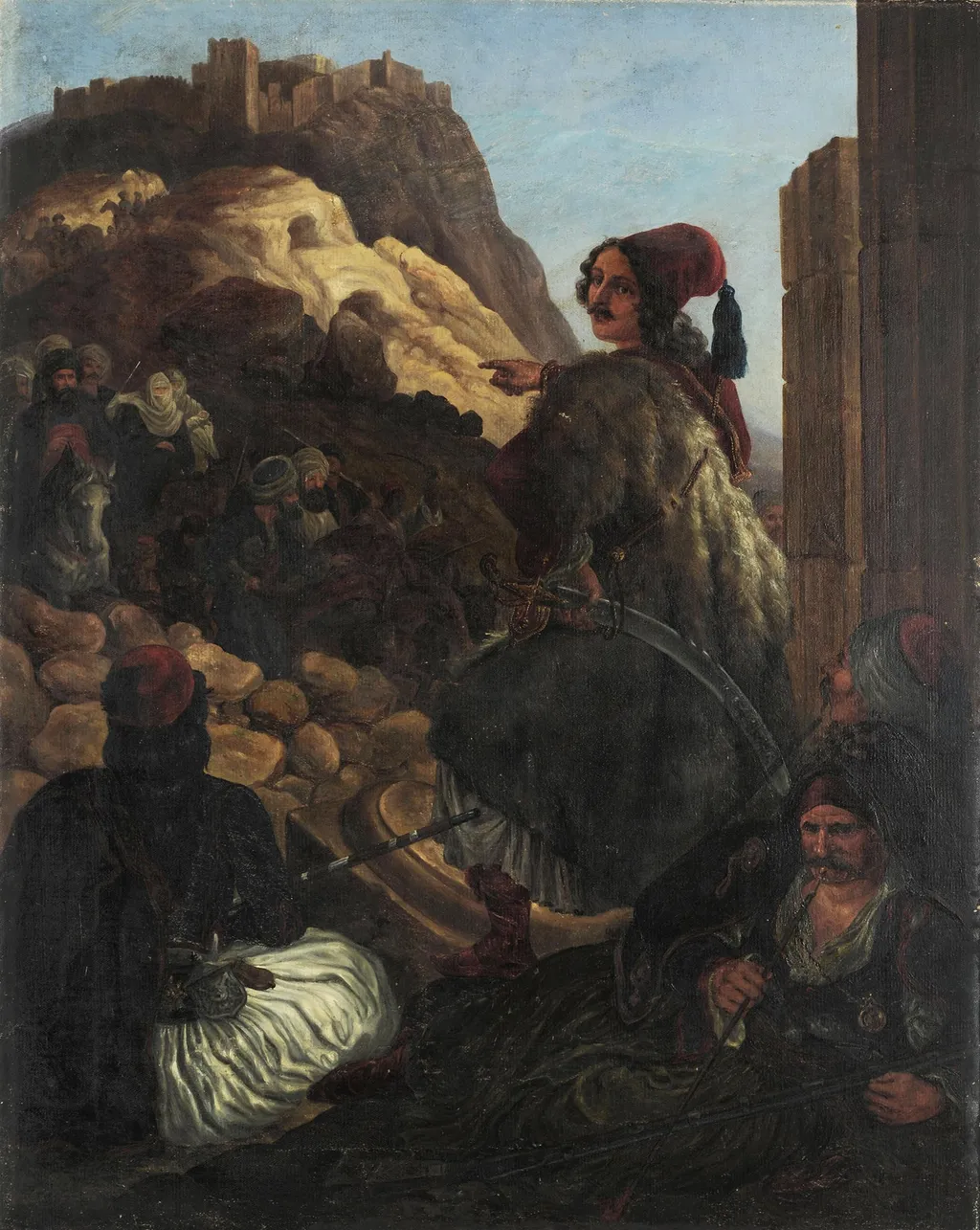
Ο Πανουργιάς Πανουργιάς κυριεύει τον Ακροκόρινθο (Η άλωση του Ακροκορίνθου, Ιανουάριος 1822) is an unspecified painting by Ες Πέτερ φον. It is held in the collection of the Historical & Ethnological Society of Greece. This painting captures a moment during the Greek War of Independence, specifically the capture of Acrocorinth in January 1822.
About this work
Overview
This painting captures a moment during the Greek War of Independence, specifically the capture of Acrocorinth in January 1822.
This painting captures a moment during the Greek War of Independence, specifically the capture of Acrocorinth in January 1822. It portrays a leader in a red hat and fur coat, sword in hand, directing a group of fighters toward the fortified mountain. Surrounding figures include armed men and weary soldiers, suggesting both resolve and exhaustion. The composition centers on the figure’s gesture, anchoring the narrative in a decisive act of rebellion.
Subject & Meaning
The central figure represents a revolutionary commander, likely a klepht or armatolos, symbolizing Greek resistance against Ottoman rule. His pointing gesture directs attention to Acrocorinth, a strategic stronghold whose fall was pivotal. The scattered, resting soldiers convey the human cost of conflict, while the clear sky and distant peaks imply hope and the vastness of the struggle. The scene is less a battle depiction than a moment of resolve before action.
Technique & Style
The artist employs strong contrasts of light and shadow to emphasize the central figure, enhancing his prominence against the landscape. Garments and terrain are rendered with textured brushwork, adding tactile realism. The sky’s unbroken blue provides calm contrast to the clustered, dynamic figures below. Compositionally, diagonal lines lead the eye from the commander’s outstretched arm to the mountain, reinforcing the narrative’s directional focus.
History & Provenance
Painted shortly after the events of 1822, the work likely emerged from early nationalist sentiment in the newly emerging Greek state. It may have been commissioned to commemorate the capture of Acrocorinth, a key victory that boosted morale. The artist’s identity remains uncertain, but the style suggests influence from contemporary European historical painting traditions adapted to local revolutionary themes.
Context
The fall of Acrocorinth in January 1822 was a turning point in the Greek uprising, removing a major Ottoman stronghold in the Peloponnese. The painting reflects the romanticized idealism of the revolution, where individual leadership and collective sacrifice were mythologized. Such imagery helped unify fragmented rebel groups under a shared narrative of liberation, blending historical fact with symbolic representation.
Legacy
Though not widely exhibited internationally, the painting holds significance in Greek visual culture as an early example of revolutionary iconography. It contributed to the visual vocabulary of national identity, influencing later depictions of freedom fighters. Its emphasis on leadership and terrain as symbols of resistance became recurring motifs in 19th-century Greek art.
Artist & collection
Artist
Museum
Historical & Ethnological Society of Greece
Continue through works from the same source collection.
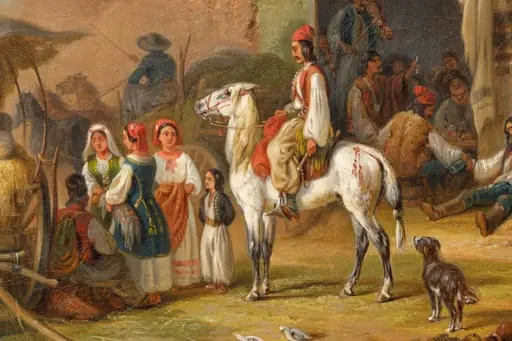 Bâlciul
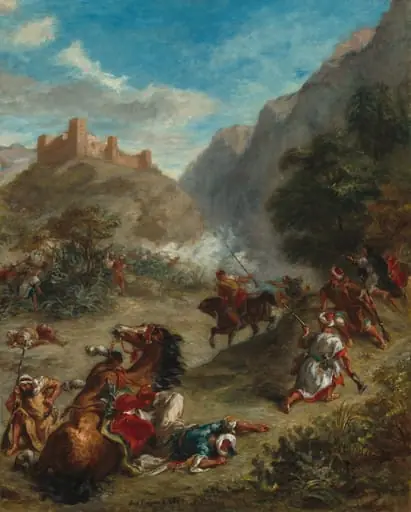 Arabs Skirmishing in the Mountains
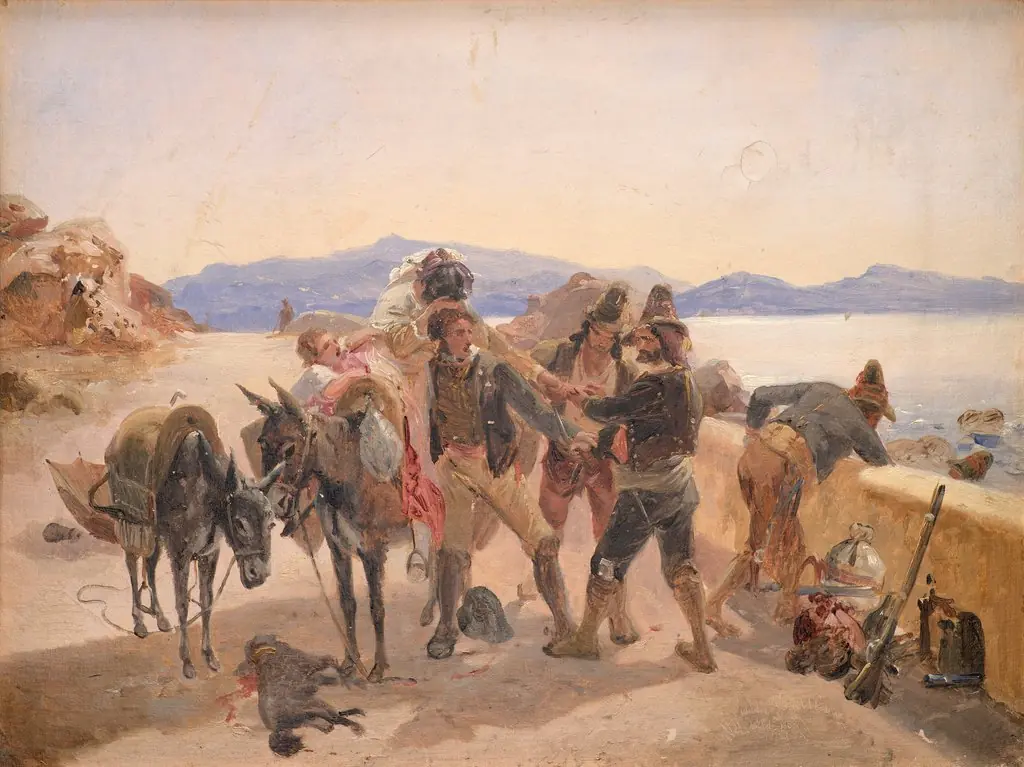 Robbers Attacking Travellers
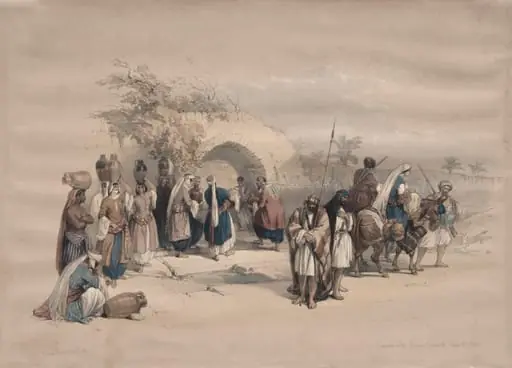 Fountain of the Virgin, Nazareth
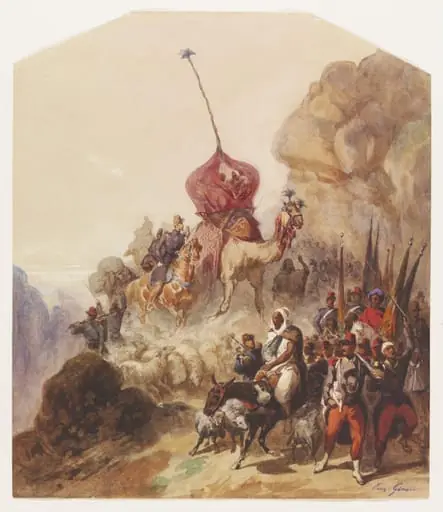 Marche dInfanterie en Algérie
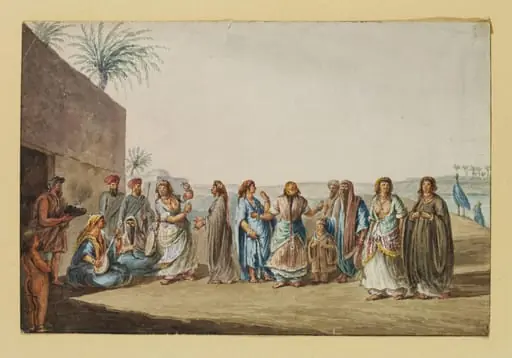 An Egyptian Ball, At Ned Sili
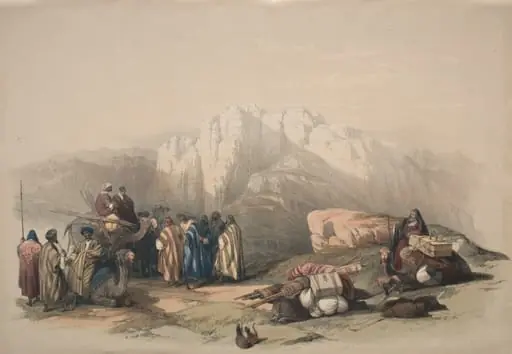 Tomb of Aaron, Summit of Mount Horeb
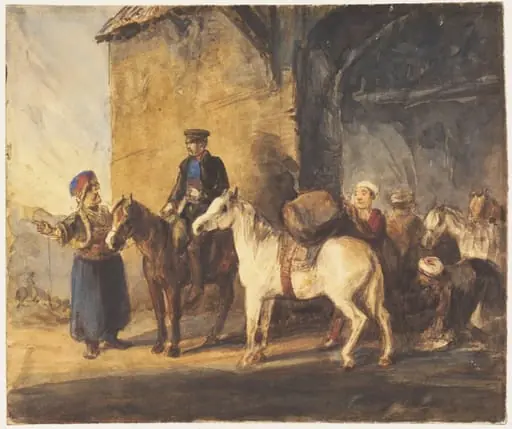 Travellers departure from a Caravanserai
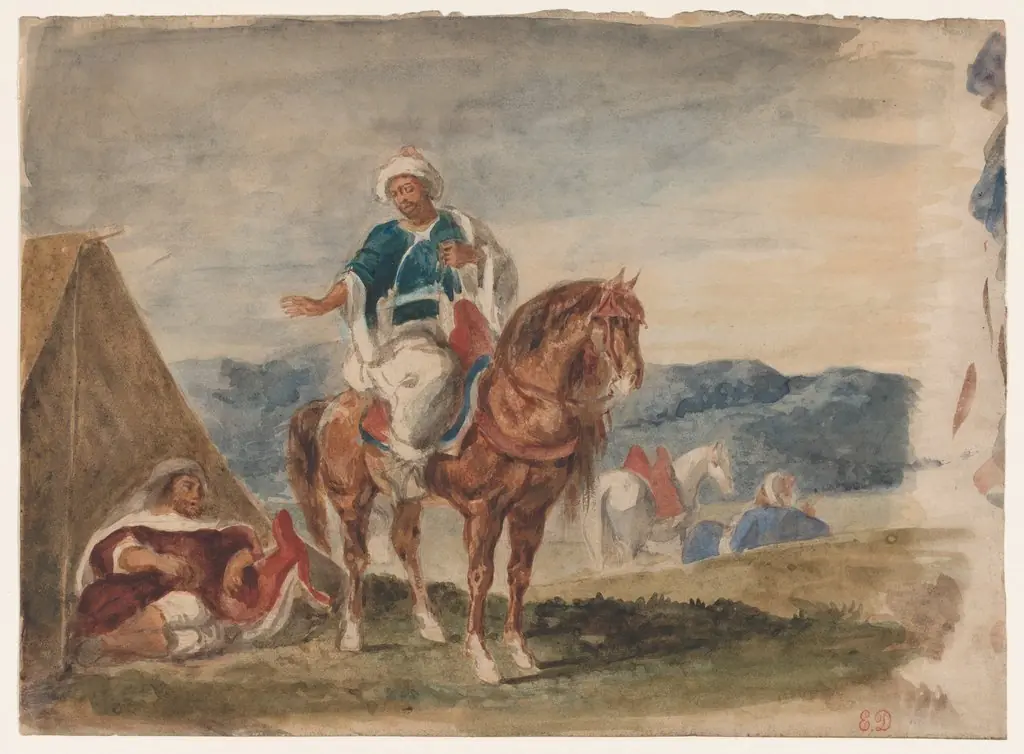 Three Arab Horsemen at an Encampment
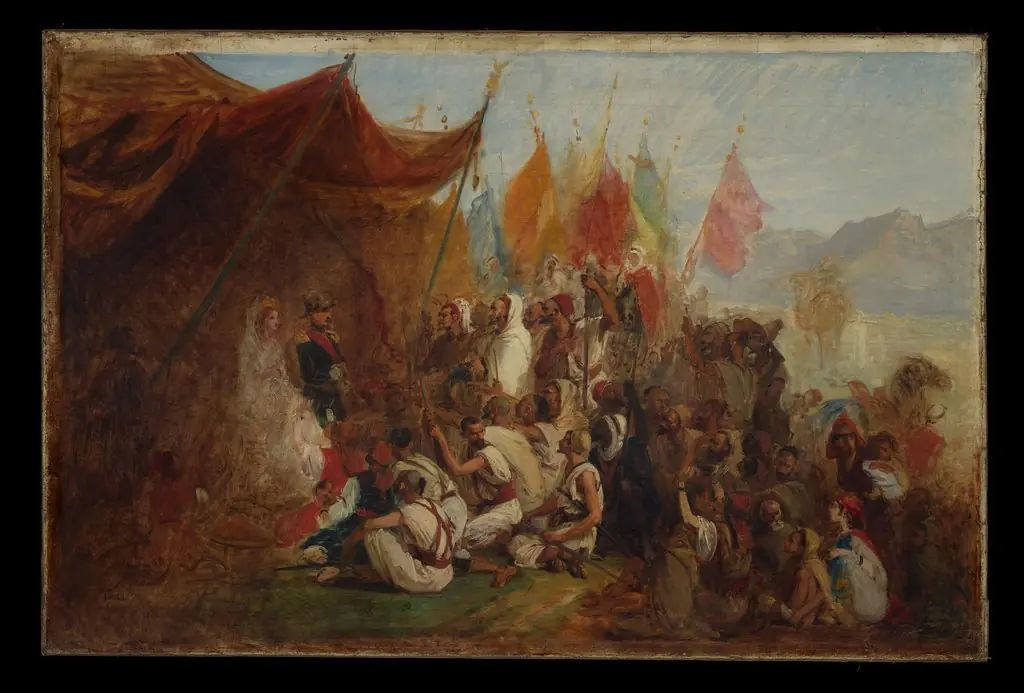 Sketch for "Reception of Emperor Napoleon III and Empress Eugénie by the Kabyle Leaders at Algiers on September 18, 1860"
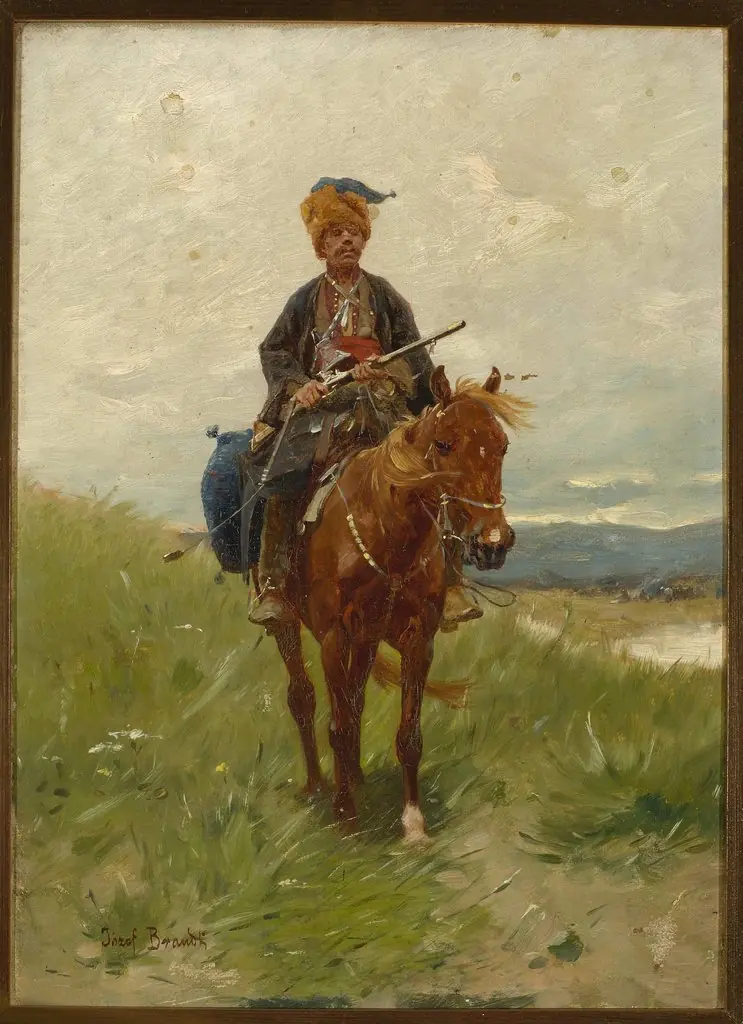 Keeping watch
![Advanced guard & Baggage of the Royal artillery landi[ng] a[t] Alexandria en route for India, by T. B. S.](https://artifactworldgallery.com/img/t-b-s--advanced-guard-baggage-of-the-royal-artillery-landi-ng-a-t-a--605f6f4d9d8dfe93-w320.webp) Advanced guard & Baggage of the Royal artillery landi[ng] a[t] Alexandria en route for India
Advanced guard & Baggage of the Royal artillery landi[ng] a[t] Alexandria en route for India