Artwork
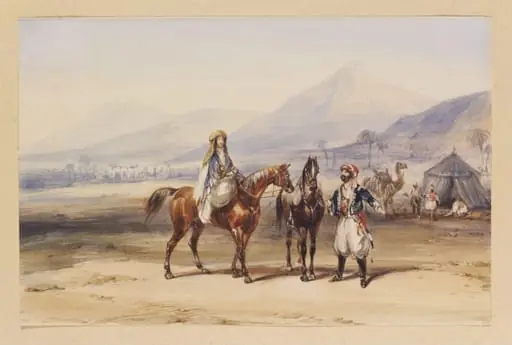
Three Arab Horsemen at an Encampment
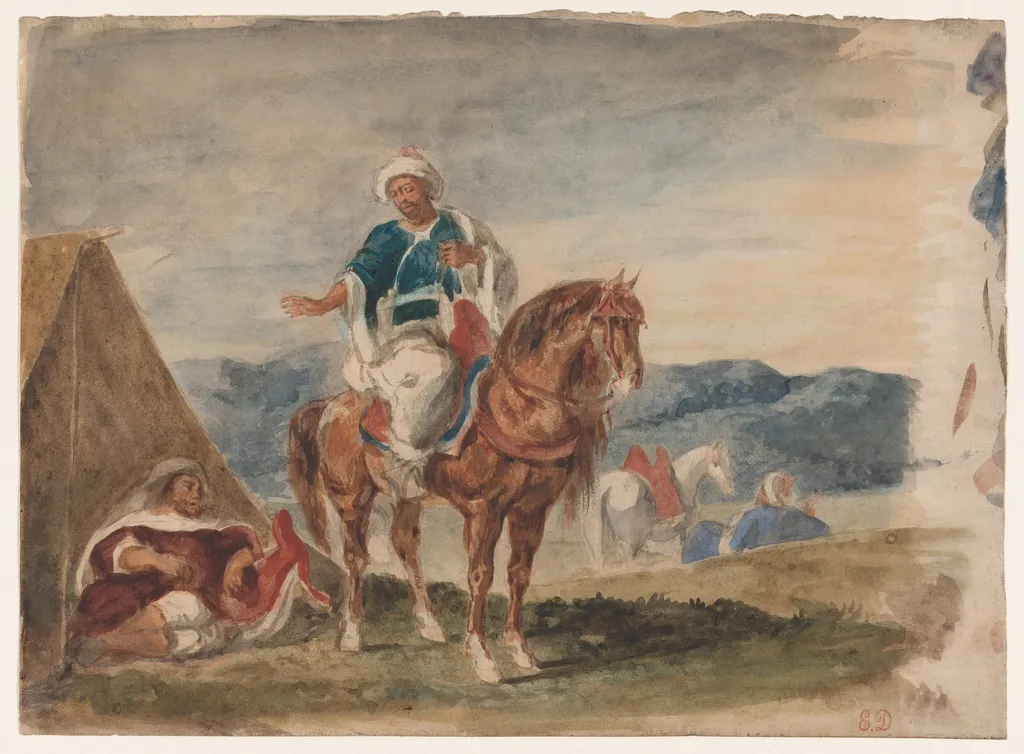
Three Arab Horsemen at an Encampment is a watercolor painting by Eugène Delacroix. It dates from 1835 and is held in the collection of the Metropolitan Museum of Art.
About this work
Overview
Eugène Delacroix executed the watercolor titled *Three Arab Horsemen at an Encampement* in 1835. The composition gathers three riders within a desert camp, one on a brown horse gesturing outward, another seated beside a tent, and a third on a white horse against a distant mountainous backdrop. The work exemplifies Delacroix’s mature preoccupation with dramatic narrative and exotic subject matter.
Subject & Meaning
The scene presents a fleeting moment among Arab cavalry, suggesting a pause in travel or a brief respite before continued journey. The central rider’s outstretched hand may imply a gesture of direction or warning, while the seated figures convey a sense of camaraderie and rest. The composition invites contemplation of movement halted by the landscape’s stillness.
Technique & Style
Fine brushwork renders the folds of the garments and the sheen of the horses’ coats, while broader washes suggest depth in the distant hills.
Delacroix employed watercolor to achieve a luminous, atmospheric effect, allowing colors to bleed softly and create subtle tonal shifts. Fine brushwork renders the folds of the garments and the sheen of the horses’ coats, while broader washes suggest depth in the distant hills. The palette balances warm earth tones with cool blues, reflecting the artist’s interest in color over strict anatomical exactness.
History & Provenance
Created during the height of Delacroix’s Romantic period, the painting reflects his fascination with North‑African themes following his travels in Morocco. The work entered private collections in the late 19th century before being acquired by a European museum in the early 20th century, where it has remained on display as part of the institution’s 19th‑century European holdings.
Context
Delacroix’s interest in exotic subjects aligns with the broader Romantic fascination with the ‘Orient’ that permeated European art in the 1830s. Influences from Rubens and the Venetian masters are evident in the dynamic arrangement and rich coloration, while the watercolor medium marks a departure from his more common oil canvases, allowing a softer, more immediate rendering of light and atmosphere.
Artist & collection
Artist
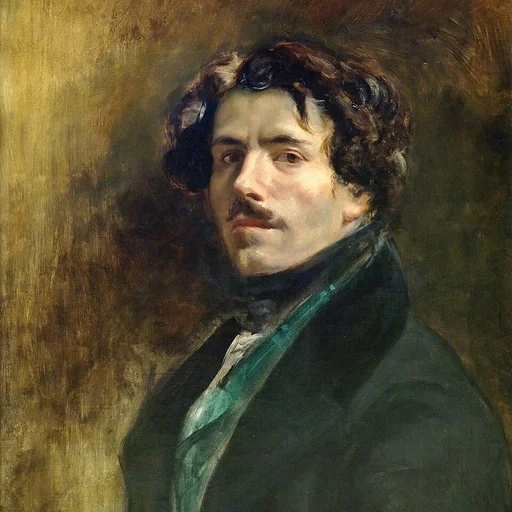
Ferdinand Victor Eugène Delacroix ( DEL-ə-krwah, -KRWAH; French: ; 26 April 1798 – 13 August 1863) was a French Romantic artist who was regarded as the leader of the French Romantic school.

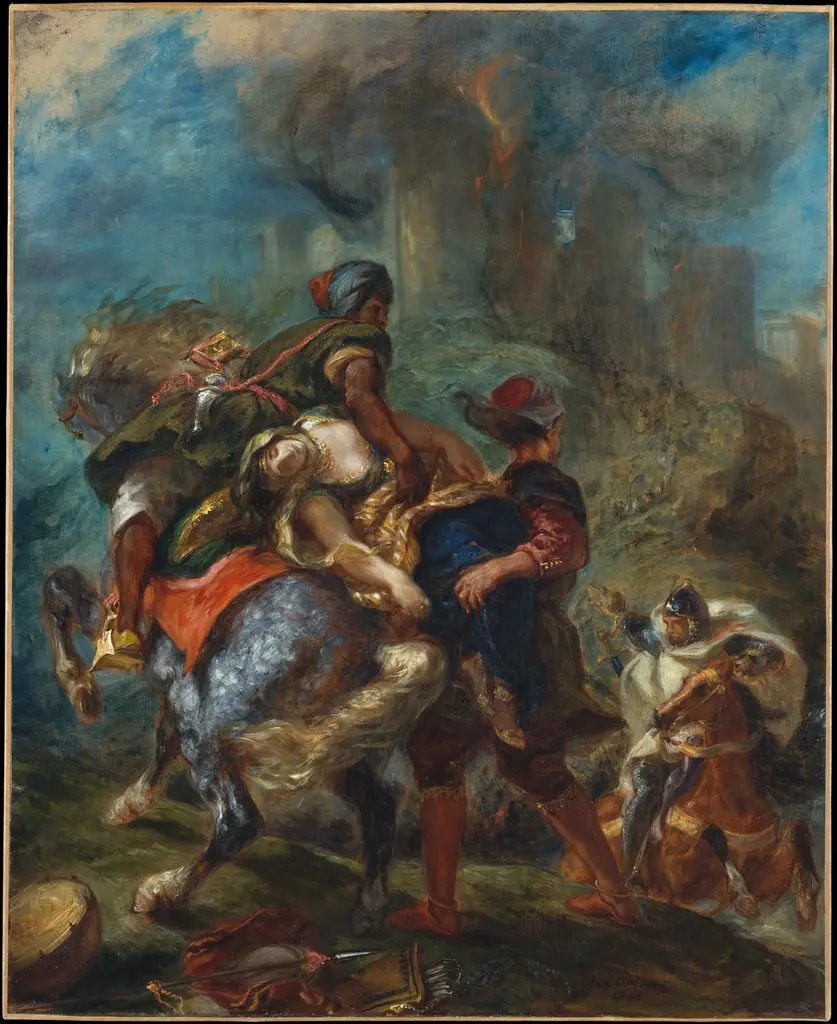
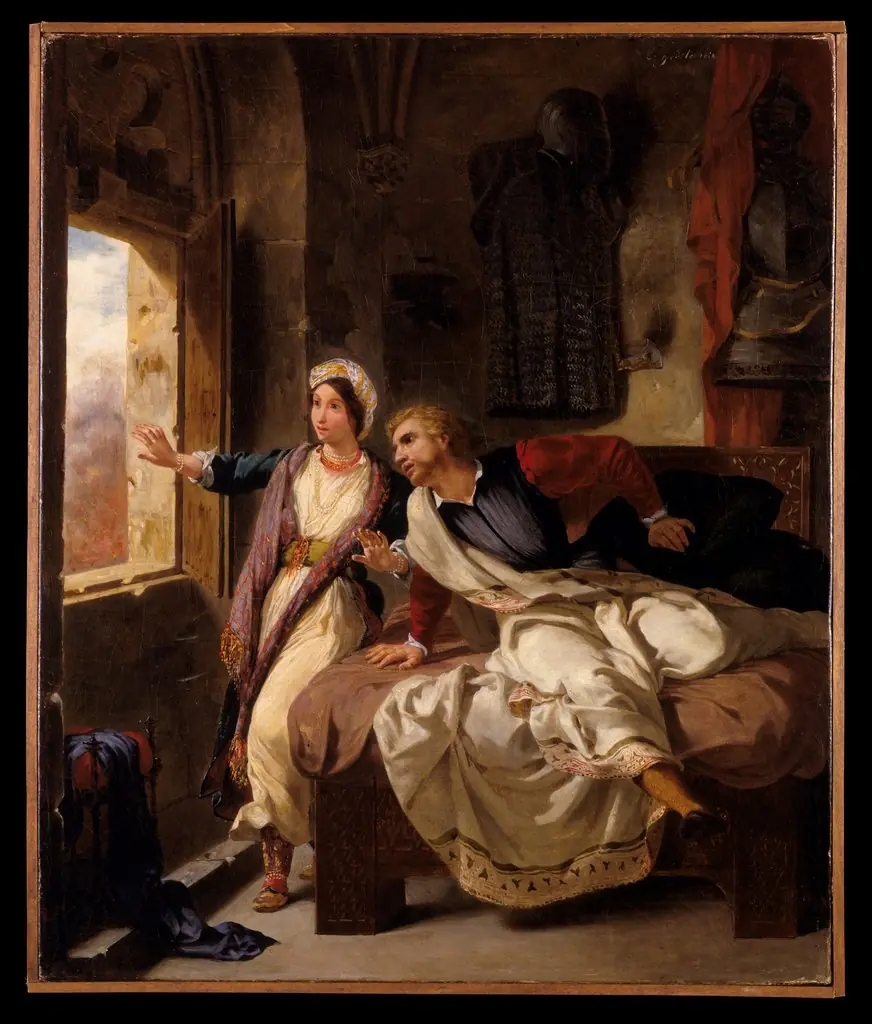
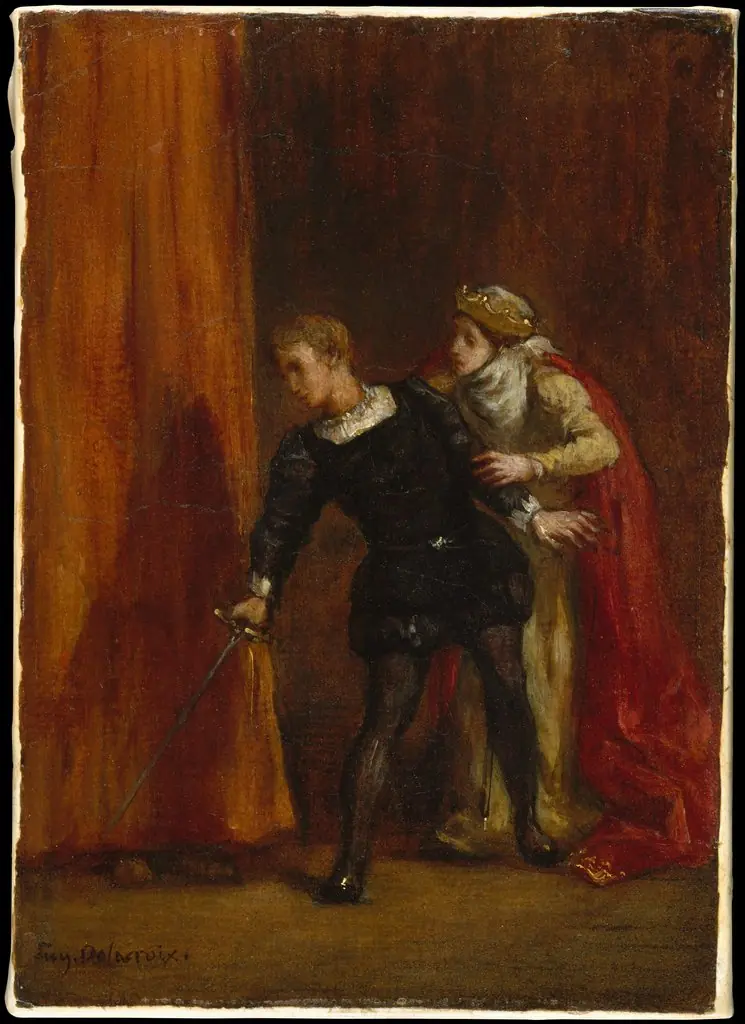
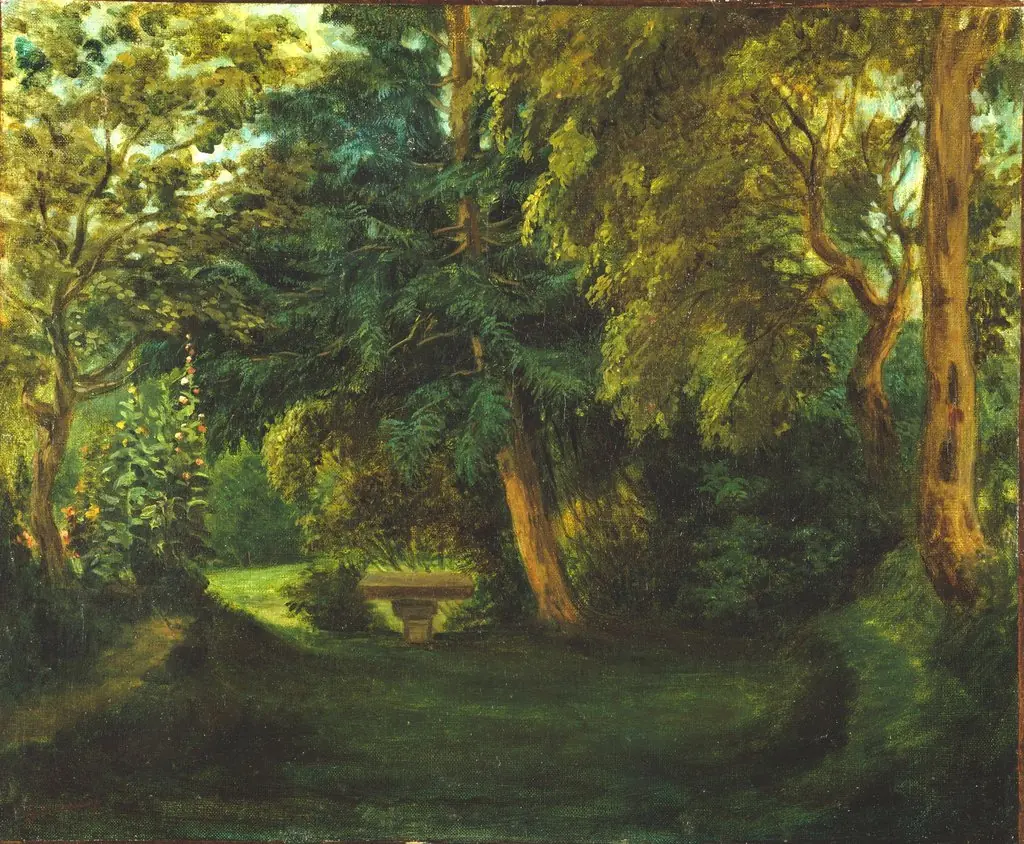
 Syrian Travel
 Eastern scene – Selling horses
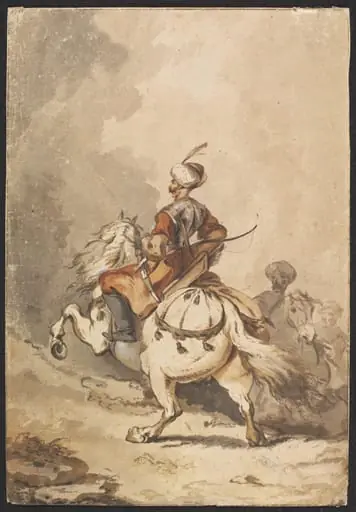 A Turk riding into Battle
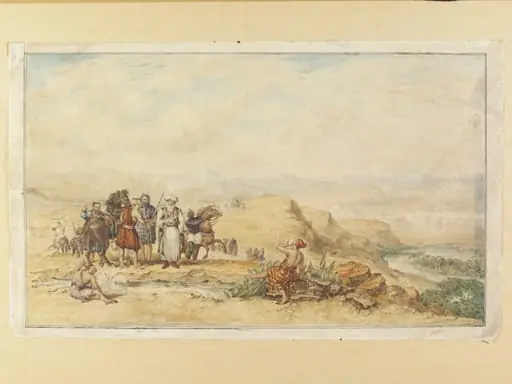 Halt at an Oasis
![Advanced guard & Baggage of the Royal artillery landi[ng] a[t] Alexandria en route for India, by T. B. S.](https://artifactworldgallery.com/img/t-b-s--advanced-guard-baggage-of-the-royal-artillery-landi-ng-a-t-a--605f6f4d9d8dfe93-w320.webp) Advanced guard & Baggage of the Royal artillery landi[ng] a[t] Alexandria en route for India
Advanced guard & Baggage of the Royal artillery landi[ng] a[t] Alexandria en route for India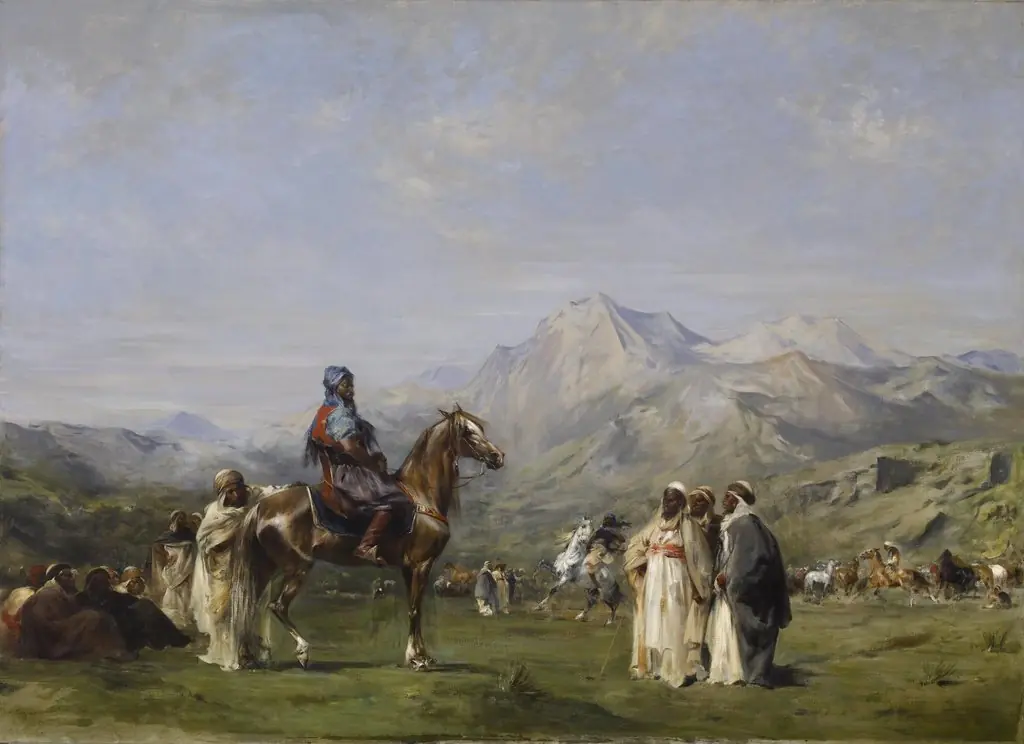 An Encampment in the Atlas Mountains
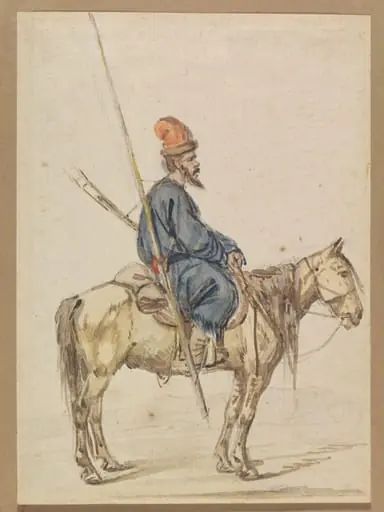 Armed horseman, possibly Russian
![A Shaykh with his Son[?] on Mules, with their Sais [groom], by S. Bossi](https://artifactworldgallery.com/img/s-bossi--a-shaykh-with-his-son-on-mules-with-their-sais-groom--240d85ba529e2bf3-w320.webp) A Shaykh with his Son[?] on Mules, with their Sais [groom]
A Shaykh with his Son[?] on Mules, with their Sais [groom]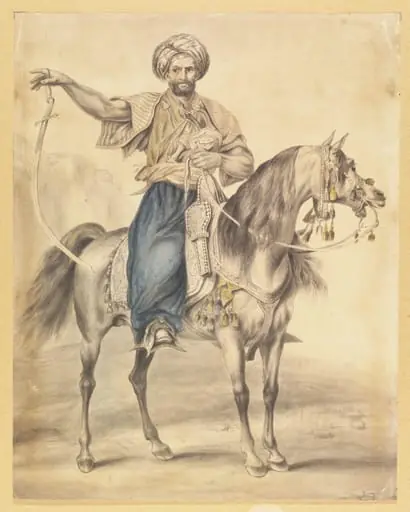 Mamluk with drawn sword, on horseback
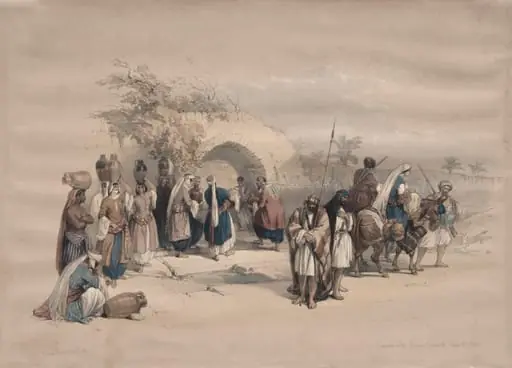 Fountain of the Virgin, Nazareth
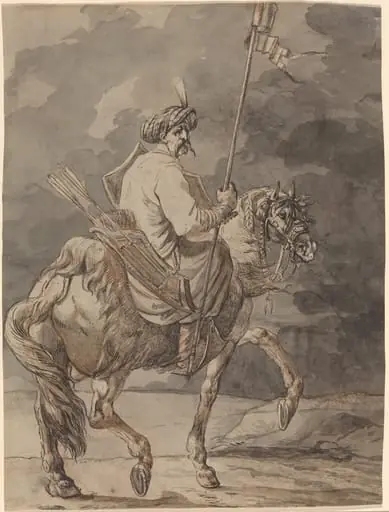 The Polish Rider
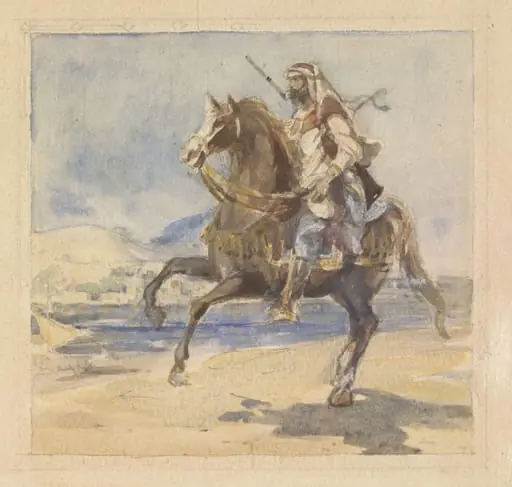 Arab Horseman