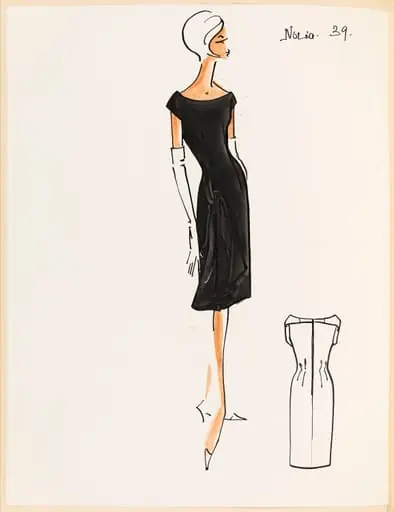
Artwork
Charmeuse
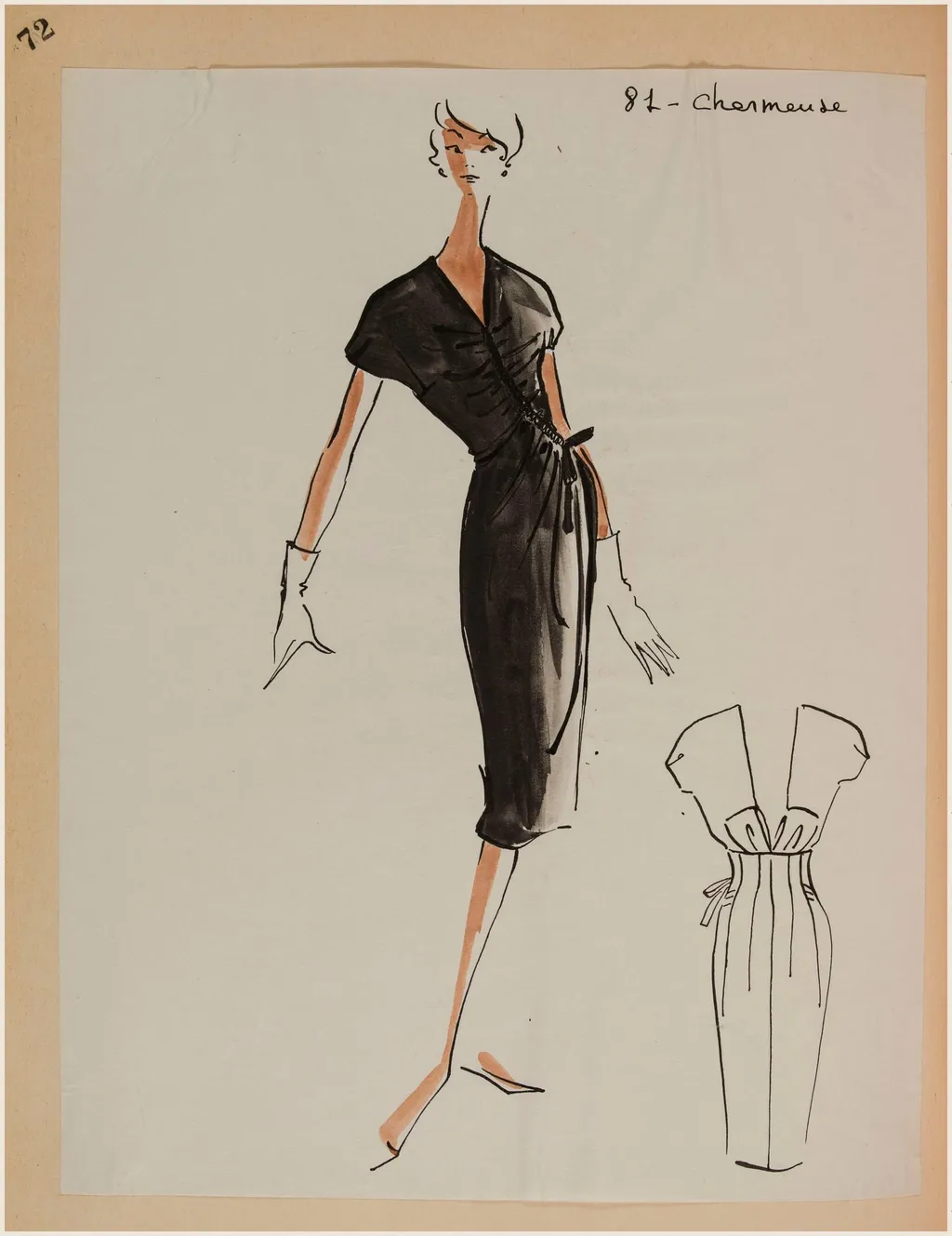
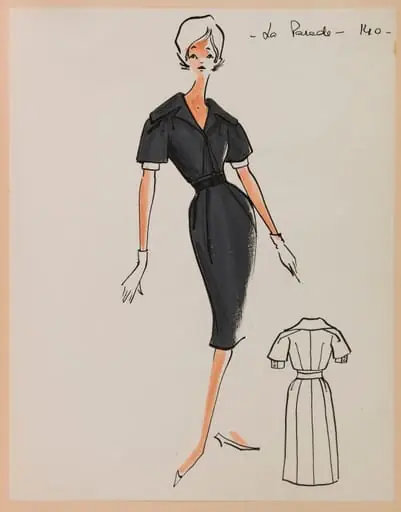
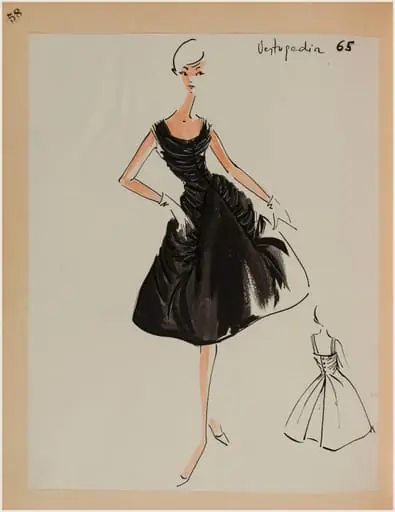
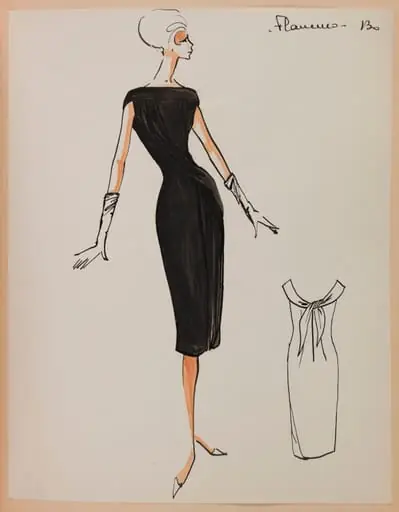
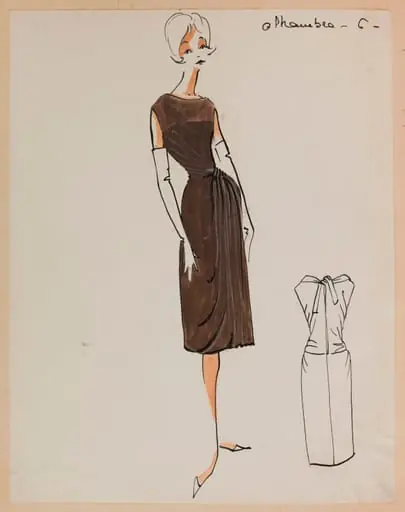
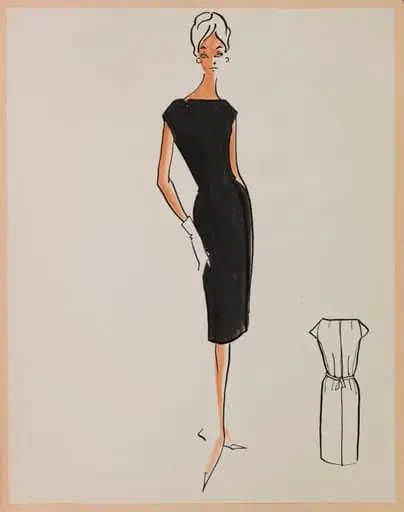
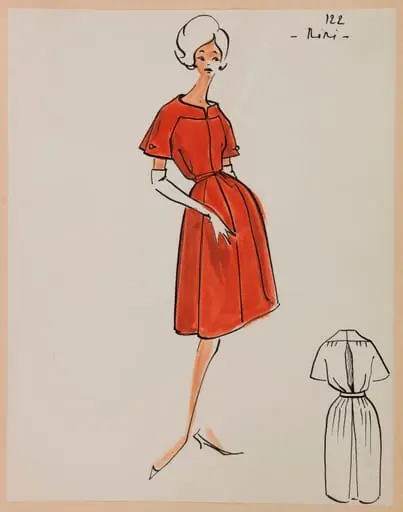
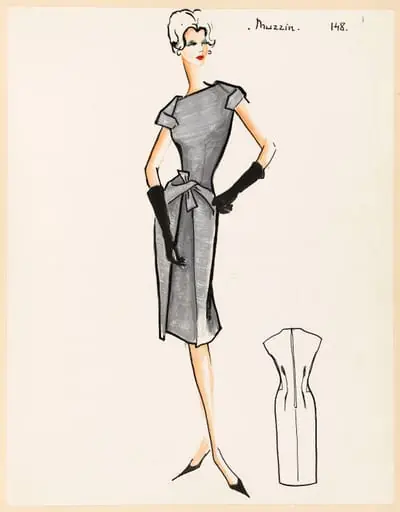
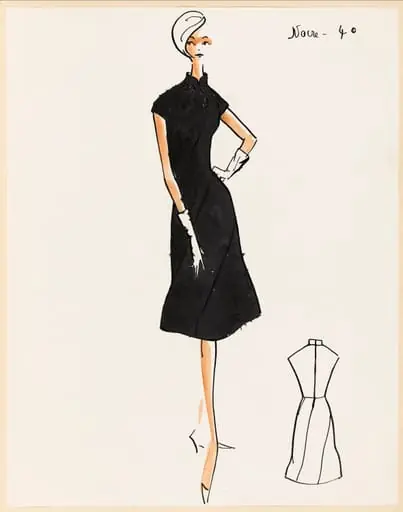
Charmeuse is a drawing by Marie-Louise Carven. It dates from 1958 and is held in the collection of the Palais Galliera - Musée de la Mode de la Ville de Paris.
About this work
Overview
The inclusion of the fabric name 'charmeuse' in the corner suggests it was made to explore textile properties rather than as a final presentation.
This sketch, dated around 1958, is a working drawing by Marie-Louise Carven, founder of the Parisian fashion house bearing her name. Executed in a fluid, spontaneous manner, it captures a simple black dress with draped skirt and three-quarter sleeves. The inclusion of the fabric name 'charmeuse' in the corner suggests it was made to explore textile properties rather than as a final presentation. The drawing resides in the Museum of Ethnography’s collection as part of its documentation of mid-century fashion design processes.
Subject & Meaning
The figure depicted is rendered in a relaxed, natural pose—one hand on the hip, the other hanging loosely—emphasizing ease of movement. This reflects Carven’s design philosophy: clothing that accommodates the body without sacrificing refinement. The absence of ornamentation and the focus on drape and silhouette underscore her commitment to understated elegance. The sketch functions as a visual note, translating an ideal of wearable grace into a tangible form.
Technique & Style
Carven used quick, assured lines to define the dress’s form, suggesting a rapid, intuitive process. The loose, gestural quality indicates this was likely a preliminary study, not a polished presentation piece. A smaller front-view sketch beneath the figure provides technical clarity, revealing her method of layering conceptual and structural insights. The minimal shading and lack of color highlight her focus on silhouette and fabric behavior over decorative detail.
History & Provenance
Created during the height of Carven’s career, the sketch dates to a period when her label was expanding its prêt-à-porter offerings. It was likely produced in her atelier as part of the design development for a garment using charmeuse, a fabric she favored for its fluid drape and subtle sheen. The drawing entered the Museum of Ethnography’s collection as an artifact of postwar French fashion practice, preserving the behind-the-scenes work of a pioneering designer.
Context
In the late 1950s, Parisian fashion was transitioning from haute couture exclusivity toward accessible ready-to-wear. Carven, known for designing for smaller frames, was among those reshaping the industry by prioritizing fit and function. This sketch exemplifies how designers translated everyday needs into refined garments. The use of charmeuse—a fabric associated with luxury yet adaptable to daily wear—mirrors this broader cultural shift toward practical elegance.
Legacy
Carven’s sketches, like this one, reveal the quiet innovation behind her influence on modern womenswear. By emphasizing fabric properties and wearable silhouettes, she helped legitimize ready-to-wear as a serious design discipline. This drawing, though modest in scale, stands as evidence of a design process that valued efficiency and bodily harmony—principles that continue to inform contemporary fashion development.
Artist & collection
Artist
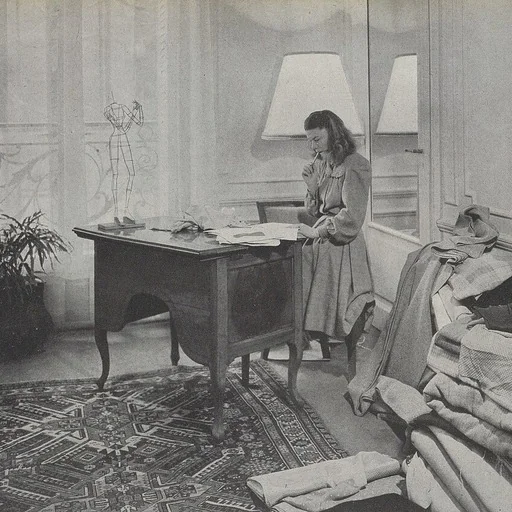
Marie-Louise Carven (31 August 1909 – 8 June 2015), born Carmen de Tommaso, was a French fashion designer who founded the house of Carven in 1945.
Museum
Palais Galliera - Musée de la Mode de la Ville de Paris
Continue through works from the same source collection.
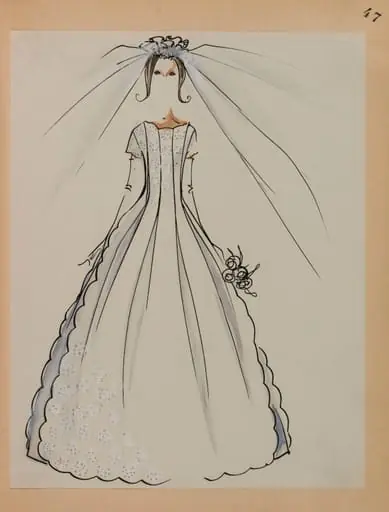 Robe de mariée festonnée et son voile
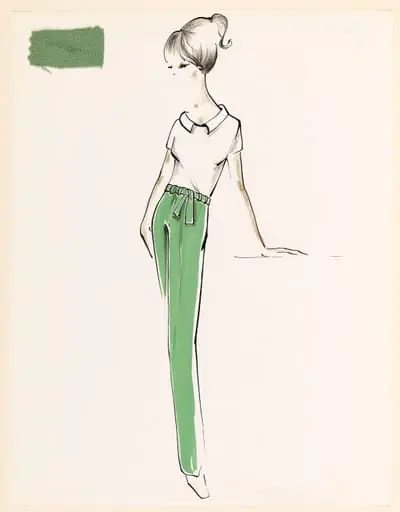 Haut blanc à manches courtes et pantalon vert à ceinture nouée
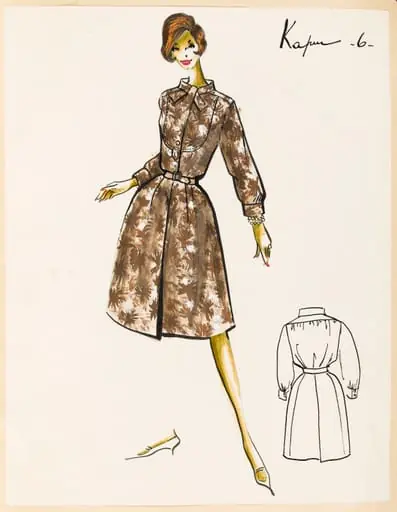 Kapur
Kapur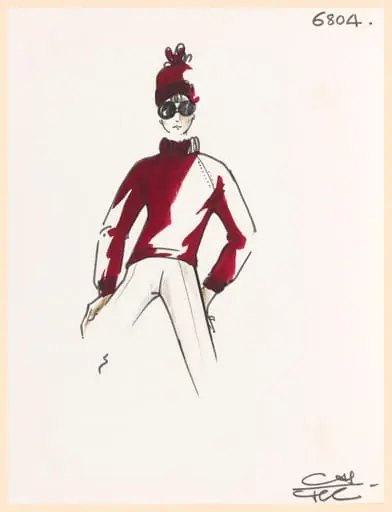 Pull-over à manches longues pourpre, bonnet assorti, pantalon et lunettes de soleil
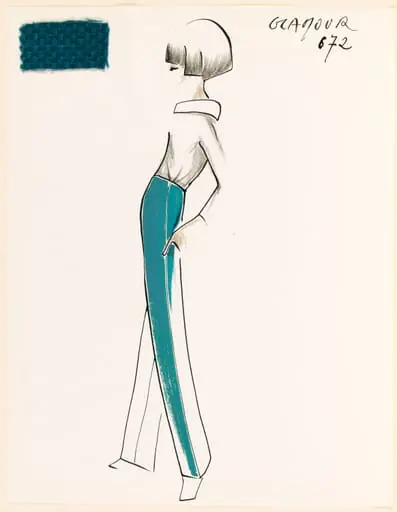 GLAMOUR
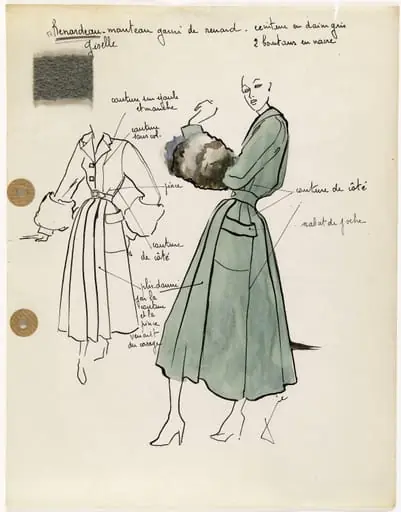 'Renardeau'
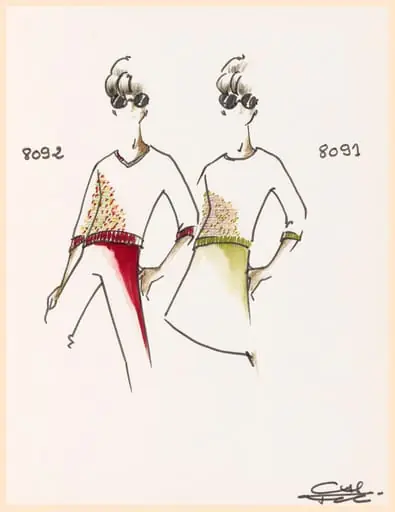 Pull-over à manches trois quarts et à encolure V à motifs multicolores, pantalon cerise et lunettes de soleil
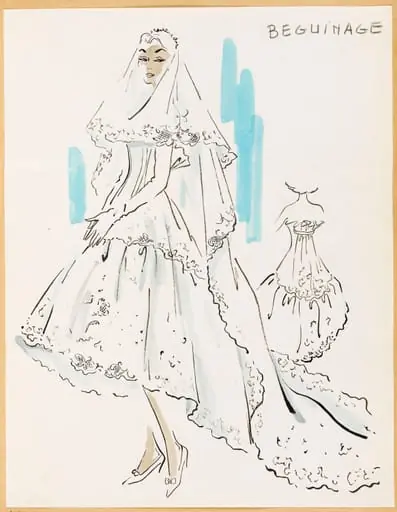 Béguinage