Artwork
Alpaga
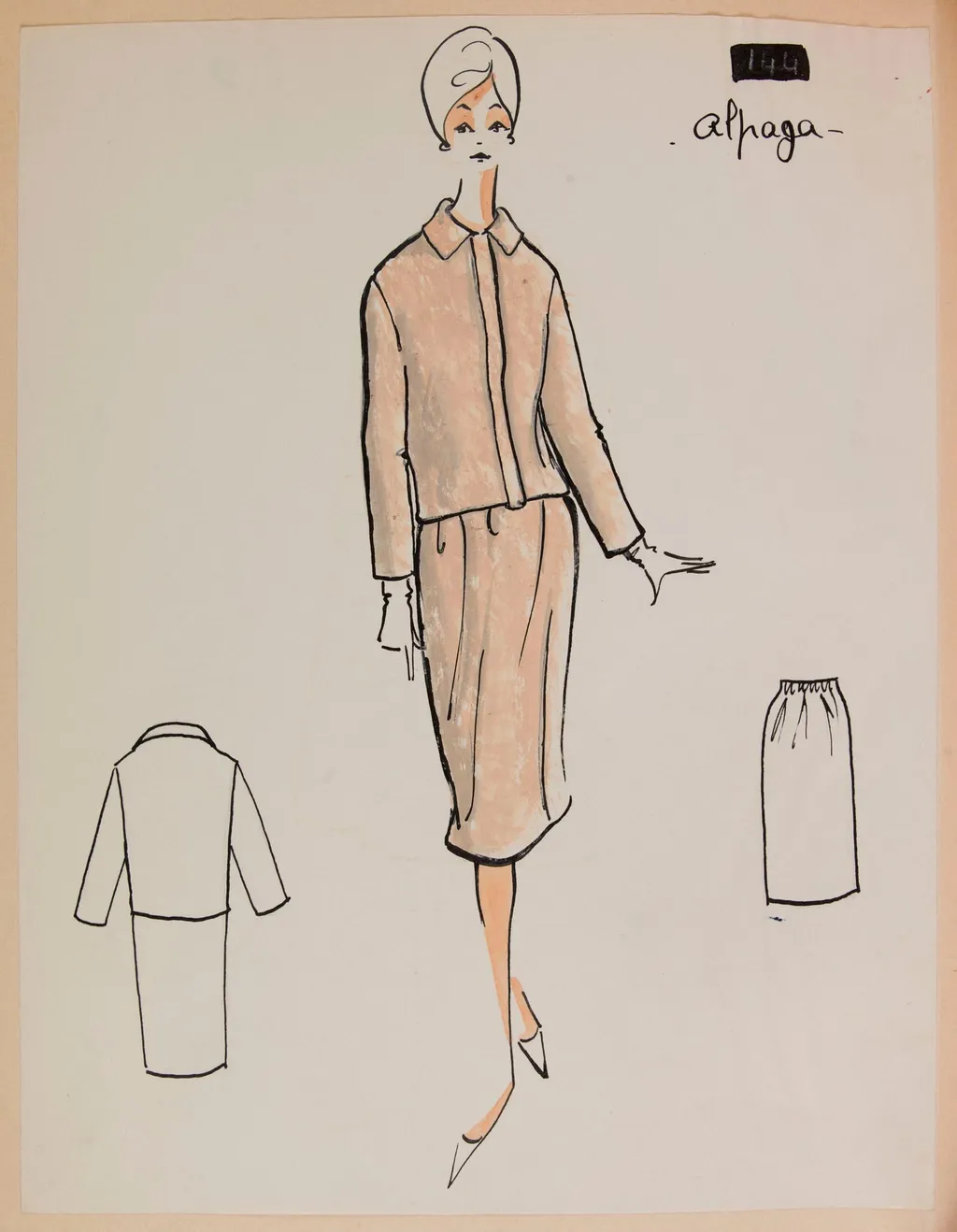
Alpaga is a drawing by Marie-Louise Carven. It dates from 1958 and is held in the collection of the Palais Galliera - Musée de la Mode de la Ville de Paris.
About this work
Overview
The piece is part of the Museum of Ethnography’s collection, reflecting its significance in documenting mid-century French fashion practice.
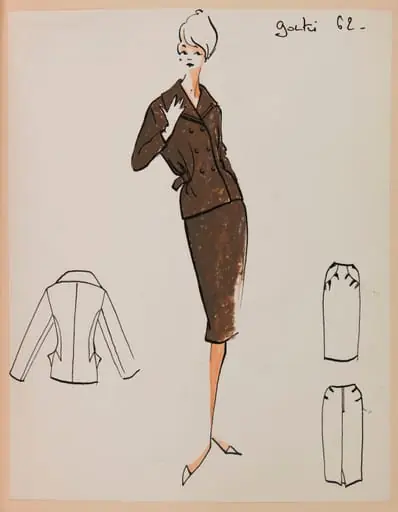
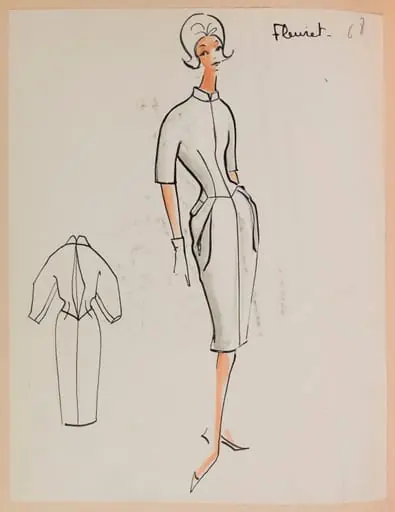
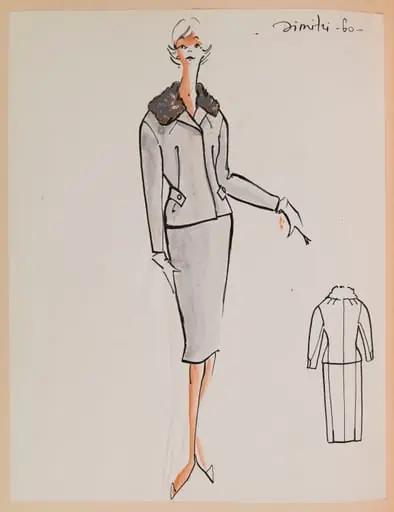
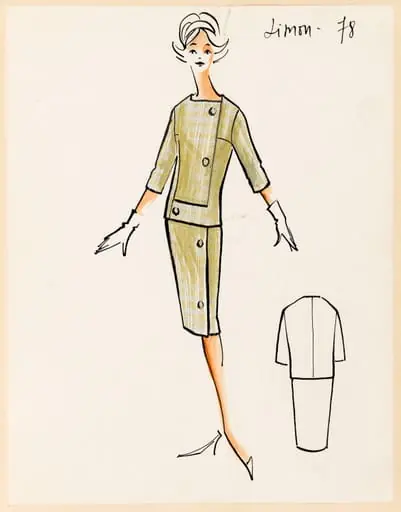
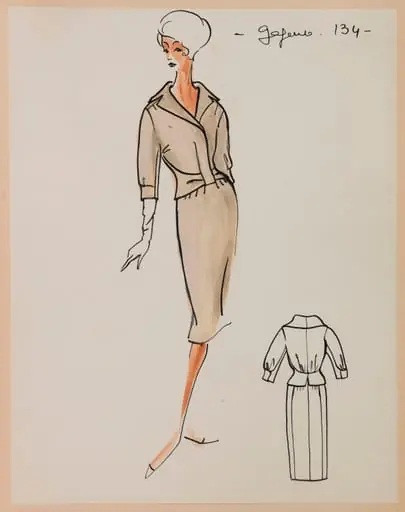
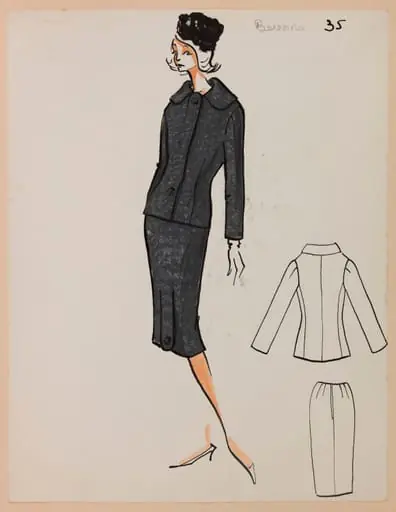
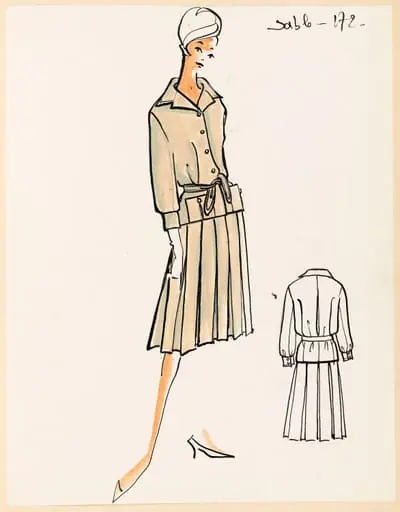
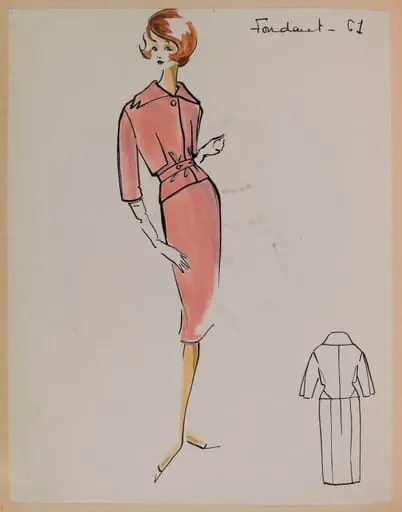
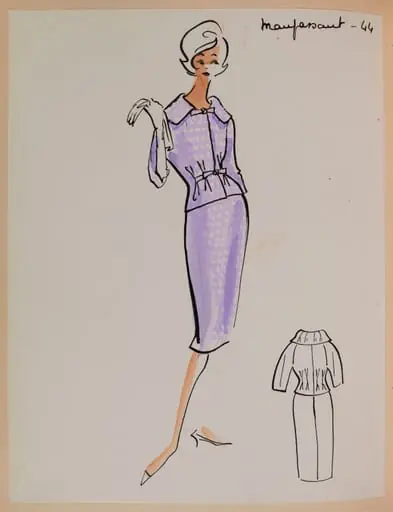
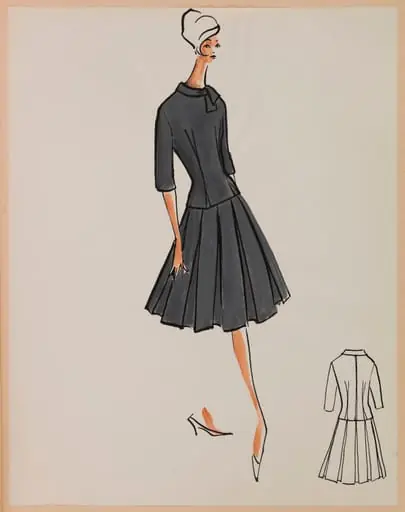
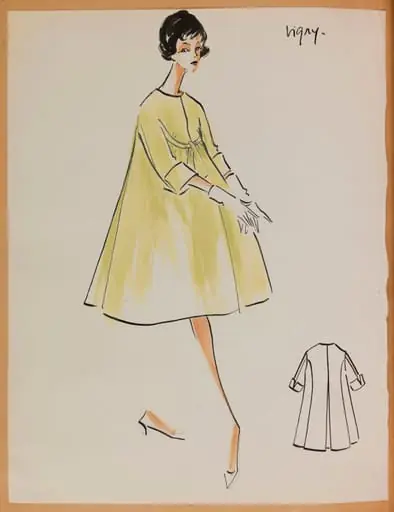
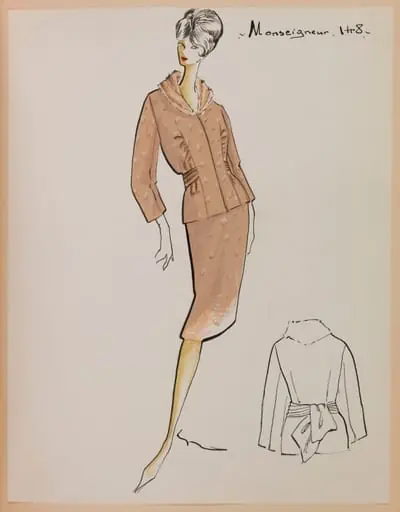
Created around 1958, *Alpaga* is a fashion illustration by Marie-Louise Carven, founder of the Parisian label Carven. The work captures a tailored ensemble in delicate fabrics, emphasizing structure and subtlety. Rendered with clean, restrained lines, it functions as both design documentation and aesthetic statement. The piece is part of the Museum of Ethnography’s collection, reflecting its significance in documenting mid-century French fashion practice.
Subject & Meaning
The illustration depicts a woman in a light-colored jacket and skirt, designed for a petite frame. The focus is entirely on the garment’s cut and texture, not the wearer’s identity. Side panels show the jacket’s back and a detailed view of the skirt’s construction, revealing Carven’s interest in functional elegance. The absence of facial features or context underscores the clothing as the central subject—designed for everyday wear, not spectacle.
Technique & Style
Carven employed minimalist linework and muted tonal contrasts to convey fabric weight and silhouette. The drawing avoids ornamentation, using precision to highlight seams, darts, and fabric drape. The inclusion of technical views—back and close-up—suggests a design studio’s working method. This restrained aesthetic aligns with her broader philosophy: clothing should enhance, not overwhelm, the body.
History & Provenance
Marie-Louise Carven established her fashion house in 1945 and was among the first Parisian designers to launch a prêt-à-porter line, democratizing high fashion. *Alpaga* emerged during a period of postwar innovation in garment production. The illustration’s presence in the Museum of Ethnography indicates its value as a cultural artifact, preserving the material language of mid-century French women’s wear.
Context
In the late 1950s, Parisian fashion was transitioning from haute couture exclusivity to accessible ready-to-wear. Carven’s designs, often in gingham and lace, catered to a modern, active woman. *Alpaga* reflects this shift—its simplicity and attention to fit resonated with a generation seeking practical elegance. The illustration’s format mirrors technical drawings used in ateliers, bridging art and industry.
Legacy
Carven’s integration of functional design with refined aesthetics influenced later generations of designers who prioritized wearability. *Alpaga* stands as a quiet testament to her role in redefining women’s clothing—not through grandeur, but through thoughtful construction. Its preservation in a museum of ethnography affirms its status as a cultural record of everyday style in postwar Europe.
Artist & collection
Artist
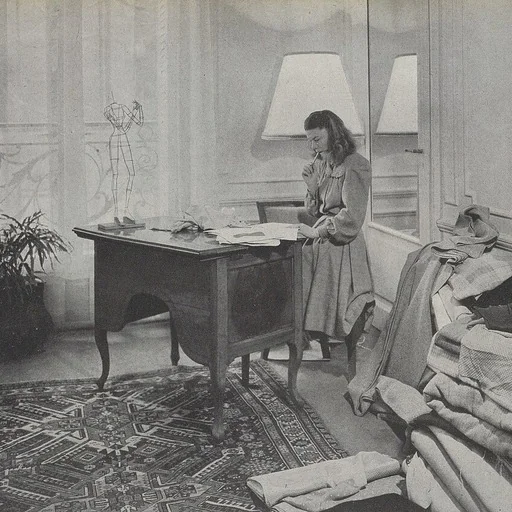
Marie-Louise Carven (31 August 1909 – 8 June 2015), born Carmen de Tommaso, was a French fashion designer who founded the house of Carven in 1945.
Museum
Palais Galliera - Musée de la Mode de la Ville de Paris
Continue through works from the same source collection.
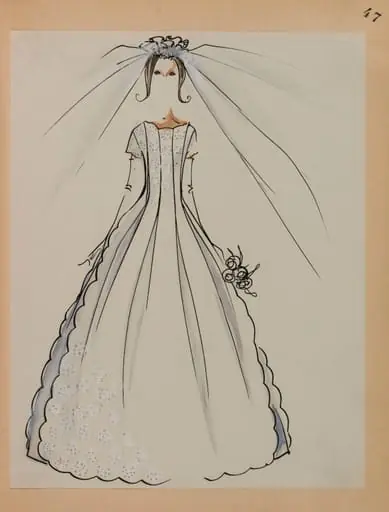 Robe de mariée festonnée et son voile
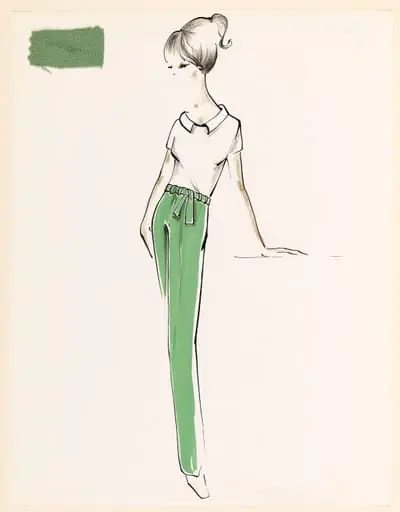 Haut blanc à manches courtes et pantalon vert à ceinture nouée
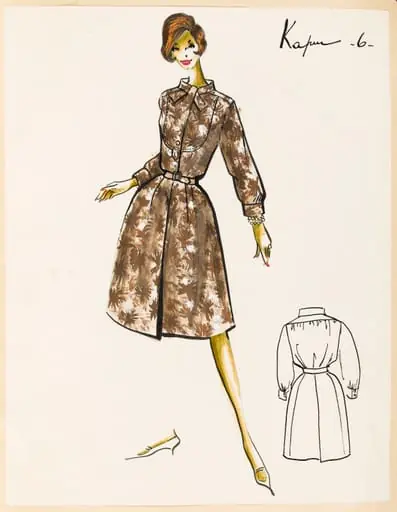 Kapur
Kapur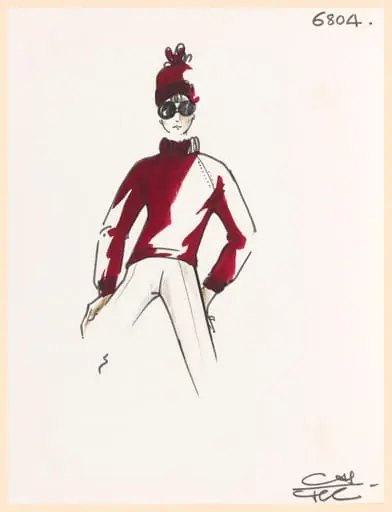 Pull-over à manches longues pourpre, bonnet assorti, pantalon et lunettes de soleil
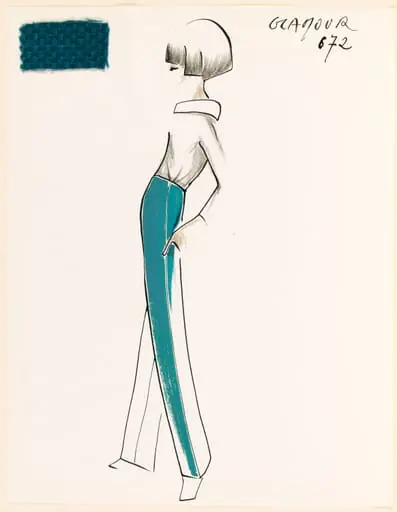 GLAMOUR
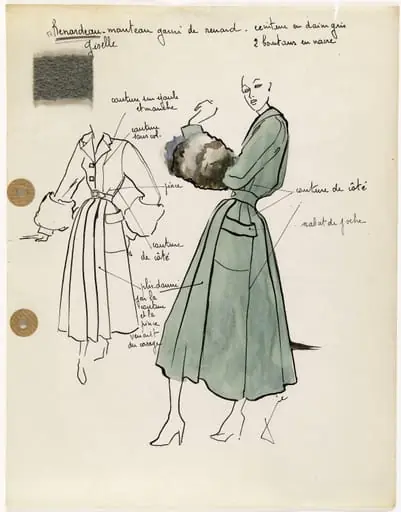 'Renardeau'
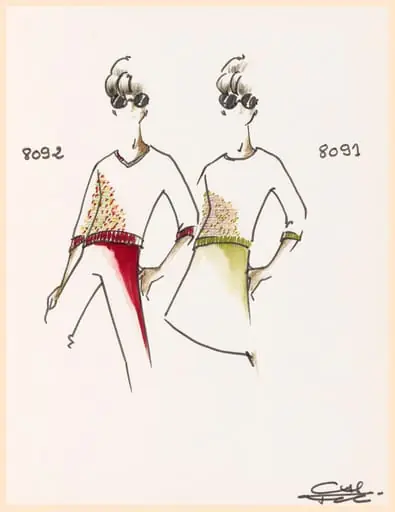 Pull-over à manches trois quarts et à encolure V à motifs multicolores, pantalon cerise et lunettes de soleil
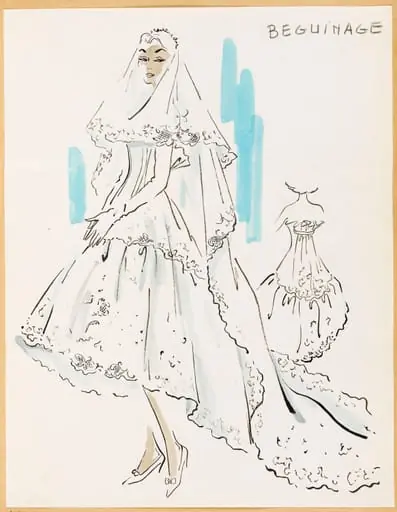 Béguinage