Artwork
Aubade Etole
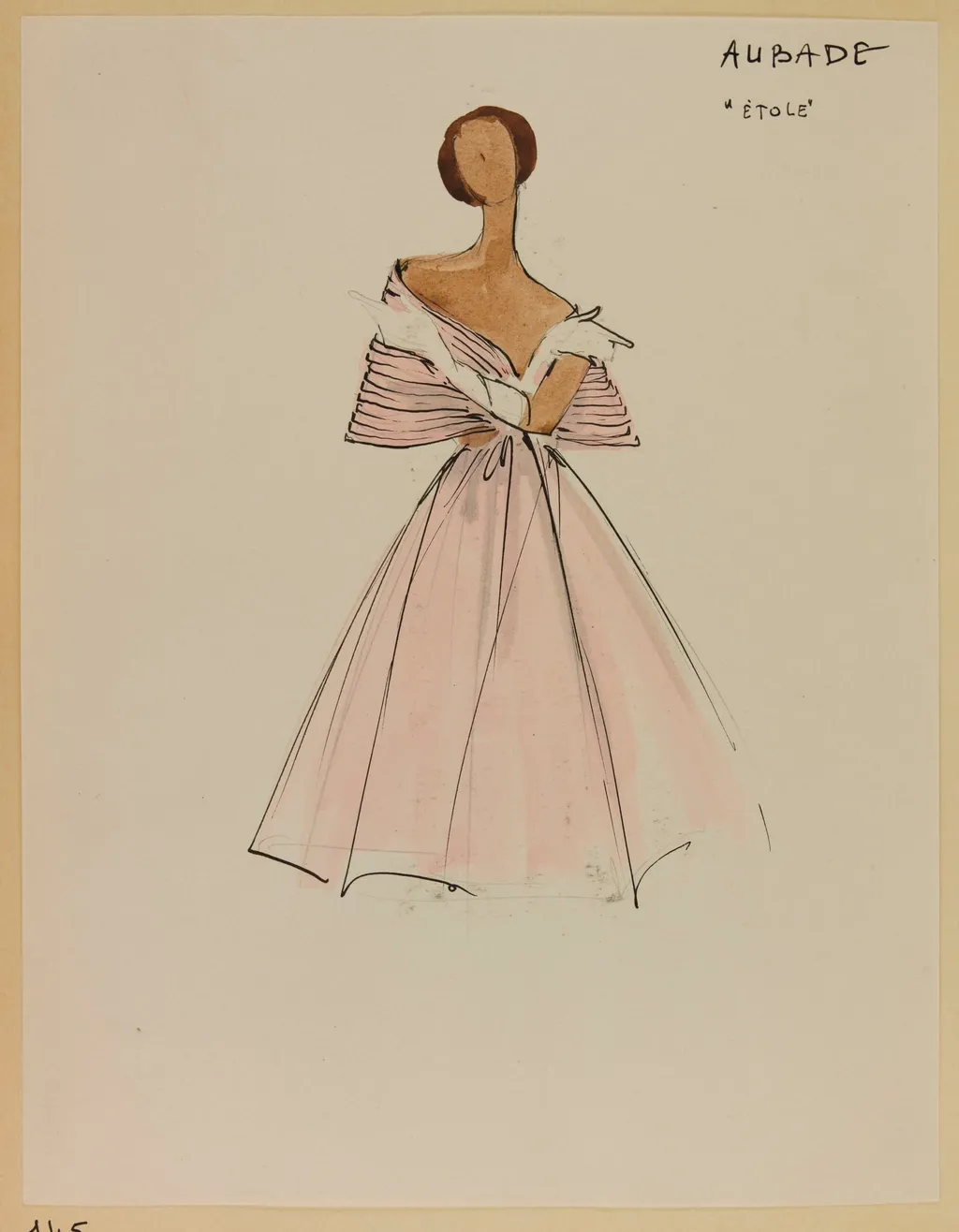
Aubade Etole is a drawing by Marie-Louise Carven. It dates from 1955 and is held in the collection of the Palais Galliera - Musée de la Mode de la Ville de Paris.
About this work
Overview
Aubade Etole is a painted portrait from approximately 1955, depicting a woman in a delicate pink dress with an off-the-shoulder neckline and a full skirt.
Aubade Etole is a painted portrait from approximately 1955, depicting a woman in a delicate pink dress with an off-the-shoulder neckline and a full skirt. A white shawl is loosely draped across her arms, and her face is turned away, concealing her identity. The background is a muted beige, drawing focus to the figure’s refined silhouette. Though often associated with the fashion house Carven, the work is not a garment but a visual interpretation of its aesthetic.
Subject & Meaning
The subject is a woman rendered in a pose of quiet composure, her anonymity emphasizing the garment over the individual. The absence of facial features shifts attention to the dress’s cut and fabric, aligning with mid-century ideals of understated elegance. The shawl suggests both modesty and grace, reinforcing a sense of refined femininity. The title, Aubade Etole, evokes morning light and a lyrical stillness, enhancing the painting’s contemplative tone.
Technique & Style
The painting employs soft, blended brushwork to render the dress’s texture and the shawl’s drape, suggesting lightweight materials like silk or lace. Color is restrained—pale pink against beige—creating harmony and subtlety. The figure’s form is simplified, with clean lines and minimal detail, reflecting a modernist tendency to prioritize form over realism. The composition is balanced and frontal, reinforcing a sense of calm formality.
History & Provenance
The painting is held in the collection of the Museum of Ethnography, though its origin as a standalone artwork—not a fashion sketch—is not widely documented. It is linked thematically to the designs of Marie-Louise Carven, whose 1950s collections emphasized petite silhouettes and pastel palettes. Whether commissioned by the designer or created independently, the work reflects the cultural resonance of her aesthetic during the postwar era.
Context
In the mid-1950s, Parisian fashion was transitioning from haute couture to accessible ready-to-wear. Carven’s designs, known for their light fabrics and youthful lines, appealed to a new generation of women. This painting captures the visual language of that shift—elegance without excess, femininity without ornamentation. It mirrors broader cultural trends favoring simplicity and practicality in postwar Europe.
Legacy
Though not created by Carven herself, Aubade Etole endures as a visual artifact of her design philosophy. It illustrates how fashion aesthetics permeated fine art, blurring boundaries between wearable design and painted representation. The work contributes to scholarly understanding of mid-century French visual culture, where clothing became a symbol of modern identity and restrained beauty.
Artist & collection
Artist
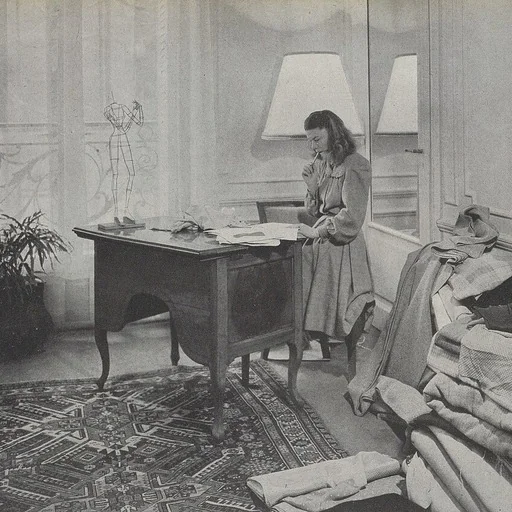
Marie-Louise Carven (31 August 1909 – 8 June 2015), born Carmen de Tommaso, was a French fashion designer who founded the house of Carven in 1945.
Museum
Palais Galliera - Musée de la Mode de la Ville de Paris
Continue through works from the same source collection.
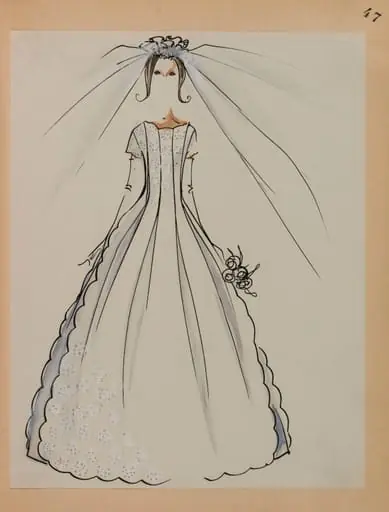 Robe de mariée festonnée et son voile
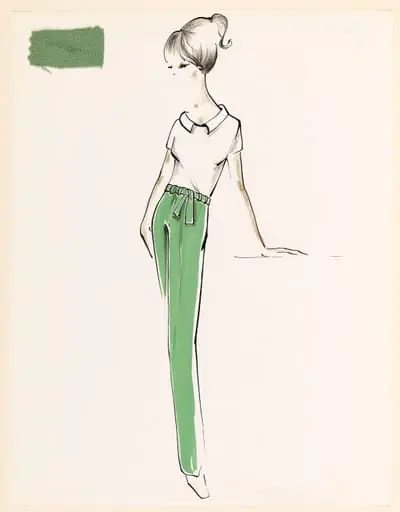 Haut blanc à manches courtes et pantalon vert à ceinture nouée
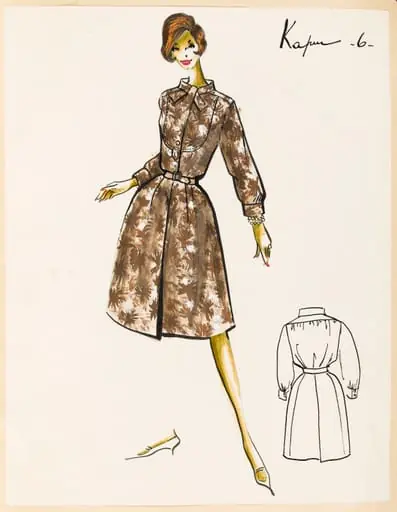 Kapur
Kapur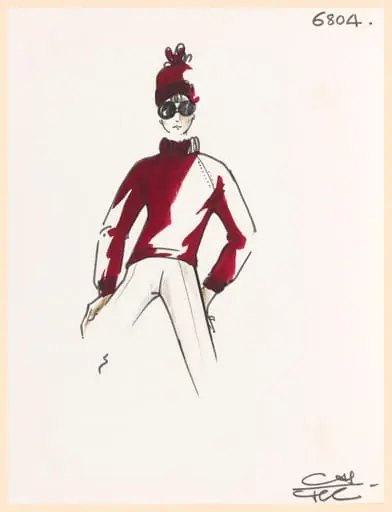 Pull-over à manches longues pourpre, bonnet assorti, pantalon et lunettes de soleil
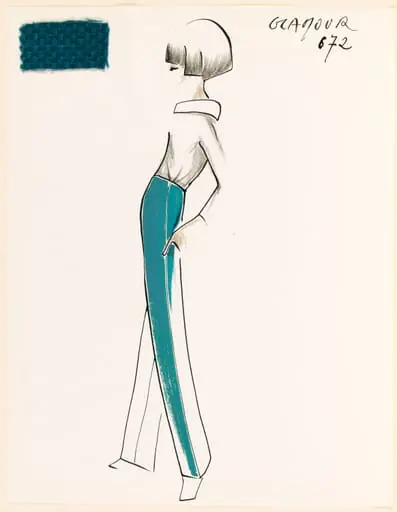 GLAMOUR
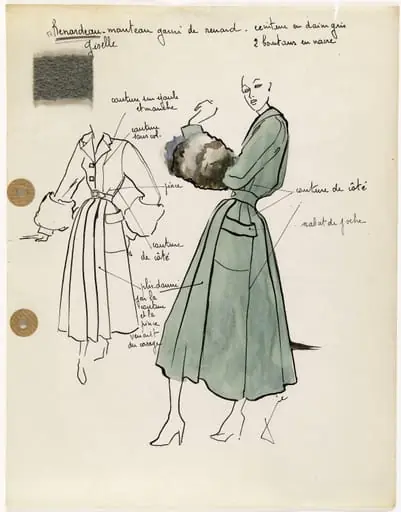 'Renardeau'
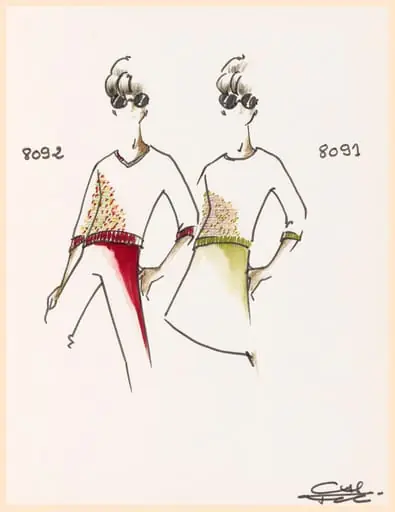 Pull-over à manches trois quarts et à encolure V à motifs multicolores, pantalon cerise et lunettes de soleil
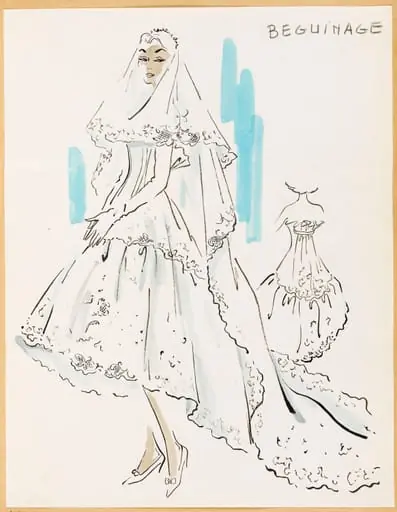 Béguinage