Artwork
Damas
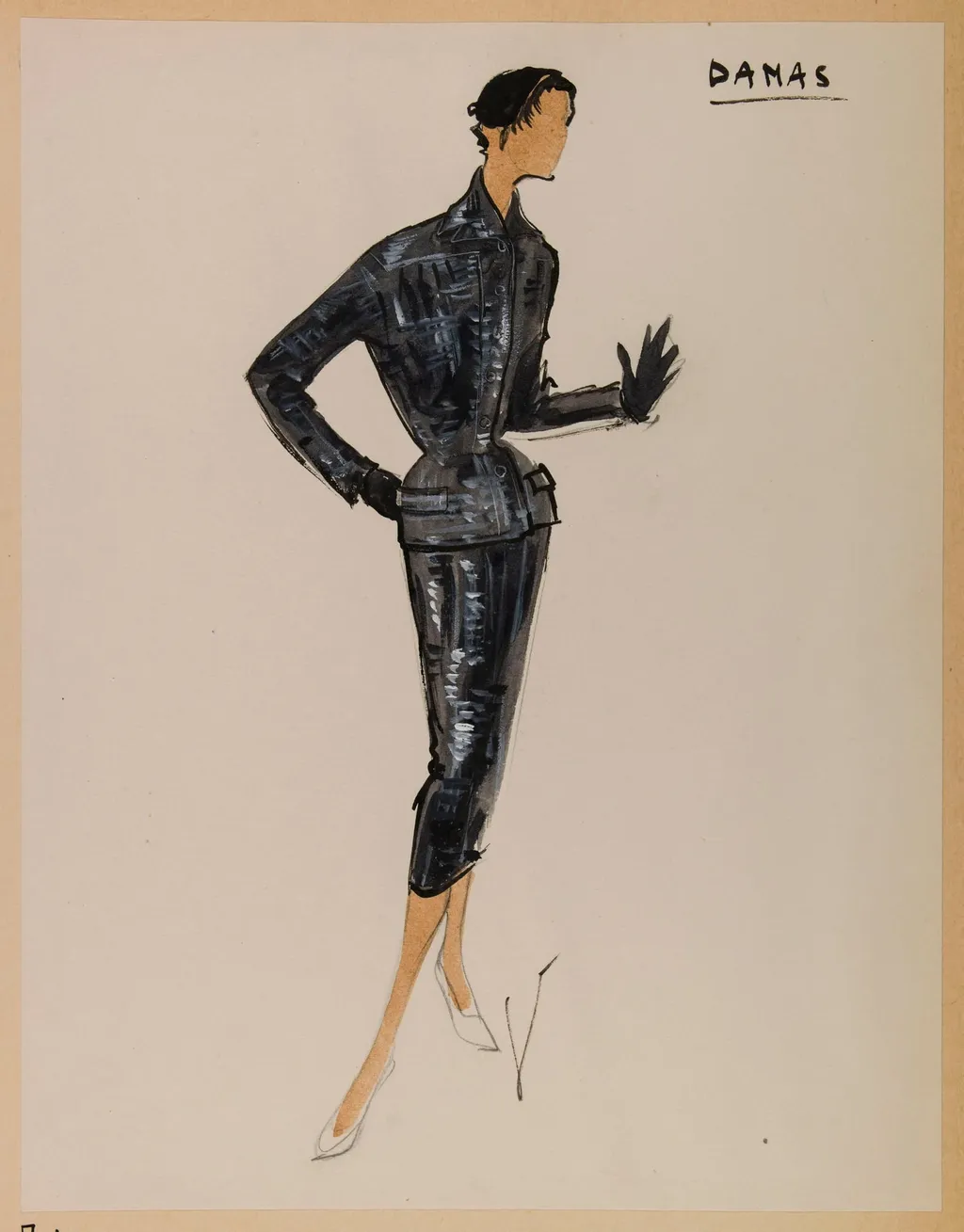
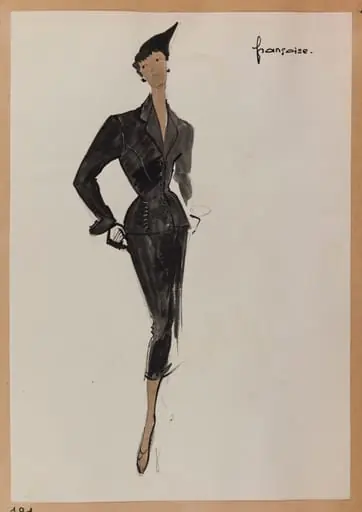
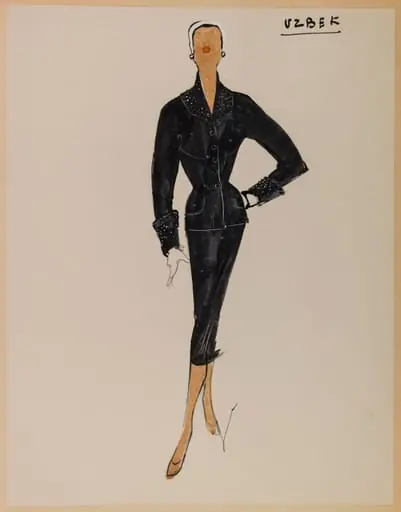
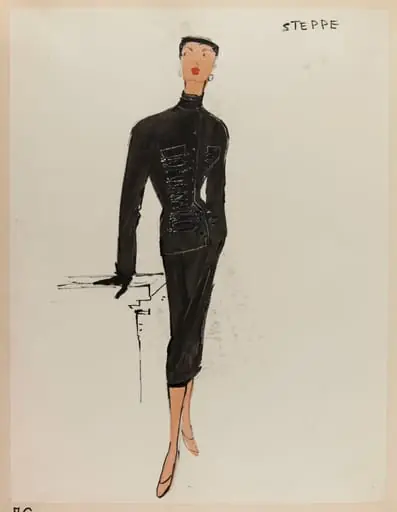
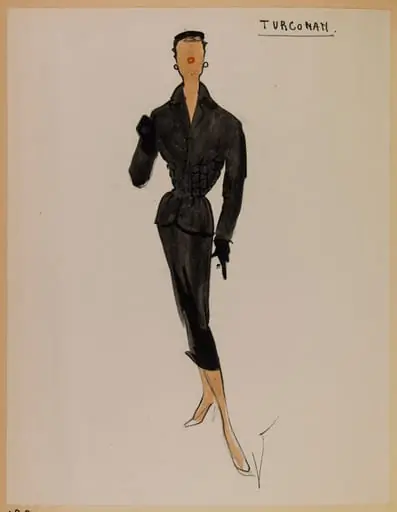
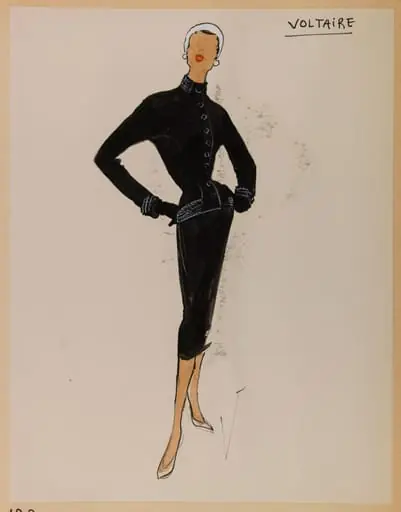
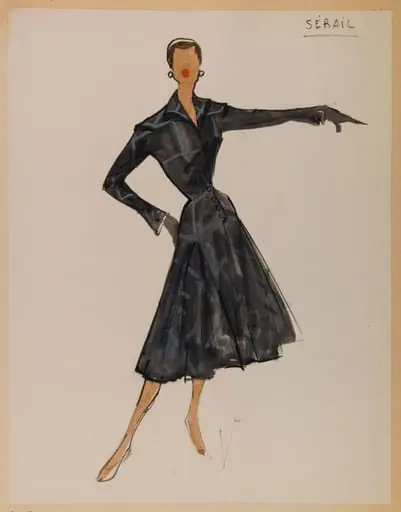
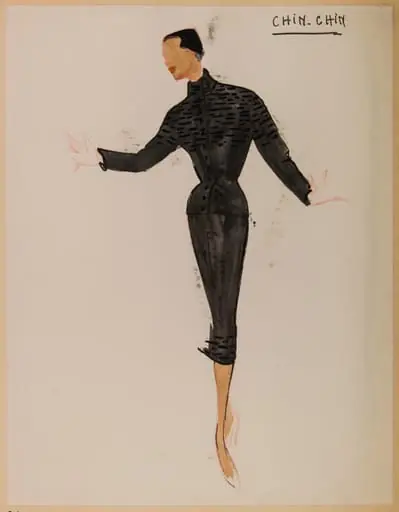
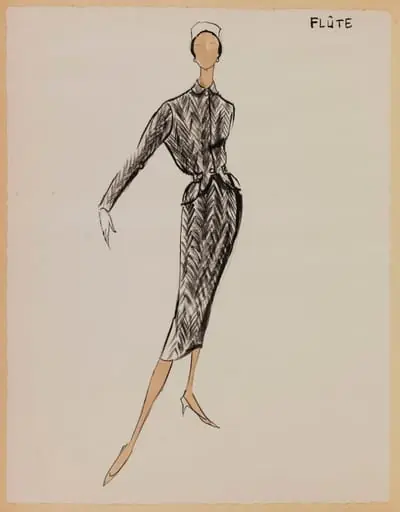
Damas is a drawing by Marie-Louise Carven. It dates from 1953 and is held in the collection of the Palais Galliera - Musée de la Mode de la Ville de Paris.
About this work
Overview
The piece is held in the collection of the Museum of Ethnography and reflects her interest in modern femininity through dress and posture.
Damas is a painted portrait from approximately 1953, attributed to Marie-Louise Carven, a French fashion designer. Though primarily known for her clothing design, Carven produced this work as a visual extension of her aesthetic. The piece is held in the collection of the Museum of Ethnography and reflects her interest in modern femininity through dress and posture. It is not a garment but a representation of one, rendered in paint.
Subject & Meaning
The subject is a woman dressed in a tailored black suit with matching pants and jacket, accessorized with white heels and black gloves. Her short bob and composed stance—left hand raised, right resting on the hip—suggest quiet authority. The image does not depict a specific individual but embodies an ideal of contemporary female independence, aligning with postwar shifts in women’s social roles and attire.
Technique & Style
Rendered in a restrained, realistic manner, the painting uses flat planes of color and minimal shading to emphasize form over texture. The light beige background isolates the figure, focusing attention on the precision of the suit’s cut and the clarity of its lines. Brushwork is controlled, avoiding dramatic expressionism; the style mirrors the clean lines of mid-century fashion design.
History & Provenance
Created around 1953, Damas emerged during Carven’s active years as a couturier and early pioneer of ready-to-wear fashion. The painting entered the Museum of Ethnography’s collection as part of a broader effort to document fashion as cultural artifact. Its presence there signals an institutional recognition of clothing as a medium of social expression, beyond its commercial function.
Context
In the early 1950s, Parisian fashion was redefining femininity after wartime austerity. Carven’s designs catered to smaller frames and emphasized practical elegance. Damas reflects this ethos, portraying a woman whose attire combines structure with ease. The painting aligns with broader cultural movements that celebrated women’s increasing visibility in public and professional spheres through dress.
Legacy
Damas stands as a rare visual artifact linking Carven’s design philosophy to fine art. While not widely exhibited, its inclusion in an ethnographic museum underscores how fashion was being reclassified as cultural history. The portrait remains a quiet testament to the era’s evolving ideals of female autonomy, expressed not through words but through the silent authority of a suit and a stance.
Artist & collection
Artist
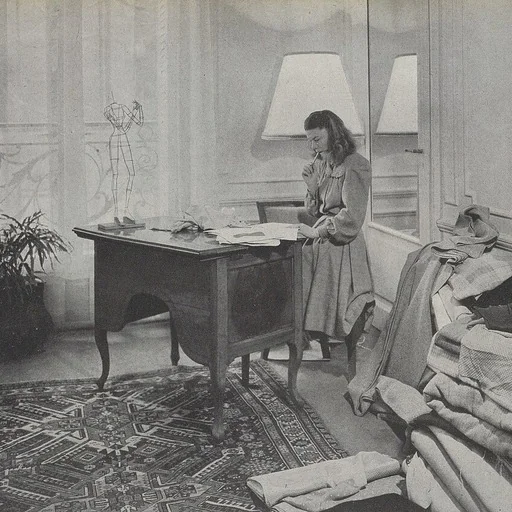
Marie-Louise Carven (31 August 1909 – 8 June 2015), born Carmen de Tommaso, was a French fashion designer who founded the house of Carven in 1945.

Museum
Palais Galliera - Musée de la Mode de la Ville de Paris
Continue through works from the same source collection.
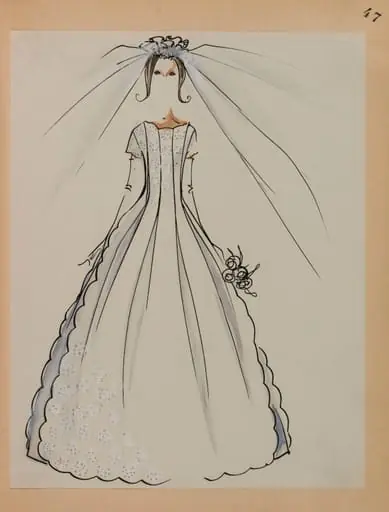 Robe de mariée festonnée et son voile
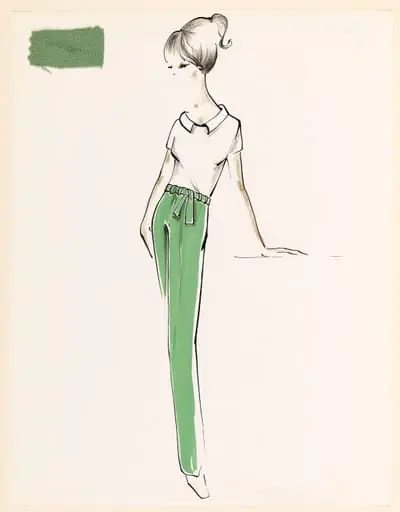 Haut blanc à manches courtes et pantalon vert à ceinture nouée
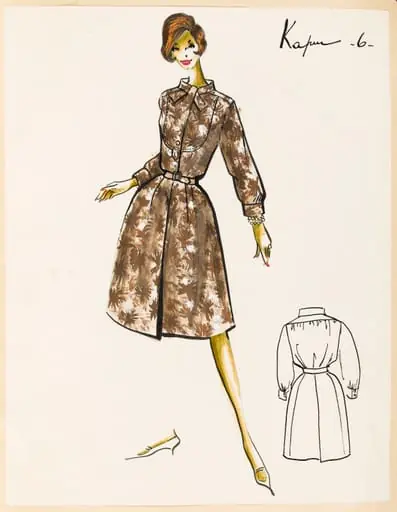 Kapur
Kapur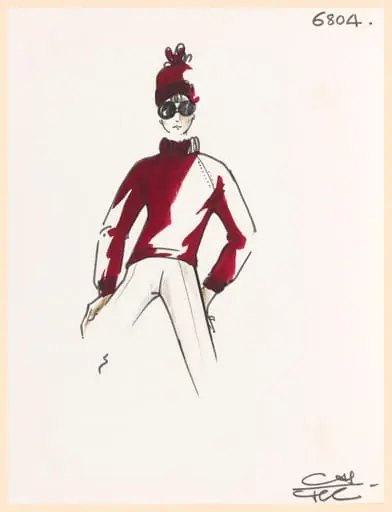 Pull-over à manches longues pourpre, bonnet assorti, pantalon et lunettes de soleil
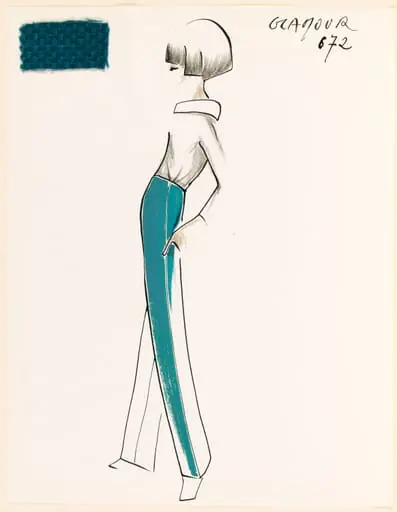 GLAMOUR
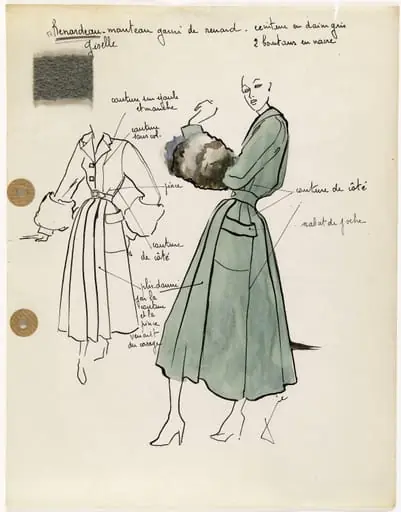 'Renardeau'
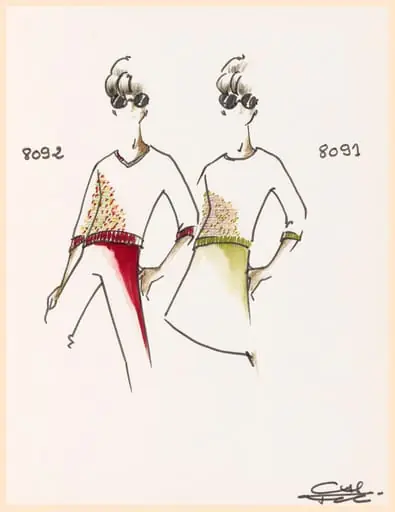 Pull-over à manches trois quarts et à encolure V à motifs multicolores, pantalon cerise et lunettes de soleil
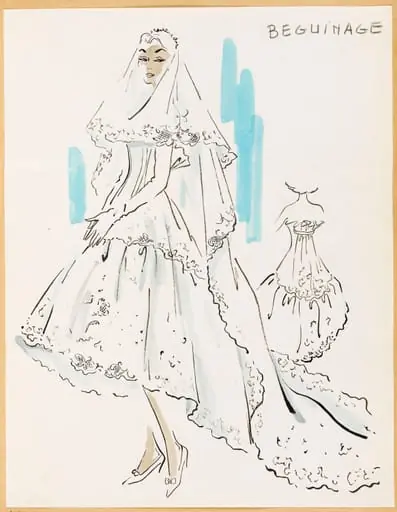 Béguinage