Artwork
Chatelaine
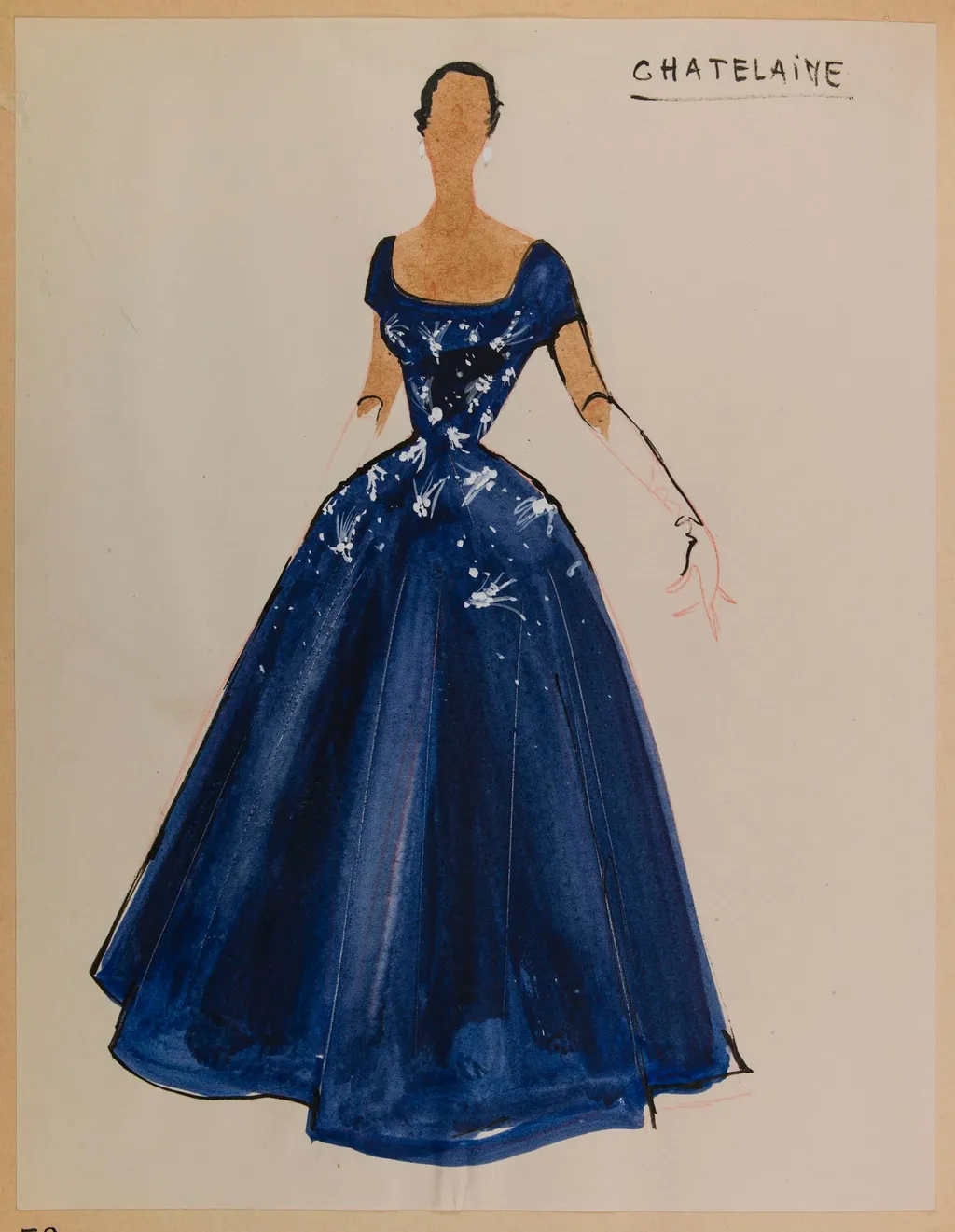
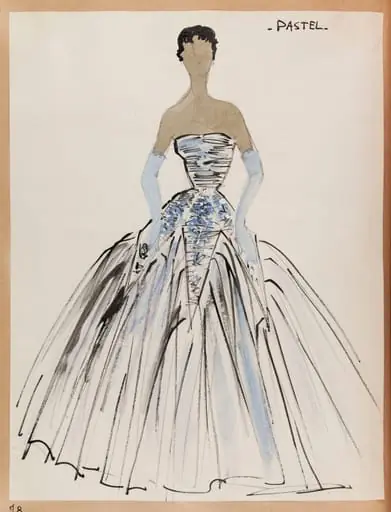
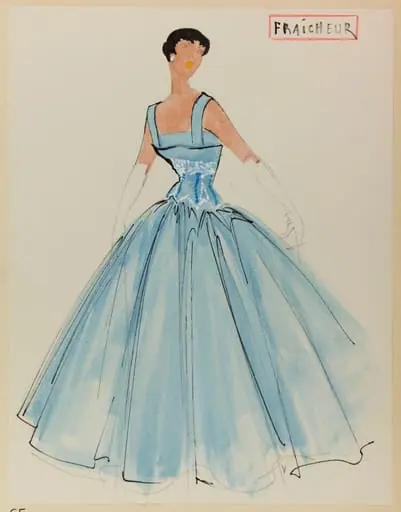
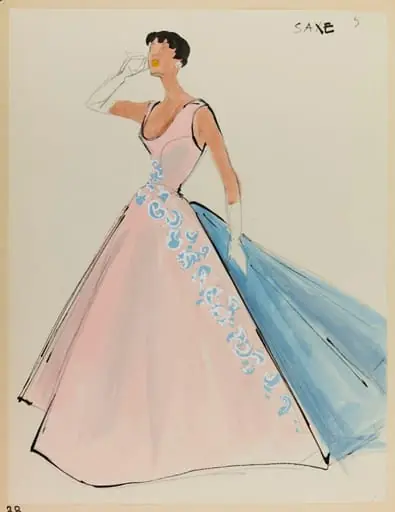
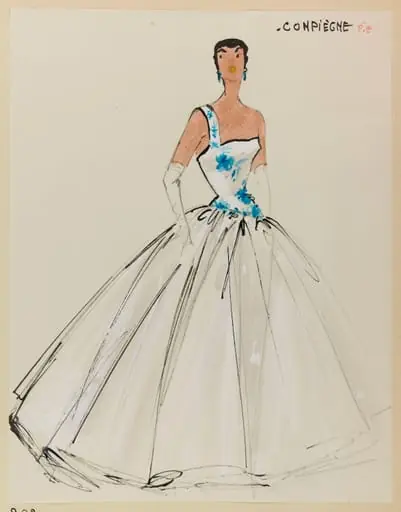
Chatelaine is a drawing by Marie-Louise Carven. It dates from 1953 and is held in the collection of the Palais Galliera - Musée de la Mode de la Ville de Paris.
About this work
Overview
The work is held in the Museum of Ethnography and reflects Carven’s broader design philosophy—elegant, accessible, and attuned to the female form.
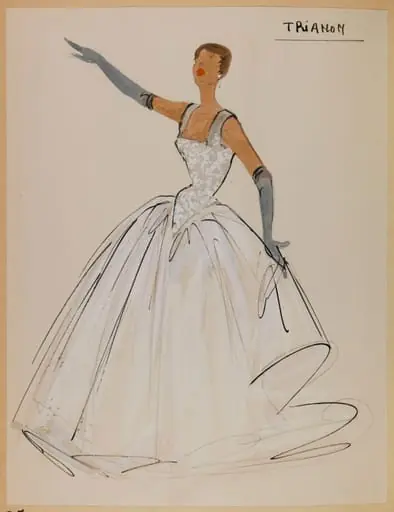
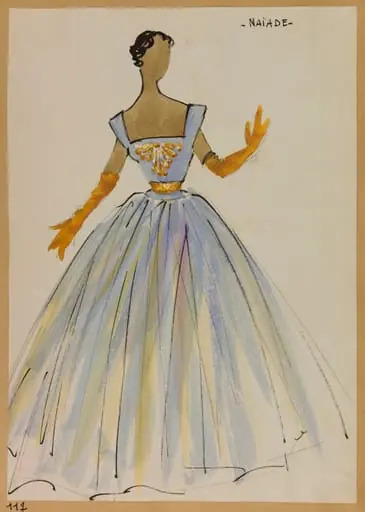
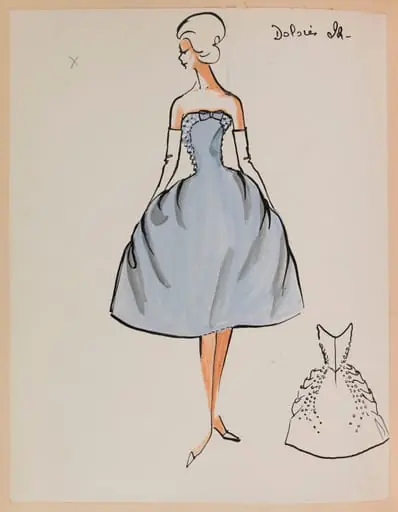
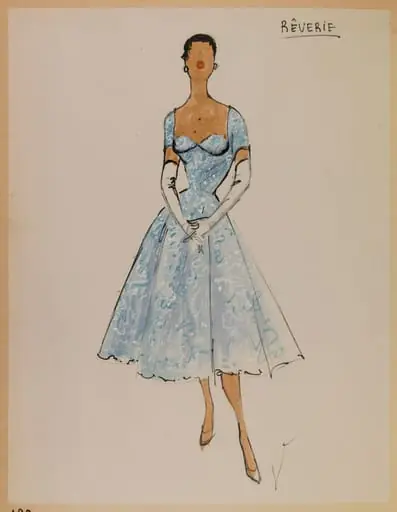
Chatelaine is a pencil drawing from around 1953, attributed to French designer Marie-Louise Carven. It depicts a stylized female figure in a full-skirted dress, rendered with restrained linework and a muted palette. The work is held in the Museum of Ethnography and reflects Carven’s broader design philosophy—elegant, accessible, and attuned to the female form. Though not a garment itself, it functions as a design study, capturing the essence of her aesthetic in two dimensions.
Subject & Meaning
The figure in Chatelaine wears a long, dark blue dress with white floral embroidery, a square neckline, and short sleeves. Her face is omitted, and her posture is still, emphasizing the garment over the individual. This abstraction shifts focus to the dress as an object of design, aligning with Carven’s interest in clothing as a refined, wearable art. The absence of identity suggests universality—intended for the everyday woman, not a model or muse.
Technique & Style
Carven employed fine cross-hatching and stippling to suggest texture in the fabric and floral motifs, avoiding heavy shading. The lines are deliberate and sparse, conveying form through economy rather than detail. A limited palette of blue and white, with pencil tonal variations, reinforces clarity and grace. The technique mirrors the lightness of the fabrics she favored in her collections, translating textile delicacy into graphic form.
History & Provenance
Created circa 1953, Chatelaine emerged during the early years of Carven’s prêt-à-porter initiative, a pioneering move in French fashion. The drawing likely served as a design reference or presentation piece for her atelier. It entered the Museum of Ethnography’s collection as part of a broader effort to document fashion as cultural artifact, reflecting mid-century shifts in how clothing was valued beyond mere utility.
Context
In postwar France, fashion was redefining itself around accessibility and modernity. Carven’s focus on petite proportions and lightweight materials countered the heavier silhouettes of the era. Chatelaine aligns with this ethos—its simplicity and scale suggest clothing designed for movement and daily life. The drawing’s presence in an ethnographic museum underscores how fashion was increasingly seen as a reflection of social change.
Legacy
Chatelaine stands as a quiet testament to Carven’s influence on democratizing fashion. Her integration of couture sensibility into ready-to-wear paved the way for future designers. Though not widely exhibited, this drawing preserves the precision and restraint that defined her approach. It remains a tangible link between the hand-drawn sketch and the mass-produced garment, bridging art and industry in mid-century design.
Artist & collection
Artist
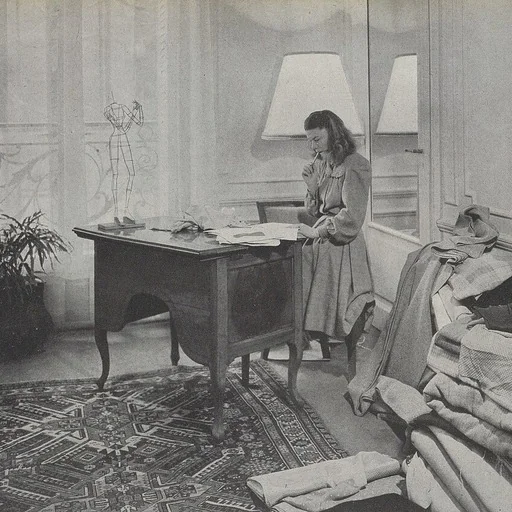
Marie-Louise Carven (31 August 1909 – 8 June 2015), born Carmen de Tommaso, was a French fashion designer who founded the house of Carven in 1945.
Museum
Palais Galliera - Musée de la Mode de la Ville de Paris
Continue through works from the same source collection.
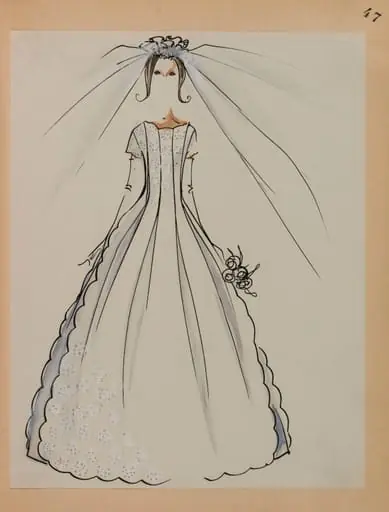 Robe de mariée festonnée et son voile
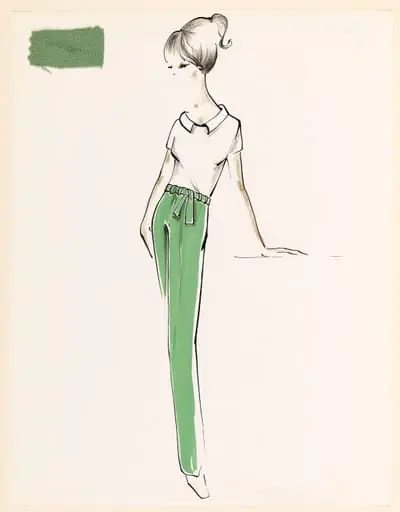 Haut blanc à manches courtes et pantalon vert à ceinture nouée
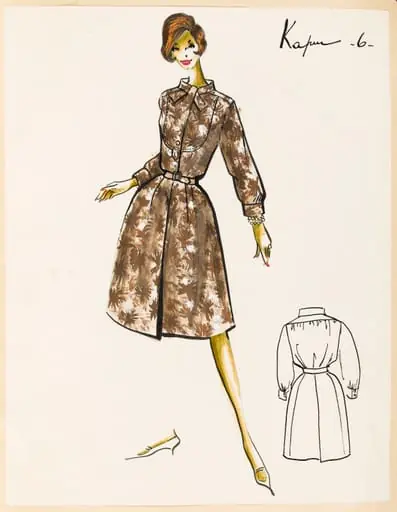 Kapur
Kapur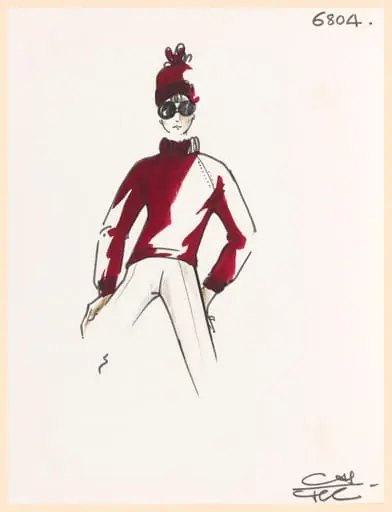 Pull-over à manches longues pourpre, bonnet assorti, pantalon et lunettes de soleil
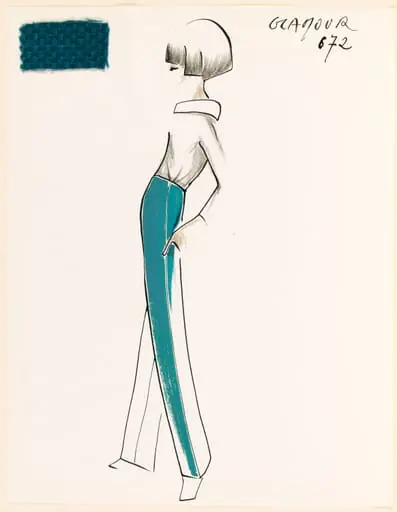 GLAMOUR
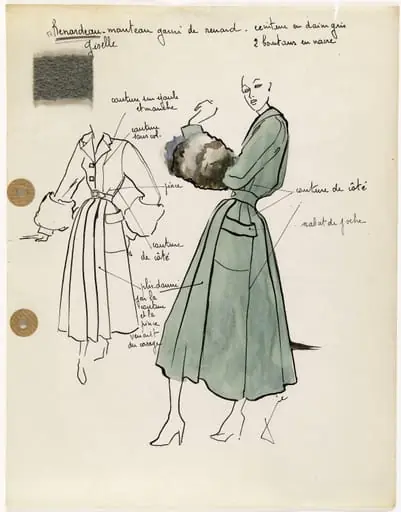 'Renardeau'
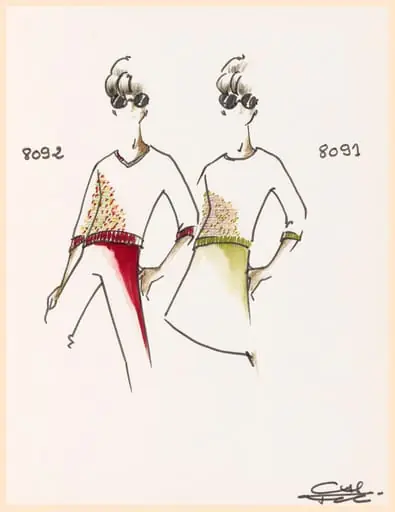 Pull-over à manches trois quarts et à encolure V à motifs multicolores, pantalon cerise et lunettes de soleil
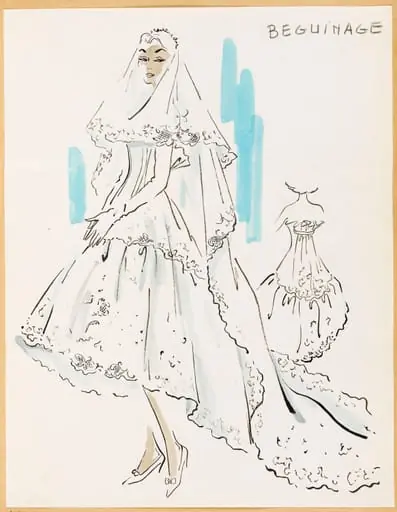 Béguinage