Artwork
'Choucha'
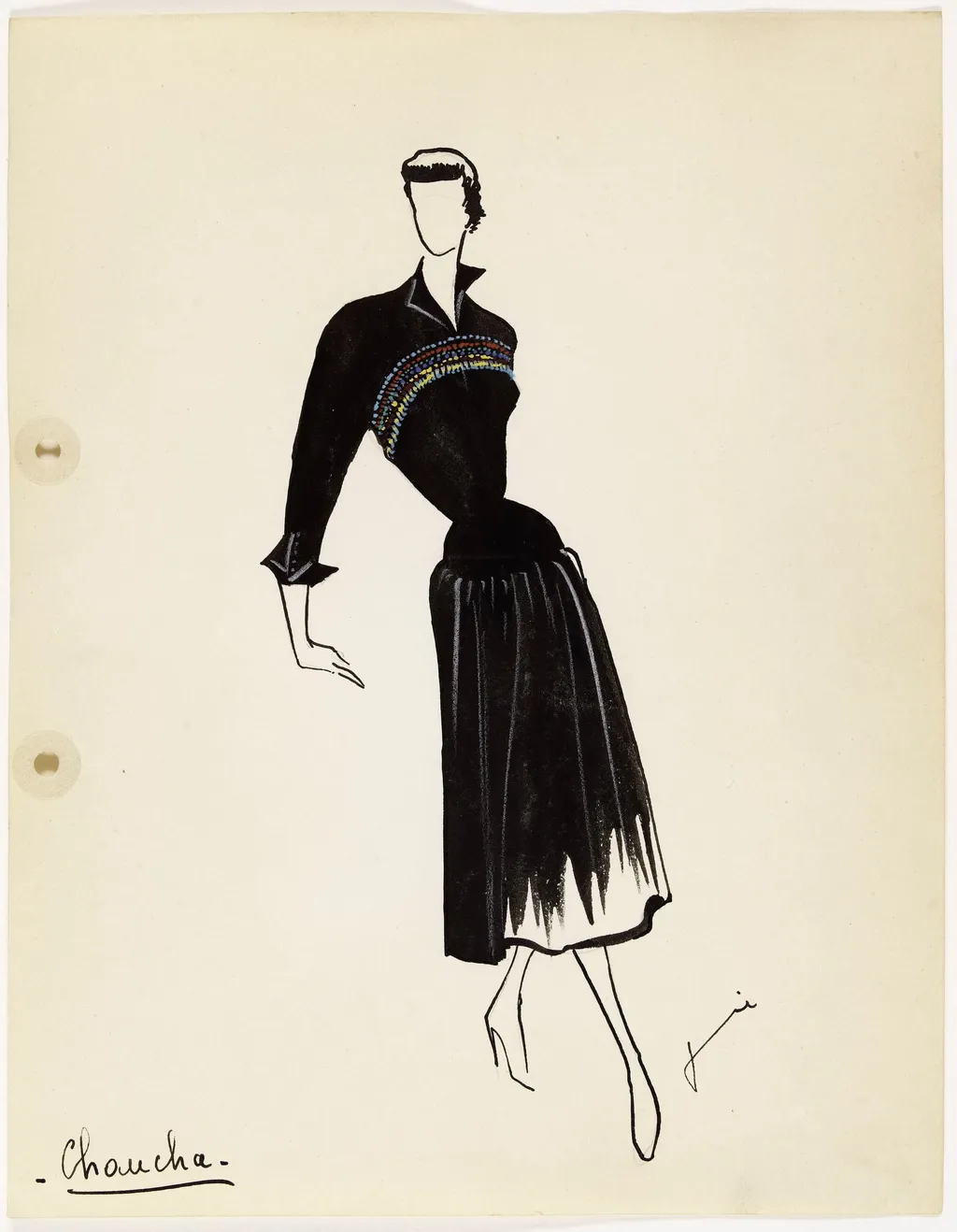
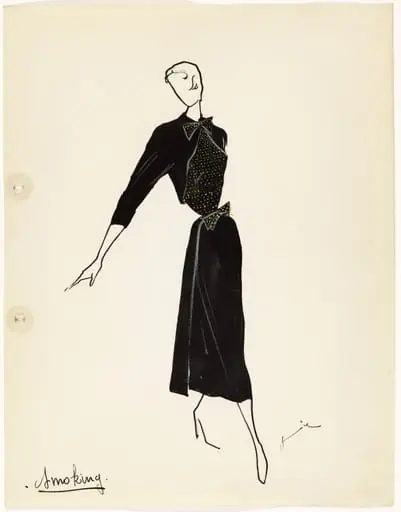
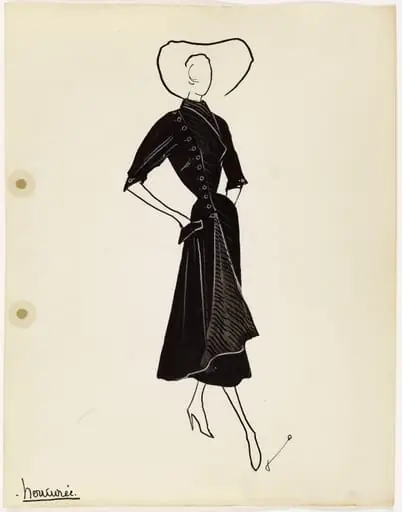
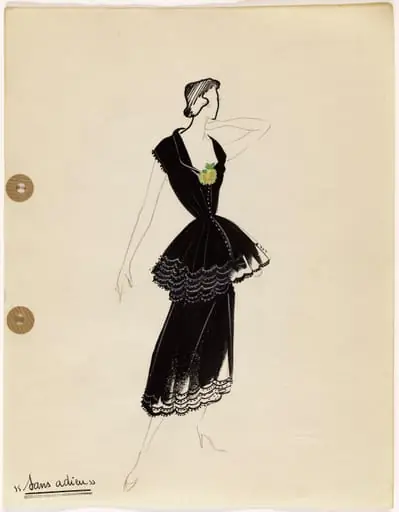
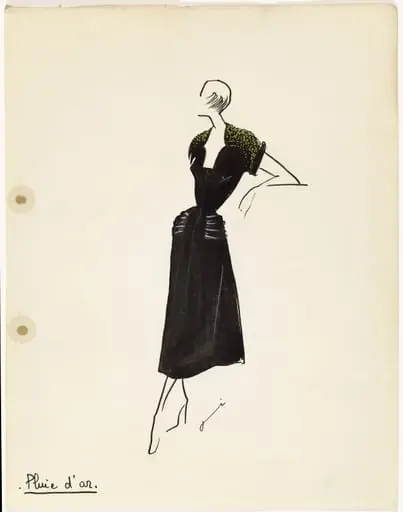
'Choucha' is a drawing by Marie-Louise Carven. It dates from 1949 and is held in the collection of the Palais Galliera - Musée de la Mode de la Ville de Paris.
About this work
Overview
The piece is part of the Museum of Ethnography’s collection, reflecting Carven’s interest in translating fashion design into visual art.
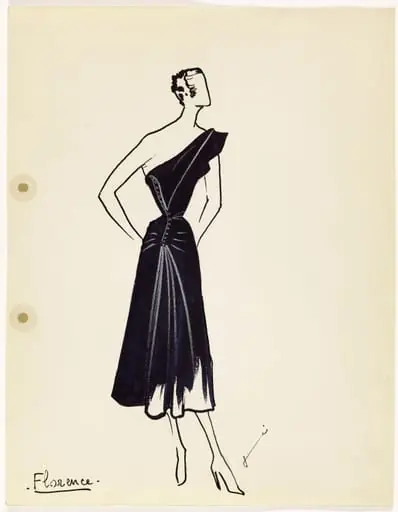
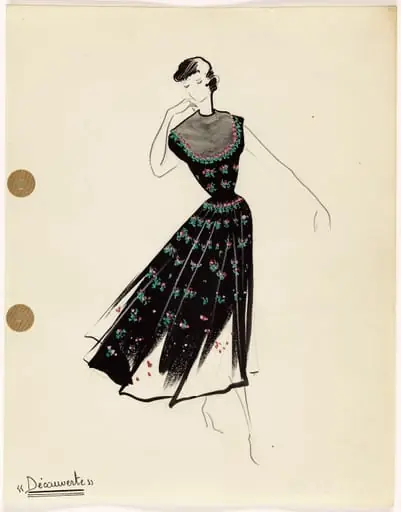
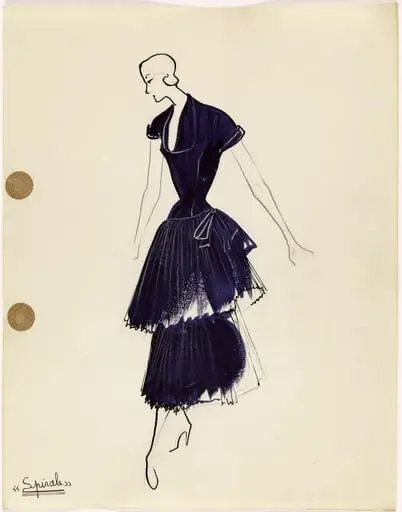
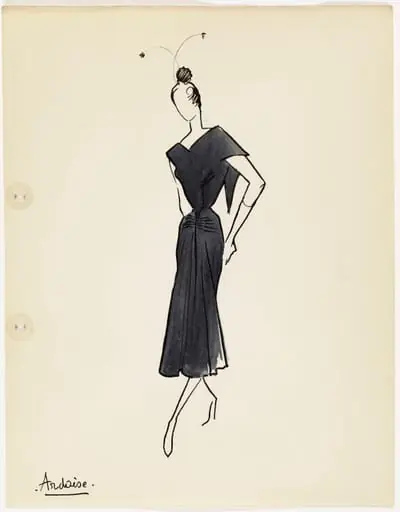
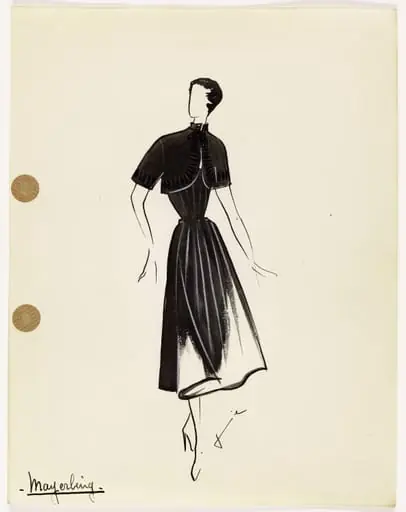
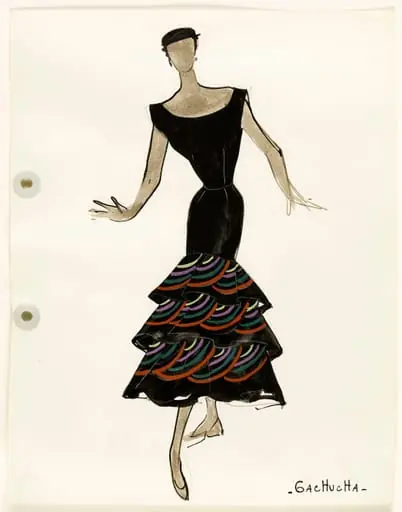
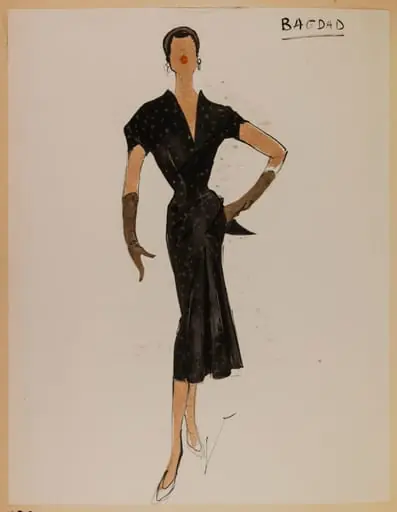
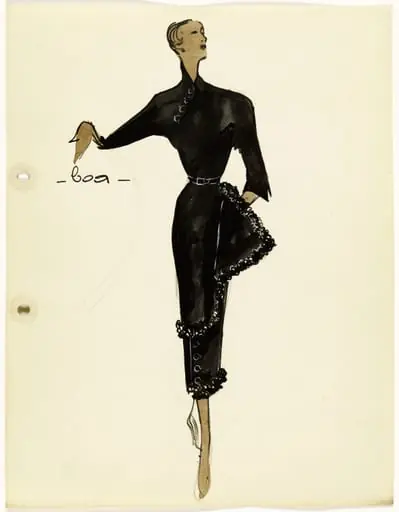
Choucha is a pencil drawing created around 1949 by French fashion designer Marie-Louise Carven. It depicts a woman in a minimalist black ensemble, rendered with confident linework and subtle shading to suggest fabric movement. The piece is part of the Museum of Ethnography’s collection, reflecting Carven’s interest in translating fashion design into visual art. Her signature, 'Choucha,' appears in the lower left corner, possibly referencing a personal or cultural reference.
Subject & Meaning
The figure in Choucha is rendered with quiet dignity, standing still in a simple outfit that balances modesty and subtle elegance. The slit in the skirt and the colored stripe at the collar introduce restrained variation, suggesting movement and individuality within a restrained palette. The figure’s composed posture and pulled-back hair convey a sense of calm self-possession, possibly reflecting Carven’s vision of modern femininity rooted in practicality and grace.
Technique & Style
Carven employed bold, fluid black lines to define the figure and garment contours, with light hatching to indicate fabric folds and volume. The drawing avoids excessive detail, favoring clarity and rhythm. The contrast between the monochrome outfit and the single colored stripe at the neckline adds visual emphasis without distraction. The style is economical yet expressive, aligning with Carven’s design philosophy of refined simplicity.
History & Provenance
Created shortly after Carven founded her fashion house in 1945, Choucha emerged during a period when she was pioneering ready-to-wear fashion in France. The drawing likely served as a design study or personal sketch, later acquired by the Museum of Ethnography. Its presence in an ethnographic context suggests an interest in documenting everyday dress as cultural expression, rather than high fashion alone.
Context
In postwar France, fashion was redefining identity through accessibility and function. Carven’s work stood apart by focusing on petite figures and lightweight materials, making elegance attainable beyond elite circles. Choucha reflects this ethos—its unadorned form and practical details mirror the shift toward wearable, everyday design. The drawing bridges fashion illustration and anthropological record, capturing a moment when clothing became a marker of modern life.
Legacy
Choucha endures as a quiet testament to Carven’s influence on democratizing fashion. Though not a garment itself, the drawing encapsulates her design principles: restraint, proportion, and attention to the body’s natural form. Its inclusion in an ethnographic museum underscores how her work transcended commercial fashion to contribute to broader cultural narratives about dress and identity in mid-century Europe.
Artist & collection
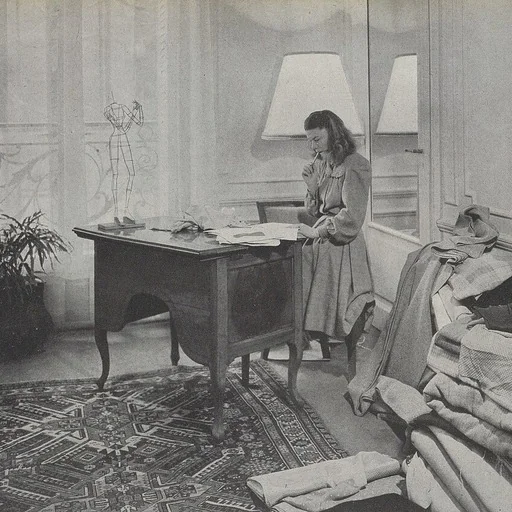
Artist
Marie-Louise Carven (31 August 1909 – 8 June 2015), born Carmen de Tommaso, was a French fashion designer who founded the house of Carven in 1945.
Museum
Palais Galliera - Musée de la Mode de la Ville de Paris
Continue through works from the same source collection.
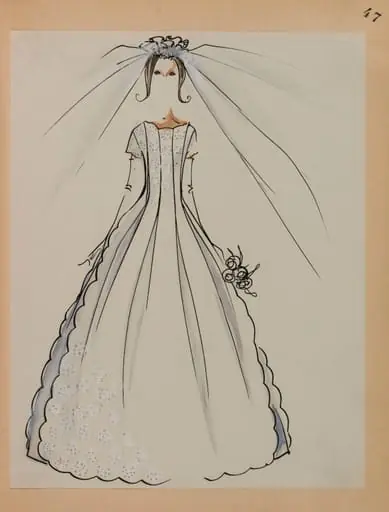 Robe de mariée festonnée et son voile
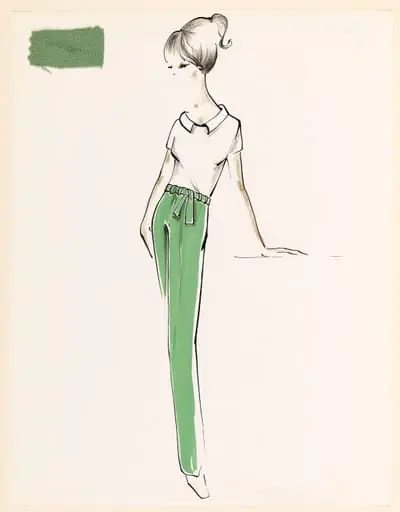 Haut blanc à manches courtes et pantalon vert à ceinture nouée
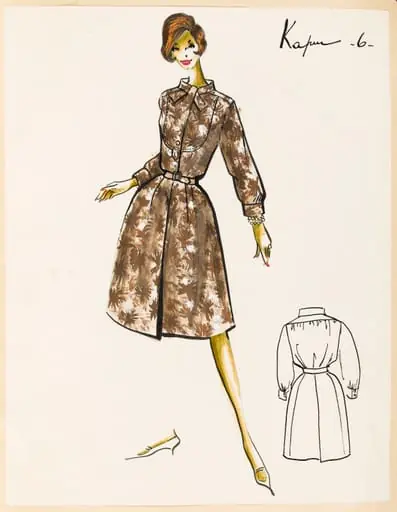 Kapur
Kapur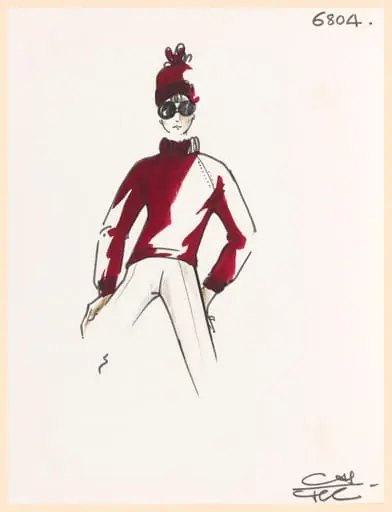 Pull-over à manches longues pourpre, bonnet assorti, pantalon et lunettes de soleil
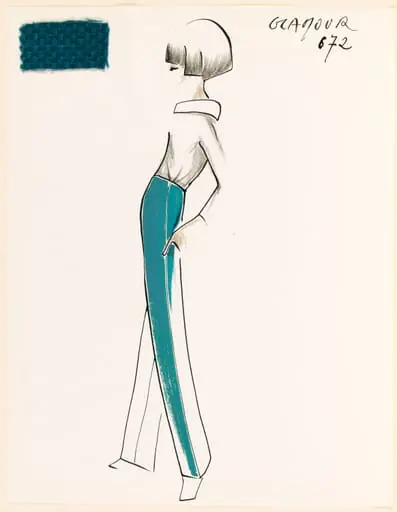 GLAMOUR
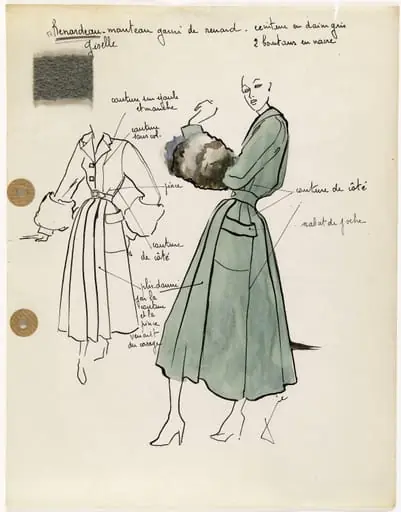 'Renardeau'
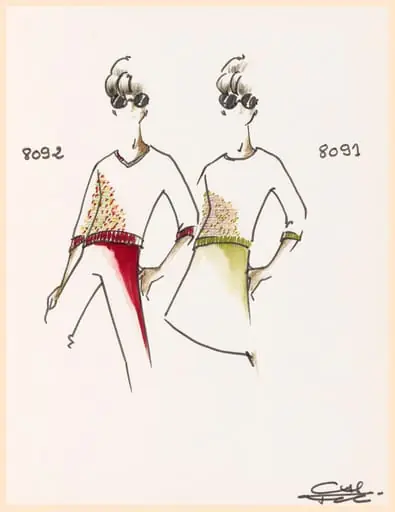 Pull-over à manches trois quarts et à encolure V à motifs multicolores, pantalon cerise et lunettes de soleil
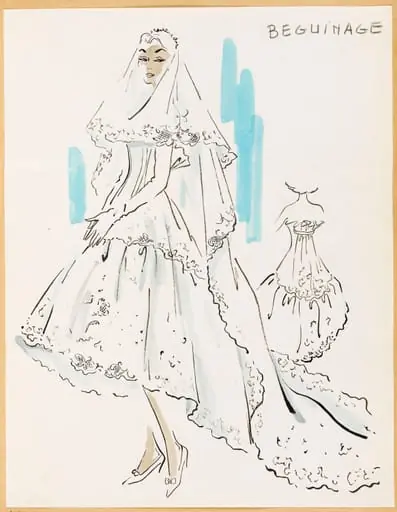 Béguinage