Artwork
Bagdad
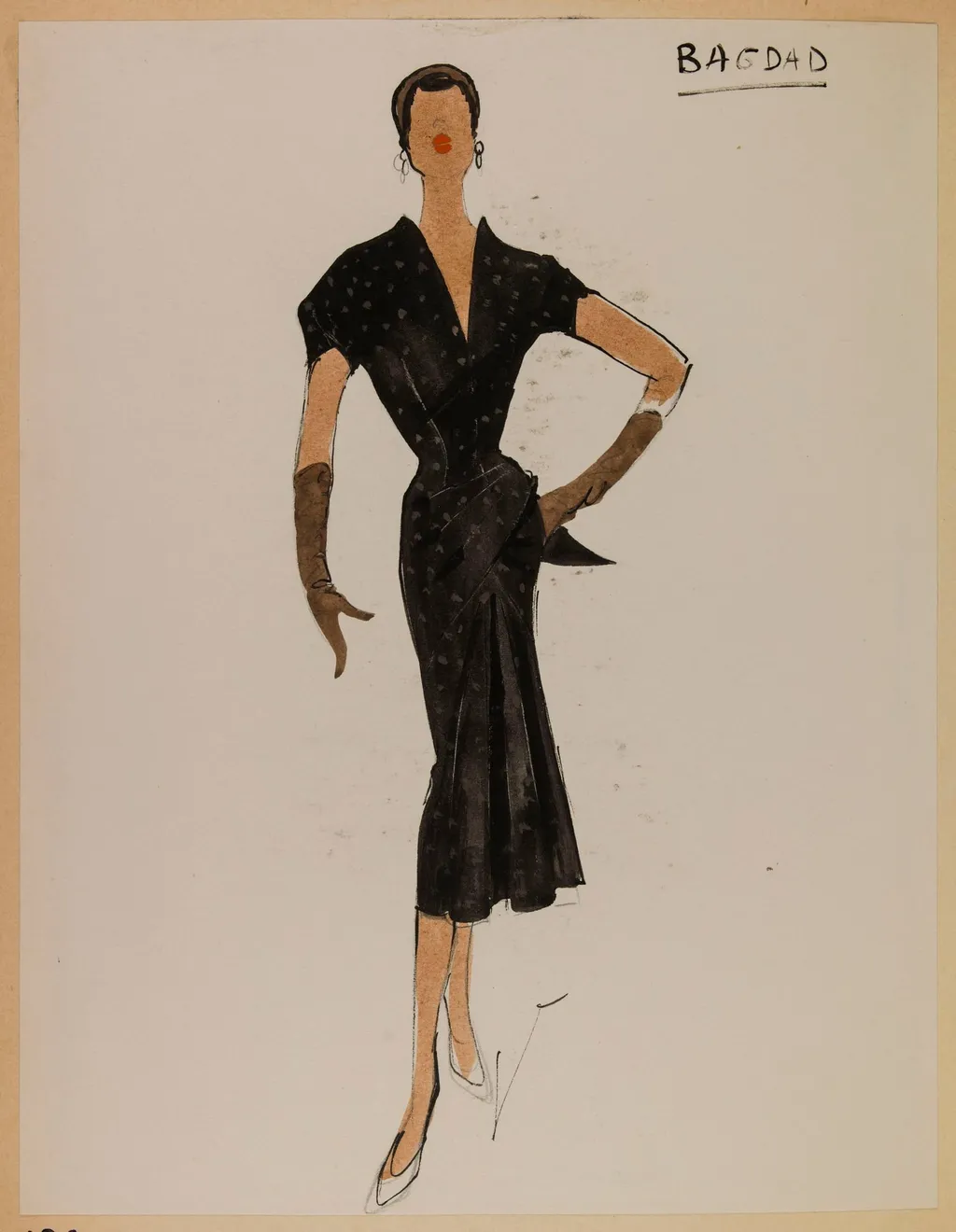
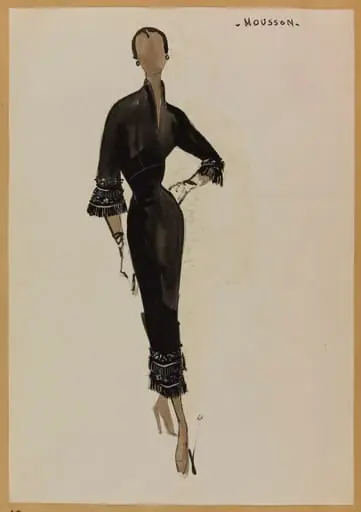
Bagdad is a drawing by Carven. It dates from 1953 and is held in the collection of the Palais Galliera - Musée de la Mode de la Ville de Paris.
About this work
Overview
The work reflects Carven’s engagement with fashion and portraiture, blending elements of mid-century design with a quiet, almost formal aesthetic.
Created around 1953 by the designer and artist Carven, this painting is part of the Museum of Ethnography’s collection. It presents a solitary female figure in a restrained, stylized composition. The work reflects Carven’s engagement with fashion and portraiture, blending elements of mid-century design with a quiet, almost formal aesthetic. Its simplicity suggests an interest in elegance through minimalism rather than ornamentation.
Subject & Meaning
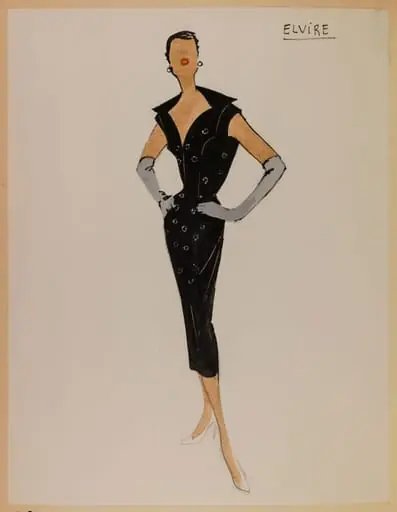
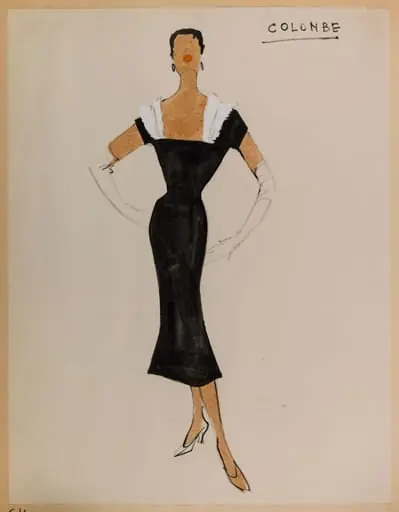
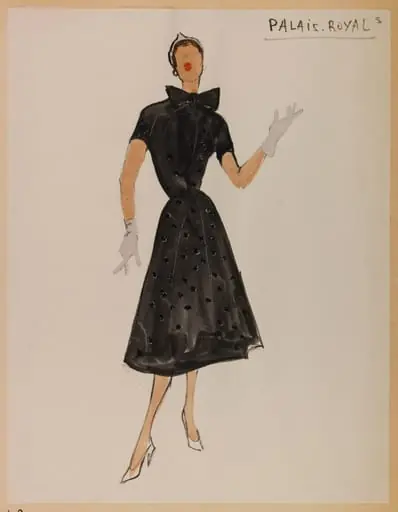
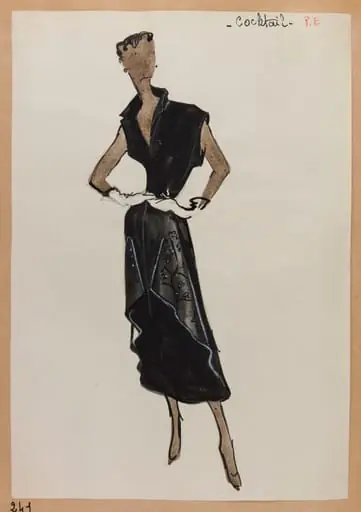
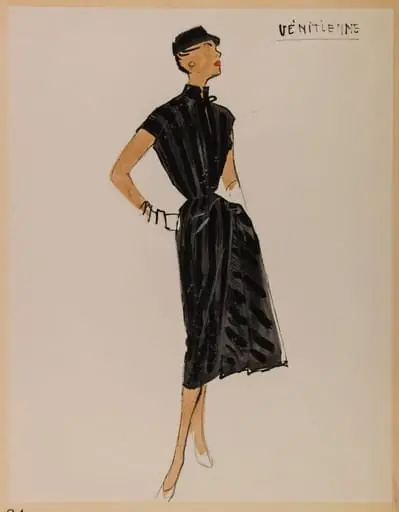
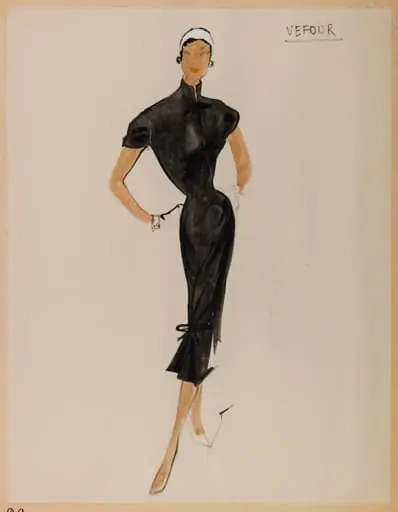
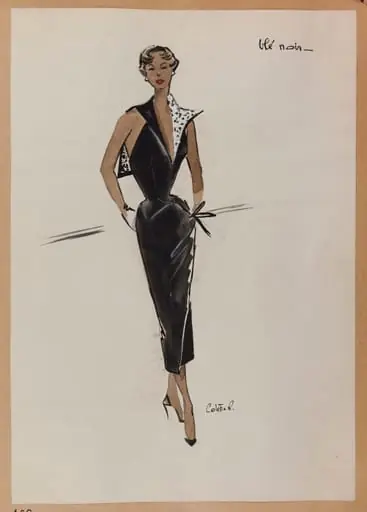
The subject is a woman dressed in a black gown with a low neckline and short sleeves, her left hand resting on her hip in a composed, self-possessed gesture. White dots pattern the fabric, while white gloves, shoes, and earrings add contrast. The pose and attire suggest a moment of poised stillness, possibly evoking urban femininity or the ritual of dressing for public appearance. No narrative context is provided, leaving interpretation open to the viewer’s perception of form and presence.
Technique & Style
The painting employs a flat, unmodulated color palette with soft edges and minimal shading. The background is a uniform light beige, drawing attention to the figure’s silhouette. Details like the dotted dress and jewelry are rendered with precision but without realism, favoring symbolic clarity. The style is deliberately restrained, aligning with mid-century modernist tendencies that valued clarity and reduction over expressive brushwork.
History & Provenance
The painting entered the Museum of Ethnography’s collection in the latter half of the 20th century, likely through acquisition or donation linked to Carven’s broader cultural output. While Carven is better known for fashion design, this work represents a lesser-known facet of their artistic practice. Its preservation in an ethnographic context suggests an interest in documenting everyday aesthetics and personal adornment as cultural artifacts.
Context
Created in the early 1950s, the work emerges during a period when fashion designers increasingly blurred boundaries between clothing, portraiture, and fine art. Parisian couturiers like Carven were shaping postwar ideals of femininity, and this painting may reflect that cultural moment. The figure’s attire and demeanor echo contemporary ideals of refined, controlled elegance, resonating with the era’s emphasis on polished public presentation.
Legacy
Though not widely exhibited outside institutional archives, the painting contributes to understanding Carven’s multidisciplinary practice beyond fashion. It stands as a quiet document of mid-century visual culture, where personal style and artistic expression intersected. Its presence in an ethnographic museum underscores its role as a record of social norms and aesthetic values rather than a standalone artistic statement.
Artist & collection
Artist
These delicate ink-on-paper drawings capture the quiet poetry of everyday things: pinecones, reeds, apples.
Museum
Palais Galliera - Musée de la Mode de la Ville de Paris
Continue through works from the same source collection.