Artwork
Concerto
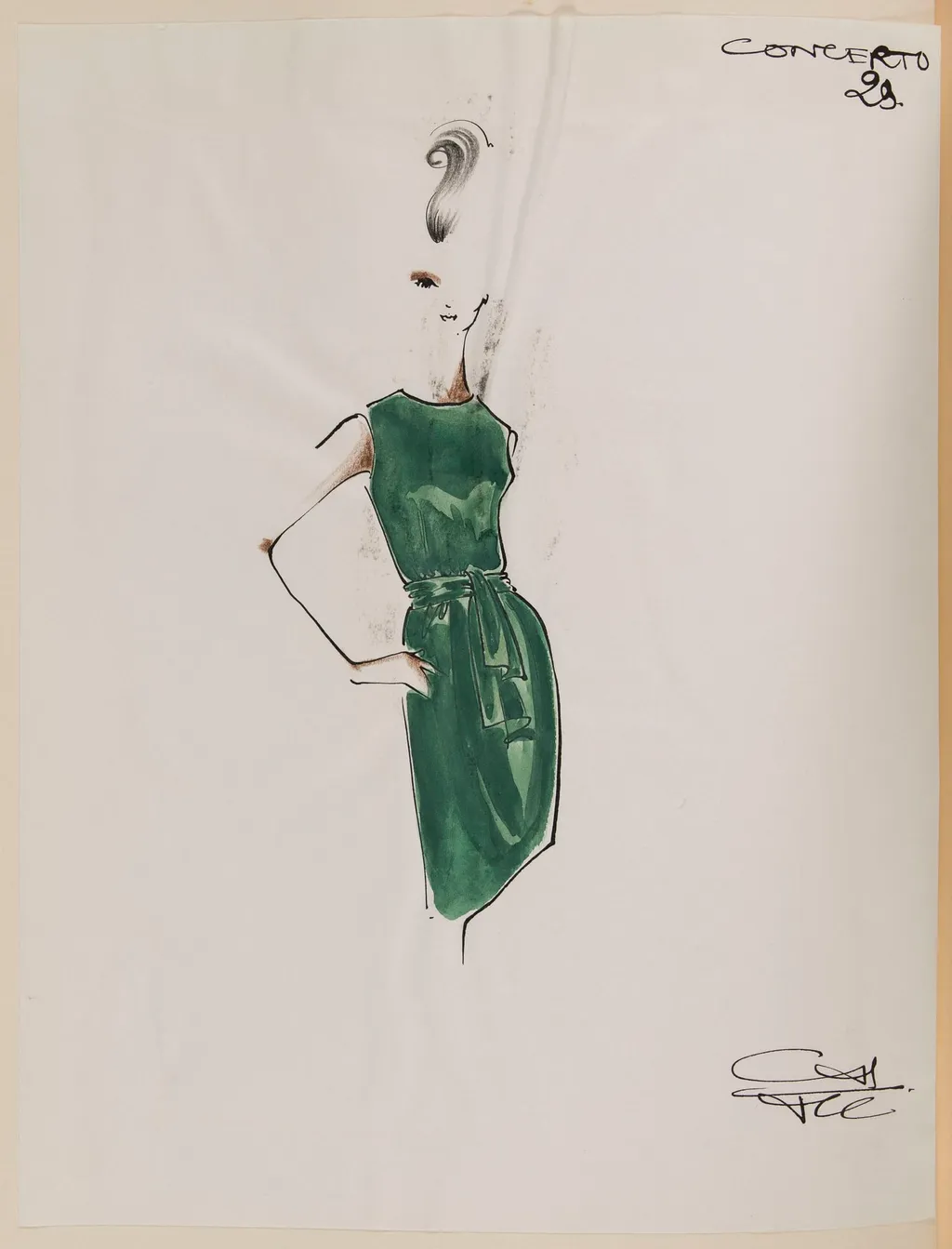
Concerto is a drawing by Marie-Louise Carven. It dates from 1963 and is held in the collection of the Palais Galliera - Musée de la Mode de la Ville de Paris.
About this work
Overview
The drawing titled Concerto, created around 1963, is a fashion illustration associated with the French designer Marie-Louise Carven.
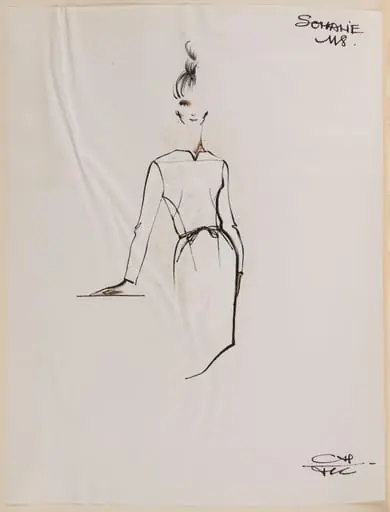
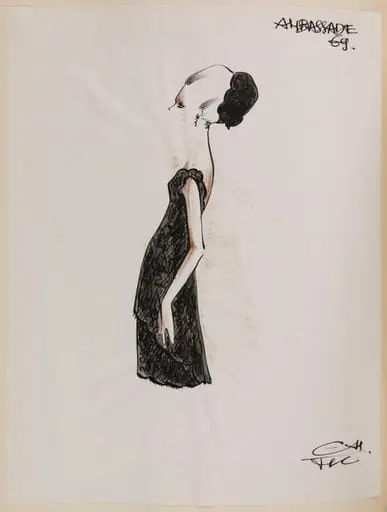
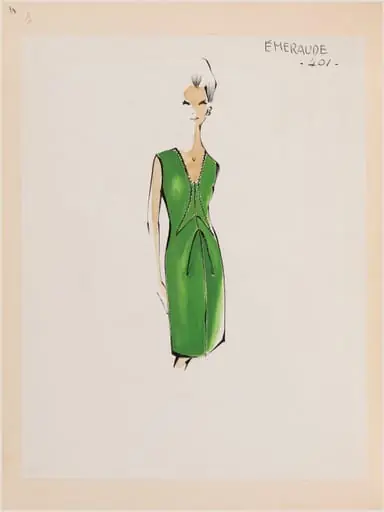
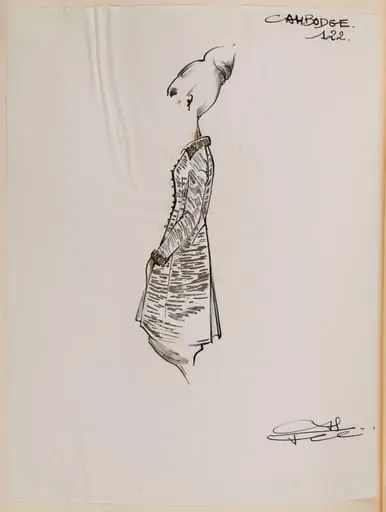
The drawing titled Concerto, created around 1963, is a fashion illustration associated with the French designer Marie-Louise Carven. It captures a woman in a sleeveless green dress with a defined waist belt, rendered in clean, restrained lines. The composition emphasizes posture and silhouette rather than facial detail, reflecting Carven’s focus on elegant, wearable forms. The image serves as a visual record of her design philosophy during the rise of ready-to-wear fashion in postwar France.
Subject & Meaning
The figure in Concerto stands with one hand on her hip and the other raised, suggesting a poised, natural movement. The absence of a detailed face shifts attention to the garment’s structure and the body’s rhythm. This approach aligns with Carven’s design ethos: clothing as an extension of the wearer’s ease and grace. The pose conveys quiet confidence, avoiding theatricality in favor of everyday sophistication suited to her target clientele.
Technique & Style
Rendered with minimal shading and precise contours, the illustration favors clarity over ornamentation. The lines are deliberate and fluid, highlighting the dress’s shape and the woman’s posture without distraction. The use of a single color—green—enhances the graphic quality, while the updo hairstyle and lack of accessories reinforce a sense of refined simplicity. This stylistic restraint mirrors Carven’s preference for lightweight fabrics and uncluttered silhouettes in her garments.
History & Provenance
Created in the early 1960s, Concerto emerged during the peak of Carven’s influence in French fashion. As one of the first designers to focus on prêt-à-porter for petite figures, her work was widely circulated in fashion publications and client portfolios. This drawing likely served as a design proposal or promotional piece for her atelier, though its exact archival origin remains undocumented. It survives as a representative artifact of her design process.
Context
In the 1960s, French fashion was shifting from haute couture exclusivity toward accessible, mass-produced clothing. Carven’s emphasis on petite proportions and breathable materials like lace and gingham positioned her as a pragmatic innovator. Concerto reflects this transition: a hand-drawn vision of clothing designed for real bodies and daily life, distinct from the grandeur of Parisian ateliers catering to elite clients.
Legacy
Carven’s work, including illustrations like Concerto, helped redefine the relationship between design and the average woman’s body. Her focus on comfort, proportion, and understated elegance influenced later generations of designers who prioritized wearability. Though less celebrated than contemporaries, her contributions to ready-to-wear and inclusive sizing remain a quiet but significant thread in 20th-century fashion history.
Artist & collection
Artist
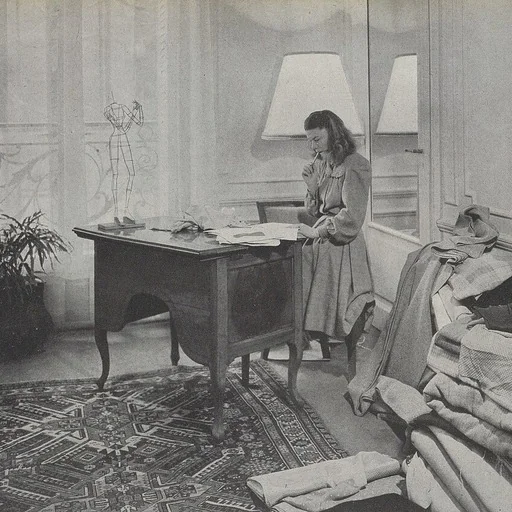
Marie-Louise Carven (31 August 1909 – 8 June 2015), born Carmen de Tommaso, was a French fashion designer who founded the house of Carven in 1945.

Museum
Palais Galliera - Musée de la Mode de la Ville de Paris
Continue through works from the same source collection.
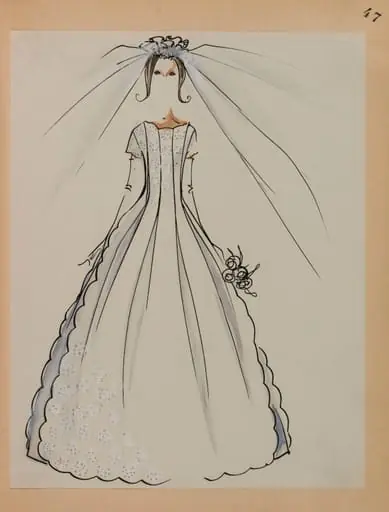 Robe de mariée festonnée et son voile
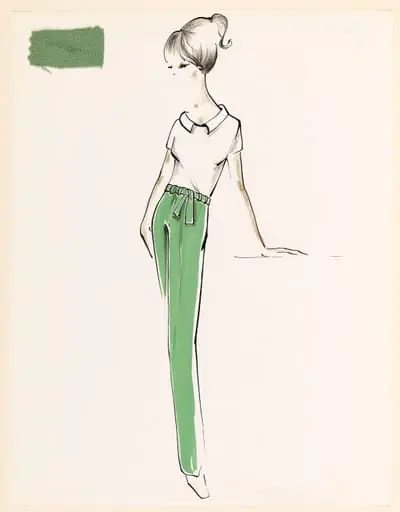 Haut blanc à manches courtes et pantalon vert à ceinture nouée
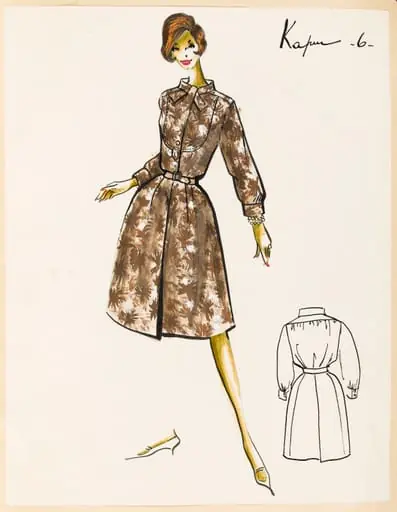 Kapur
Kapur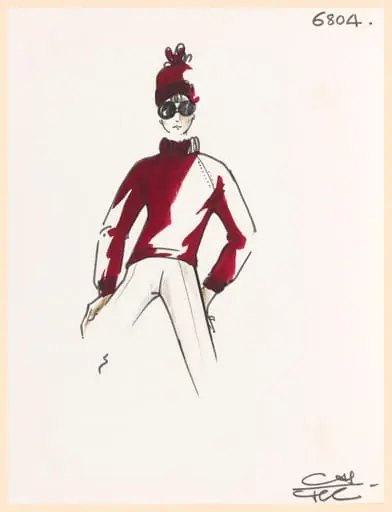 Pull-over à manches longues pourpre, bonnet assorti, pantalon et lunettes de soleil
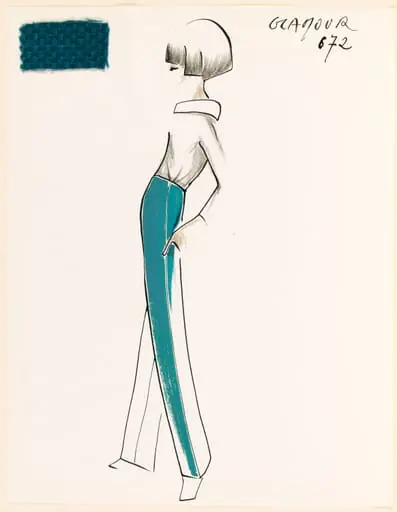 GLAMOUR
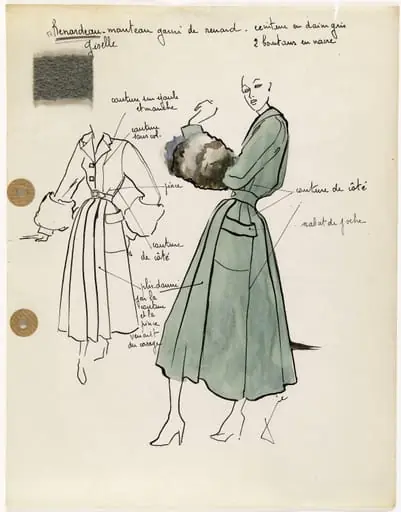 'Renardeau'
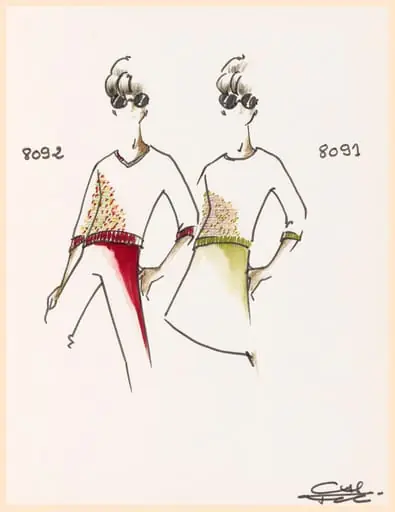 Pull-over à manches trois quarts et à encolure V à motifs multicolores, pantalon cerise et lunettes de soleil
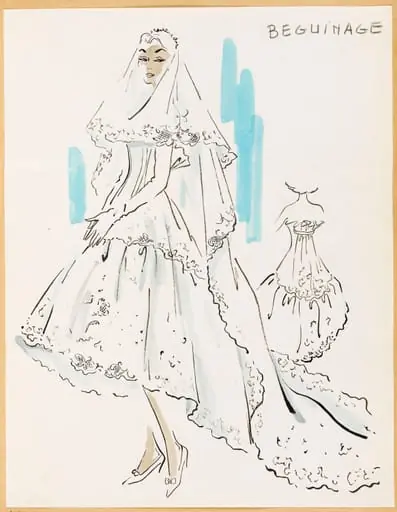 Béguinage