Artwork
Croisade
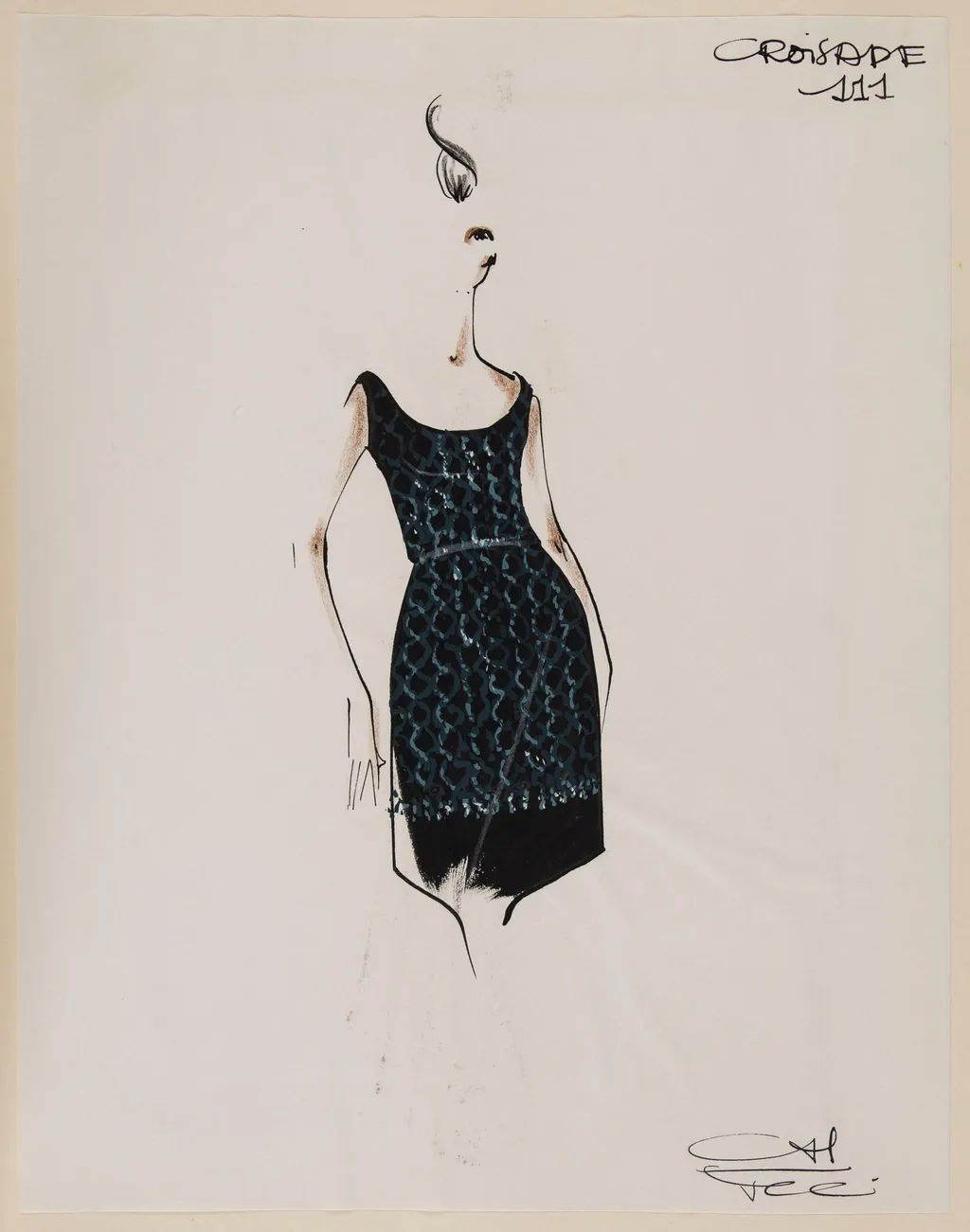
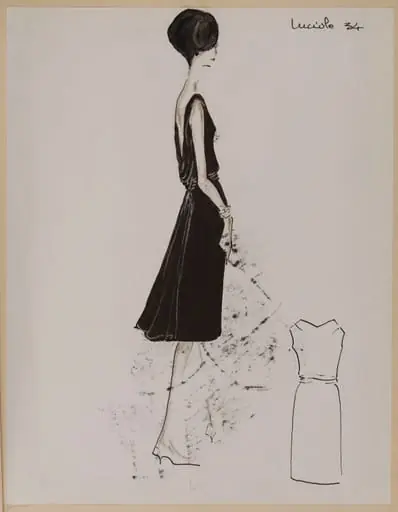
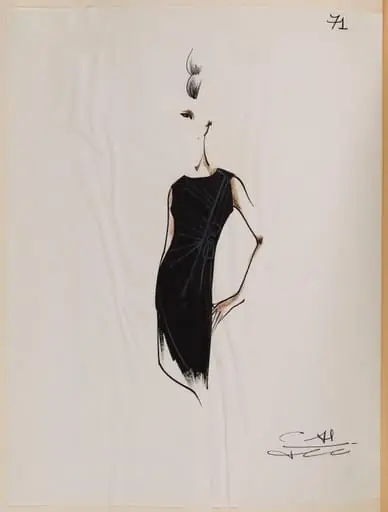
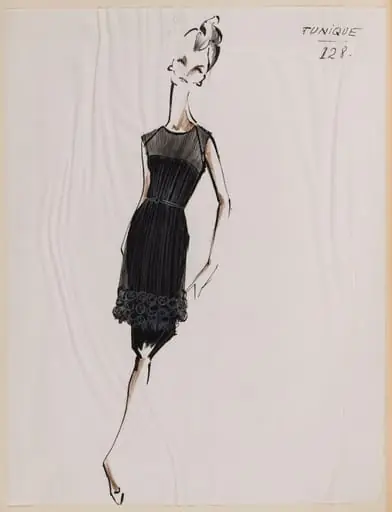
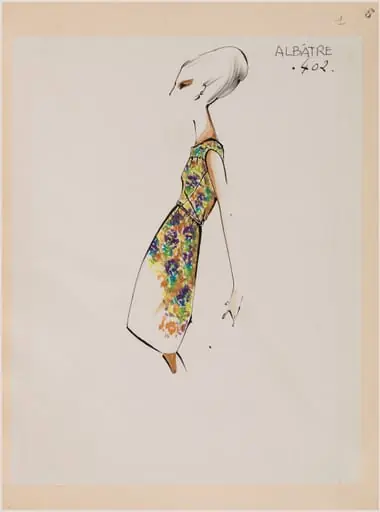
Croisade is a drawing by Marie-Louise Carven. It dates from 1963 and is held in the collection of the Palais Galliera - Musée de la Mode de la Ville de Paris.
About this work
Overview
Created around 1963, *Croisade* is a fashion sketch by Marie-Louise Carven, founder of the Parisian label Carven established in 1945.
Created around 1963, *Croisade* is a fashion sketch by Marie-Louise Carven, founder of the Parisian label Carven established in 1945. The drawing reflects her focus on accessible, tailored designs for smaller frames. Executed in ink with minimal detail, it belongs to the collection of the Museum of Ethnography, where it is preserved as part of a broader documentation of 20th-century fashion practice rather than as a finished garment.
Subject & Meaning
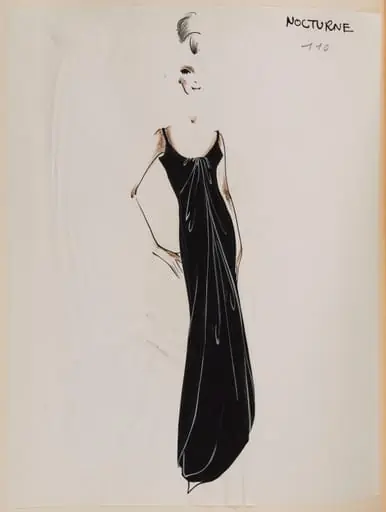
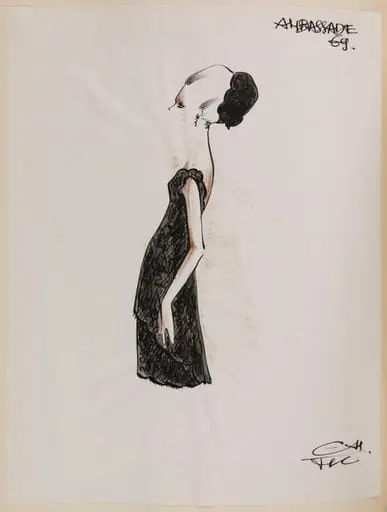
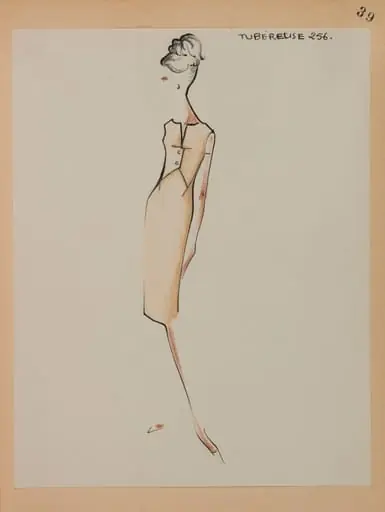
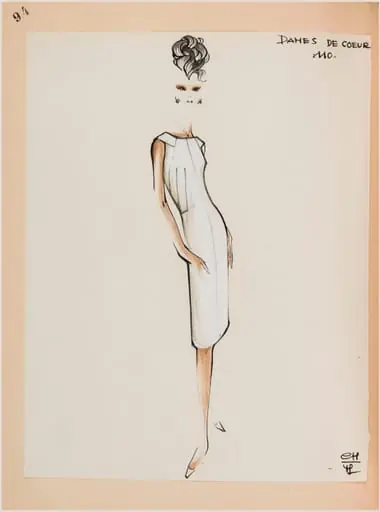
The sketch depicts a woman in a sleeveless black dress, hemmed just above the knee, with no ornamentation beyond a subtle dark pattern. The figure’s hair is rendered as a soft, compact mass, and the plain background isolates the form. The title *Croisade*—meaning 'crusade'—suggests a quiet assertion of purpose, possibly referencing Carven’s commitment to redefining women’s wear through simplicity and practicality during a period of shifting social norms.
Technique & Style
Carven rendered the design with swift, assured lines, avoiding shading or embellishment. The absence of detail emphasizes silhouette over decoration, aligning with her design philosophy. The signature appears twice, and the title is inscribed at the top, indicating the sketch’s function as both a creative note and a formal record. This economy of line reflects the precision valued in couture drafting, where clarity outweighed ornament.
History & Provenance
The sketch entered the Museum of Ethnography’s collection as part of a broader effort to document fashion as cultural artifact. Carven, one of the first Parisian designers to launch a prêt-à-porter line, produced such drawings for internal use and client presentations. Its preservation suggests institutional recognition of her role in democratizing fashion, though the exact path from studio to museum remains undocumented.
Context
In the early 1960s, Parisian fashion was transitioning from haute couture exclusivity toward ready-to-wear accessibility. Carven’s work, including *Croisade*, responded to changing lifestyles and the growing demand for functional, well-cut garments. Her designs catered to women seeking elegance without formality, positioning her as a quiet innovator amid the era’s more flamboyant trends.
Legacy
Carven’s sketches, including *Croisade*, illustrate a design ethos centered on restraint and fit rather than spectacle. Though her label declined in prominence after her retirement, her early adoption of prêt-à-porter influenced later generations of designers seeking to balance artistry with wearability. The sketch endures as a testament to a quiet revolution in how women’s clothing was conceived and produced.
Artist & collection
Artist
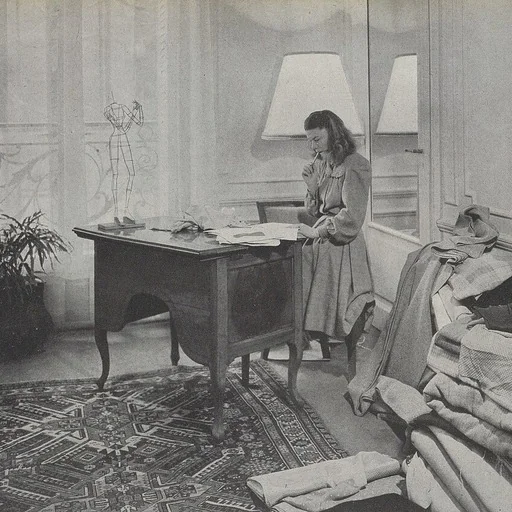
Marie-Louise Carven (31 August 1909 – 8 June 2015), born Carmen de Tommaso, was a French fashion designer who founded the house of Carven in 1945.
Museum
Palais Galliera - Musée de la Mode de la Ville de Paris
Continue through works from the same source collection.
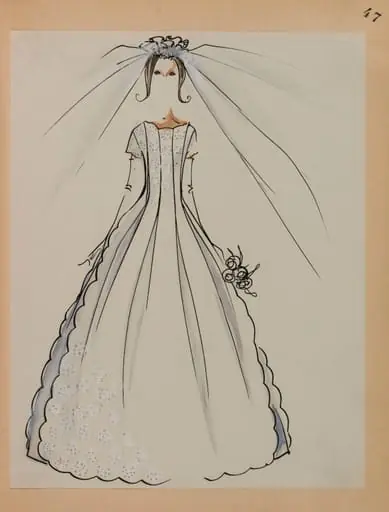 Robe de mariée festonnée et son voile
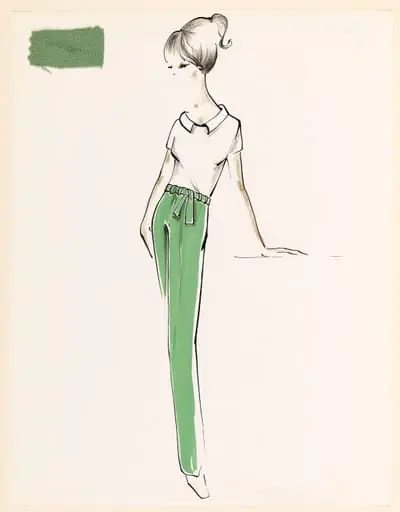 Haut blanc à manches courtes et pantalon vert à ceinture nouée
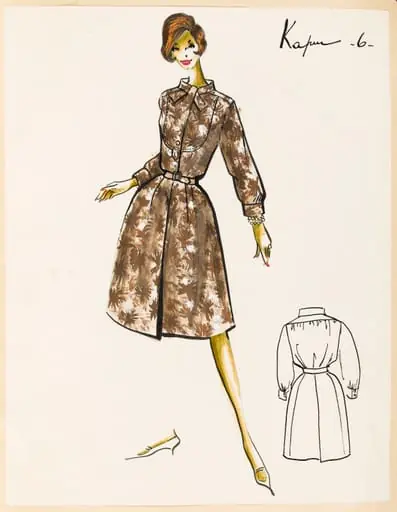 Kapur
Kapur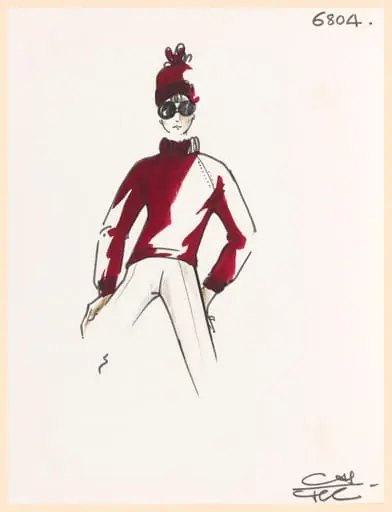 Pull-over à manches longues pourpre, bonnet assorti, pantalon et lunettes de soleil
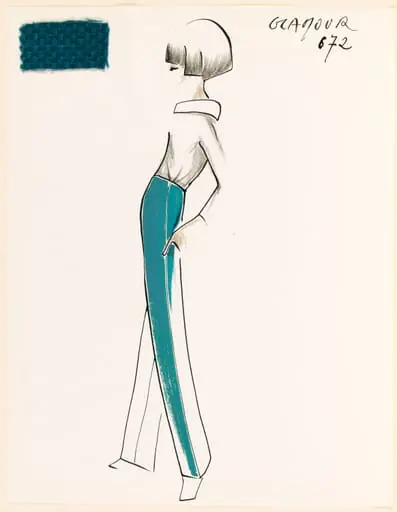 GLAMOUR
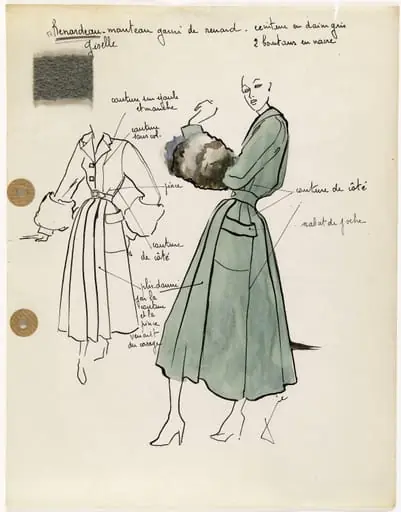 'Renardeau'
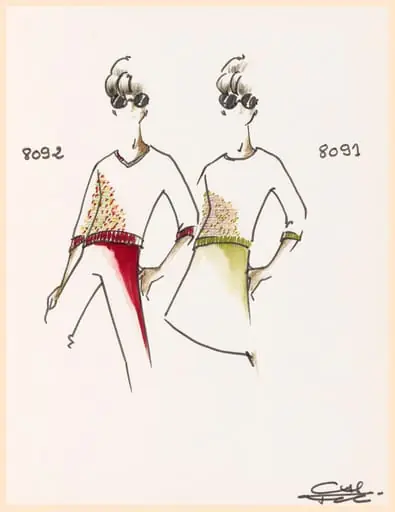 Pull-over à manches trois quarts et à encolure V à motifs multicolores, pantalon cerise et lunettes de soleil
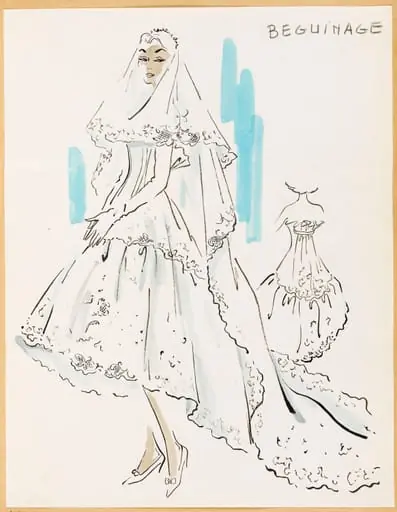 Béguinage