Artwork
Coq de Bruyère
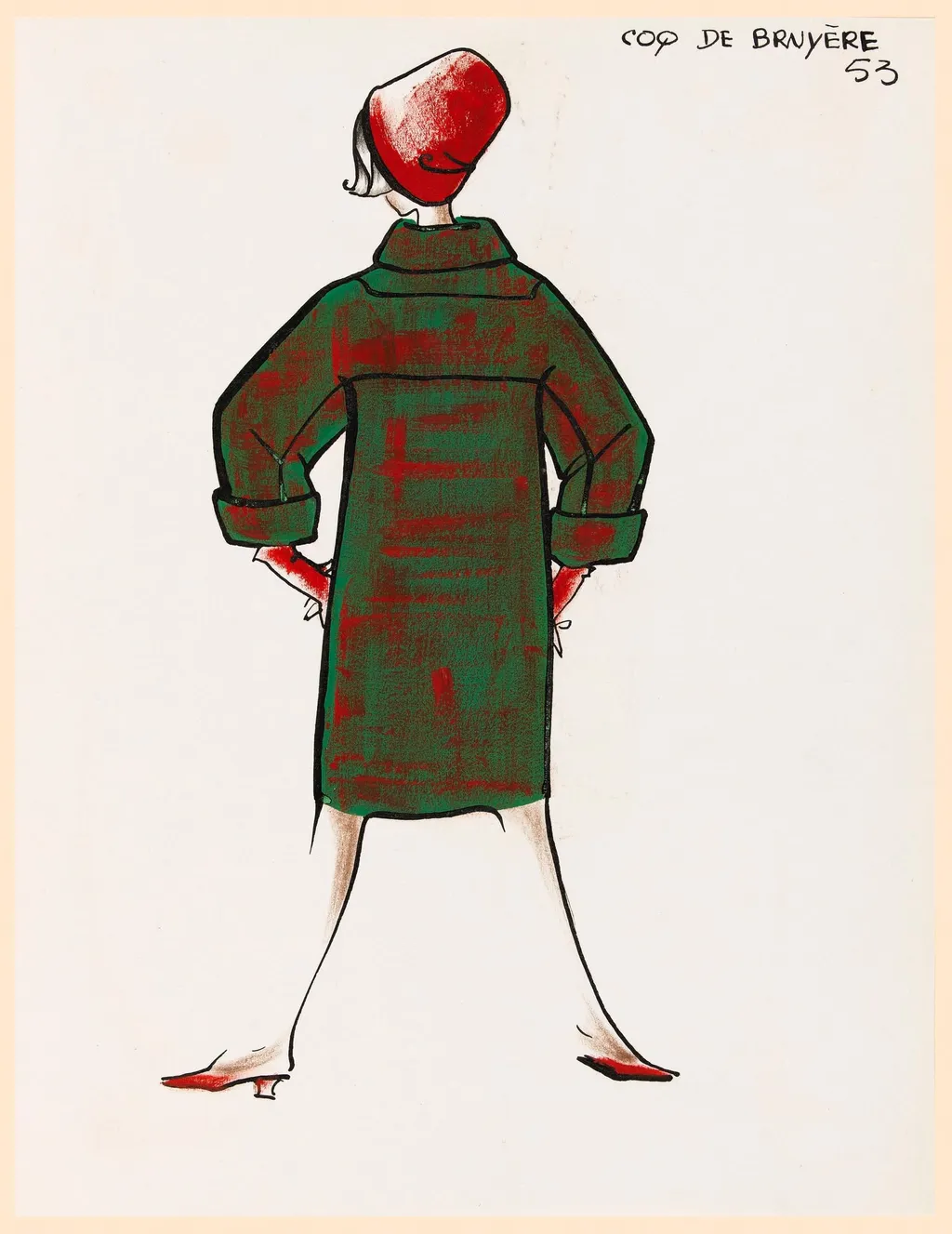
Coq de Bruyère is a drawing by Marie-Louise Carven. It dates from 1962 and is held in the collection of the Palais Galliera - Musée de la Mode de la Ville de Paris.
About this work
Overview
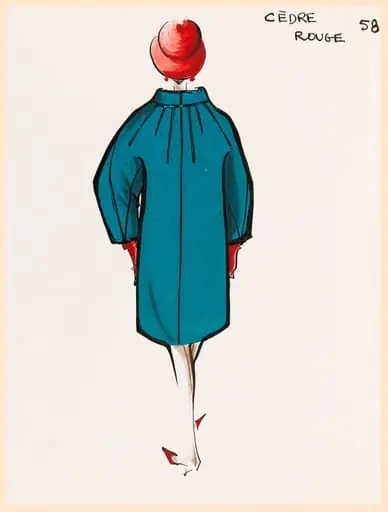
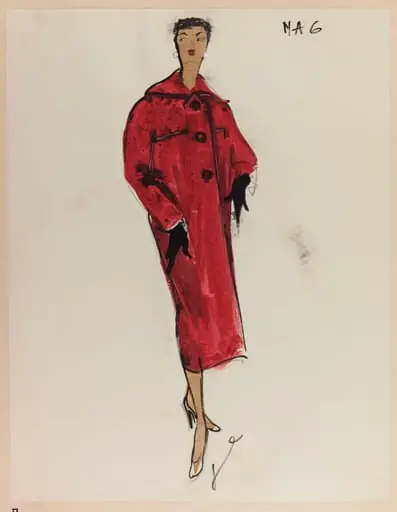
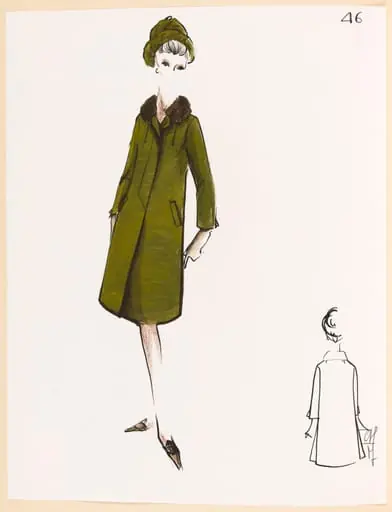
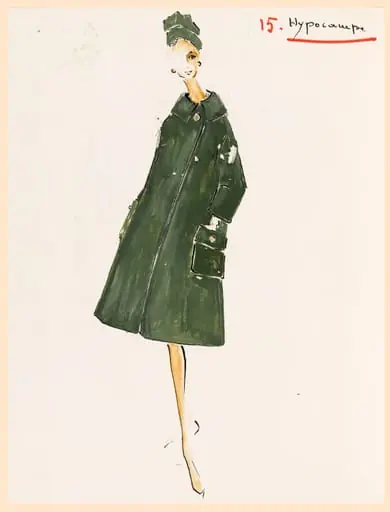
Created circa 1962, *Coq de Bruyère* is a fashion illustration by French designer Marie‑Louise Carven. The image depicts a woman seen from behind, dressed in a long green coat with red stripes, a matching red hat, red shoes, and a skirt that falls just above the ankle. The figure stands with hands placed in the coat’s large pockets, emphasizing the garment’s structure.
Subject & Meaning
The composition centers on the coat, a garment designed for petite women, reflecting Carven’s reputation for lightweight, tailored clothing. The vivid contrast of red and green highlights the coat’s bold pattern, while the high collar and oversized pockets suggest both practicality and a refined aesthetic, underscoring the designer’s focus on elegance suited to a smaller frame.
Technique & Style
Carven employs a limited palette of saturated red and green against a neutral background, allowing the clothing to dominate the visual field. Simplified shapes and clean lines convey the silhouette with clarity, while the bold coloration draws attention to the garment’s details, such as the stripe pattern and the high collar, creating a crisp, graphic effect.
History & Provenance
Marie‑Louise Carven founded the Carven fashion house in 1945 and was among the first Parisian couturiers to launch a ready‑to‑wear line. *Coq de Bruyère* entered the collection of the Museum of Ethnography, where it is preserved as an example of mid‑century French womenswear illustration and the designer’s contribution to accessible high fashion.
Artist & collection
Artist
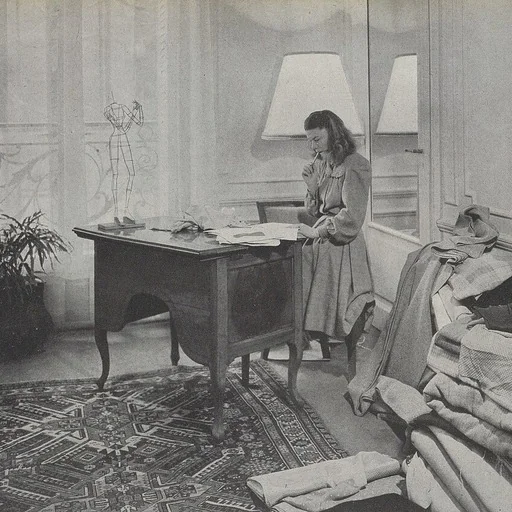
Marie-Louise Carven (31 August 1909 – 8 June 2015), born Carmen de Tommaso, was a French fashion designer who founded the house of Carven in 1945.
Museum
Palais Galliera - Musée de la Mode de la Ville de Paris
Continue through works from the same source collection.
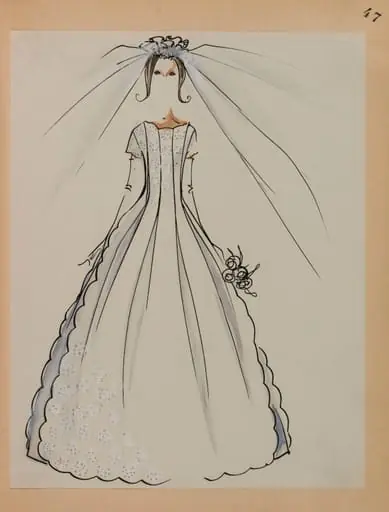 Robe de mariée festonnée et son voile
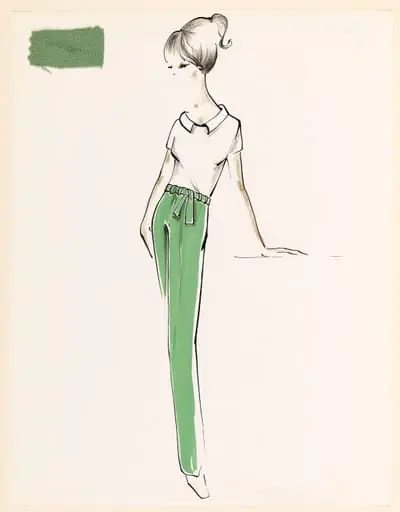 Haut blanc à manches courtes et pantalon vert à ceinture nouée
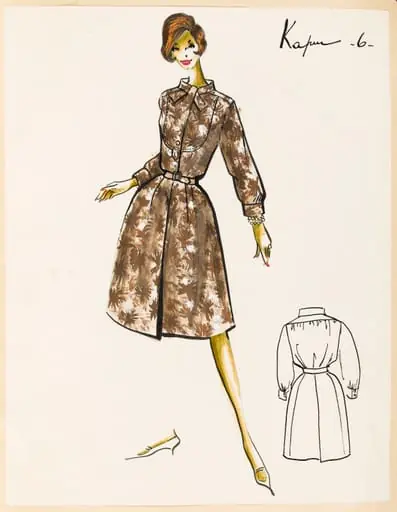 Kapur
Kapur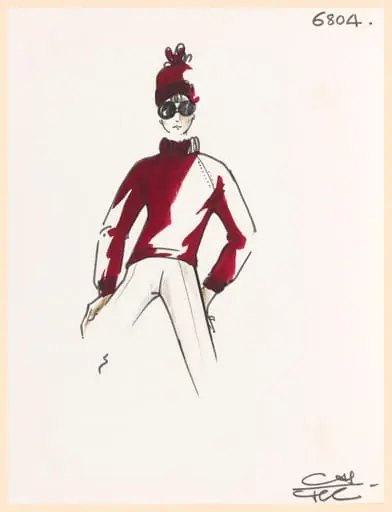 Pull-over à manches longues pourpre, bonnet assorti, pantalon et lunettes de soleil
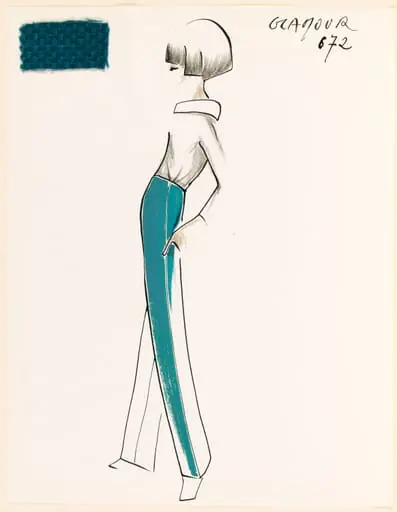 GLAMOUR
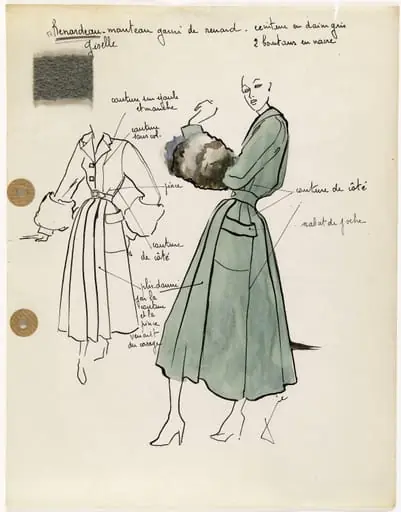 'Renardeau'
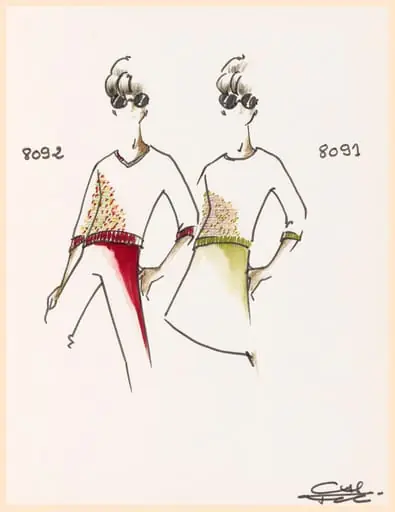 Pull-over à manches trois quarts et à encolure V à motifs multicolores, pantalon cerise et lunettes de soleil
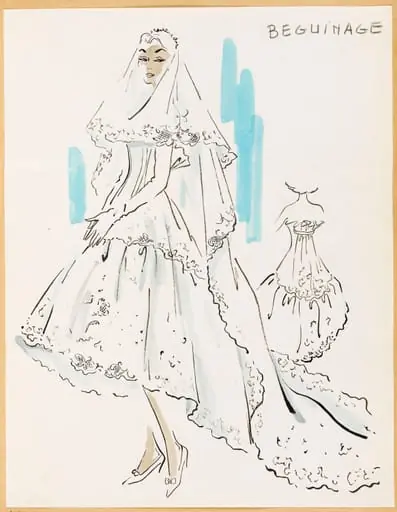 Béguinage