Artwork
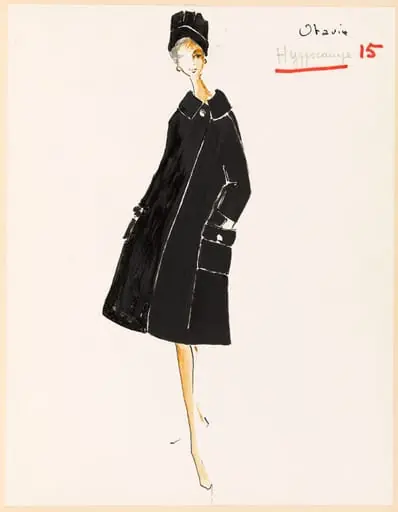
Hippocampe
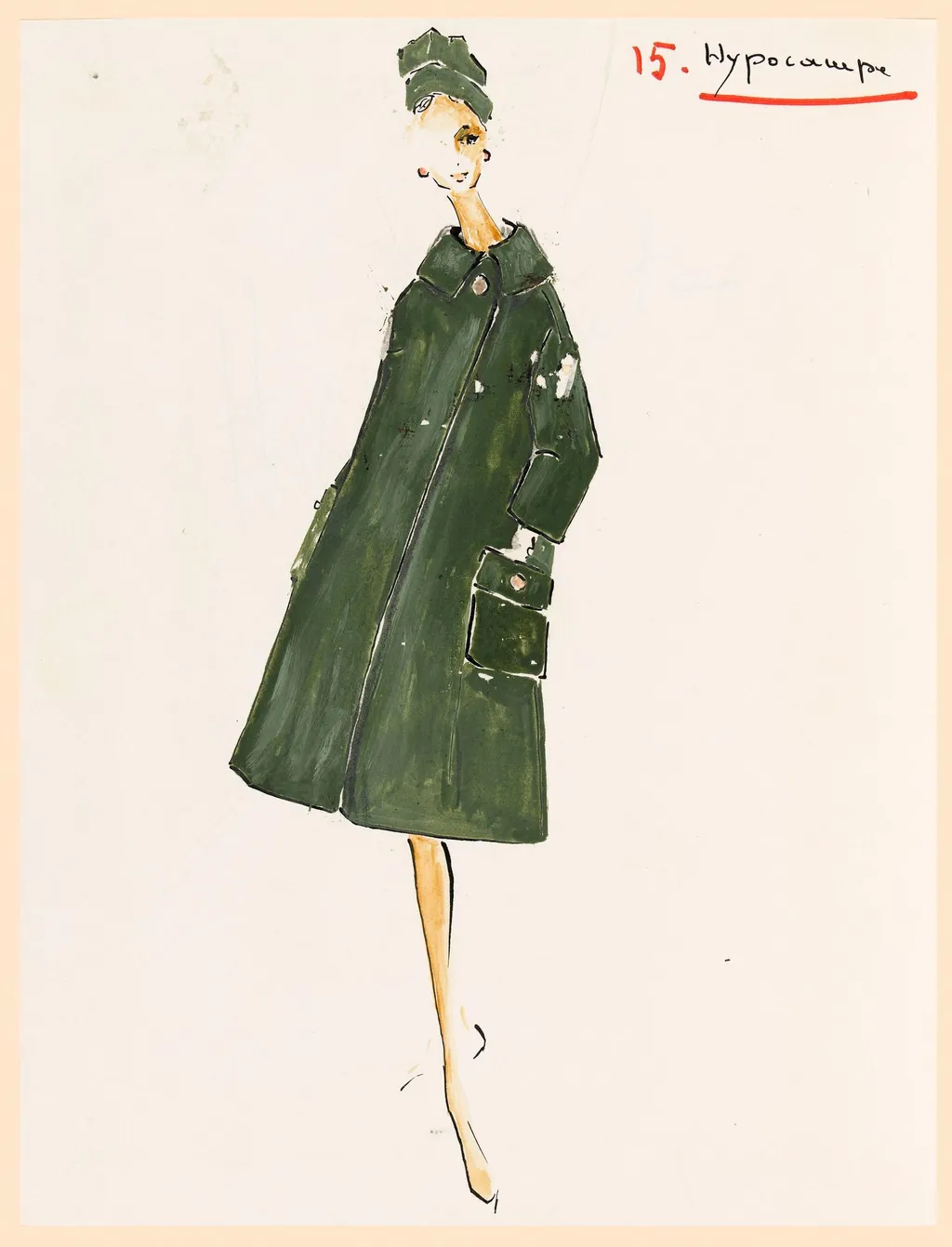
Hippocampe is a drawing by Marie-Louise Carven. It dates from 1967 and is held in the collection of the Palais Galliera - Musée de la Mode de la Ville de Paris.
About this work
If you're interested in learning more about the artist behind this piece, you might want to look up Marie-Louise Carven.
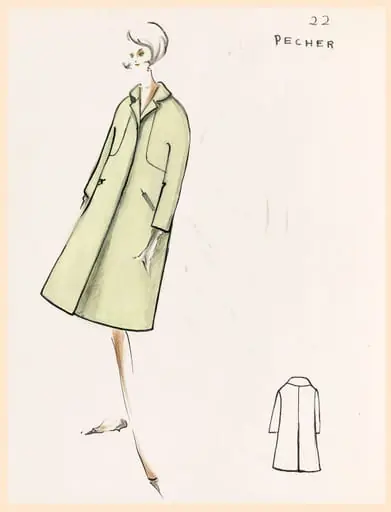
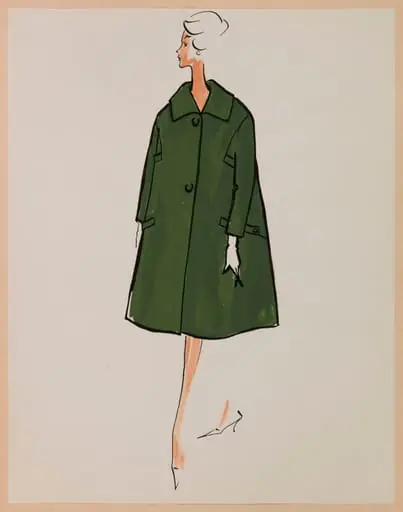
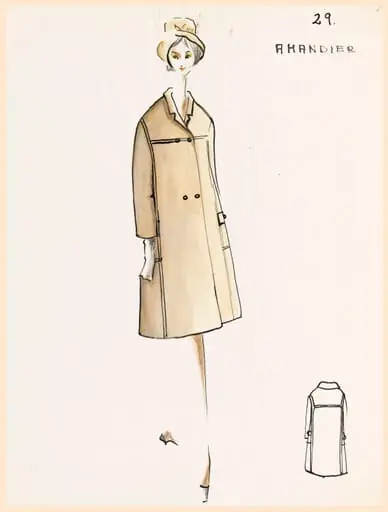
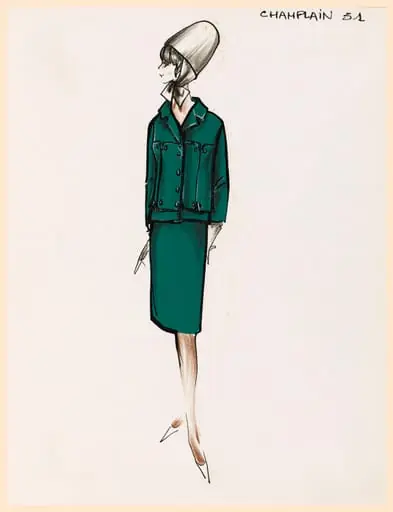
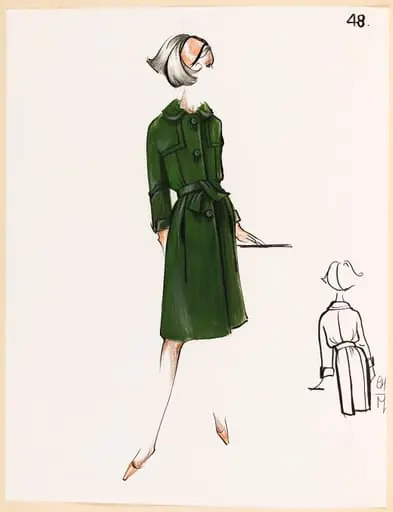
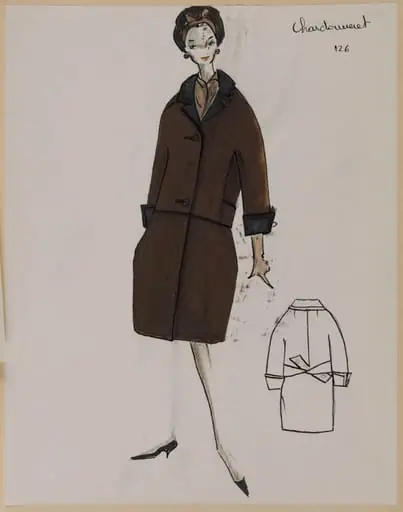
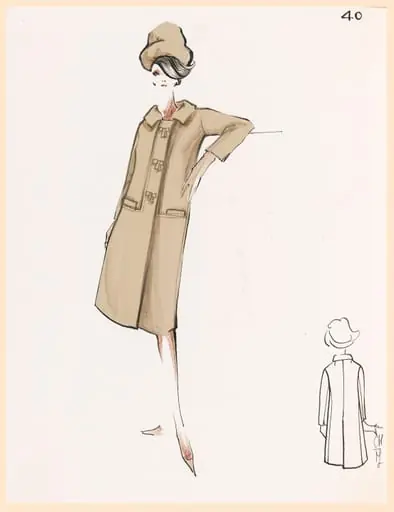
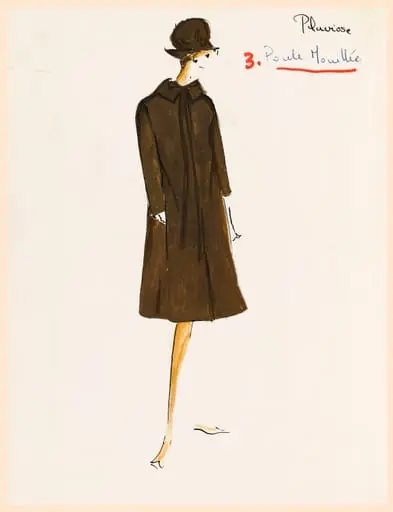
This painting depicts a woman dressed in a green coat and hat, with a matching purse in her right hand. The coat is knee-length, featuring two pockets on the front. The woman's face is blurred, and she is shown from the knees up.
The woman's attire appears to be from the mid-20th century, given the style of the coat and hat. The artist's use of color and composition creates a sense of elegance and sophistication.
If you're interested in learning more about the artist behind this piece, you might want to look up Marie-Louise Carven.
Overview
Created around 1967, *Hippocampe* is a painted portrait of a woman dressed in a green knee-length coat and matching hat, holding a purse. Though attributed to Marie-Louise Carven, the work is not a garment but a visual representation tied to her design sensibility. It resides in the Museum of Ethnography’s collection, reflecting an intersection between fashion and fine art in mid-century France.
Subject & Meaning
The figure, depicted from the knees upward, is rendered with a softly blurred face, emphasizing posture and attire over identity. The coordinated green ensemble—coat, hat, and purse—suggests a deliberate, refined personal style. The ambiguity of the subject invites focus on the clothing as an expression of modern femininity, aligning with Carven’s emphasis on wearable elegance for petite figures.
Technique & Style
The painting employs muted, cohesive tones of green to unify the figure and her accessories. Brushwork is loose yet controlled, avoiding sharp detail, particularly around the face, to direct attention to silhouette and fabric. The composition, cropped at the knees, isolates the upper body, reinforcing the garment’s structure and the quiet confidence of its wearer.
History & Provenance
Marie-Louise Carven founded her fashion house in 1945 and pioneered ready-to-wear in Parisian couture. While known for textiles and tailoring, *Hippocampe* is a rare painted work linked to her aesthetic. Its acquisition by the Museum of Ethnography suggests an interest in fashion as cultural artifact, documenting mid-century French women’s daily dress and self-presentation.
Context
In the 1960s, Parisian fashion shifted toward accessibility and modernity. Carven’s ready-to-wear line responded to changing lifestyles, and *Hippocampe* mirrors this transition—not as a garment, but as a visual record of how clothing conveyed identity. The painting’s restraint and focus on tailored simplicity reflect broader cultural values of understated sophistication in postwar Europe.
Legacy
Though not a textile or runway piece, *Hippocampe* endures as a visual extension of Carven’s design philosophy. Its presence in an ethnographic museum underscores fashion’s role in documenting social norms. The work contributes to broader scholarly interest in how women’s attire in mid-century France expressed autonomy, taste, and quiet individuality.
Artist & collection
Artist
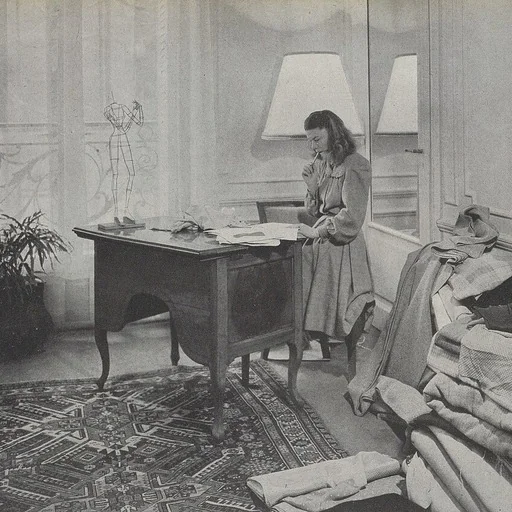
Marie-Louise Carven (31 August 1909 – 8 June 2015), born Carmen de Tommaso, was a French fashion designer who founded the house of Carven in 1945.
Museum
Palais Galliera - Musée de la Mode de la Ville de Paris
Continue through works from the same source collection.
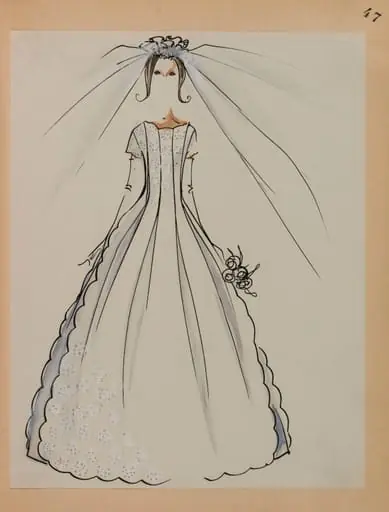 Robe de mariée festonnée et son voile
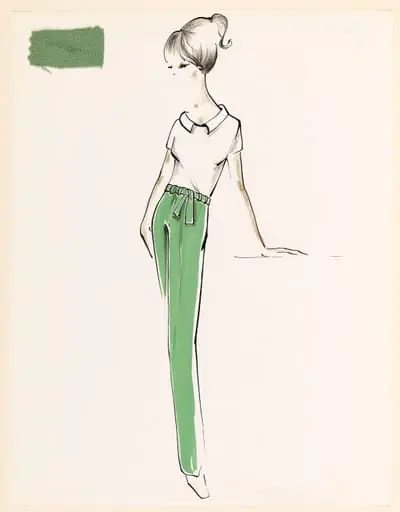 Haut blanc à manches courtes et pantalon vert à ceinture nouée
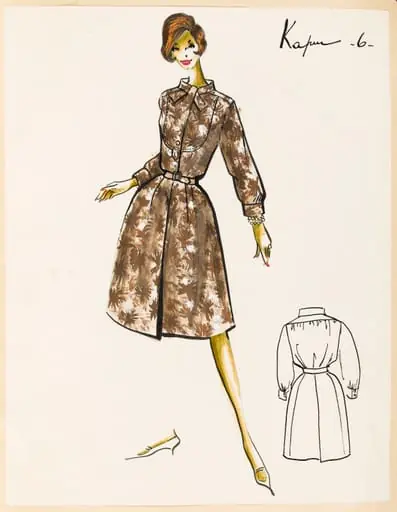 Kapur
Kapur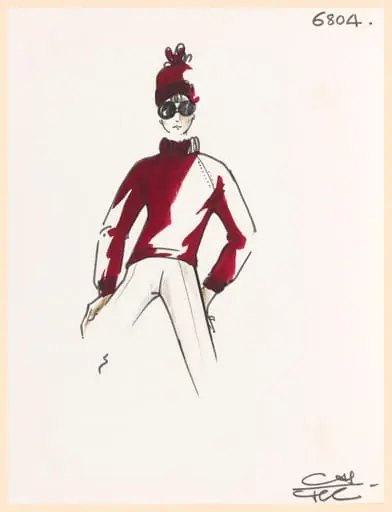 Pull-over à manches longues pourpre, bonnet assorti, pantalon et lunettes de soleil
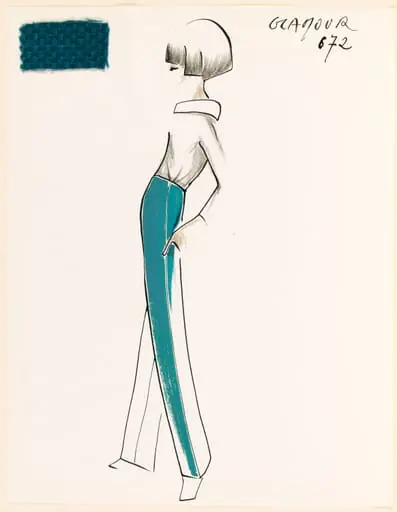 GLAMOUR
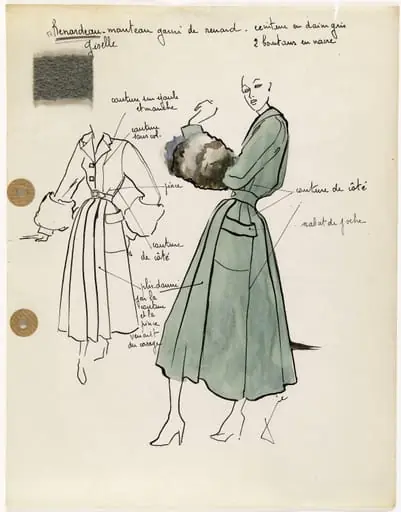 'Renardeau'
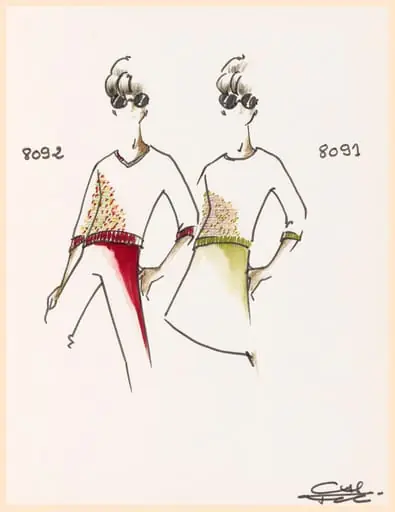 Pull-over à manches trois quarts et à encolure V à motifs multicolores, pantalon cerise et lunettes de soleil
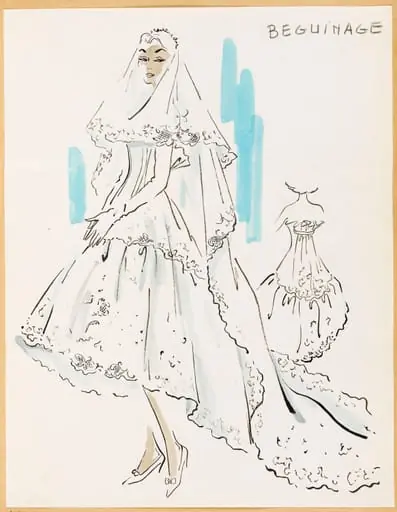 Béguinage