Artwork
Coquelicot
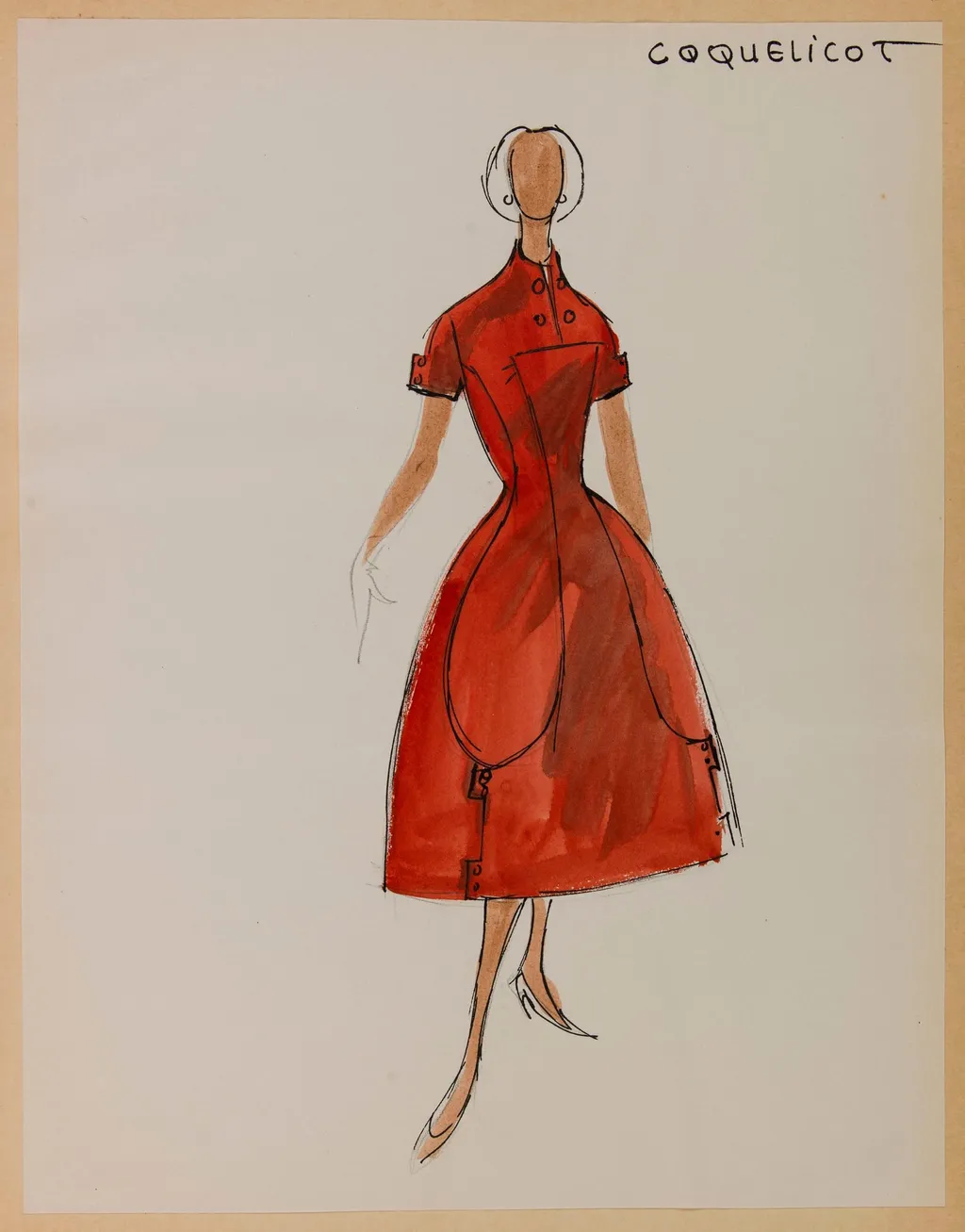
Coquelicot is a drawing by Marie-Louise Carven. It dates from 1956 and is held in the collection of the Palais Galliera - Musée de la Mode de la Ville de Paris.
About this work
Overview
The title, written in the corner, references the French word for poppy, hinting at color or mood rather than literal decoration.
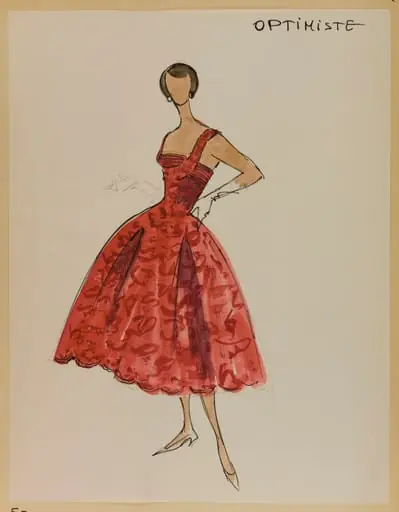
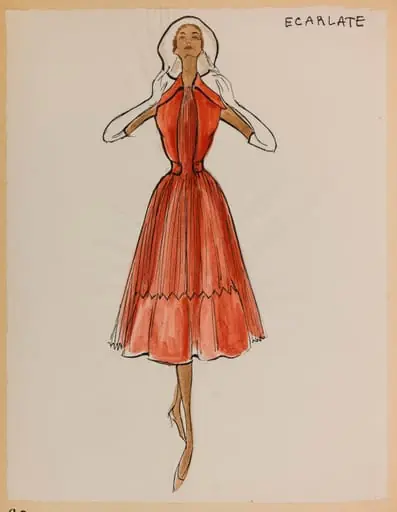
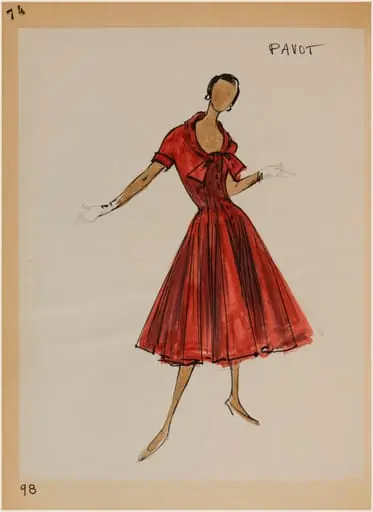
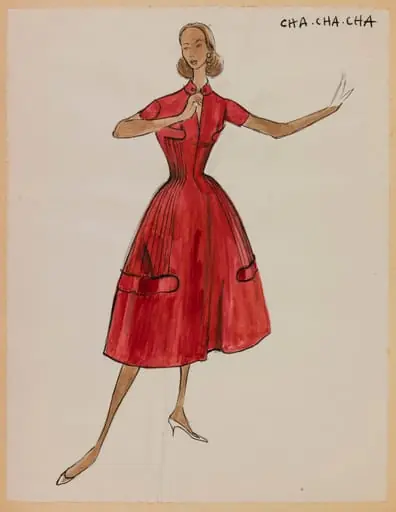
Created around 1956, Coquelicot is a pencil sketch by French fashion designer Marie-Louise Carven. It depicts a woman in a simple red dress with a fitted waist and softly flared hem, rendered in loose, rapid strokes. The drawing lacks intricate detail, suggesting it was made as a working idea rather than a polished presentation. The title, written in the corner, references the French word for poppy, hinting at color or mood rather than literal decoration.
Subject & Meaning
The figure in Coquelicot wears a modest, sleeveless dress that reflects Carven’s focus on wearable, feminine silhouettes for petite frames. The plain background and restrained styling emphasize form over ornamentation. The title, Coquelicot, evokes the vibrant red of poppies, aligning with Carven’s frequent use of soft, romantic hues. It suggests an emotional tone—delicate yet lively—rather than a literal floral pattern.
Technique & Style
Carven rendered the sketch with swift, fluid lines, capturing the essence of the garment without fine detailing. The fabric is suggested through smooth contours rather than texture, consistent with her preference for lightweight materials like gingham and lace. The quick execution implies spontaneity, typical of design sketches used to explore ideas before construction. The neat, pulled-back hairstyle reinforces the clean, understated aesthetic central to her brand.
History & Provenance
The sketch is held in the collection of the Museum of Ethnography, though its acquisition history is not publicly documented. It dates from the mid-1950s, a period when Carven was actively developing her prêt-à-porter line, one of the earliest in Paris. As a working drawing, it likely originated in her atelier and was preserved for its representation of her design philosophy rather than its finish.
Context
In postwar Paris, Carven helped redefine fashion by prioritizing accessibility and practicality for everyday women. Coquelicot reflects this shift: a minimalist design, free of excessive embellishment, suited to a growing market for ready-to-wear clothing. Her use of soft colors and delicate fabrics contrasted with the more structured styles of contemporaries, positioning her as a quiet innovator in democratizing fashion.
Legacy
Coquelicot exemplifies Carven’s enduring influence on accessible, feminine design. Though not a finished garment, the sketch preserves her approach to form, proportion, and restraint. It stands as a testament to the role of preliminary drawings in shaping modern prêt-à-porter, highlighting how small, unadorned ideas could lead to broader shifts in how women dressed in the 20th century.
Artist & collection
Artist
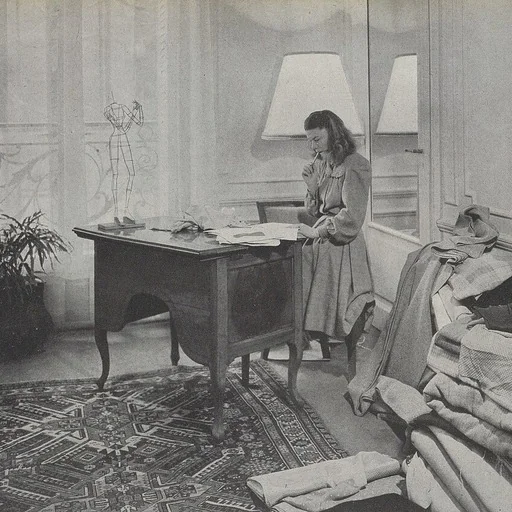
Marie-Louise Carven (31 August 1909 – 8 June 2015), born Carmen de Tommaso, was a French fashion designer who founded the house of Carven in 1945.
Museum
Palais Galliera - Musée de la Mode de la Ville de Paris
Continue through works from the same source collection.
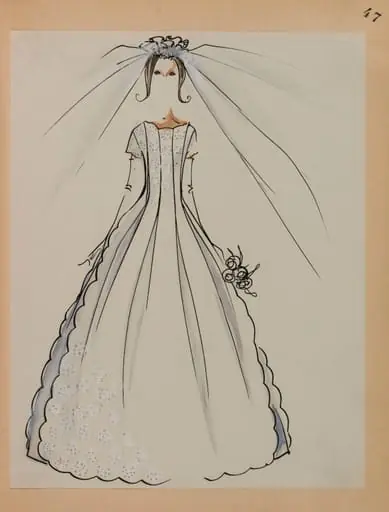 Robe de mariée festonnée et son voile
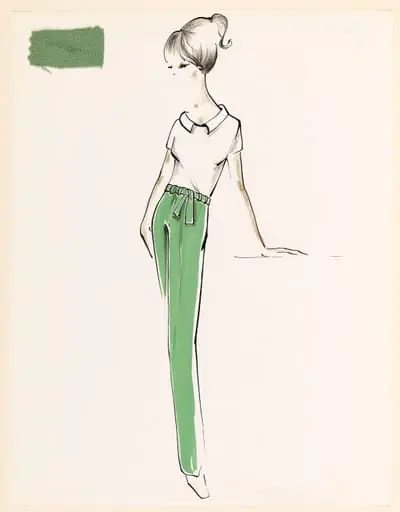 Haut blanc à manches courtes et pantalon vert à ceinture nouée
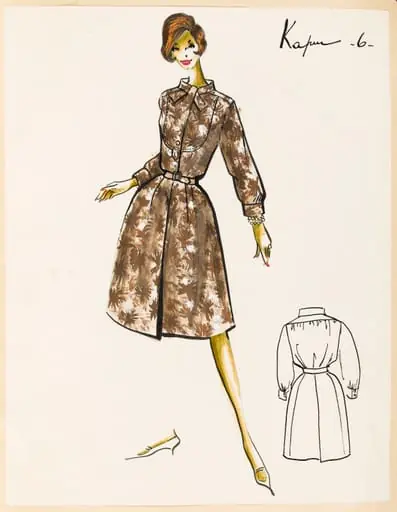 Kapur
Kapur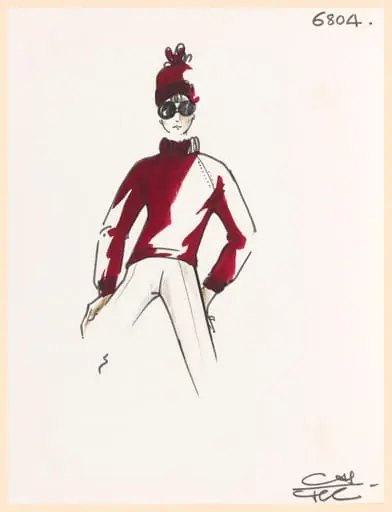 Pull-over à manches longues pourpre, bonnet assorti, pantalon et lunettes de soleil
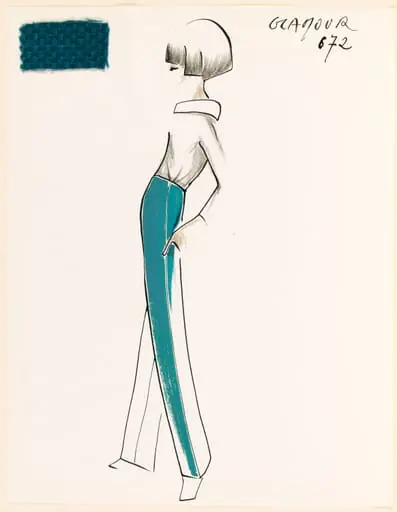 GLAMOUR
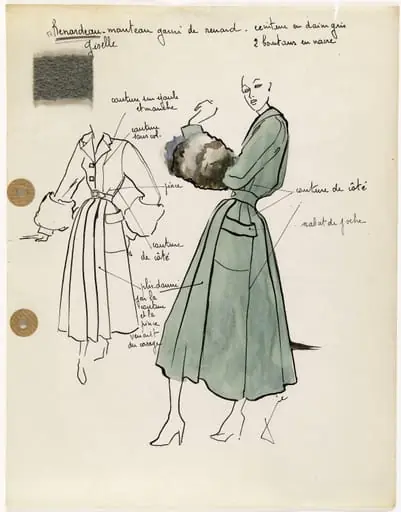 'Renardeau'
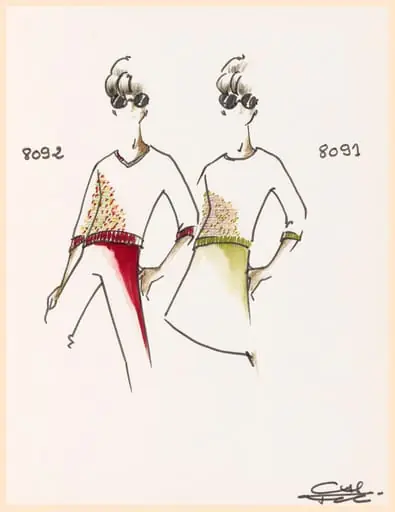 Pull-over à manches trois quarts et à encolure V à motifs multicolores, pantalon cerise et lunettes de soleil
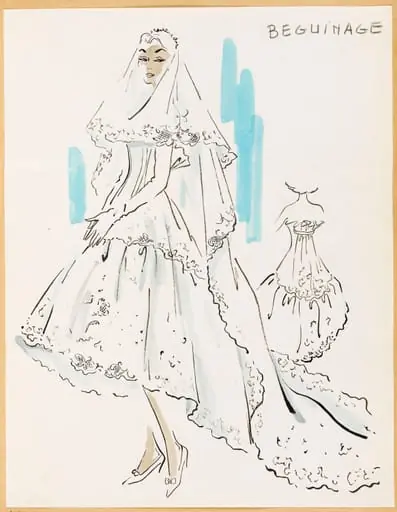 Béguinage