Artwork
Coquin
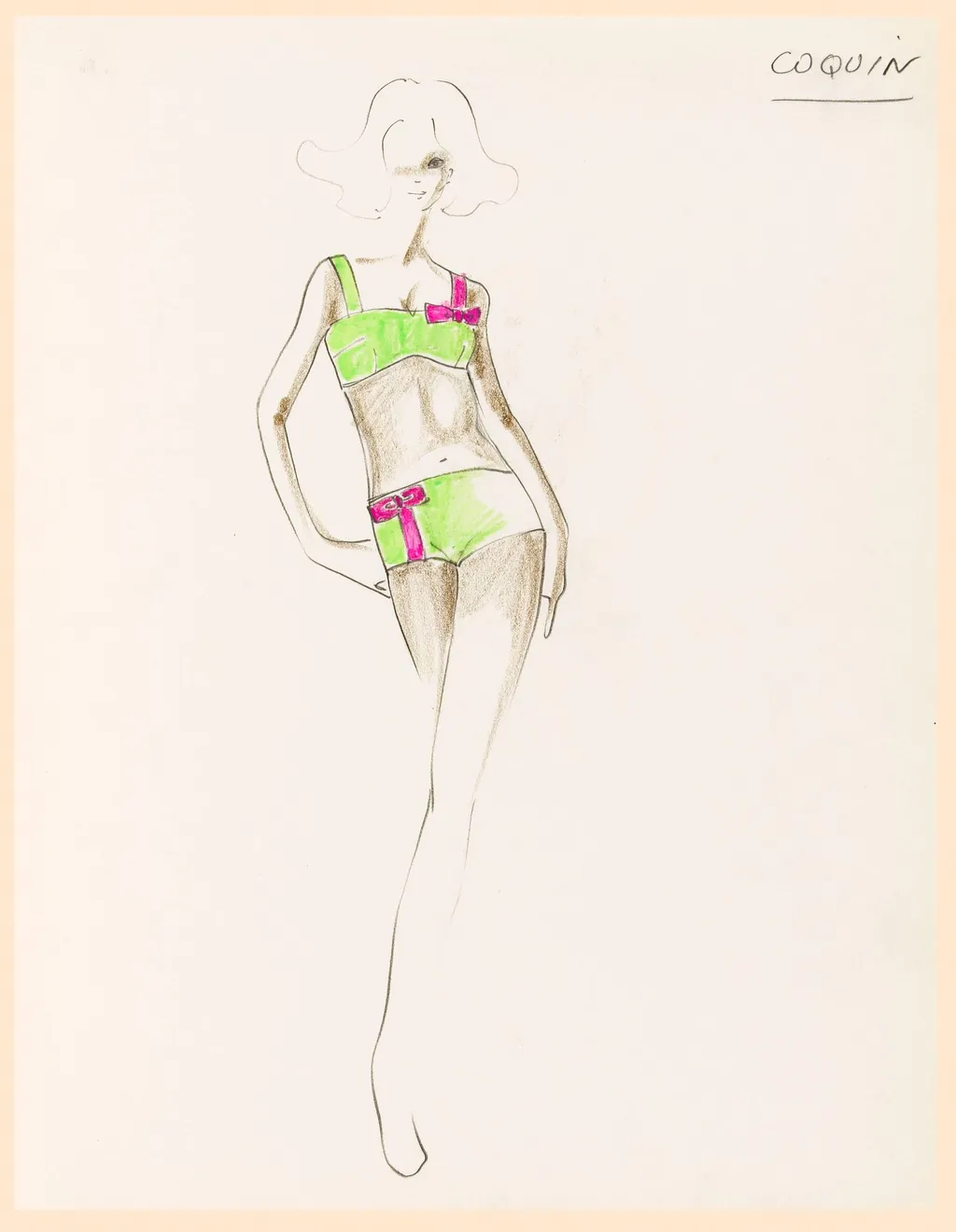
Coquin is a drawing by Marie-Louise Carven. It dates from 1964 and is held in the collection of the Palais Galliera - Musée de la Mode de la Ville de Paris.
About this work
Overview
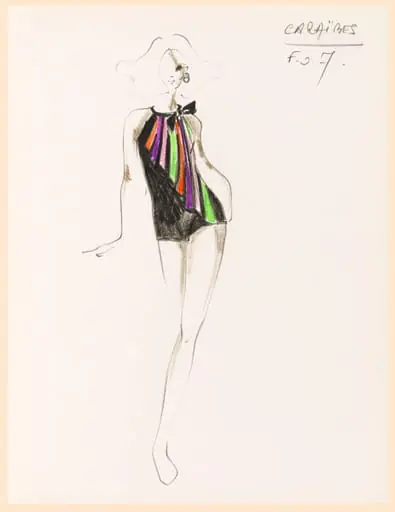
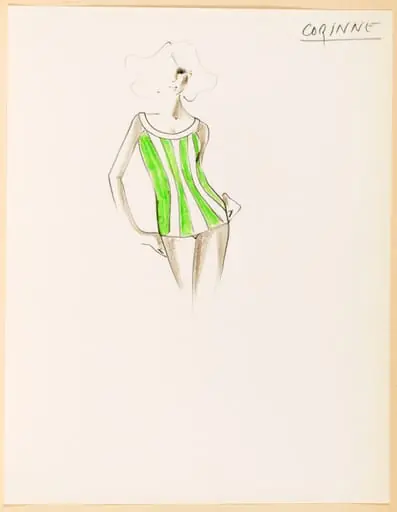
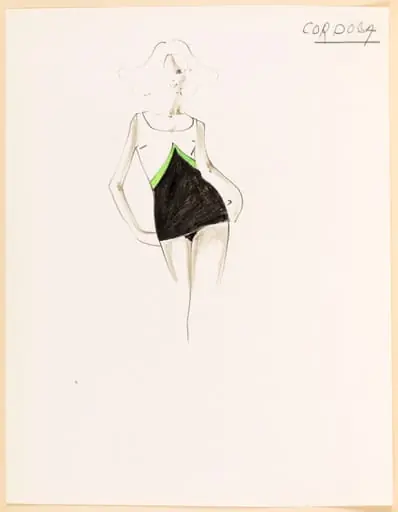
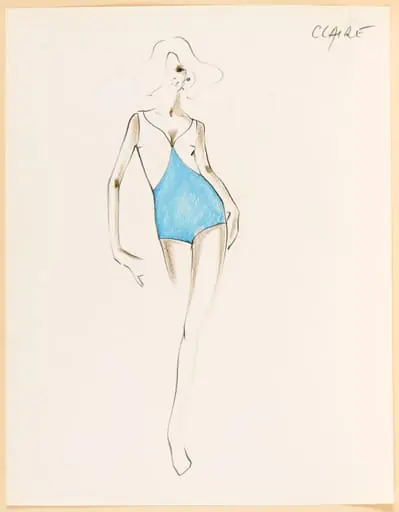
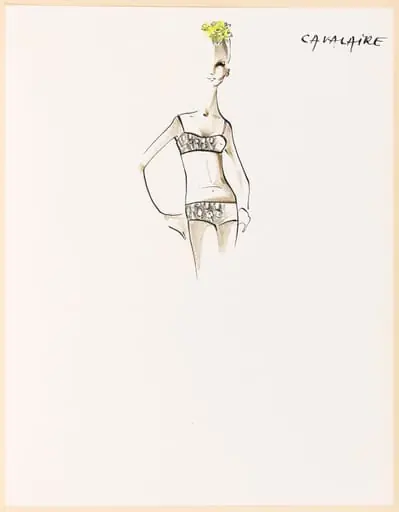
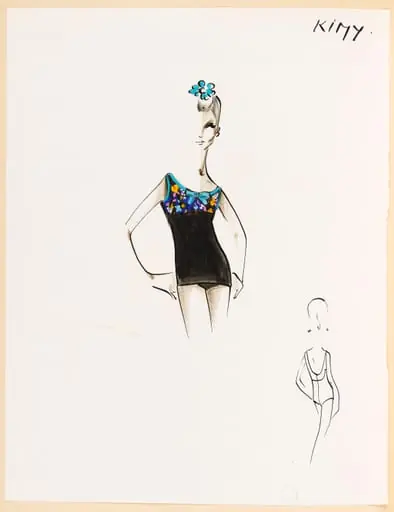
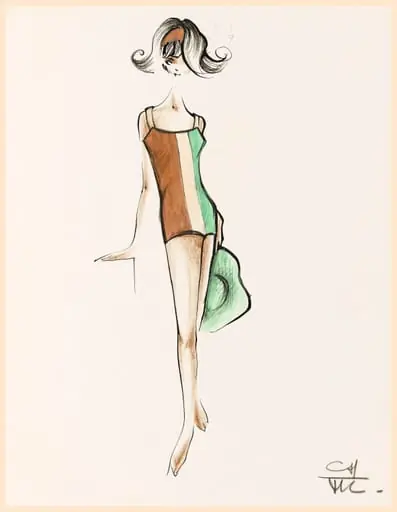
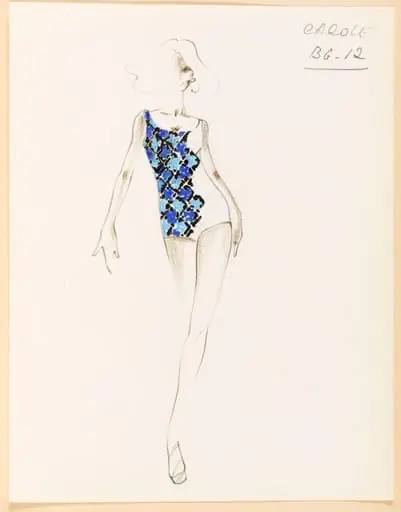
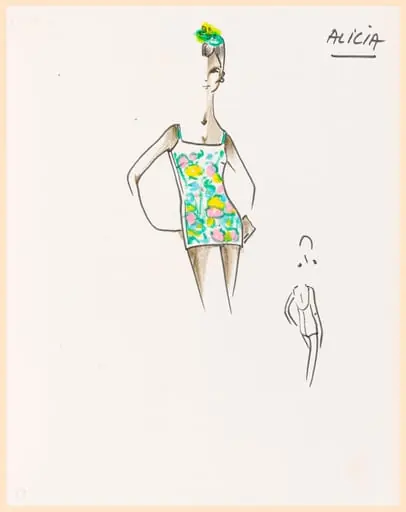
Created around 1964, Coquin is a pencil sketch by French designer Marie-Louise Carven, known for her focus on petite silhouettes and accessible fashion.
Created around 1964, Coquin is a pencil sketch by French designer Marie-Louise Carven, known for her focus on petite silhouettes and accessible fashion. The work captures a figure in a minimalist bikini, rendered with swift, unrefined lines that suggest spontaneity rather than finality. It belongs to the Museum of Ethnography’s collection and reflects Carven’s interest in translating everyday movement and casual elegance into design.
Subject & Meaning
The figure in Coquin stands with relaxed posture, one hand on hip, evoking a sense of ease and self-possession. The bikini’s pink trim against green fabric hints at playful contrast, while the title—Coquin, meaning 'cheeky' or 'mischievous' in French—reinforces a lighthearted tone. The sketch avoids idealization, instead presenting a natural, unposed form that aligns with Carven’s philosophy of clothing for real bodies and real life.
Technique & Style
Carven executed Coquin with loose, rapid pencil strokes, favoring fluidity over precision. The absence of heavy shading or detailed anatomy suggests it was a working sketch, perhaps a quick notation for a garment idea. The minimal use of line conveys form through suggestion rather than definition, echoing the spontaneity of fashion illustration used in design development rather than public presentation.
History & Provenance
Marie-Louise Carven founded her couture house in 1945 and later expanded into prêt-à-porter, a pioneering move in postwar Paris. Coquin dates from the height of her influence, likely produced during her studio’s design process. The sketch entered the Museum of Ethnography’s collection as part of a broader effort to document fashion as cultural artifact, reflecting shifts in postwar women’s lifestyles and dress.
Context
In the 1960s, swimwear became a symbol of social change, with more women embracing active, casual lifestyles. Carven’s design language responded to this shift, favoring light fabrics and simple cuts over elaborate tailoring. Coquin, though a sketch, aligns with broader trends toward informality in women’s fashion and the growing visibility of the body in everyday attire.
Legacy
Coquin exemplifies Carven’s contribution to democratizing fashion through practical, body-conscious design. As a sketch, it reveals the private, iterative side of couture work, contrasting with the polished final garments. Its preservation in a museum context underscores how fashion drawings are now recognized as vital records of design thinking and cultural values in mid-century Europe.
Artist & collection
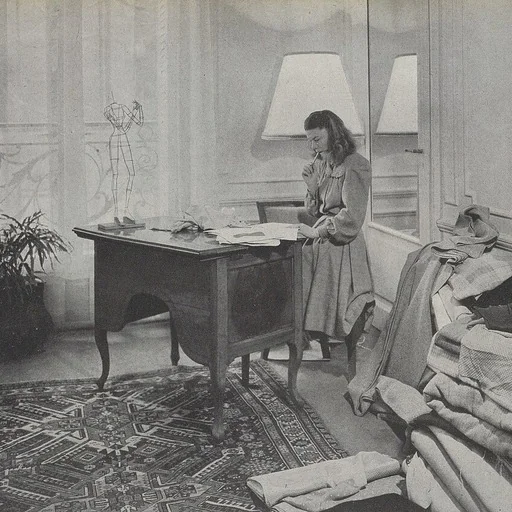
Artist
Marie-Louise Carven (31 August 1909 – 8 June 2015), born Carmen de Tommaso, was a French fashion designer who founded the house of Carven in 1945.
Museum
Palais Galliera - Musée de la Mode de la Ville de Paris
Continue through works from the same source collection.
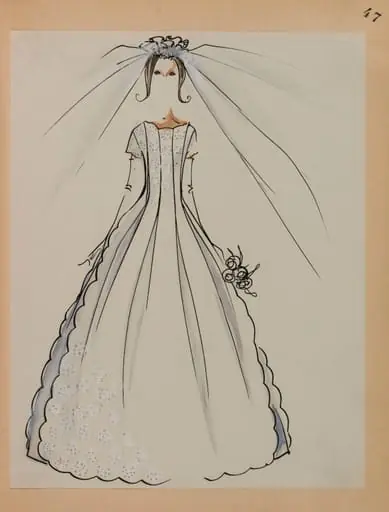 Robe de mariée festonnée et son voile
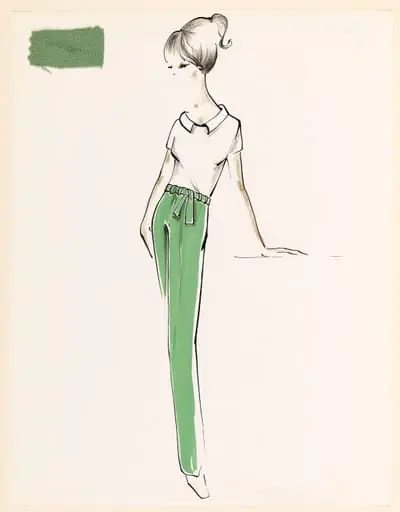 Haut blanc à manches courtes et pantalon vert à ceinture nouée
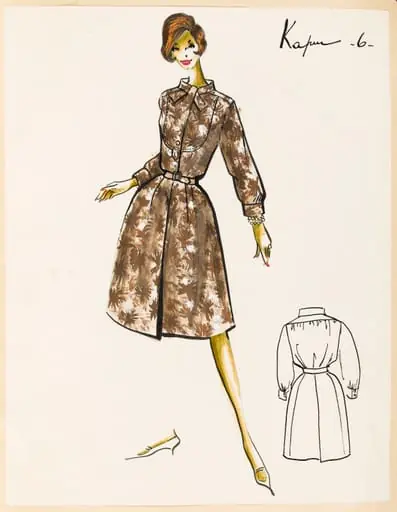 Kapur
Kapur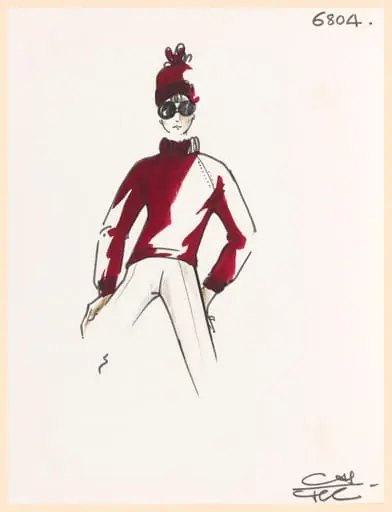 Pull-over à manches longues pourpre, bonnet assorti, pantalon et lunettes de soleil
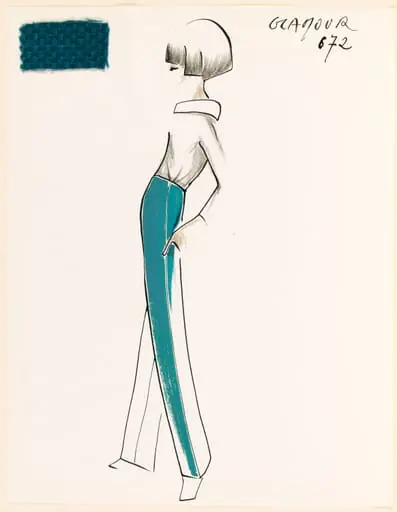 GLAMOUR
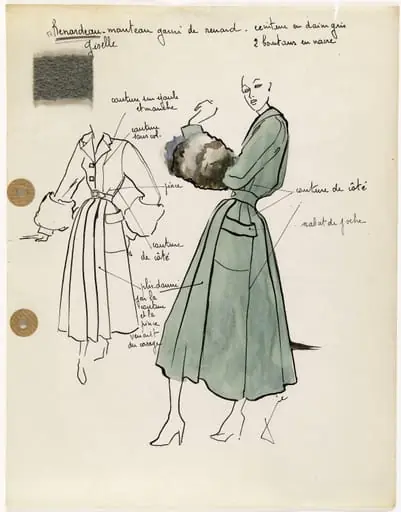 'Renardeau'
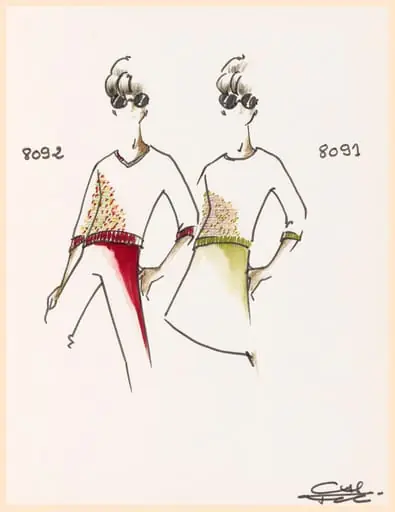 Pull-over à manches trois quarts et à encolure V à motifs multicolores, pantalon cerise et lunettes de soleil
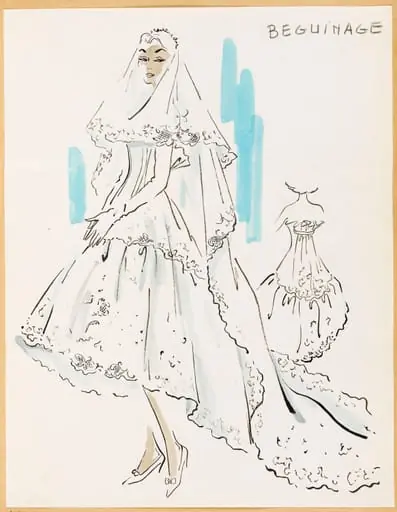 Béguinage