Artwork
Courchevel
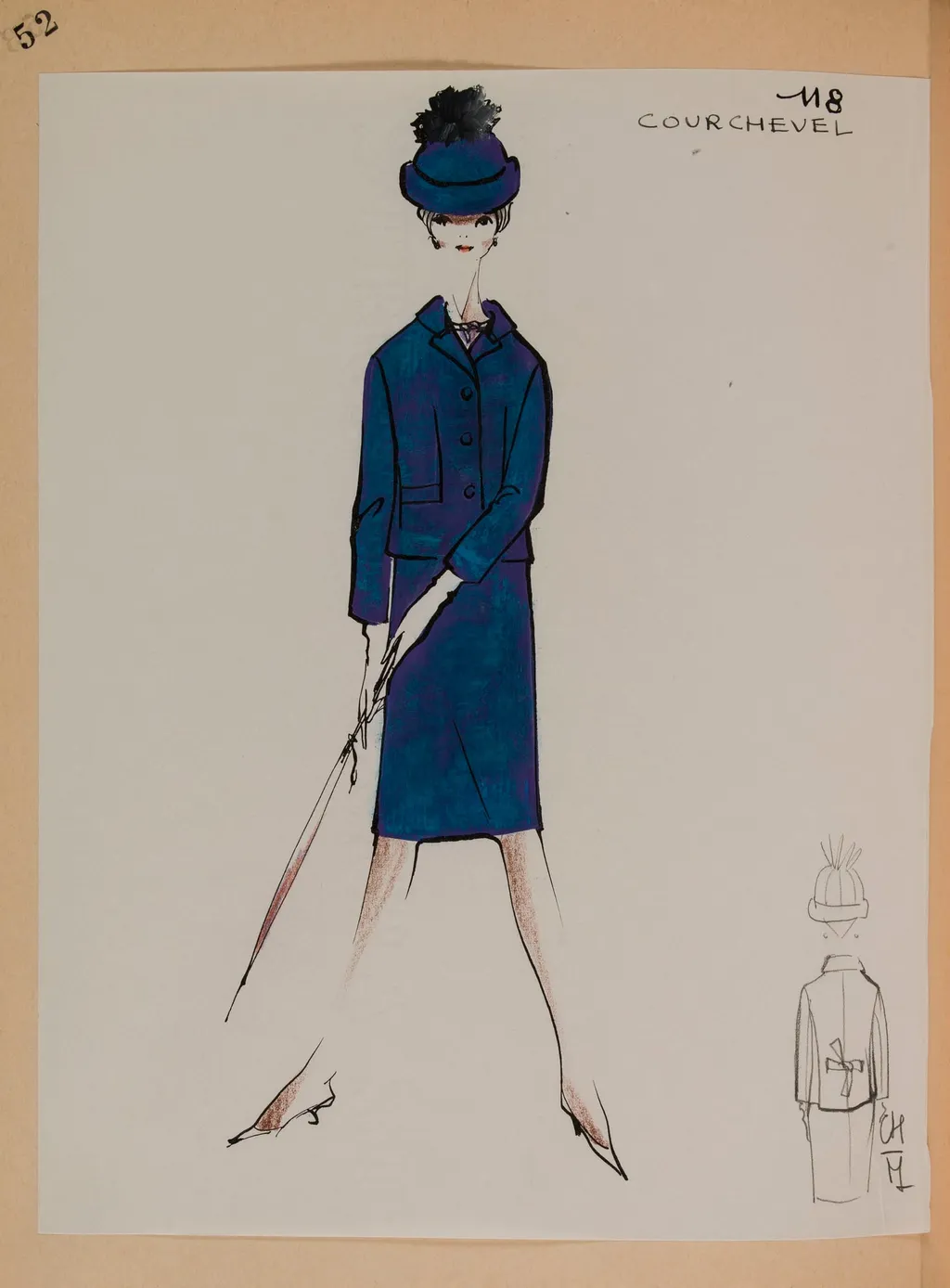
Courchevel is a drawing by Marie-Louise Carven. It dates from 1963 and is held in the collection of the Palais Galliera - Musée de la Mode de la Ville de Paris.
About this work
Overview
The work captures a formal ensemble designed for the French alpine resort, reflecting Carven’s focus on elegant, wearable styles for smaller frames.
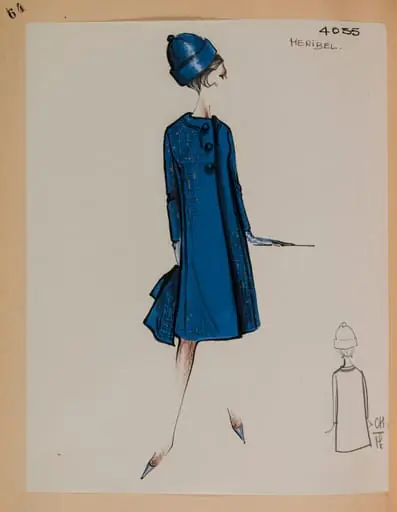
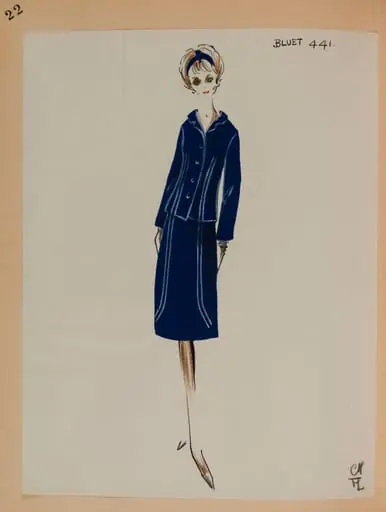
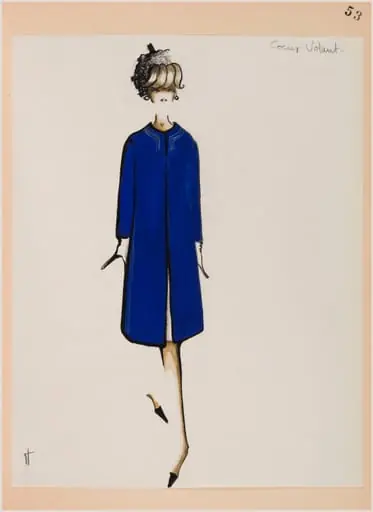
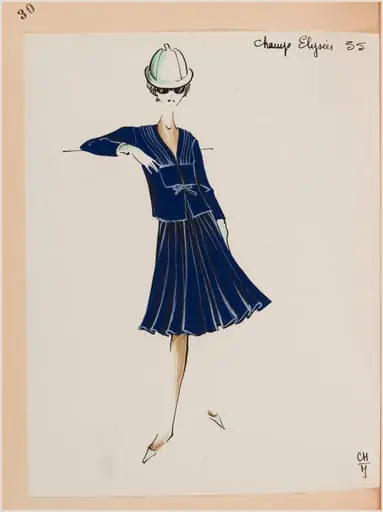
Created around 1963, *Courchevel* is a fashion illustration by Marie-Louise Carven, founder of the Parisian label Carven established in 1945. The work captures a formal ensemble designed for the French alpine resort, reflecting Carven’s focus on elegant, wearable styles for smaller frames. Though produced as a design study, it is now preserved in the Museum of Ethnography, suggesting its cultural significance beyond commercial use.
Subject & Meaning
The illustration depicts a woman dressed in a coordinated blue suit—jacket, knee-length skirt, and hat—accessorized with a black feather and a white umbrella featuring a red handle. The outfit, paired with black shoes, conveys refined outdoor formality. The umbrella suggests preparedness for mountain weather, subtly linking the design to the leisure culture of Courchevel, a destination associated with postwar European sophistication.
Technique & Style
Rendered in pencil or ink on beige paper, the drawing employs clean, precise lines to define the garment’s structure. Minimal shading emphasizes silhouette over texture, typical of fashion plates meant for client presentation. The restrained palette of blue and black, with a single red accent, reflects Carven’s preference for subtle contrast and clarity, aligning with her modernist approach to couture.
History & Provenance
Marie-Louise Carven pioneered ready-to-wear fashion in France, making her work accessible beyond elite clients. *Courchevel* likely served as a design proposal or catalog piece for her seasonal collection. Its acquisition by the Museum of Ethnography indicates recognition of its role in documenting mid-century French social habits and fashion’s evolving relationship with leisure.
Context
In the early 1960s, French fashion increasingly responded to changing lifestyles, including alpine tourism and women’s mobility. Carven’s designs catered to this shift, blending couture refinement with practicality. *Courchevel* exemplifies how fashion illustrators translated seasonal trends into visual narratives that connected clothing with place, activity, and identity.
Legacy
Though not a garment itself, *Courchevel* preserves the aesthetic values of Carven’s atelier: understated elegance, attention to proportion, and integration of function into style. As a surviving artifact of early prêt-à-porter development, it contributes to the historical record of how fashion democratized without sacrificing sophistication.
Artist & collection
Artist
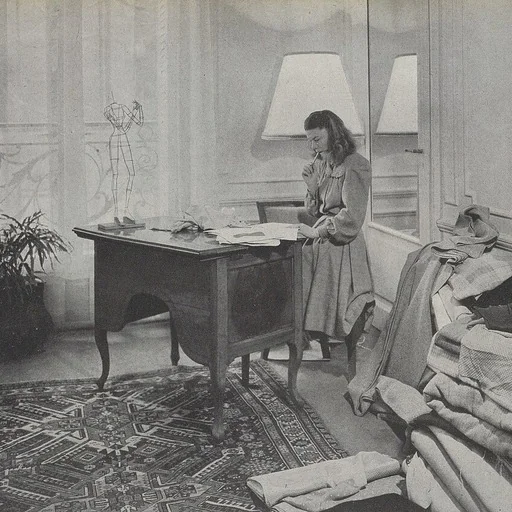
Marie-Louise Carven (31 August 1909 – 8 June 2015), born Carmen de Tommaso, was a French fashion designer who founded the house of Carven in 1945.
Museum
Palais Galliera - Musée de la Mode de la Ville de Paris
Continue through works from the same source collection.
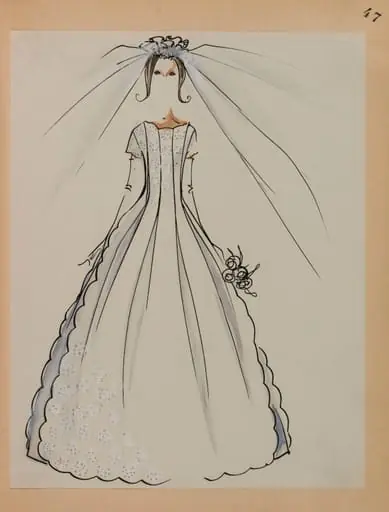 Robe de mariée festonnée et son voile
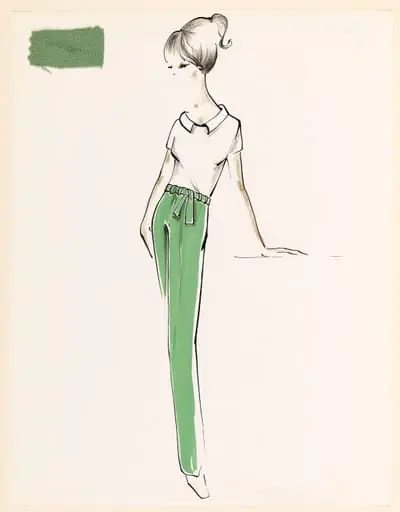 Haut blanc à manches courtes et pantalon vert à ceinture nouée
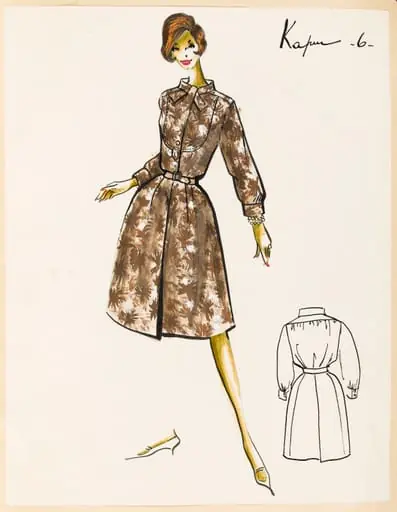 Kapur
Kapur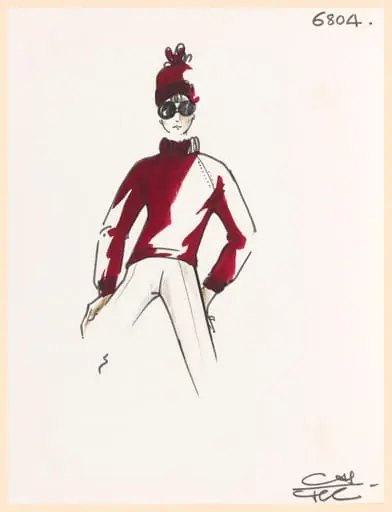 Pull-over à manches longues pourpre, bonnet assorti, pantalon et lunettes de soleil
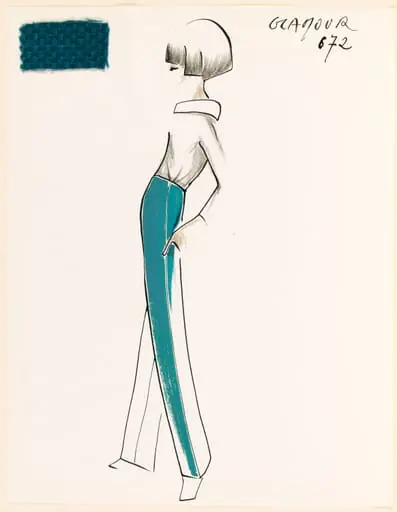 GLAMOUR
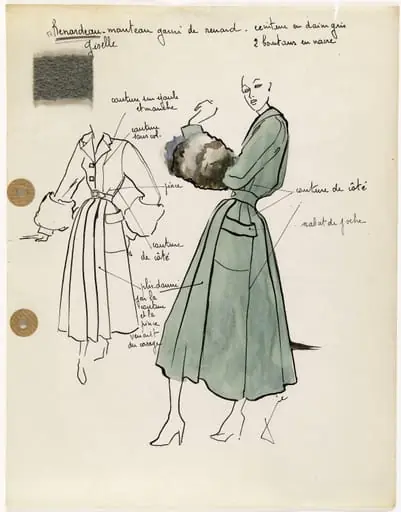 'Renardeau'
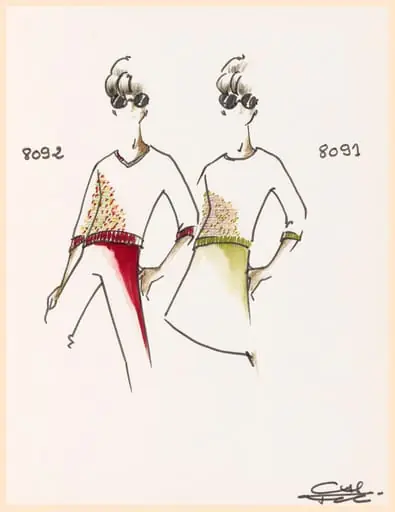 Pull-over à manches trois quarts et à encolure V à motifs multicolores, pantalon cerise et lunettes de soleil
 Béguinage