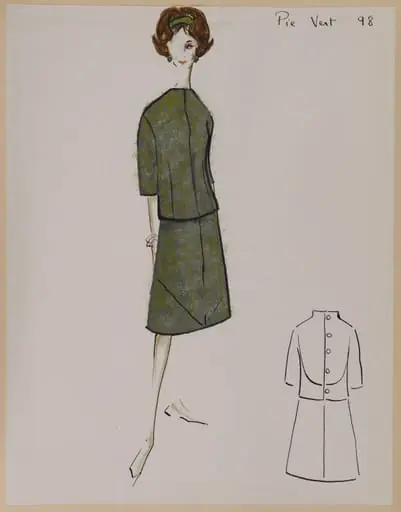
Artwork
Fanfan la Tulipe
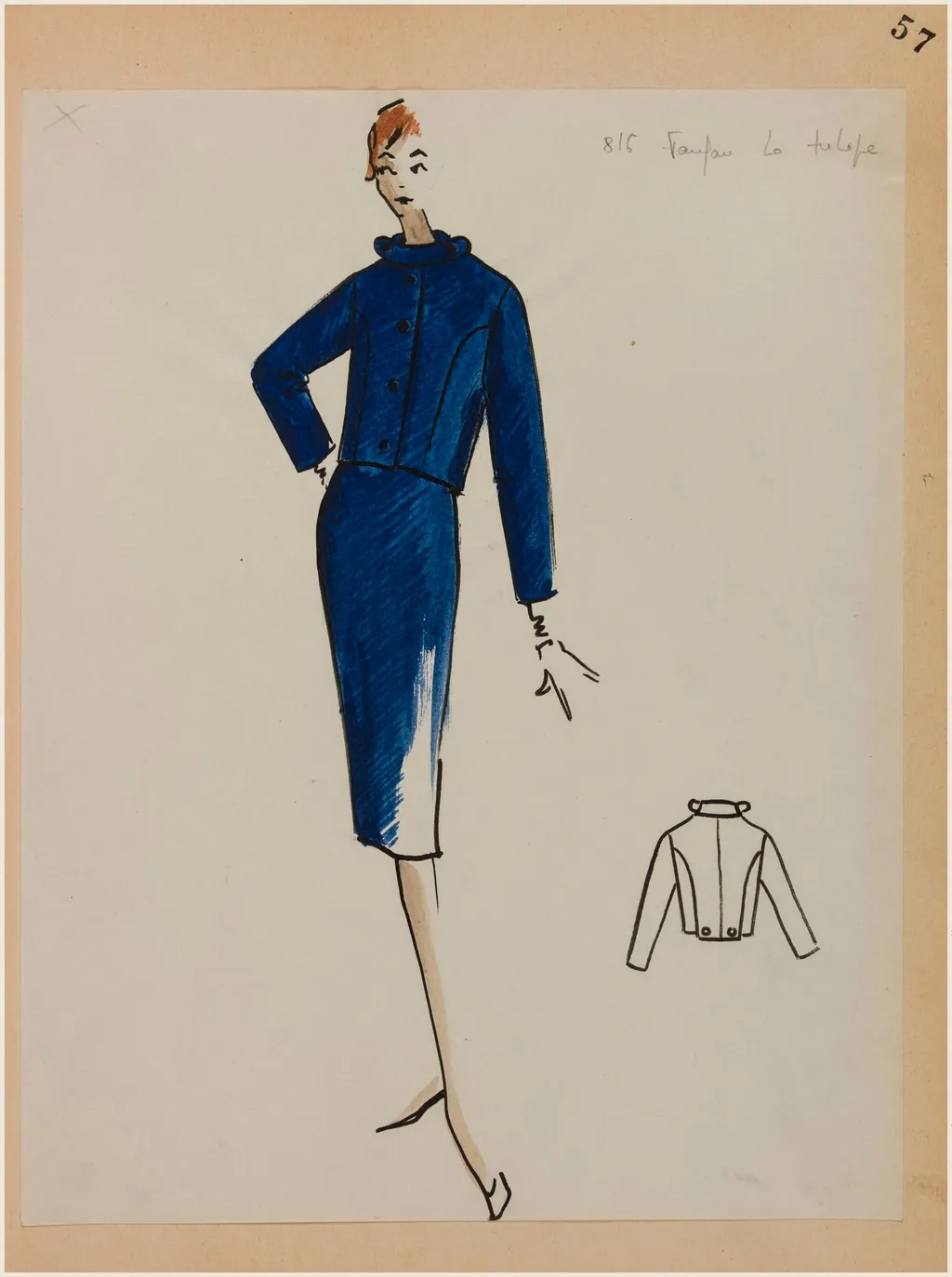
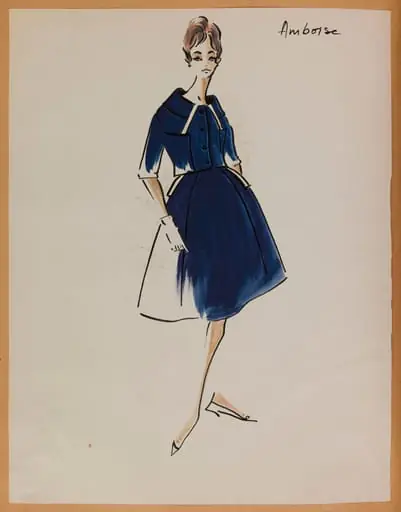
Fanfan la Tulipe is a drawing by Marie-Louise Carven. It dates from 1958 and is held in the collection of the Palais Galliera - Musée de la Mode de la Ville de Paris.
About this work
Overview
This ink sketch, dated around 1958, is attributed to Marie-Louise Carven, founder of the Parisian fashion house Carven.
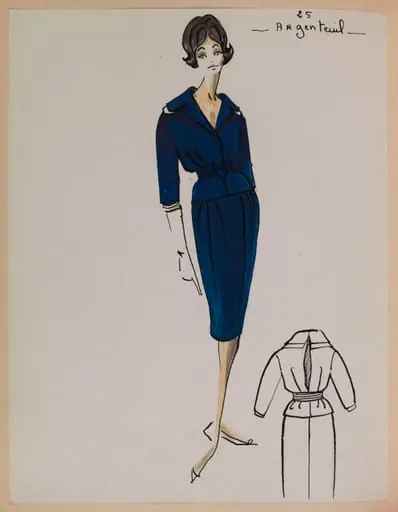
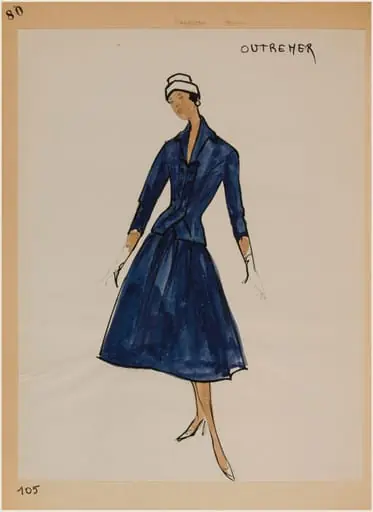
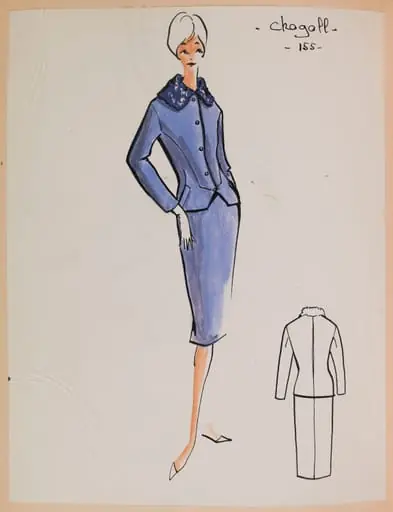
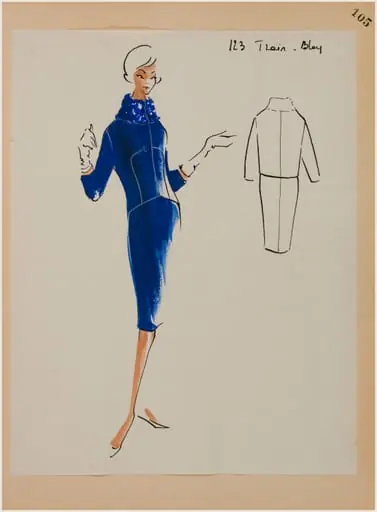
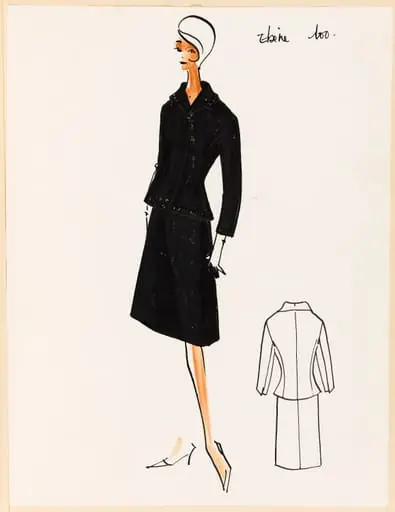
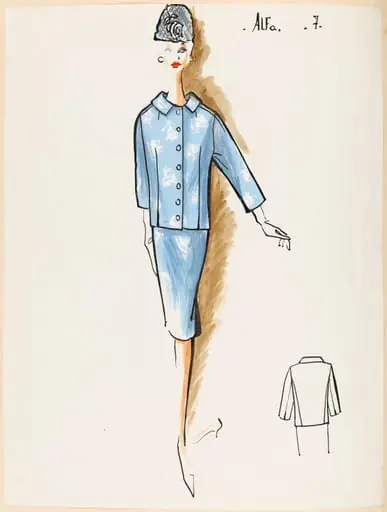
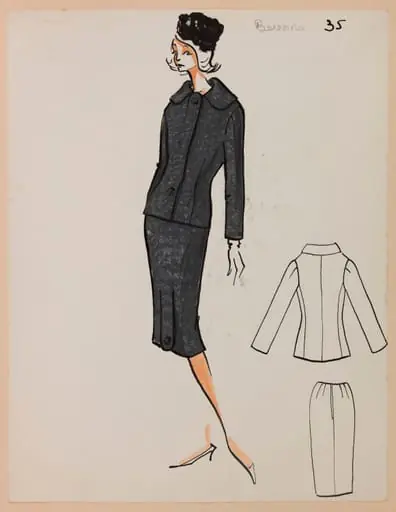
This ink sketch, dated around 1958, is attributed to Marie-Louise Carven, founder of the Parisian fashion house Carven. It depicts a female figure in a dark blue ensemble, rendered with swift, unembellished lines. The drawing lacks a background and includes a smaller study of the jacket in the corner. A handwritten title, 'Fanfan la Tulipe,' appears beside the figure, suggesting a design name rather than a portrait. The work reflects Carven’s approach to wearable, modestly scaled fashion.
Subject & Meaning
The figure, posed with relaxed posture—one hand on the hip, the other hanging loosely—conveys ease rather than formality. The title 'Fanfan la Tulipe' may reference a garment line or a fictional persona, aligning with Carven’s playful naming conventions. The sketch does not aim to capture a specific individual but rather to communicate the silhouette and movement of a design intended for everyday wear, emphasizing practicality and lightness.
Technique & Style
Executed in loose, confident ink lines, the drawing prioritizes gesture over detail. There is no shading or background, focusing attention solely on the form of the outfit. A secondary sketch of the jacket, drawn in the corner, indicates iterative design thinking. The style is characteristic of fashion illustration from mid-century Paris, where speed and clarity were valued over ornamentation, serving as a working tool rather than a finished artwork.
History & Provenance
The sketch is held in the collection of the Museum of Ethnography, suggesting its significance as a cultural artifact of postwar French fashion. Carven, who founded her house in 1945, was among the first to transition couture into ready-to-wear. This drawing likely originated in her studio as part of the design process, documenting one of many concepts developed during the late 1950s, a period when her brand expanded its commercial reach.
Context
In the late 1950s, Parisian fashion was shifting toward accessibility and youth-oriented styles. Carven’s designs catered to smaller frames and emphasized comfort without sacrificing elegance. This sketch reflects broader trends: the move away from rigid tailoring, the embrace of casual silhouettes, and the increasing role of sketches as functional design documents. It aligns with the era’s growing interest in clothing as part of daily life, not just ceremonial attire.
Legacy
Carven’s work helped redefine women’s fashion by prioritizing practicality and proportion. This sketch, though modest in scale, exemplifies her design philosophy: clean lines, light fabrics, and an understanding of the body in motion. As a surviving artifact from her studio, it contributes to the historical record of how ready-to-wear fashion evolved in postwar Europe, influencing later designers who valued simplicity and wearability.
Artist & collection
Artist
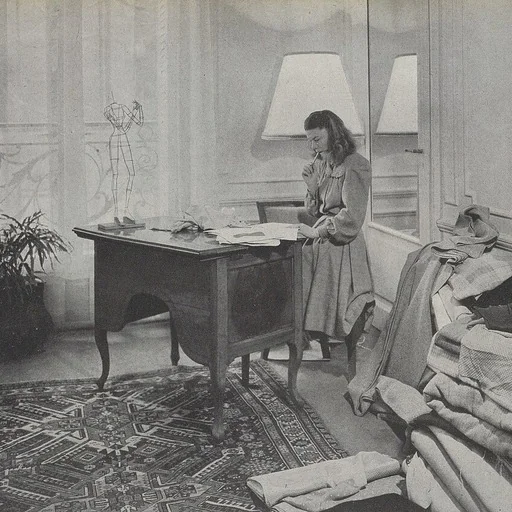
Marie-Louise Carven (31 August 1909 – 8 June 2015), born Carmen de Tommaso, was a French fashion designer who founded the house of Carven in 1945.
Museum
Palais Galliera - Musée de la Mode de la Ville de Paris
Continue through works from the same source collection.
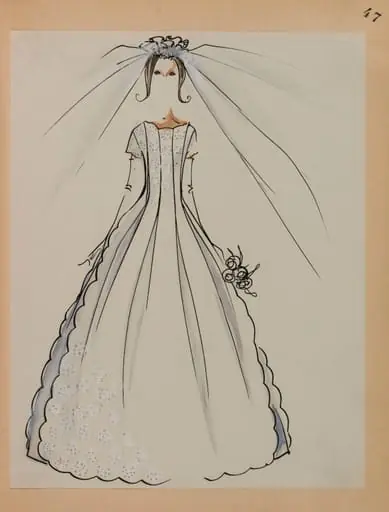 Robe de mariée festonnée et son voile
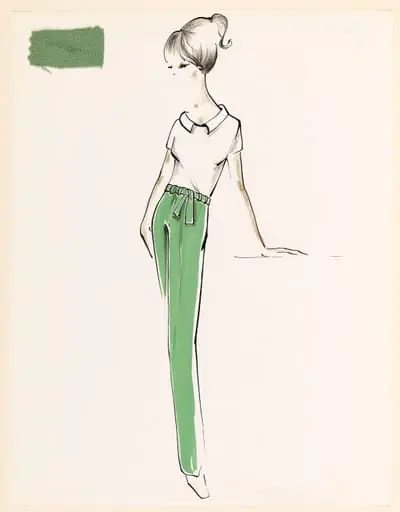 Haut blanc à manches courtes et pantalon vert à ceinture nouée
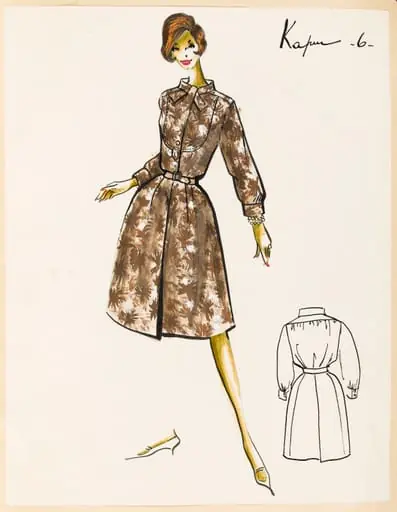 Kapur
Kapur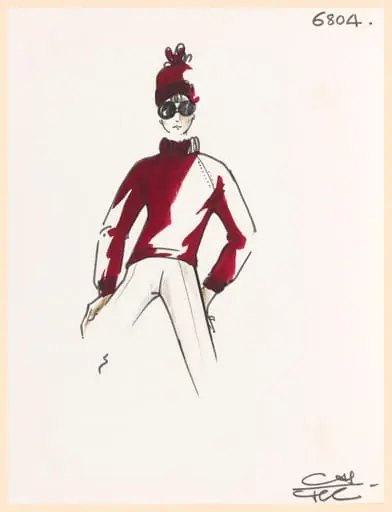 Pull-over à manches longues pourpre, bonnet assorti, pantalon et lunettes de soleil
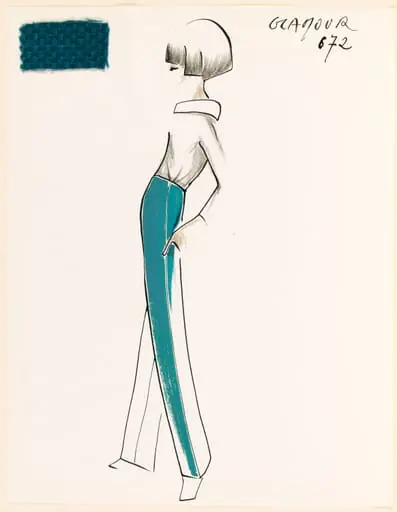 GLAMOUR
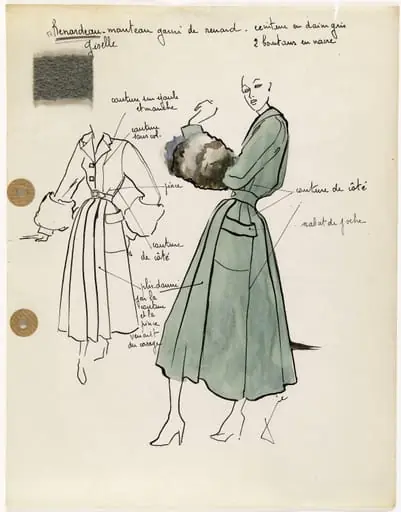 'Renardeau'
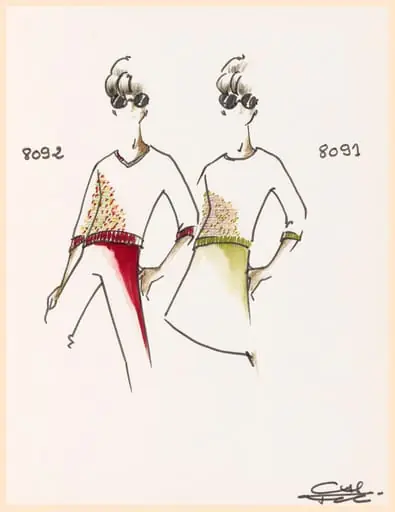 Pull-over à manches trois quarts et à encolure V à motifs multicolores, pantalon cerise et lunettes de soleil
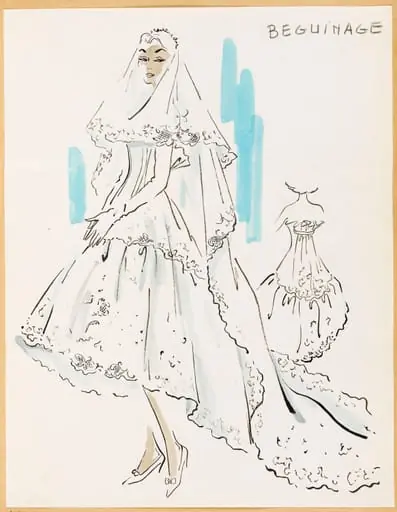 Béguinage