Artwork
Djinn
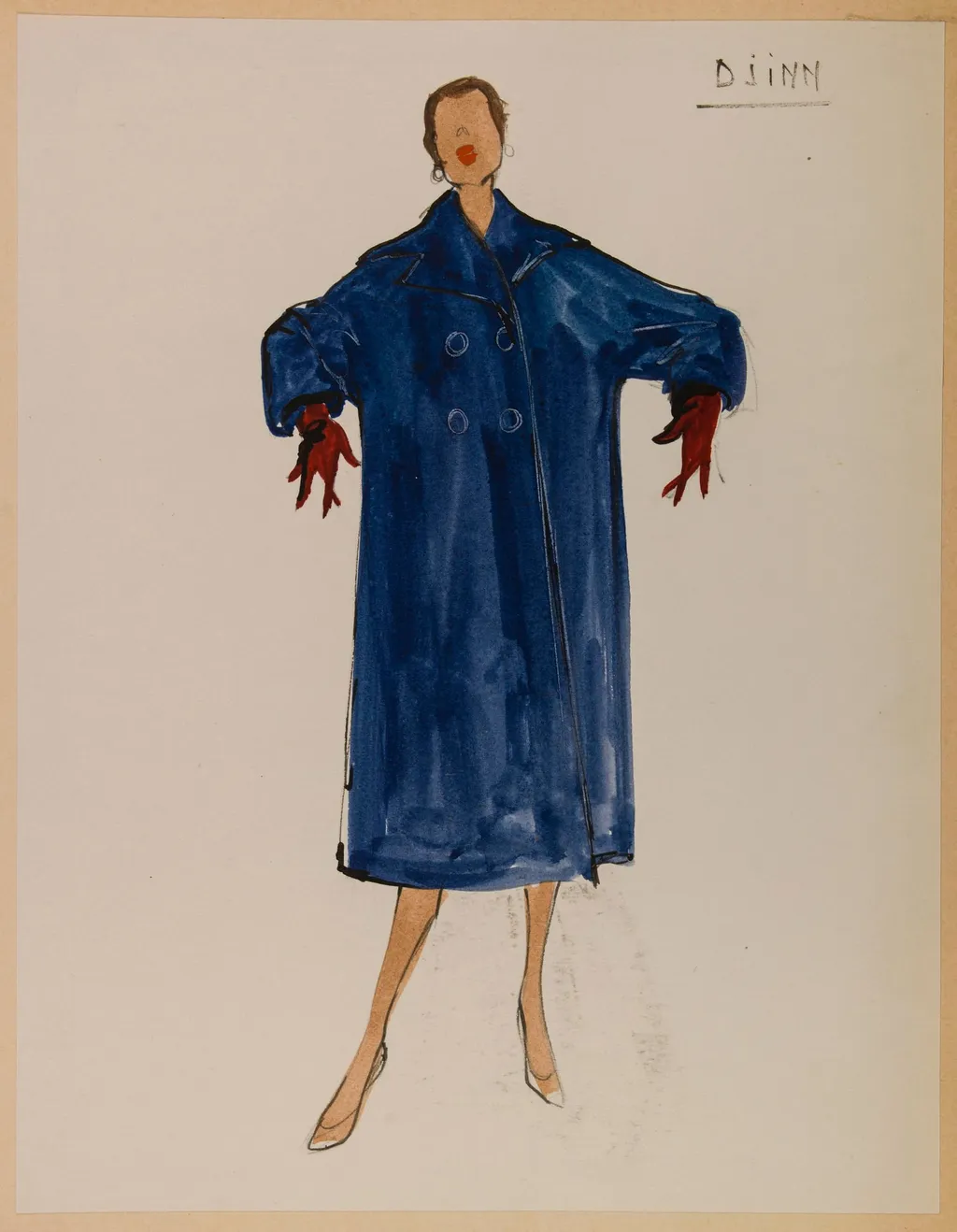
Djinn is a drawing by Marie-Louise Carven. It dates from 1953 and is held in the collection of the Palais Galliera - Musée de la Mode de la Ville de Paris.
About this work
Overview
Created around 1953, *Djinn* is a fashion sketch by Marie-Louise Carven, founder of the Parisian house Carven established in 1945.
Created around 1953, *Djinn* is a fashion sketch by Marie-Louise Carven, founder of the Parisian house Carven established in 1945. The work reflects her interest in practical, wearable design for smaller frames. Though rendered as a drawing, it was intended as a prototype for a garment, part of her broader effort to bridge haute couture with accessible ready-to-wear fashion. The piece resides in the Museum of Ethnography’s collection, highlighting its cultural significance beyond mere clothing design.
Subject & Meaning
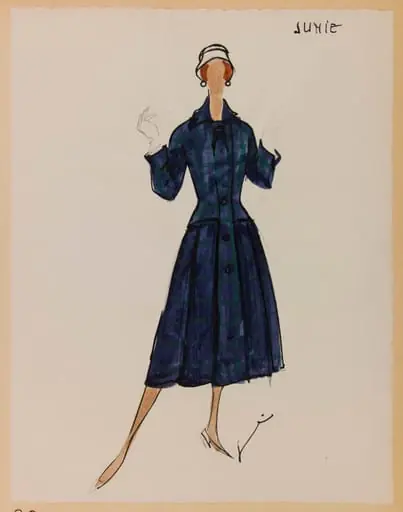
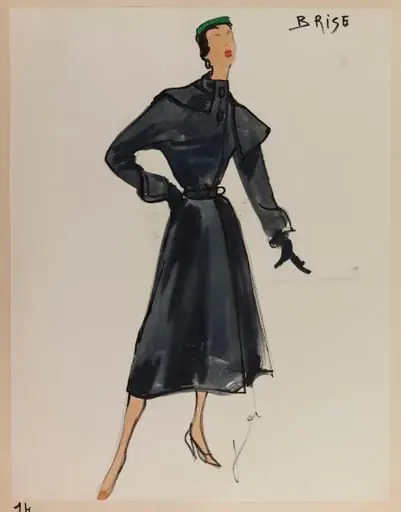
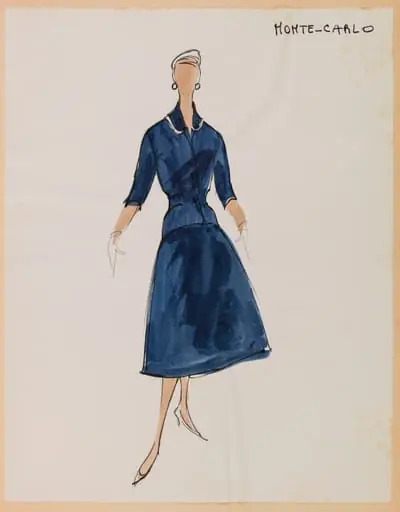
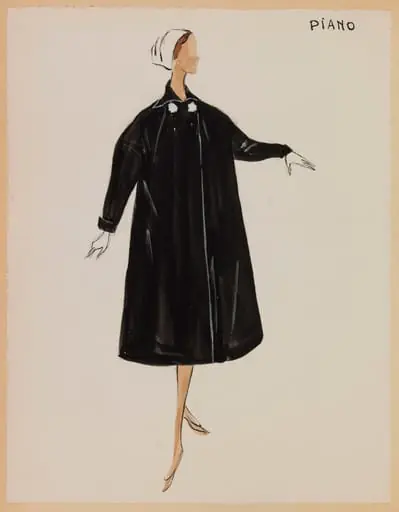
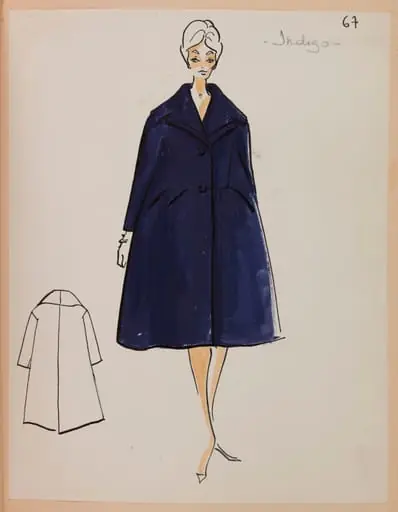
The sketch depicts a woman in a long, dark-blue coat with a belted waist and large pockets, suggesting functionality and ease of movement. The bright red gloves draw attention, creating a deliberate contrast that emphasizes gesture and presence. The neat hair and simple shoes imply modesty and composure. The coat’s robe-like silhouette conveys comfort without sacrificing structure, reflecting mid-century ideals of refined, everyday elegance for the modern woman.
Technique & Style
Carven rendered *Djinn* with clean, precise lines typical of fashion illustration of the period. The use of monochrome blue for the garment allows the vivid red gloves to serve as a focal point, demonstrating her understanding of color as a compositional tool. The loose, flowing form of the coat is suggested through minimal shading, prioritizing silhouette over detail. This restrained approach underscores her design philosophy: clarity, utility, and quiet sophistication.
History & Provenance
Marie-Louise Carven launched her label in 1945, quickly gaining recognition for democratizing Parisian style. *Djinn* emerged during the early years of her prêt-à-porter initiative, a pioneering move in postwar French fashion. The sketch entered the Museum of Ethnography’s holdings as part of a broader effort to document design as cultural artifact. Its preservation signals recognition of fashion as a legitimate subject of anthropological study, not merely aesthetic expression.
Context
In the early 1950s, Parisian fashion was transitioning from exclusive couture toward accessible ready-to-wear. Carven was among the first to respond to changing social norms, including women’s increased mobility and desire for practical attire. *Djinn* reflects this shift—its relaxed cut and functional details align with postwar needs for versatility. The sketch’s inclusion in an ethnographic museum situates it within wider cultural conversations about gender, labor, and daily life in mid-century Europe.
Legacy
Carven’s work, including *Djinn*, helped redefine the boundaries of fashion design by prioritizing wearability over ornamentation. Her early adoption of prêt-à-porter influenced subsequent generations of designers seeking to merge artistic vision with everyday utility. The sketch remains a quiet testament to a design ethos that valued comfort and restraint, contributing to the evolving perception of fashion as both art and social practice.
Artist & collection
Artist
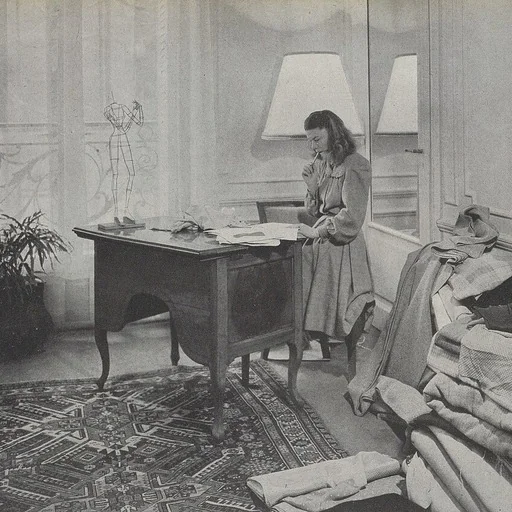
Marie-Louise Carven (31 August 1909 – 8 June 2015), born Carmen de Tommaso, was a French fashion designer who founded the house of Carven in 1945.
Museum
Palais Galliera - Musée de la Mode de la Ville de Paris
Continue through works from the same source collection.
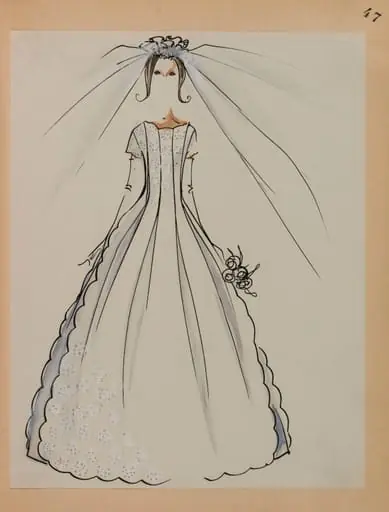 Robe de mariée festonnée et son voile
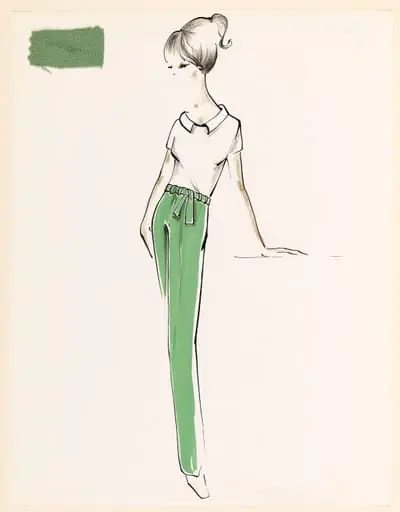 Haut blanc à manches courtes et pantalon vert à ceinture nouée
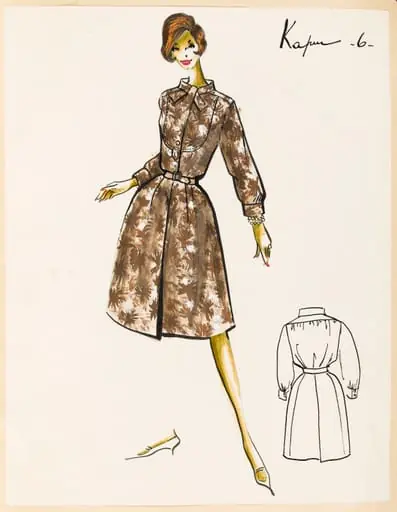 Kapur
Kapur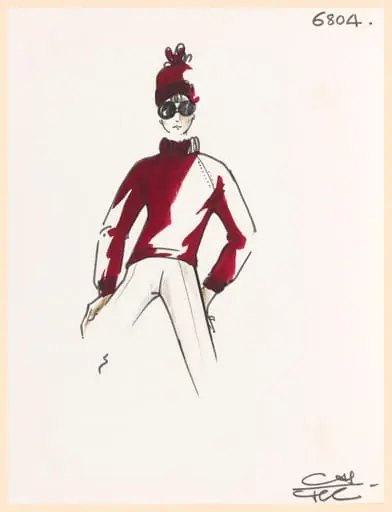 Pull-over à manches longues pourpre, bonnet assorti, pantalon et lunettes de soleil
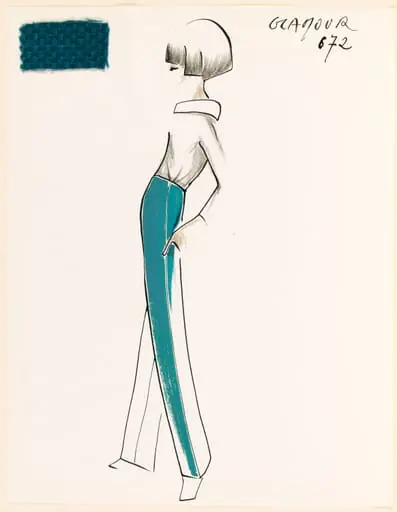 GLAMOUR
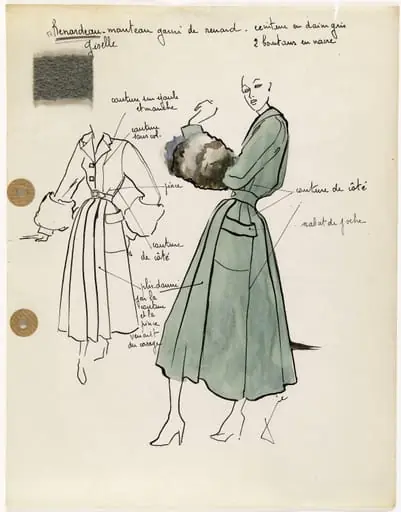 'Renardeau'
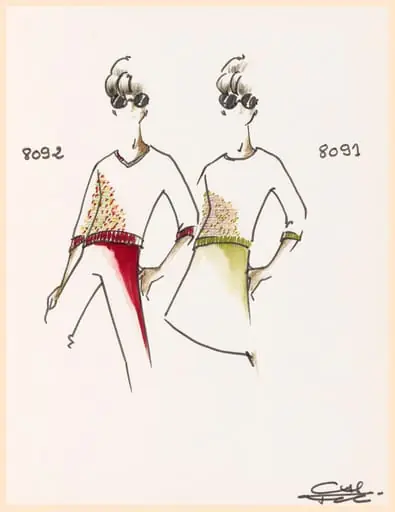 Pull-over à manches trois quarts et à encolure V à motifs multicolores, pantalon cerise et lunettes de soleil
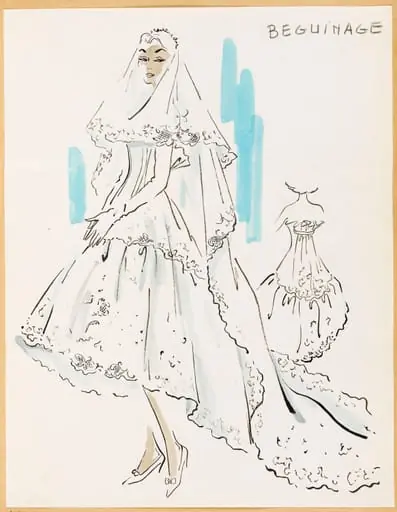 Béguinage