Artwork
Narguilé
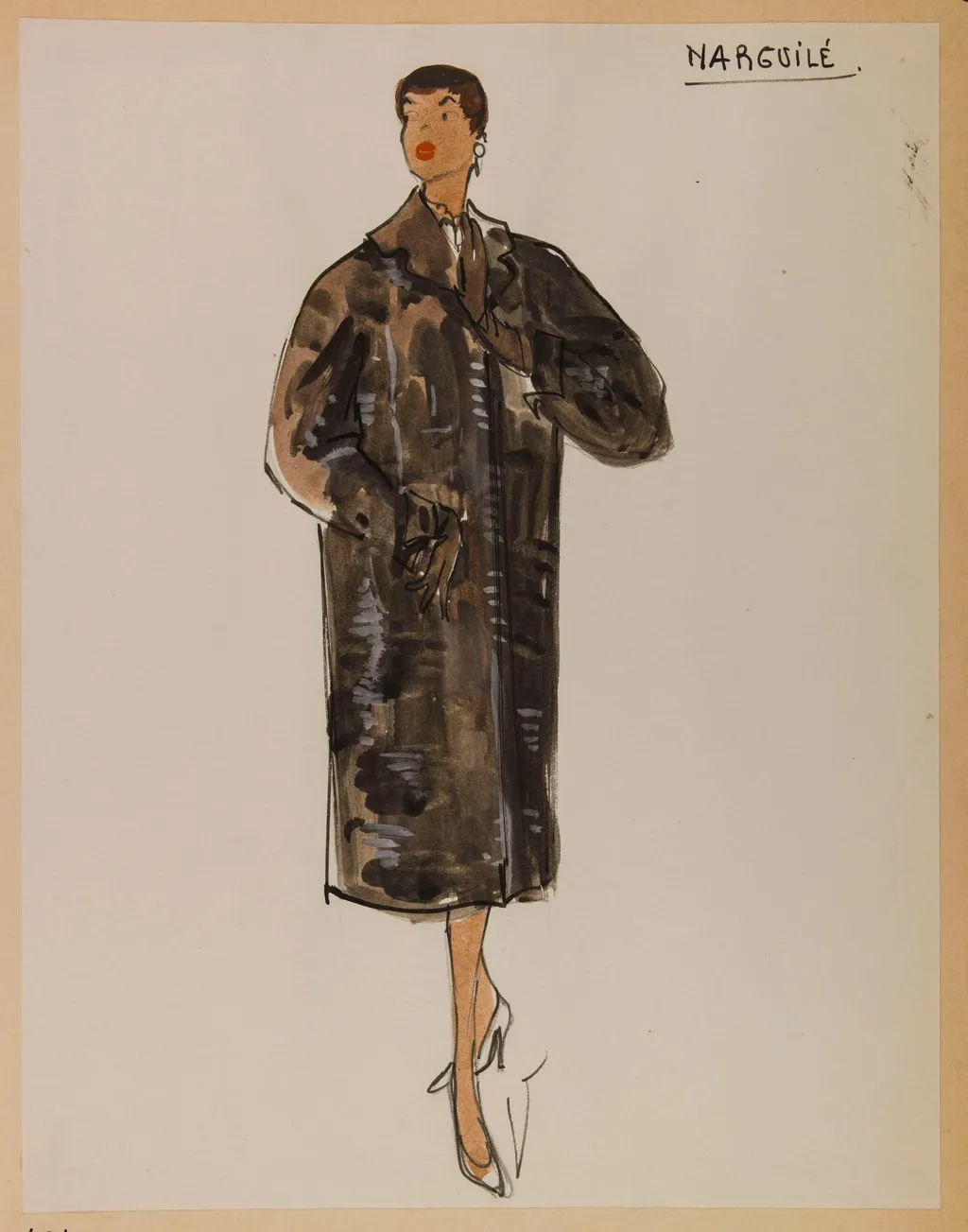
Narguilé is a drawing by Marie-Louise Carven. It dates from 1953 and is held in the collection of the Palais Galliera - Musée de la Mode de la Ville de Paris.
About this work
Overview
Created around 1953 by French designer Marie-Louise Carven, *Narguilé* is a fashion sketch in ink or pencil, capturing a woman in a flowing, belted coat.
Created around 1953 by French designer Marie-Louise Carven, *Narguilé* is a fashion sketch in ink or pencil, capturing a woman in a flowing, belted coat. Carven, who founded her label in 1945, was known for adapting haute couture principles to more accessible designs. The drawing, held by the Museum of Ethnography, reflects her interest in wearable elegance and the quiet sophistication of everyday dress.
Subject & Meaning
The figure in *Narguilé* wears a long, loosely fitted coat with wide sleeves and a defined waist, suggesting both structure and ease. Her restrained hairstyle and minimal jewelry emphasize understated grace. The title, referencing the hookah pipe, may allude to a languid, contemplative mood or an exoticized aesthetic popular in mid-century fashion, though the garment itself remains grounded in European silhouettes.
Technique & Style
Carven rendered the coat with swift, fluid lines that suggest fabric’s weight and movement without heavy shading. The wrinkles and soft folds imply a natural drape, likely inspired by lightweight wool or silk. The sketch’s spontaneity aligns with fashion illustration traditions, where immediacy conveys both design intent and the vitality of the wearer’s presence.
History & Provenance
The drawing entered the collection of the Museum of Ethnography, likely through donation or acquisition tied to Carven’s broader cultural influence. Though not a finished garment, it represents the designer’s process during the early years of her prêt-à-porter initiative. Its preservation underscores the growing recognition of fashion sketches as cultural artifacts beyond mere design tools.
Context
In the early 1950s, Parisian fashion was transitioning from postwar austerity toward renewed experimentation. Carven’s focus on petite proportions and practical luxury stood apart from the volume-driven silhouettes of larger houses. *Narguilé* reflects this shift—prioritizing comfort and individuality, aligning with the rise of modern, independent women in postwar Europe.
Legacy
As one of the first French couturiers to embrace ready-to-wear, Carven helped redefine fashion accessibility. *Narguilé* endures not as a commercial product but as a testament to her design philosophy: refined simplicity, attention to the female form, and an unpretentious elegance. The sketch remains a quiet example of how fashion drawing can capture the spirit of an era.
Artist & collection
Artist
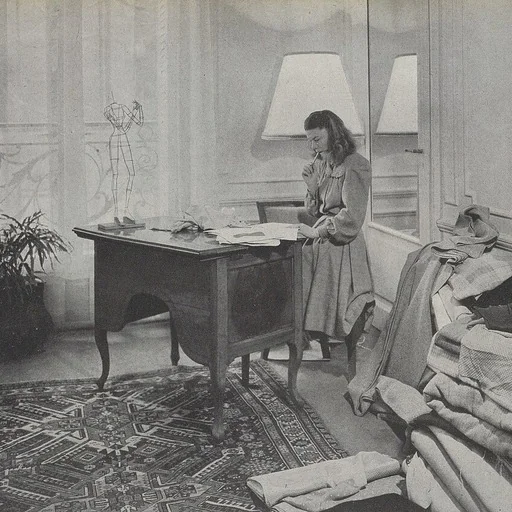
Marie-Louise Carven (31 August 1909 – 8 June 2015), born Carmen de Tommaso, was a French fashion designer who founded the house of Carven in 1945.
Museum
Palais Galliera - Musée de la Mode de la Ville de Paris
Continue through works from the same source collection.
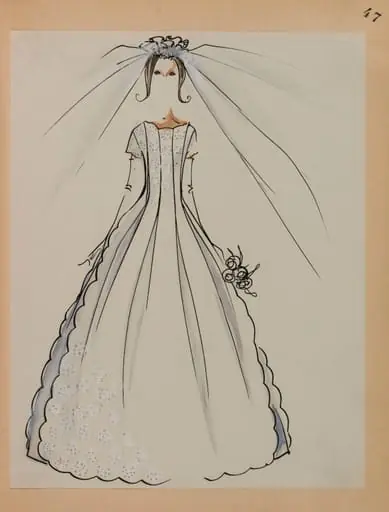 Robe de mariée festonnée et son voile
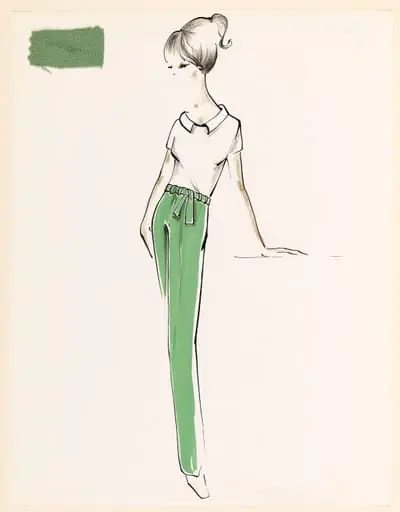 Haut blanc à manches courtes et pantalon vert à ceinture nouée
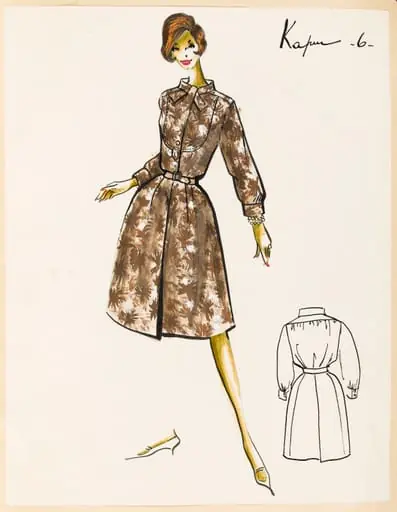 Kapur
Kapur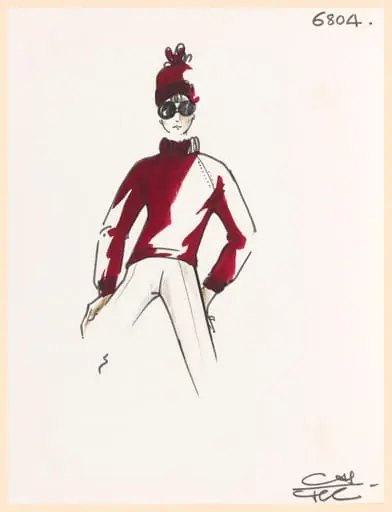 Pull-over à manches longues pourpre, bonnet assorti, pantalon et lunettes de soleil
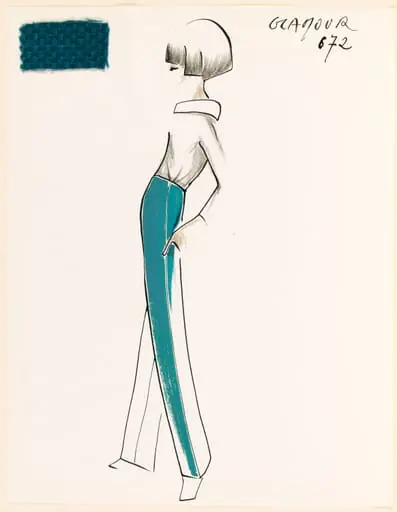 GLAMOUR
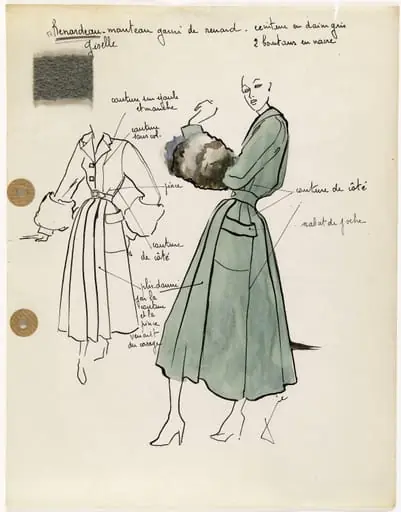 'Renardeau'
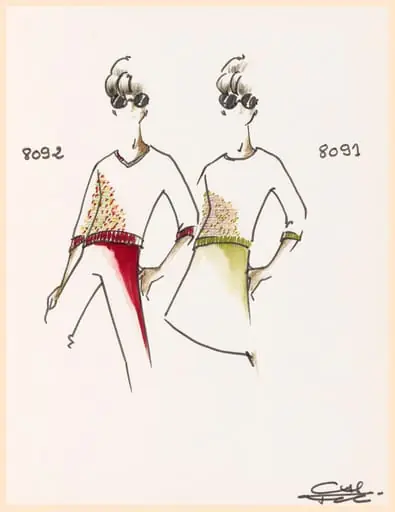 Pull-over à manches trois quarts et à encolure V à motifs multicolores, pantalon cerise et lunettes de soleil
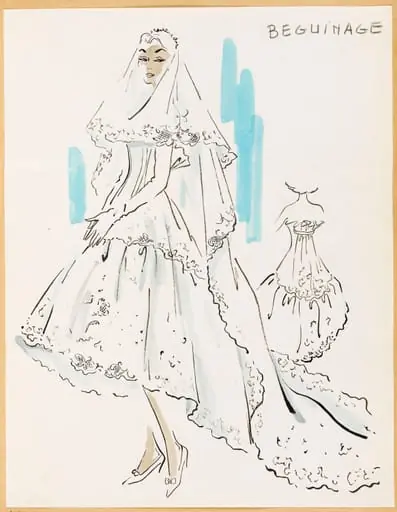 Béguinage