Artwork
Eucalyptus
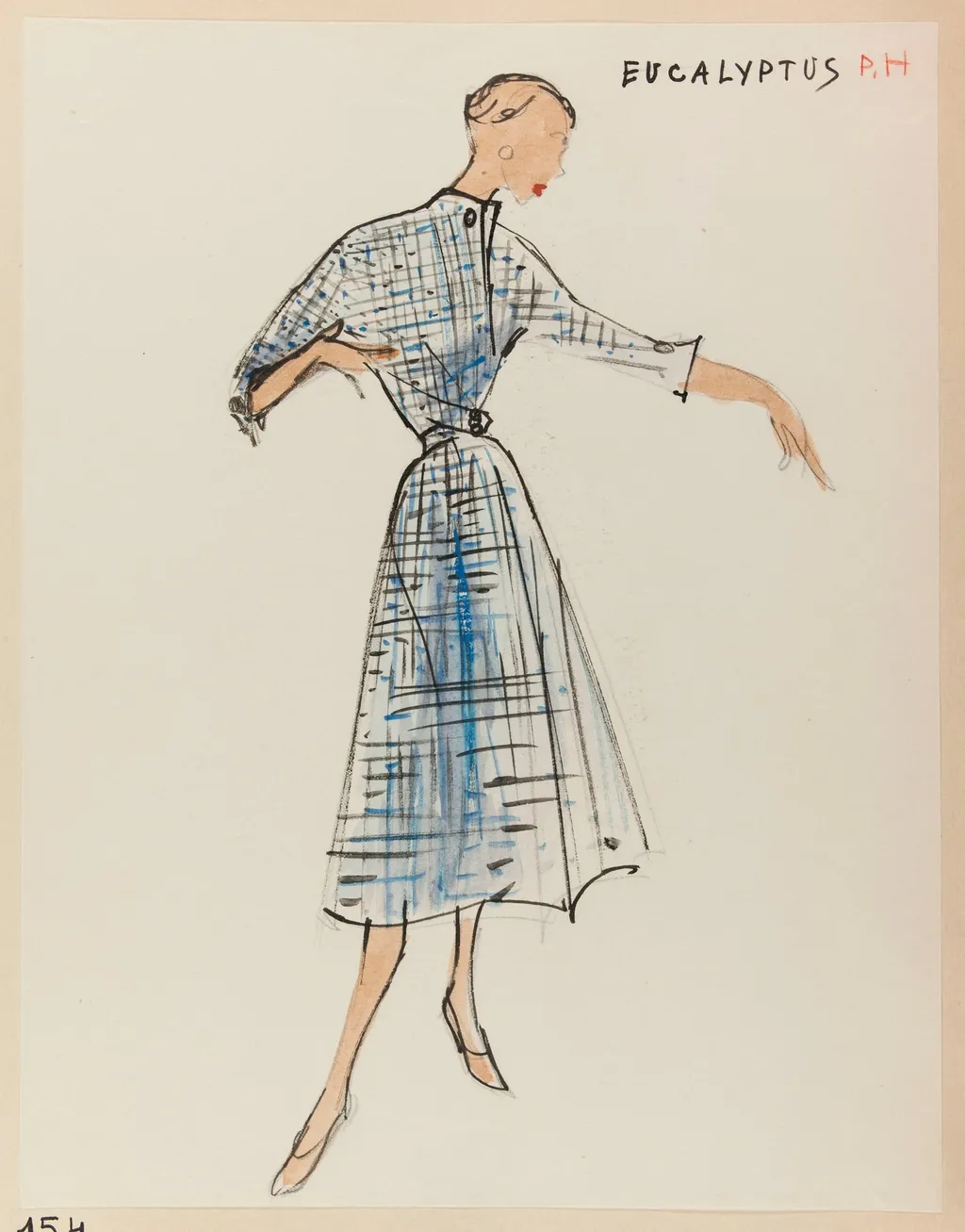
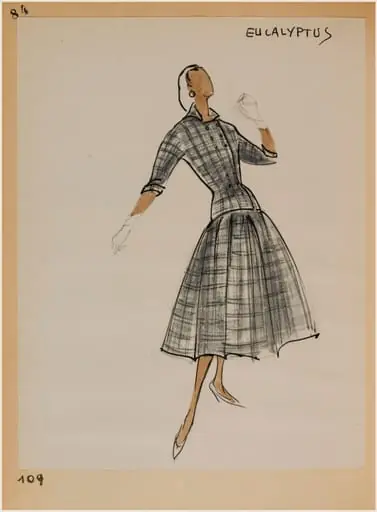
Eucalyptus is a drawing by Marie-Louise Carven. It dates from 1952 and is held in the collection of the Palais Galliera - Musée de la Mode de la Ville de Paris.
About this work
Overview
The work reflects her interest in accessible elegance and was produced during a period when she was pioneering ready-to-wear designs in French couture.
Created around 1952, *Eucalyptus* is a fashion illustration by Marie-Louise Carven, founder of the Parisian label Carven established in 1945. The work reflects her interest in accessible elegance and was produced during a period when she was pioneering ready-to-wear designs in French couture. Though held in the Museum of Ethnography, the piece belongs to the realm of fashion design rather than ethnographic artifact, suggesting its cultural significance as a representation of postwar French style.
Subject & Meaning
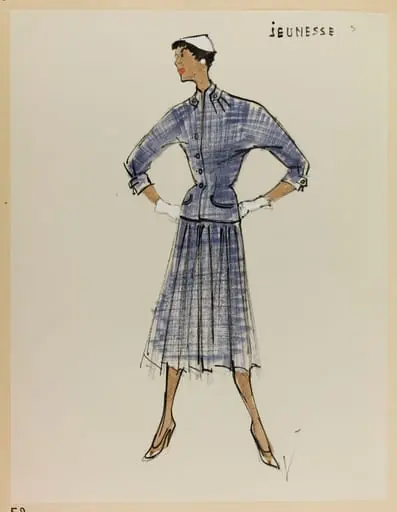
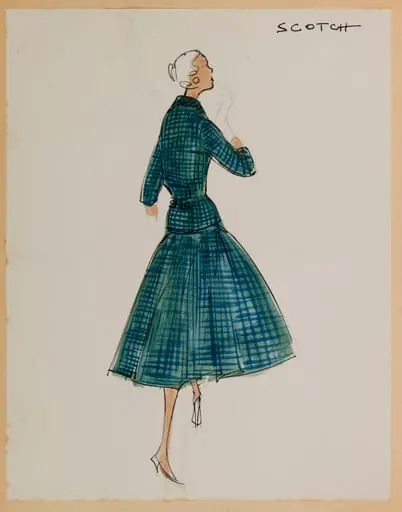
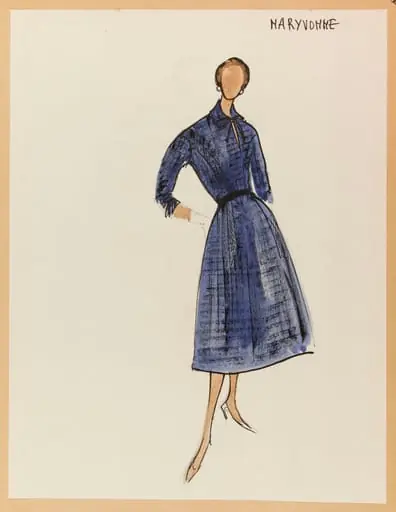
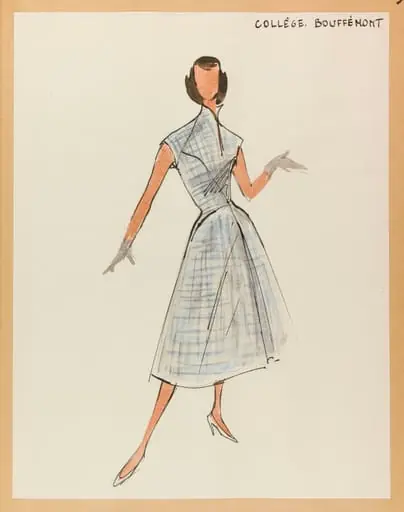
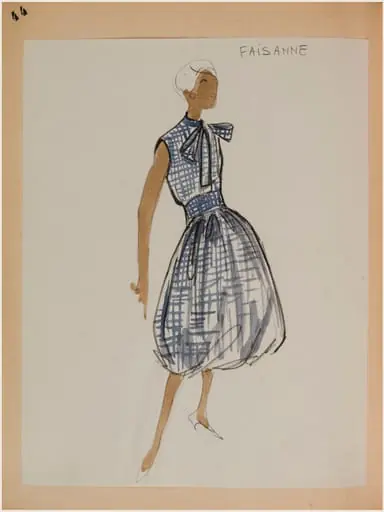
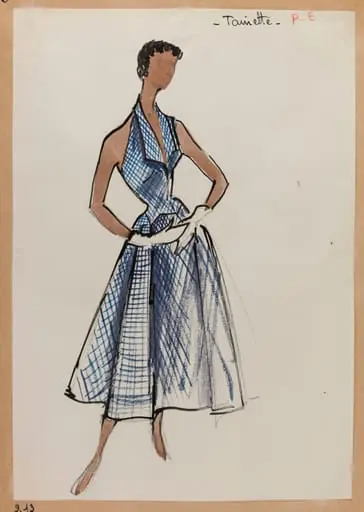
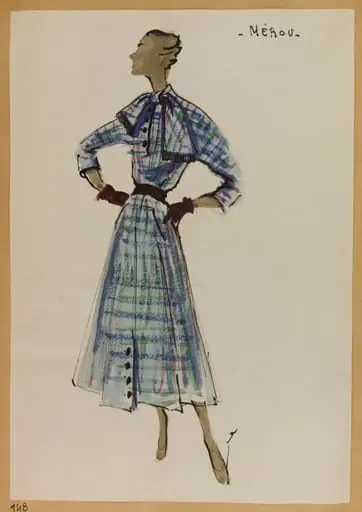
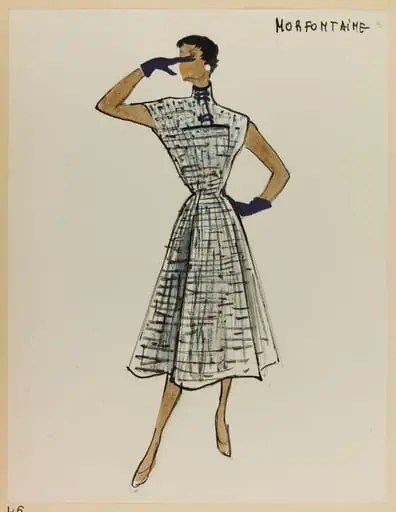
The illustration depicts a woman in a mid-calf plaid dress with a tailored waist and flared skirt, styled with pulled-back hair and high heels. The figure embodies a quiet sophistication, neither theatrical nor overtly glamorous, aligning with Carven’s vision of refined, wearable femininity. The absence of overt context or narrative invites focus on the garment’s structure and the wearer’s poised demeanor, reflecting mid-century ideals of understated elegance for the modern woman.
Technique & Style
Rendered in loose, confident lines with minimal shading, the drawing emphasizes form over detail. The plaid pattern, composed of soft blues and whites, suggests texture through variation in line weight and tone rather than precise rendering. The light beige background isolates the figure, enhancing the graphic quality of the composition. This expressive, almost sketch-like approach balances precision with spontaneity, characteristic of fashion illustrations meant to convey mood as much as silhouette.
History & Provenance
The illustration was produced during Carven’s active years as a designer, when her label was gaining recognition for democratizing Parisian fashion. Its presence in the Museum of Ethnography indicates a curatorial interest in fashion as cultural expression, though the work’s original purpose was commercial—likely a design study or promotional image. Its preservation suggests recognition of its role in documenting evolving postwar aesthetics beyond haute couture.
Context
In early 1950s Paris, couture houses were beginning to respond to demand for more practical clothing. Carven was among the first to launch prêt-à-porter lines, targeting petite figures and everyday life. *Eucalyptus* reflects this shift: the dress is stylish yet unpretentious, suitable for urban settings. The illustration’s modest scale and restrained palette contrast with the opulence of high fashion, signaling a broader cultural move toward accessibility in design.
Legacy
Though not widely exhibited, *Eucalyptus* stands as a quiet testament to Carven’s influence on modern fashion’s evolution. Her integration of ready-to-wear principles into a couture framework helped redefine who fashion served. The illustration’s preservation in a museum of ethnography underscores how clothing design came to be viewed as a cultural artifact, reflecting social norms, gender roles, and the changing rhythms of daily life in mid-century Europe.
Artist & collection
Artist
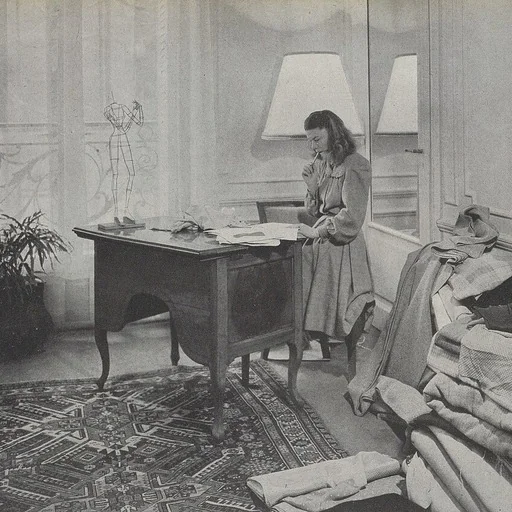
Marie-Louise Carven (31 August 1909 – 8 June 2015), born Carmen de Tommaso, was a French fashion designer who founded the house of Carven in 1945.
Museum
Palais Galliera - Musée de la Mode de la Ville de Paris
Continue through works from the same source collection.
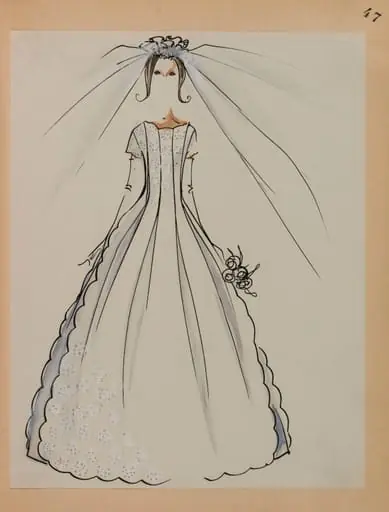 Robe de mariée festonnée et son voile
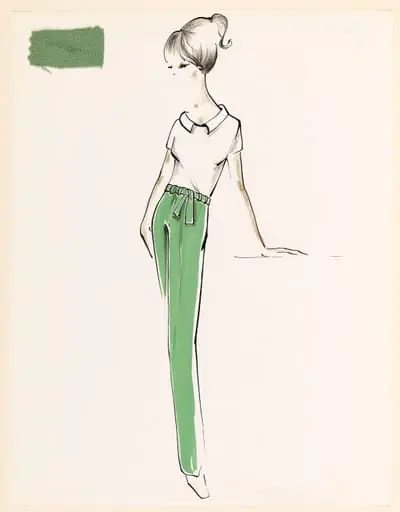 Haut blanc à manches courtes et pantalon vert à ceinture nouée
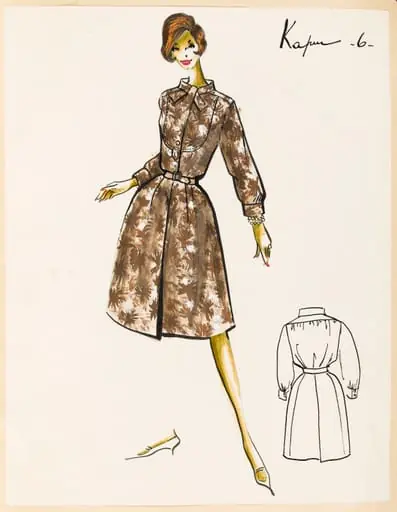 Kapur
Kapur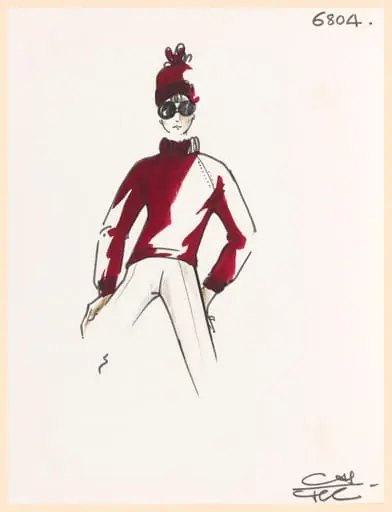 Pull-over à manches longues pourpre, bonnet assorti, pantalon et lunettes de soleil
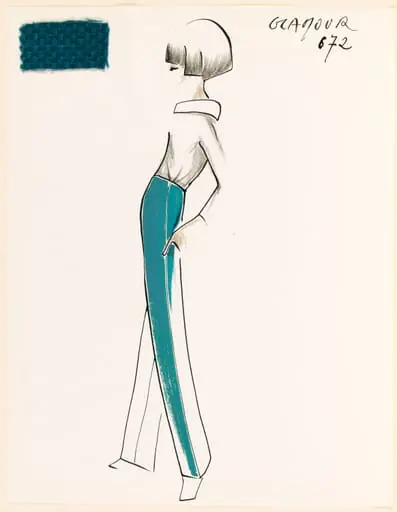 GLAMOUR
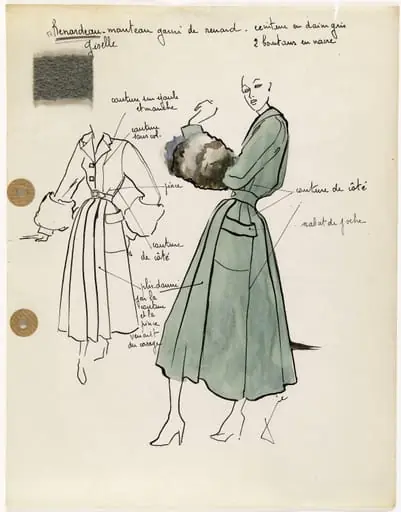 'Renardeau'
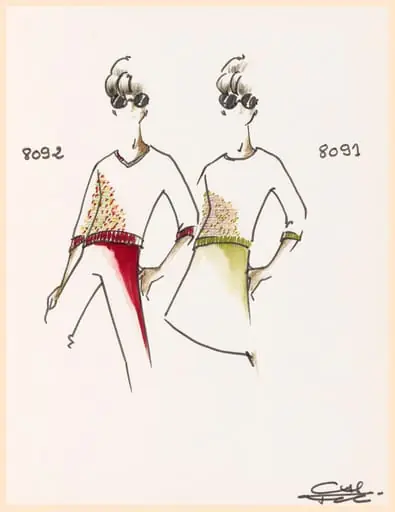 Pull-over à manches trois quarts et à encolure V à motifs multicolores, pantalon cerise et lunettes de soleil
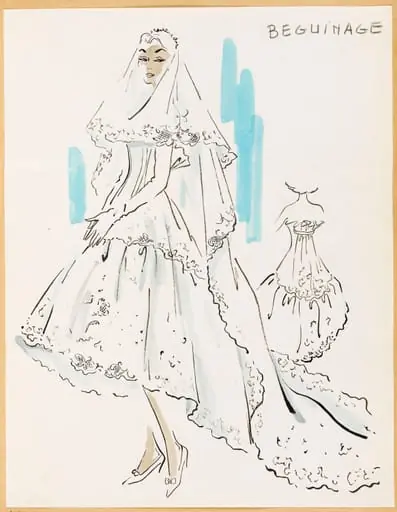 Béguinage