Artwork
Argenteuil
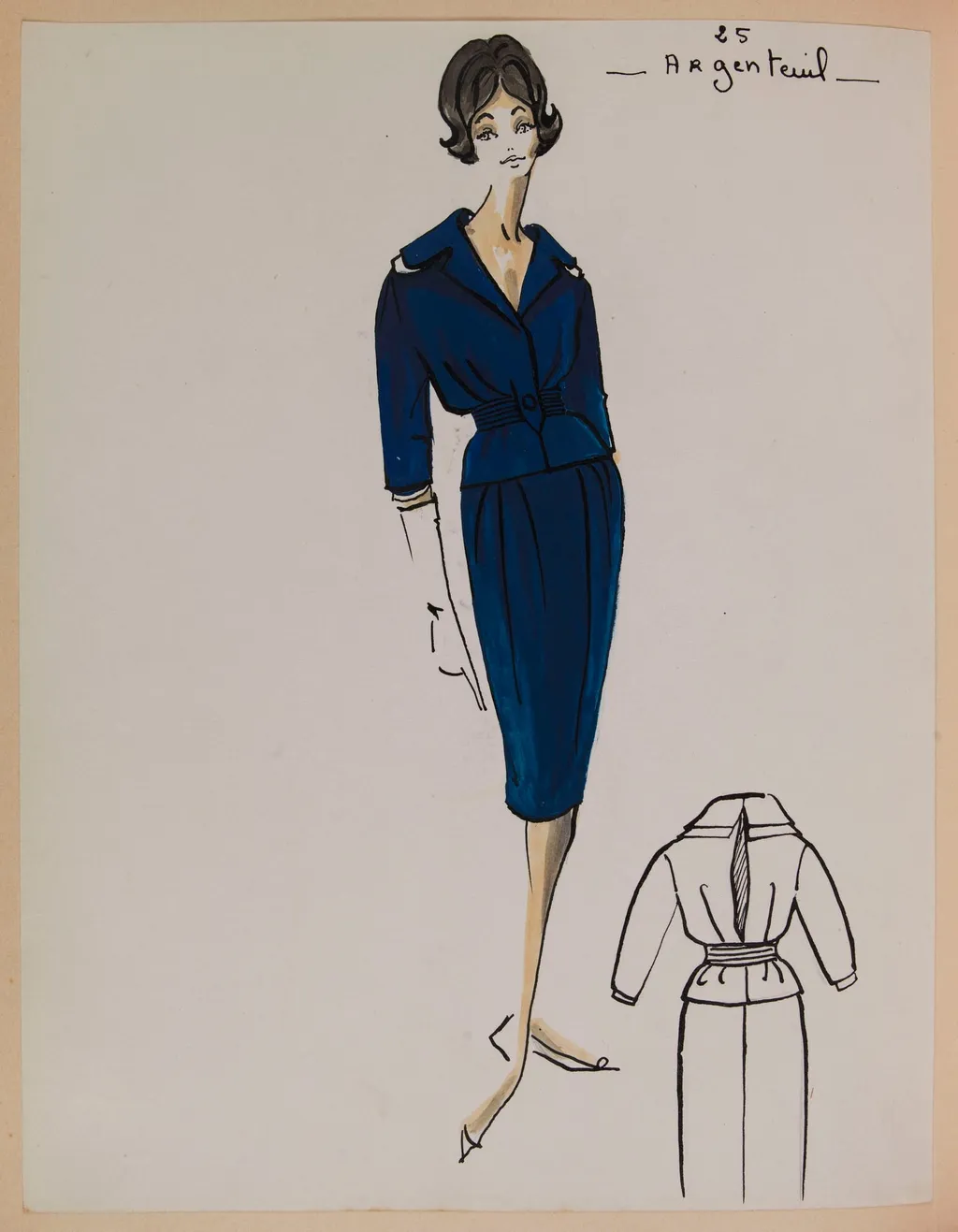
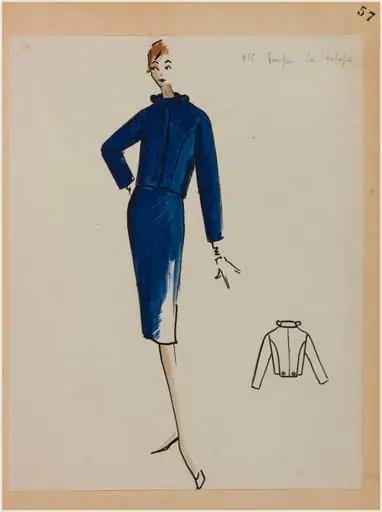
Argenteuil is a drawing by Marie-Louise Carven. It dates from 1958 and is held in the collection of the Palais Galliera - Musée de la Mode de la Ville de Paris.
About this work
The clothes look like they’re from the mid-20th century, with clean lines and a polished look.
This drawing shows a woman in a matching navy blue jacket and skirt. The outfit has a belted waist, a notched lapel, and three buttons down the front. Her hair is short and styled neatly, and she stands with one hand resting on her hip. To the right, there’s a simple back view of the same outfit.
The sketch is labeled “Argenteuil” in the corner, but it’s unclear what that refers to. The clothes look like they’re from the mid-20th century, with clean lines and a polished look.
If you like this style, look up womenswear.
Overview
The drawing titled Argenteuil, dated around 1958, is a fashion sketch attributed to the French designer Marie-Louise Carven. It depicts a tailored navy blue ensemble consisting of a jacket and skirt, both featuring a defined waistline, notched lapels, and three front buttons. The figure is rendered in profile and rear view, emphasizing the garment’s structure. The label suggests a connection to the Parisian suburb of Argenteuil, though its precise significance remains unconfirmed.
Subject & Meaning
The sketch presents a woman in a poised, understated stance, one hand resting on her hip, suggesting quiet confidence. The outfit’s simplicity and symmetry reflect Carven’s design philosophy: practical elegance for the modern woman. The absence of ornamentation and focus on clean lines imply an emphasis on fit and proportion over decoration, aligning with mid-century ideals of refined, wearable fashion for everyday life.
Technique & Style
Rendered in pencil, the drawing uses precise, economical lines to convey form and structure. The dual views—front and back—demonstrate a technical approach common in fashion illustration, prioritizing clarity of construction. The lack of color and minimal shading underscores the focus on silhouette and tailoring. The neat, short hairstyle and restrained posture reinforce the overall aesthetic of disciplined, urban sophistication.
History & Provenance
Created during the late 1950s, the sketch belongs to a period when Carven was actively developing her ready-to-wear line, one of the earliest in Paris. Though the drawing’s original context is undocumented, it likely served as a design reference for production. Carven’s house, founded in 1945, was known for catering to petite figures, and this piece exemplifies the tailored, accessible garments that defined her brand’s identity during its peak years.
Context
In postwar France, fashion was shifting toward accessibility and practicality. Carven’s designs responded to this by offering well-constructed, modestly priced clothing for working women. Argenteuil, as a sketch, reflects this cultural transition—moving away from haute couture’s exclusivity toward a more democratic model of dress. The suburb’s name may hint at a seasonal collection or location-inspired motif, common in fashion naming practices of the era.
Legacy
Though not widely exhibited, the Argenteuil sketch exemplifies Carven’s contribution to the evolution of ready-to-wear fashion. Her emphasis on proportion, tailored fit, and understated detail influenced later designers who prioritized wearable elegance. The drawing stands as a quiet testament to a design ethos that valued function without sacrificing refinement, leaving a subtle but lasting imprint on 20th-century women’s wear.
Artist & collection
Artist
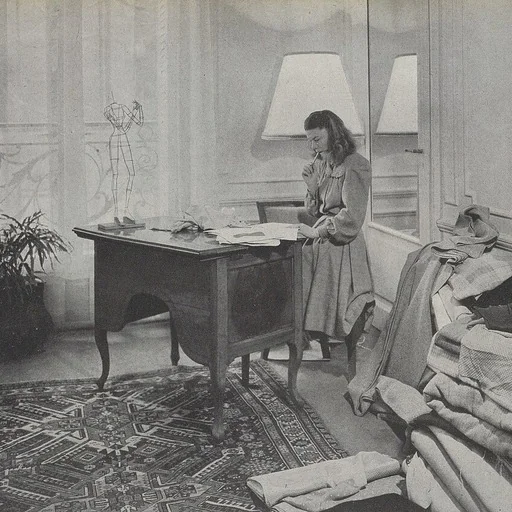
Marie-Louise Carven (31 August 1909 – 8 June 2015), born Carmen de Tommaso, was a French fashion designer who founded the house of Carven in 1945.

Museum
Palais Galliera - Musée de la Mode de la Ville de Paris
Continue through works from the same source collection.
 Robe de mariée festonnée et son voile
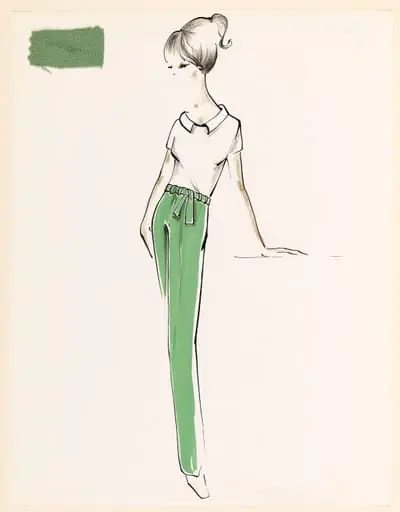 Haut blanc à manches courtes et pantalon vert à ceinture nouée
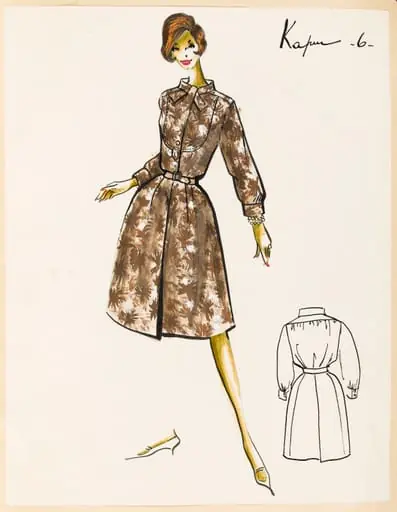 Kapur
Kapur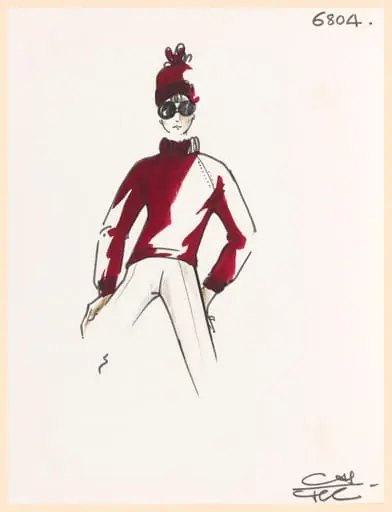 Pull-over à manches longues pourpre, bonnet assorti, pantalon et lunettes de soleil
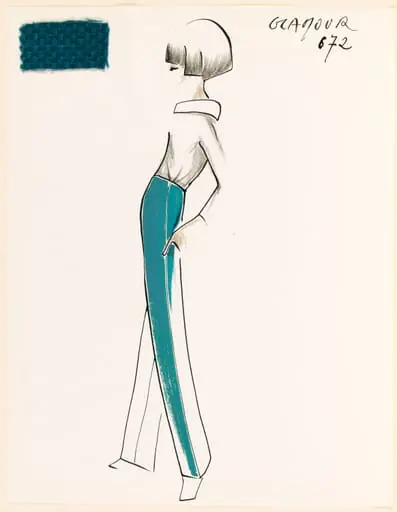 GLAMOUR
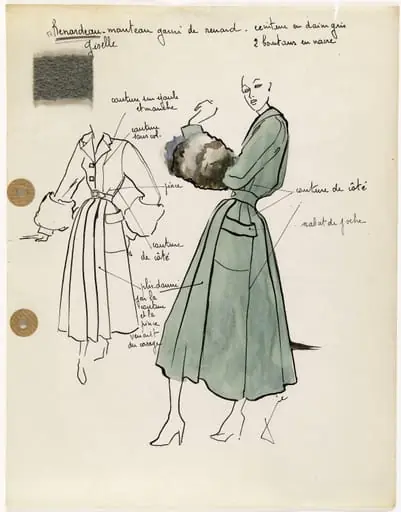 'Renardeau'
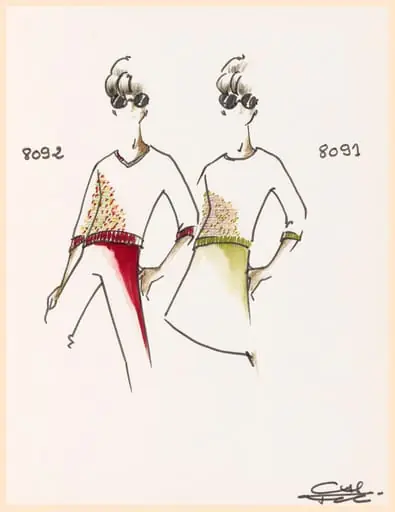 Pull-over à manches trois quarts et à encolure V à motifs multicolores, pantalon cerise et lunettes de soleil
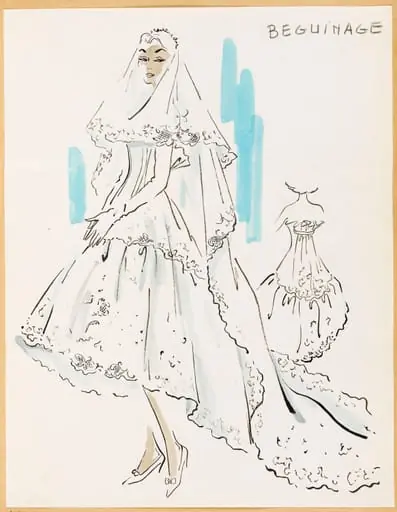 Béguinage