Artwork
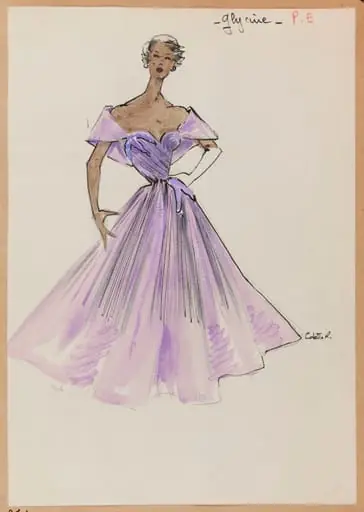
Glycine
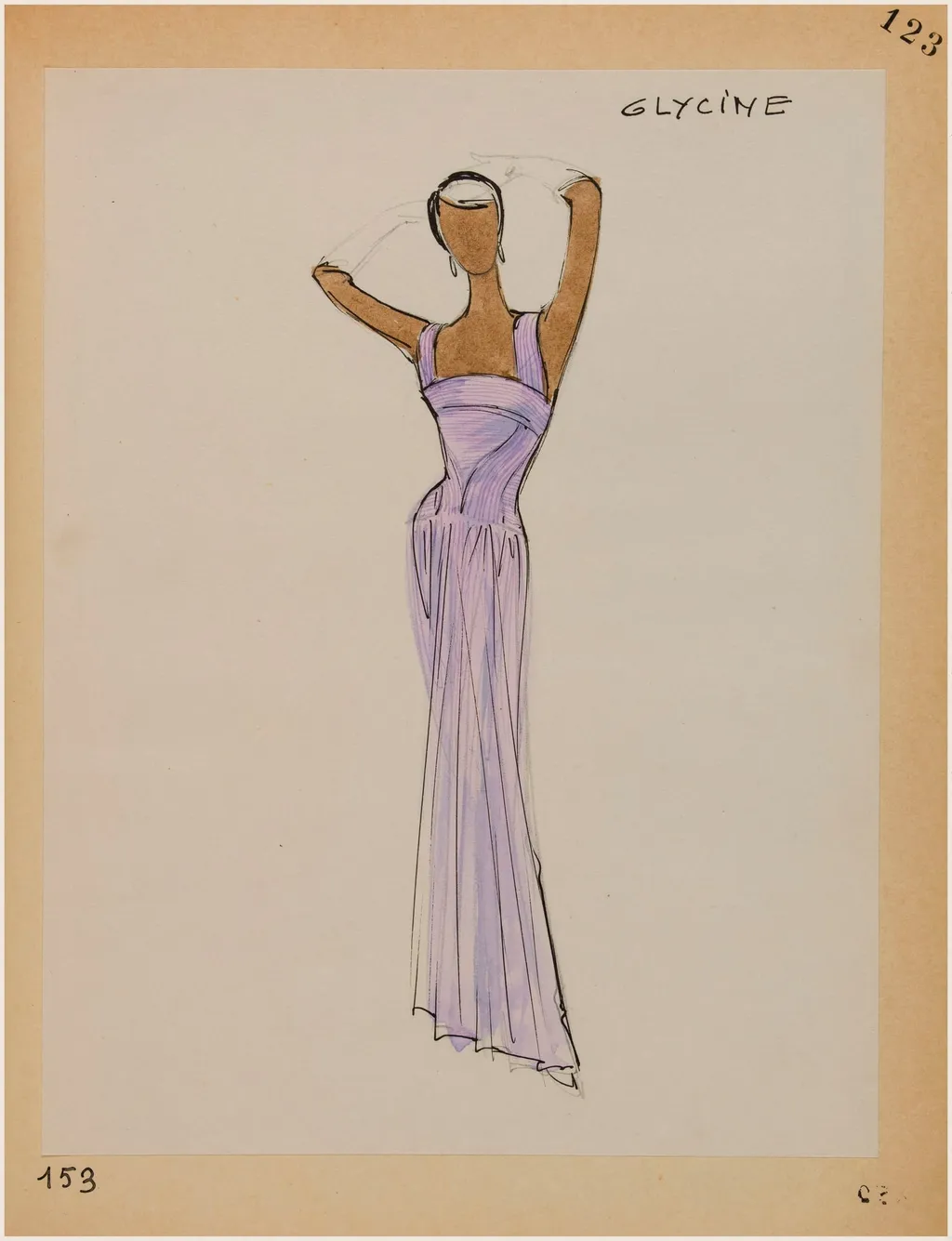
Glycine is a drawing by Marie-Louise Carven. It dates from 1956 and is held in the collection of the Palais Galliera - Musée de la Mode de la Ville de Paris.
About this work
Overview
The drawing titled *Glycine* is a fashion sketch by Marie-Louise Carven, created in 1956 and held in the Museum of Ethnography’s collection.
The drawing titled *Glycine* is a fashion sketch by Marie-Louise Carven, created in 1956 and held in the Museum of Ethnography’s collection. It depicts a slender female figure in a long, flowing dress with a fitted waist and deep V-neck. The arms are raised behind the head, suggesting movement or a moment of release. Executed in a restrained line style, the sketch emphasizes the garment’s drape and silhouette rather than detailed ornamentation.
Subject & Meaning
The figure in *Glycine* embodies Carven’s design philosophy: grace in motion, tailored for smaller frames. The raised arms and fluid lines imply ease and natural posture, aligning with her vision of wearable elegance. The name *Glycine*, after a flowering vine, may reference the dress’s lightness and organic flow. It reflects a quiet, poetic approach to fashion, prioritizing comfort and subtle beauty over ornament.
Technique & Style
Carven rendered the dress with smooth, continuous lines that suggest soft fabric and gentle folds. The absence of heavy shading or texture gives the sketch a lyrical quality, focusing attention on form and movement. The minimal use of line captures the essence of the garment without distraction, consistent with her preference for lightweight materials and clean silhouettes in actual garments.
History & Provenance
Created in 1956, *Glycine* was produced during the height of Carven’s influence in Parisian fashion. It entered the Museum of Ethnography’s collection as part of a broader effort to document mid-century French design. The sketch likely served as a working template for a garment, reflecting Carven’s practice of translating design ideas into tangible forms for production.
Context
In postwar Paris, Carven was among the first designers to champion prêt-à-porter, making stylish clothing accessible beyond haute couture clients. Her focus on petite proportions and delicate fabrics like lace and gingham contrasted with the heavier silhouettes of the era. *Glycine* exemplifies this shift—elegant yet practical, designed for everyday life rather than ceremonial display.
Legacy
Though Carven’s label faded from prominence after her retirement, her emphasis on accessible, body-conscious design influenced later generations of French designers. *Glycine* remains a quiet testament to her ability to convey movement and femininity through minimal means. The sketch endures not as a finished garment, but as a refined expression of her design ethos.
Artist & collection
Artist
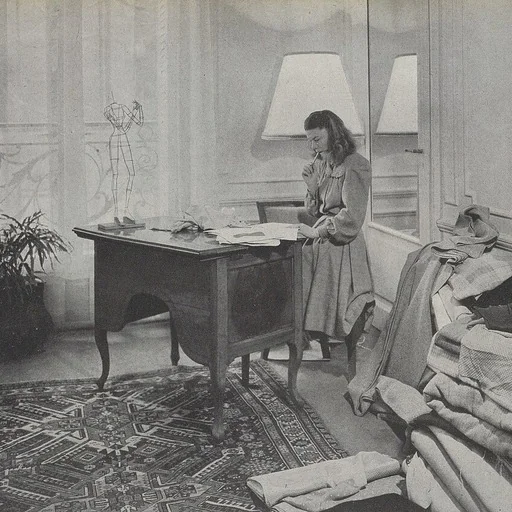
Marie-Louise Carven (31 August 1909 – 8 June 2015), born Carmen de Tommaso, was a French fashion designer who founded the house of Carven in 1945.
Museum
Palais Galliera - Musée de la Mode de la Ville de Paris
Continue through works from the same source collection.
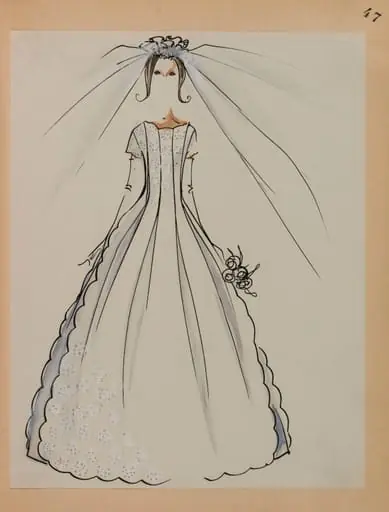 Robe de mariée festonnée et son voile
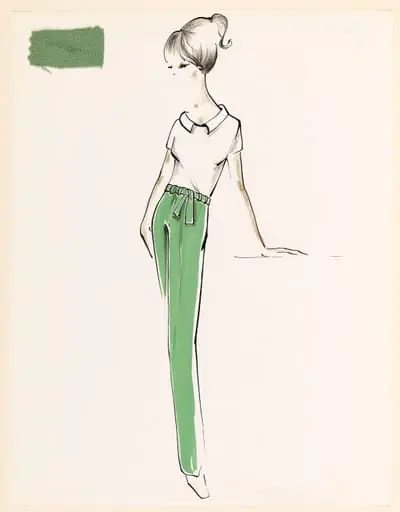 Haut blanc à manches courtes et pantalon vert à ceinture nouée
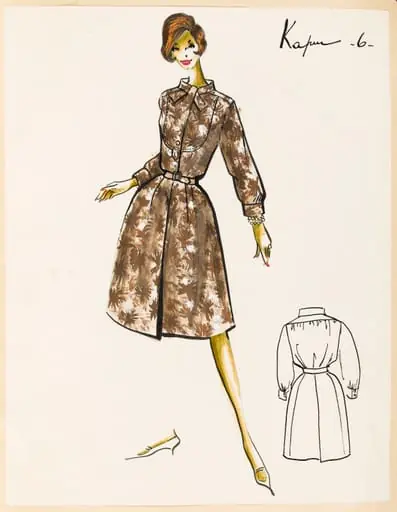 Kapur
Kapur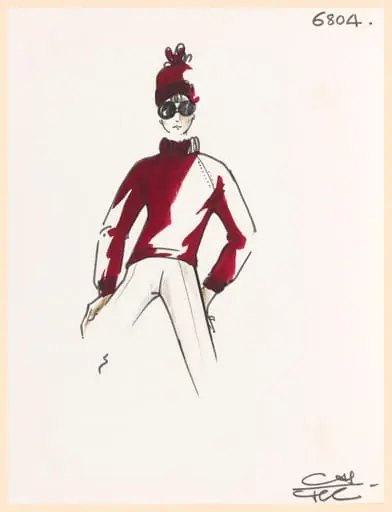 Pull-over à manches longues pourpre, bonnet assorti, pantalon et lunettes de soleil
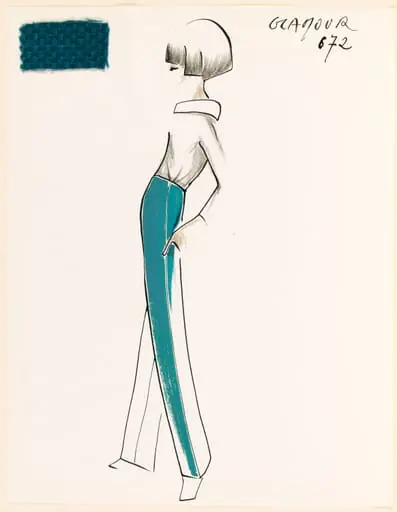 GLAMOUR
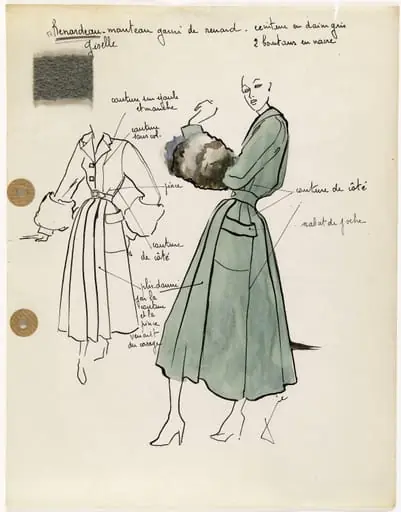 'Renardeau'
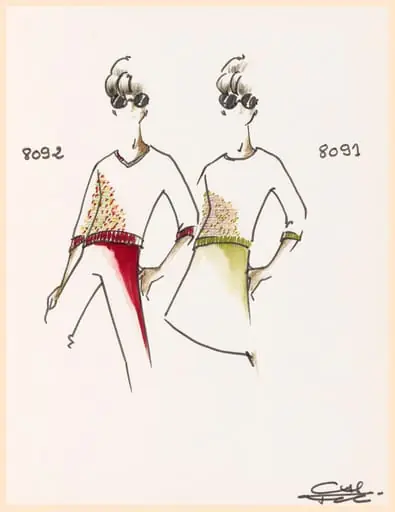 Pull-over à manches trois quarts et à encolure V à motifs multicolores, pantalon cerise et lunettes de soleil
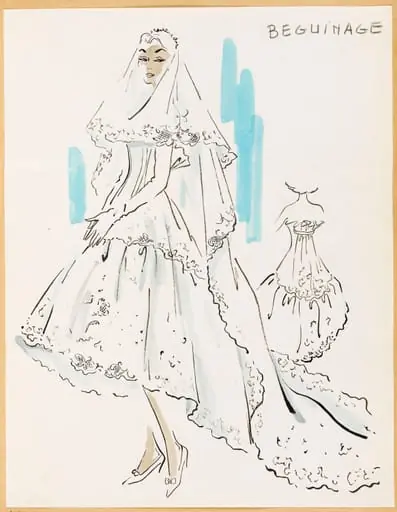 Béguinage