Artwork
'Gros cailloux'
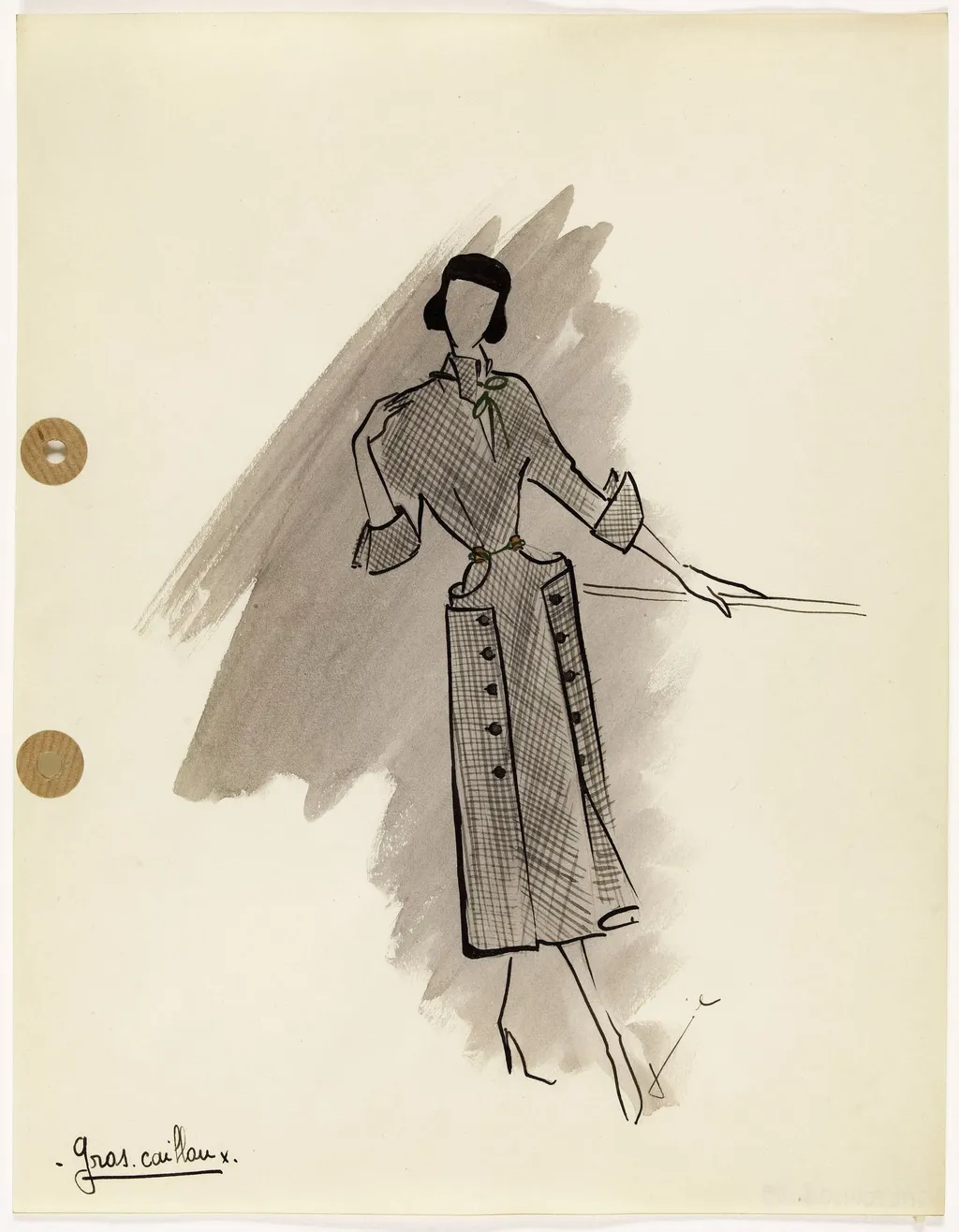
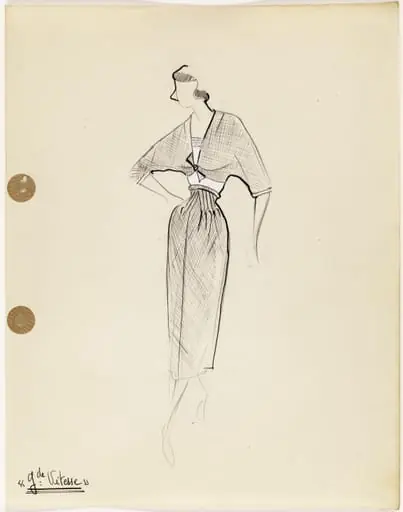
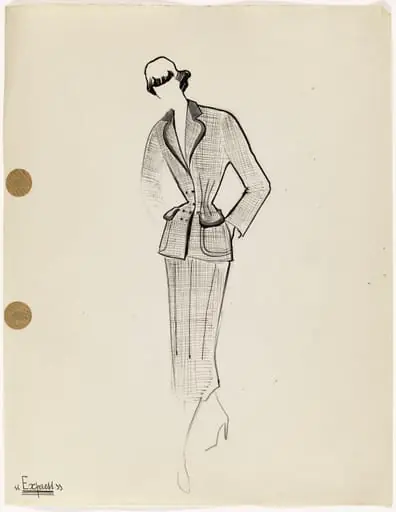
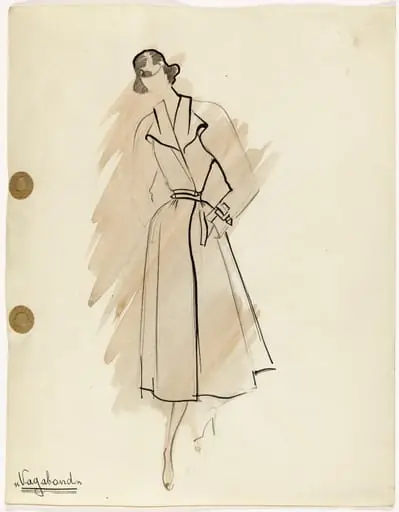
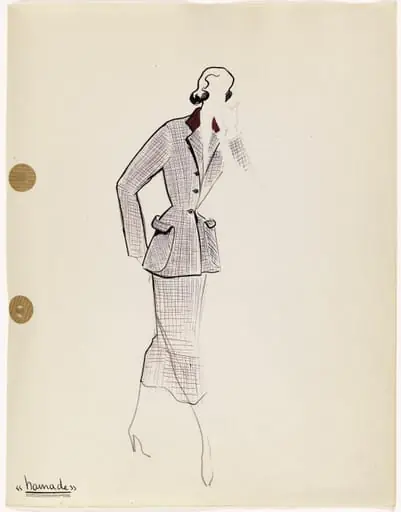
'Gros cailloux' is a drawing by Marie-Louise Carven. It dates from 1949 and is held in the collection of the Palais Galliera - Musée de la Mode de la Ville de Paris.
About this work
Overview
The piece resides in the Museum of Ethnography’s collection, reflecting Carven’s dual role as designer and visual observer of contemporary dress.
Created around 1949, *Gros cailloux* is a fashion sketch by Marie-Louise Carven, founder of the Parisian design house Carven. Executed in ink and wash, it functions as a preparatory study rather than a finished garment. The piece resides in the Museum of Ethnography’s collection, reflecting Carven’s dual role as designer and visual observer of contemporary dress. Its informal quality suggests it was made for personal reference or internal design development.
Subject & Meaning
The sketch depicts a woman in a long, loosely cut coat with a checkered pattern, accompanied by a cane and a draped scarf. The posture and accessories convey an air of casual elegance, characteristic of postwar Parisian women seeking comfort without sacrificing style. The absence of elaborate detail emphasizes movement and silhouette, suggesting an interest in practical, everyday wear rather than formal attire.
Technique & Style
Carven employed swift, confident brushstrokes to define the coat’s folds and the scarf’s flow, using minimal lines to suggest volume and texture. The checkered pattern is rendered with rhythmic, repeated marks, avoiding precision in favor of expressive suggestion. The signature in the corner confirms authorship and situates the work as a personal design artifact, not a commercial illustration.
History & Provenance
The drawing entered the Museum of Ethnography’s holdings as part of a broader collection documenting 20th-century fashion practices. Its preservation reflects institutional interest in the transition from haute couture to ready-to-wear. While little is documented about its immediate provenance, its existence aligns with Carven’s documented habit of sketching daily observations during the late 1940s.
Context
In postwar France, fashion was shifting toward accessibility and simplicity. Carven’s designs responded to this by emphasizing lightweight fabrics and tailored fits for smaller frames. *Gros cailloux* mirrors this trend, capturing a moment when women’s clothing moved away from wartime austerity toward relaxed, modern silhouettes influenced by both utility and emerging youth culture.
Legacy
Though not a finished garment, *Gros cailloux* exemplifies Carven’s approach to design as an observational and iterative process. It stands as a quiet testament to the role of sketching in the evolution of prêt-à-porter. The work contributes to broader understandings of how female designers documented and shaped everyday fashion in mid-century Europe.
Artist & collection
Artist
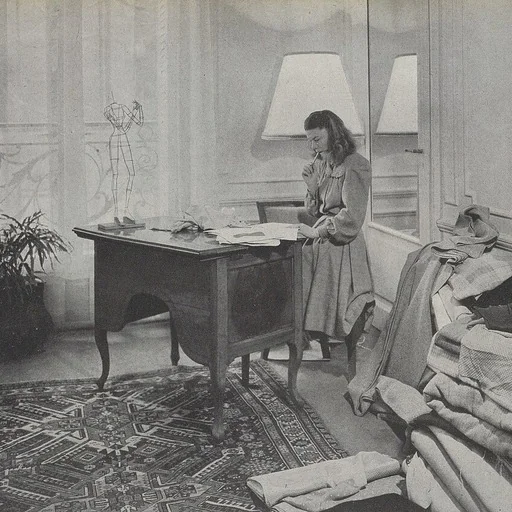
Marie-Louise Carven (31 August 1909 – 8 June 2015), born Carmen de Tommaso, was a French fashion designer who founded the house of Carven in 1945.
Museum
Palais Galliera - Musée de la Mode de la Ville de Paris
Continue through works from the same source collection.
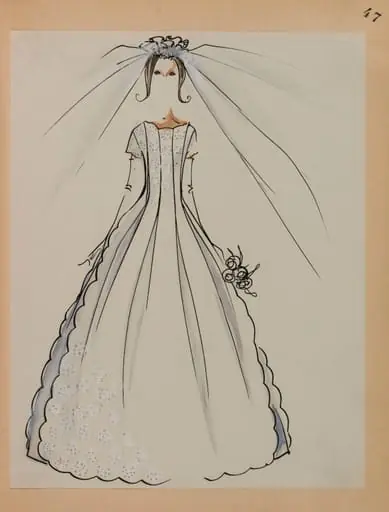 Robe de mariée festonnée et son voile
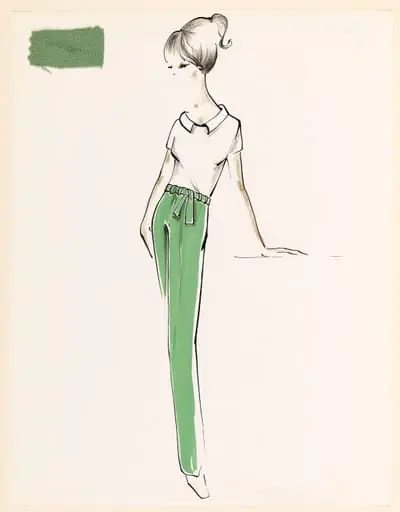 Haut blanc à manches courtes et pantalon vert à ceinture nouée
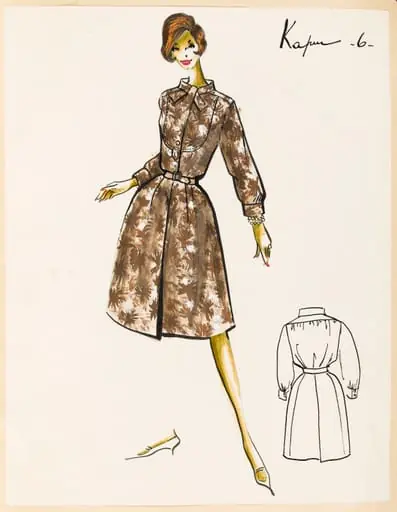 Kapur
Kapur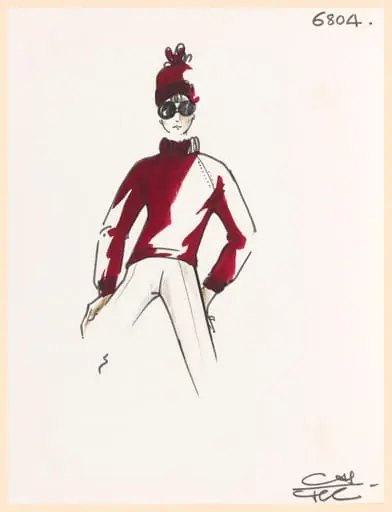 Pull-over à manches longues pourpre, bonnet assorti, pantalon et lunettes de soleil
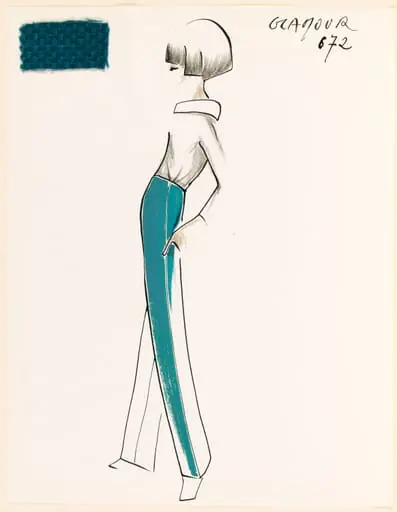 GLAMOUR
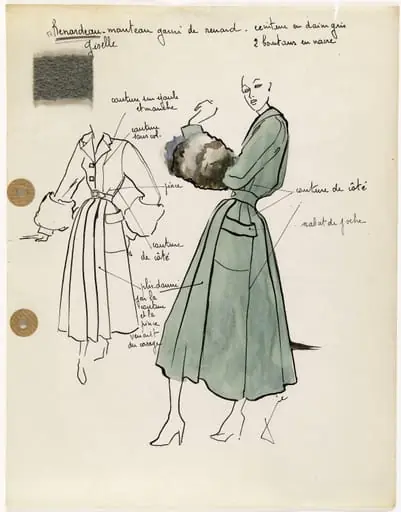 'Renardeau'
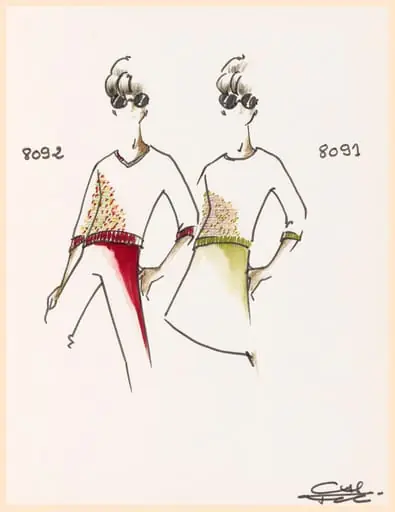 Pull-over à manches trois quarts et à encolure V à motifs multicolores, pantalon cerise et lunettes de soleil
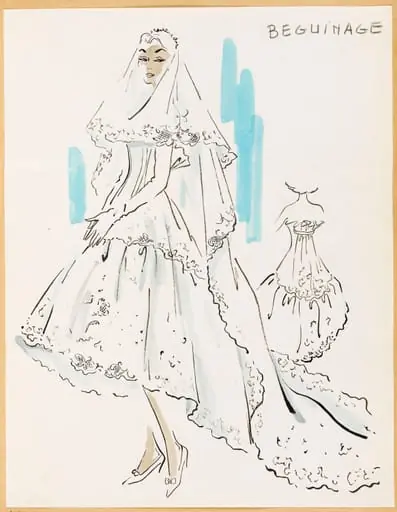 Béguinage