Artwork
Hanneton
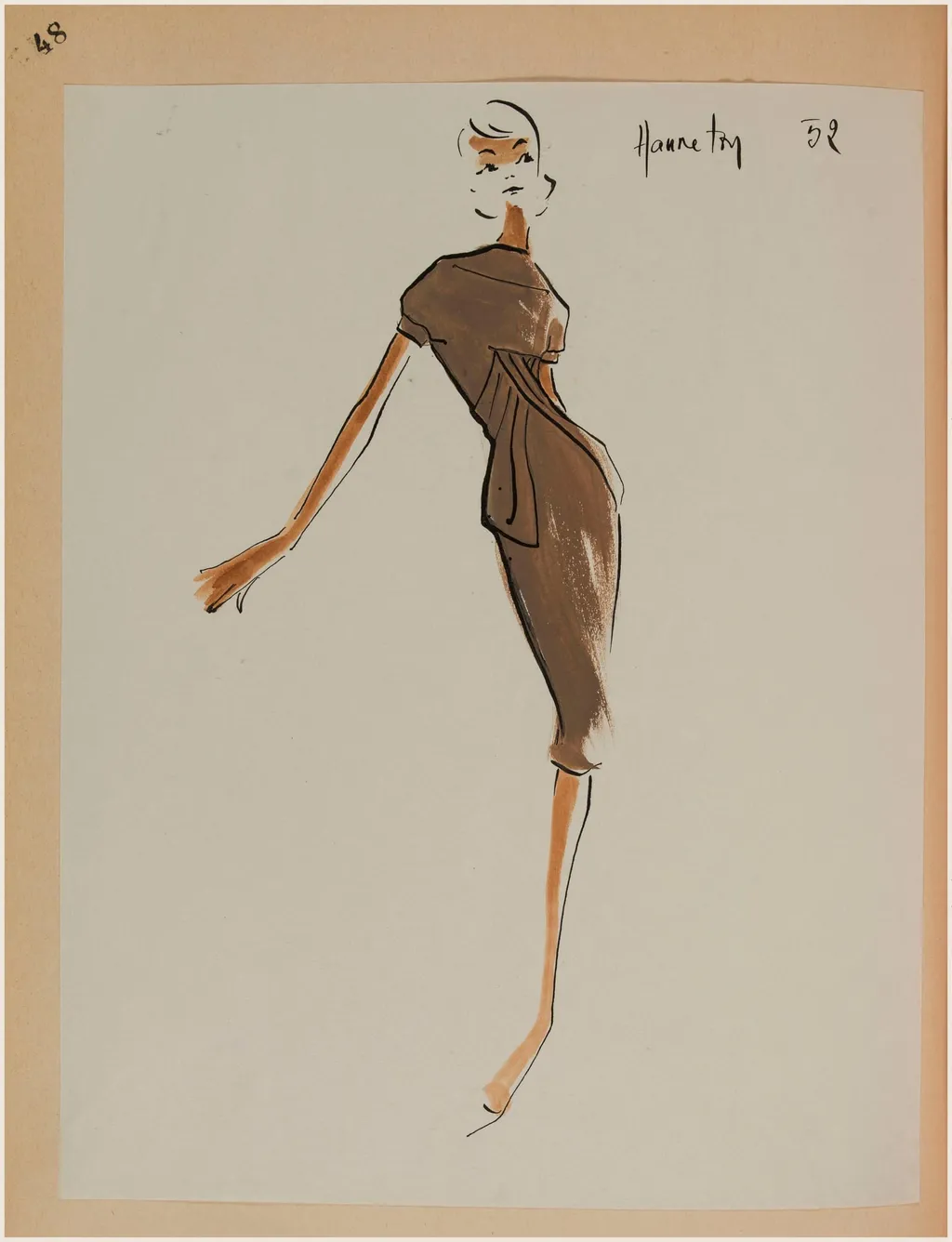
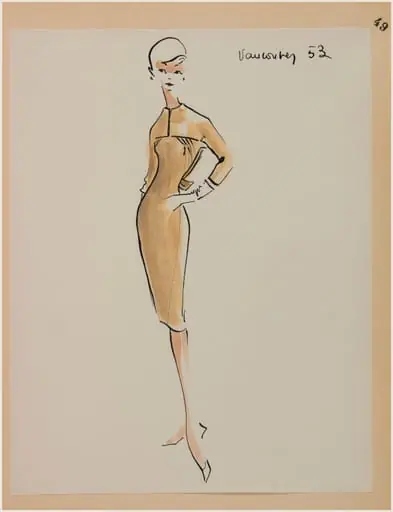
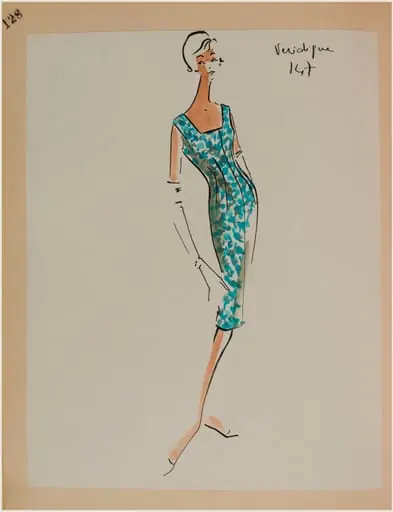
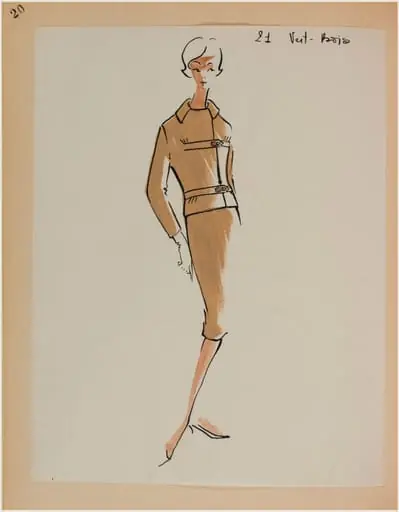
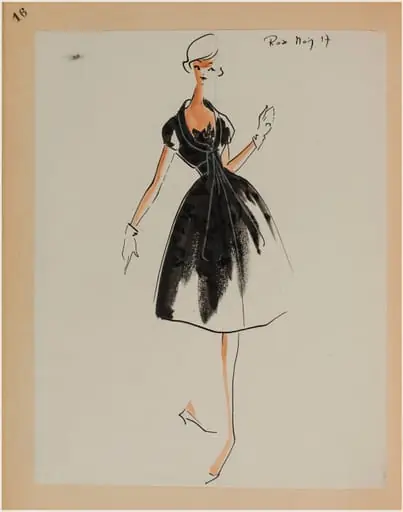
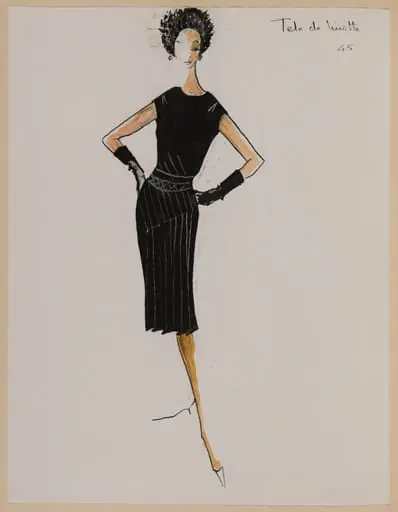
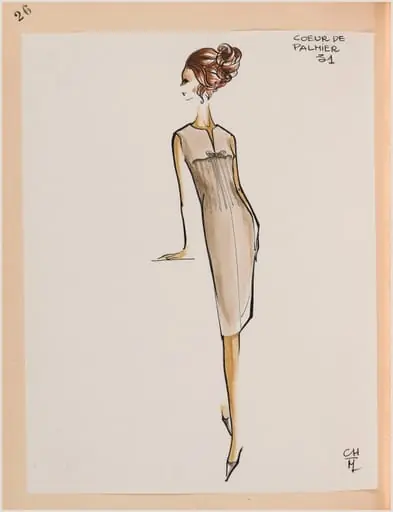
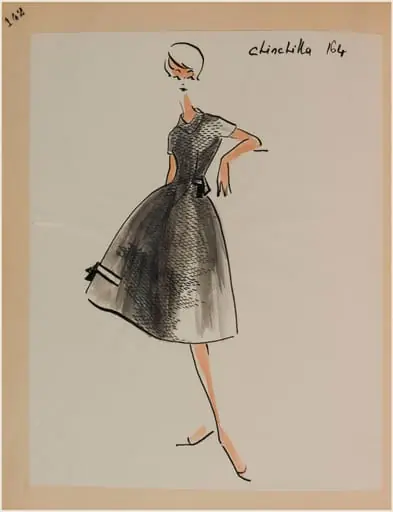
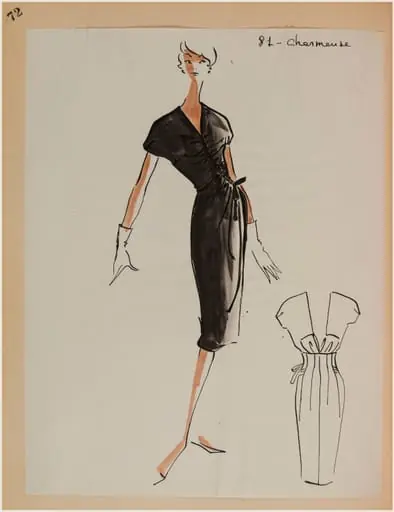
Hanneton is a drawing by Marie-Louise Carven. It dates from 1958 and is held in the collection of the Palais Galliera - Musée de la Mode de la Ville de Paris.
About this work
Overview
Its informal quality reflects Carven’s practice of using drawing to explore silhouette and proportion before production.
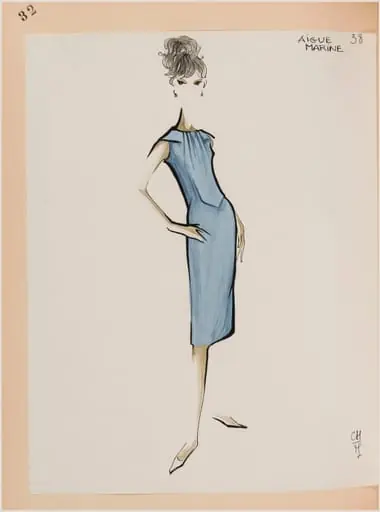
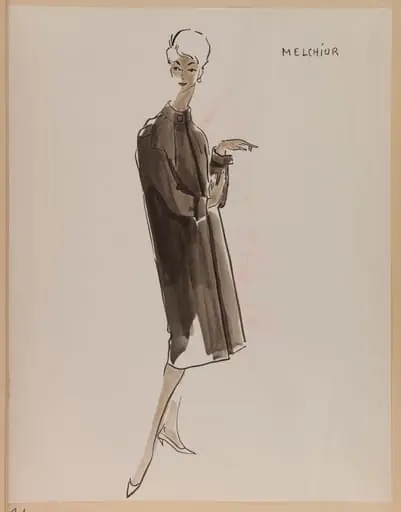
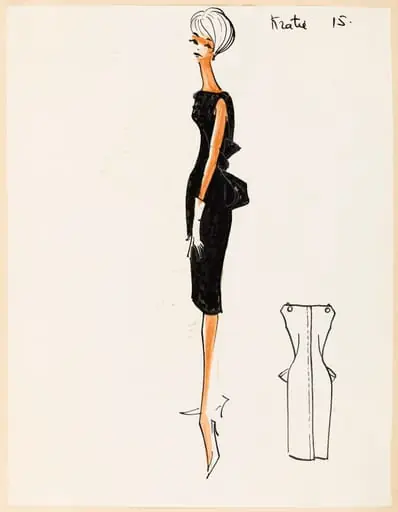
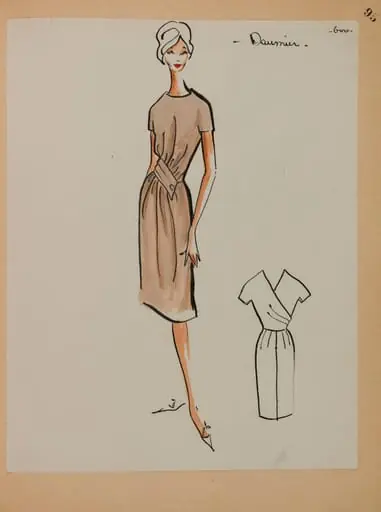
Created around 1958, *Hanneton* is a pencil and wash sketch by French designer Marie-Louise Carven. It resides in the Museum of Ethnography as part of a collection documenting fashion design processes. Unlike finished garments, this work functions as a preparatory study, capturing movement and form with minimal detail. Its informal quality reflects Carven’s practice of using drawing to explore silhouette and proportion before production.
Subject & Meaning
The figure is a woman in profile, arms extended, suggesting a moment of adjustment or motion. The pose is unposed, conveying naturalism rather than idealization. The absence of facial features and the focus on posture and drapery emphasize the relationship between body and fabric. The title, possibly the model’s name or an internal reference, hints at the personal, working context of the sketch rather than a public-facing design.
Technique & Style
Carven employed loose, rapid pencil strokes with subtle brown and beige washes to suggest volume and texture. The lines are economical, avoiding detail in favor of rhythm and gesture. Light shading defines the waistline and folds of the dress, while the fabric’s lightness is implied rather than rendered. The sketch’s spontaneity aligns with the immediacy of fashion illustration used in design development, not final presentation.
History & Provenance
The sketch entered the Museum of Ethnography’s collection as part of a broader acquisition of Carven’s archival materials. It was likely preserved alongside other design studies from her atelier, reflecting institutional interest in the material culture of postwar French fashion. Its survival as a working document, rather than a finished garment, underscores its value as evidence of creative process.
Context
In the late 1950s, Carven was refining her approach to ready-to-wear, emphasizing fit for smaller frames and breathable textiles. This sketch aligns with her design philosophy: simplicity, comfort, and movement. The use of minimal color and fluid line reflects a broader trend among designers who treated drawing as a tool for experimentation, not just presentation, bridging art and industry.
Legacy
Hanneton exemplifies how fashion designers used drawing to translate bodily experience into wearable form. Its preservation in a museum of ethnography signals a shift in how fashion is understood—not merely as luxury, but as cultural practice. The sketch remains a quiet testament to the quiet labor behind design, valued for its honesty over polish.
Artist & collection
Artist
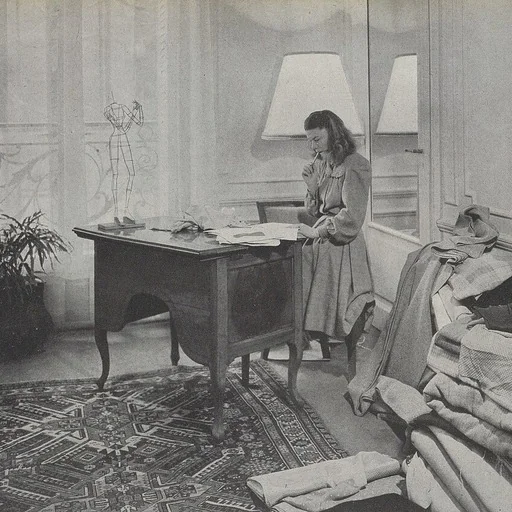
Marie-Louise Carven (31 August 1909 – 8 June 2015), born Carmen de Tommaso, was a French fashion designer who founded the house of Carven in 1945.
Museum
Palais Galliera - Musée de la Mode de la Ville de Paris
Continue through works from the same source collection.
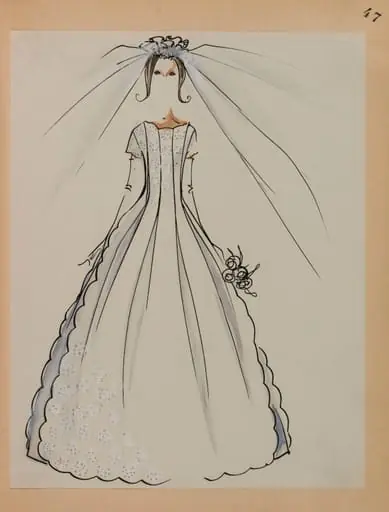 Robe de mariée festonnée et son voile
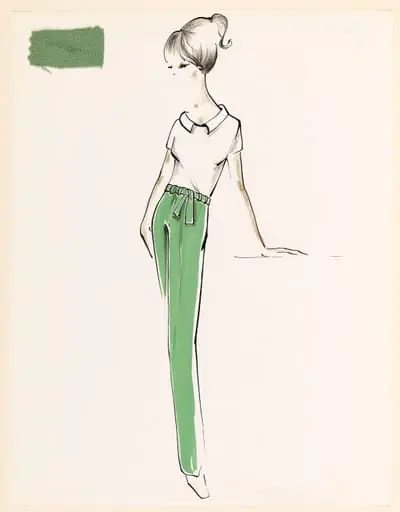 Haut blanc à manches courtes et pantalon vert à ceinture nouée
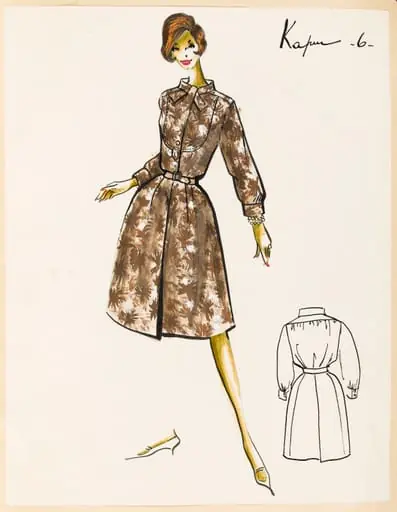 Kapur
Kapur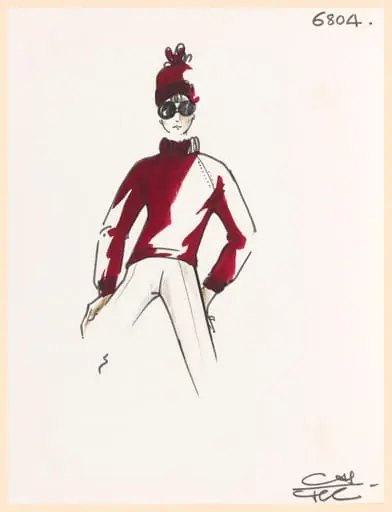 Pull-over à manches longues pourpre, bonnet assorti, pantalon et lunettes de soleil
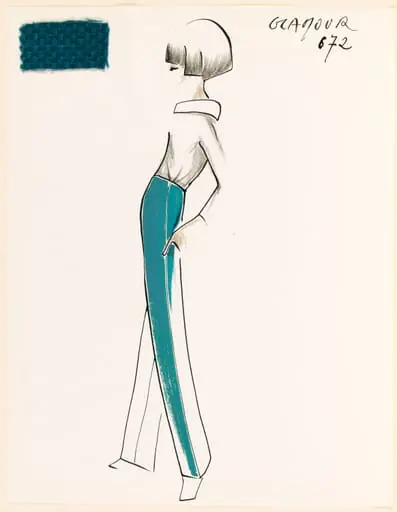 GLAMOUR
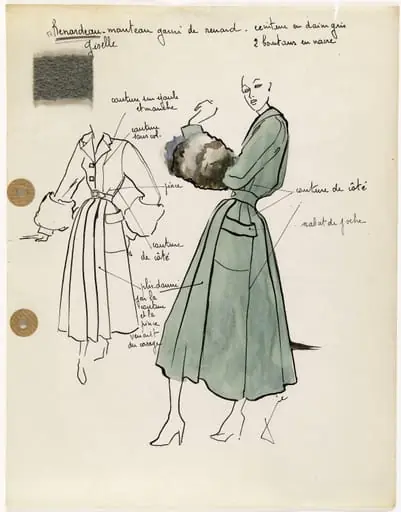 'Renardeau'
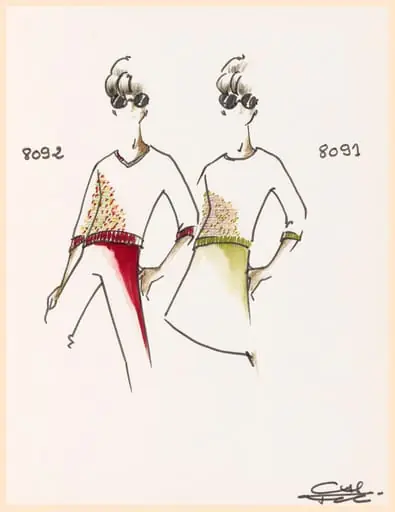 Pull-over à manches trois quarts et à encolure V à motifs multicolores, pantalon cerise et lunettes de soleil
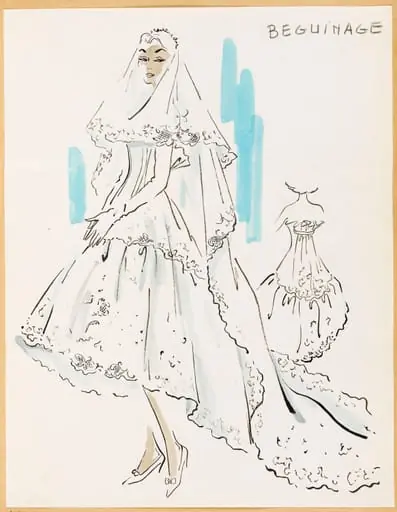 Béguinage