Artwork
Ispahan
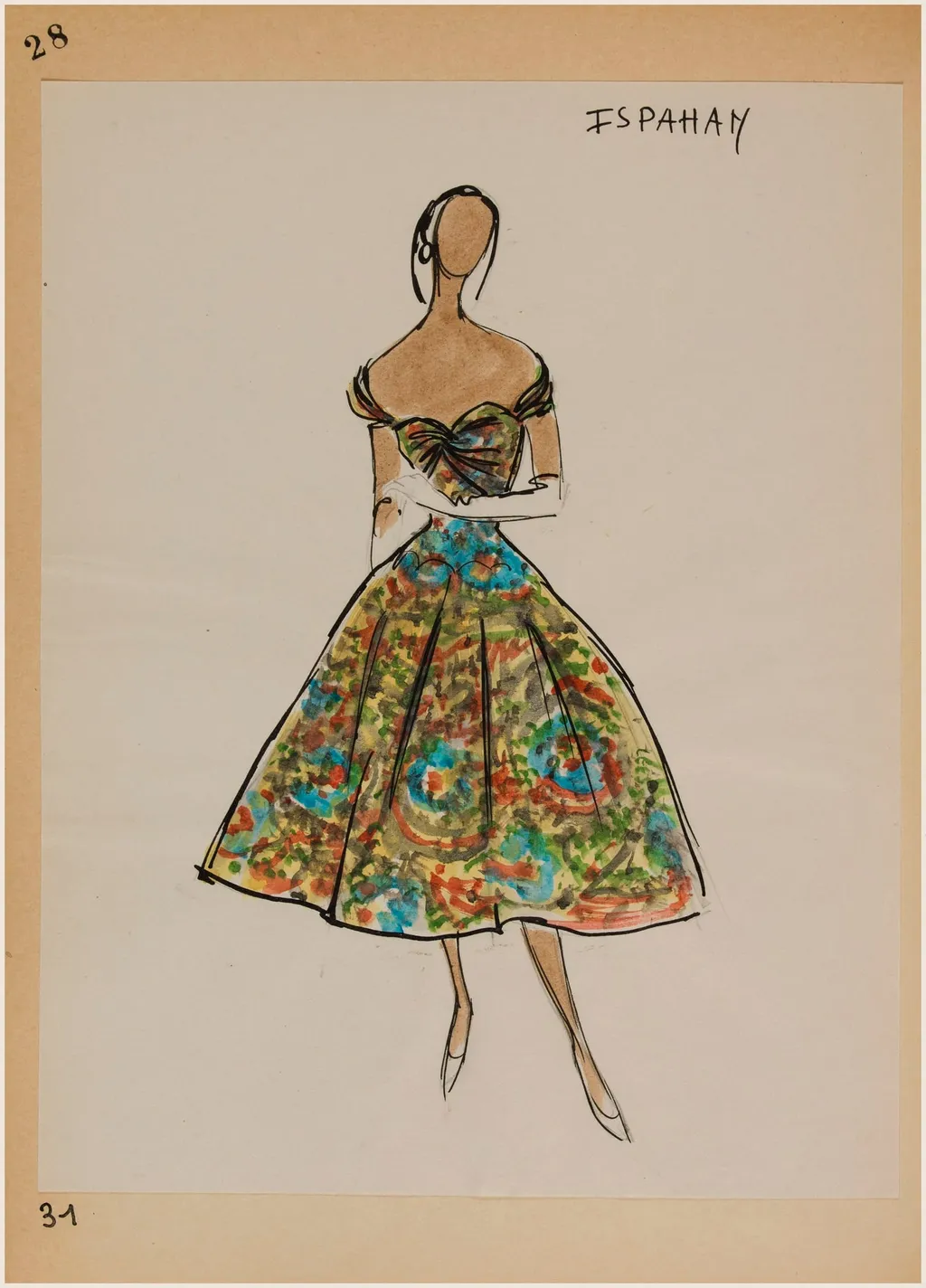
Ispahan is a drawing by Marie-Louise Carven. It dates from 1956 and is held in the collection of the Palais Galliera - Musée de la Mode de la Ville de Paris.
About this work
Overview
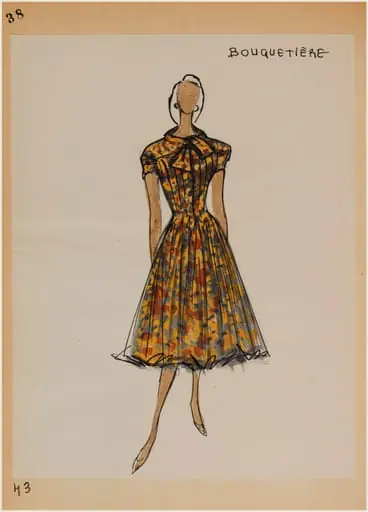
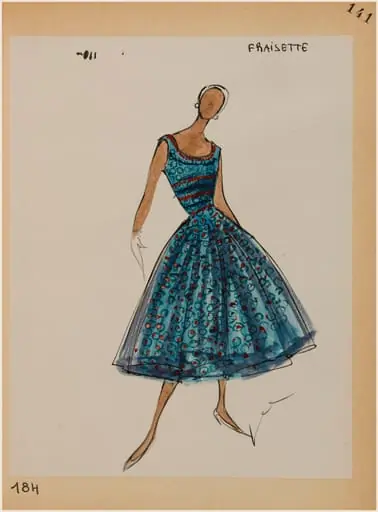
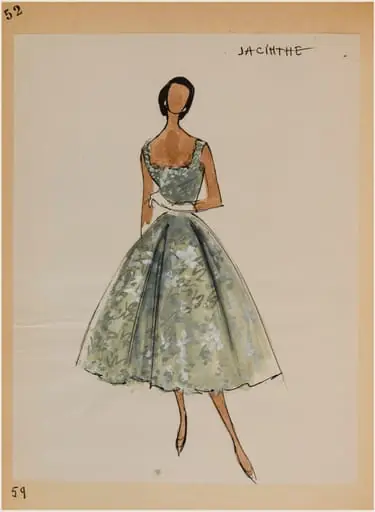
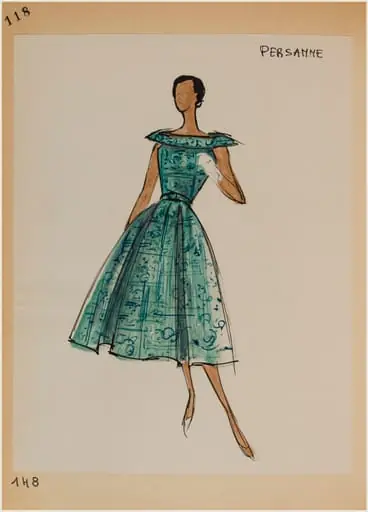
The sketch titled *Ispahan* dates from 1956 and is attributed to French designer Marie‑Louise Carven. It depicts a woman wearing a strapless dress with a fitted bodice and a flared skirt adorned with vivid swirls of green, blue and red. The drawing is executed in a loose, quick manner, with light shading and occasional cross‑hatching to suggest texture.
Subject & Meaning
The figure presents a streamlined silhouette that emphasizes the dress’s structural clarity while the colorful pattern on the skirt evokes a sense of playful movement. The title, *Ispahan*, likely references the Persian city, suggesting an exotic inspiration for the garment’s decorative motif.
Technique & Style
Carven’s rendering relies on rapid line work and selective tonal washes, creating a balance between simplicity of form and decorative richness. The use of cross‑hatching in certain areas builds surface texture, while the overall composition maintains clean, geometric lines that highlight the dress’s architecture.
History & Provenance
Created shortly after Carven established her eponymous fashion house in 1945, the sketch reflects her early forays into ready‑to‑wear design. The piece is now held by the Museum of Ethnography, where it forms part of the collection documenting mid‑century fashion illustration.
Context
During the 1950s Carven was among the first couturiers to introduce a prêt‑à‑porter line and to innovate with lightweight fabrics for petite clientele. *Ispahan* exemplifies her approach to accessible elegance, marrying practical construction with vivid, culturally inspired ornamentation.
Artist & collection
Artist
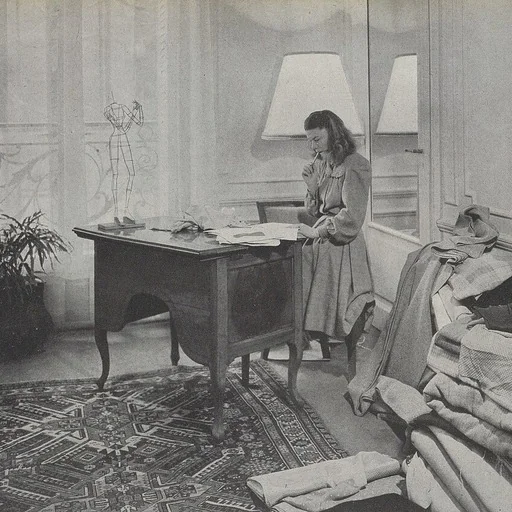
Marie-Louise Carven (31 August 1909 – 8 June 2015), born Carmen de Tommaso, was a French fashion designer who founded the house of Carven in 1945.
Museum
Palais Galliera - Musée de la Mode de la Ville de Paris
Continue through works from the same source collection.
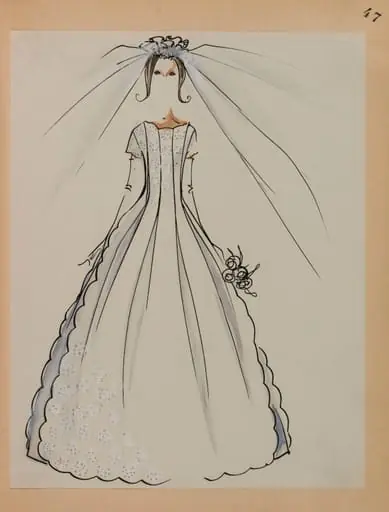 Robe de mariée festonnée et son voile
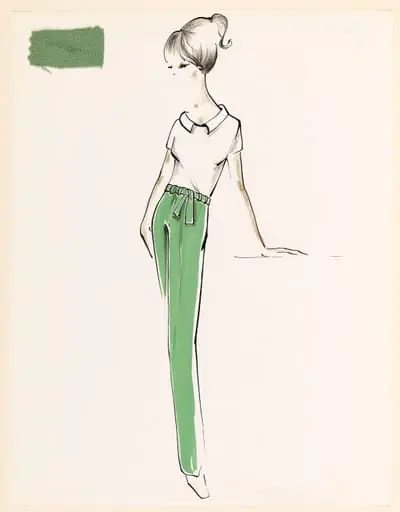 Haut blanc à manches courtes et pantalon vert à ceinture nouée
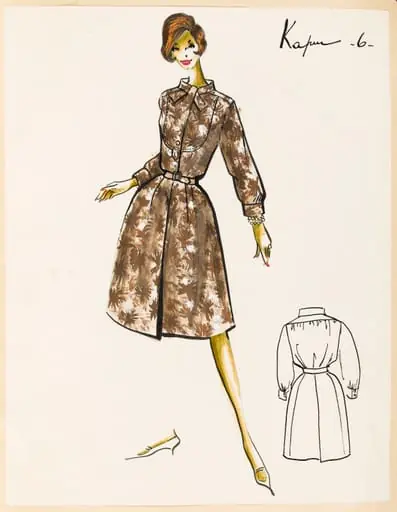 Kapur
Kapur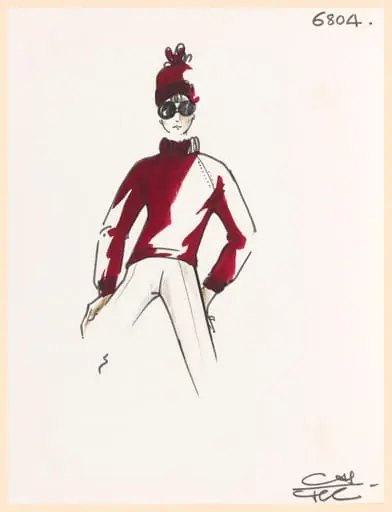 Pull-over à manches longues pourpre, bonnet assorti, pantalon et lunettes de soleil
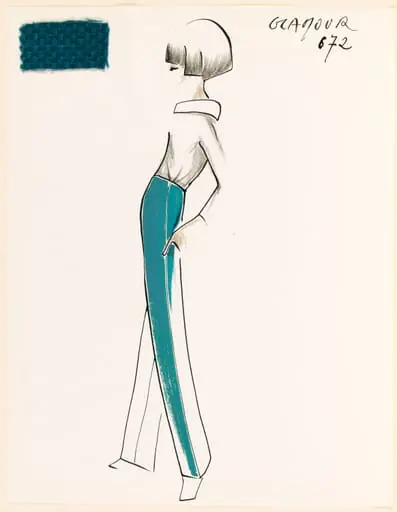 GLAMOUR
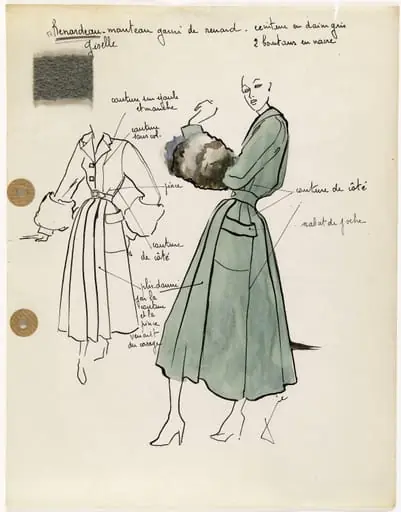 'Renardeau'
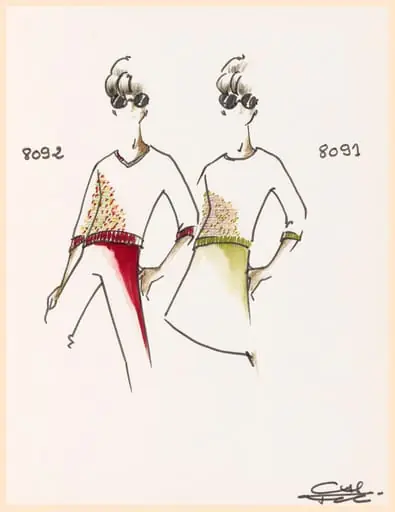 Pull-over à manches trois quarts et à encolure V à motifs multicolores, pantalon cerise et lunettes de soleil
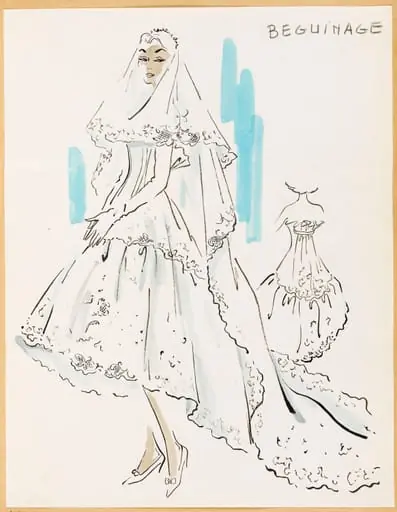 Béguinage