Artwork
Fraisette
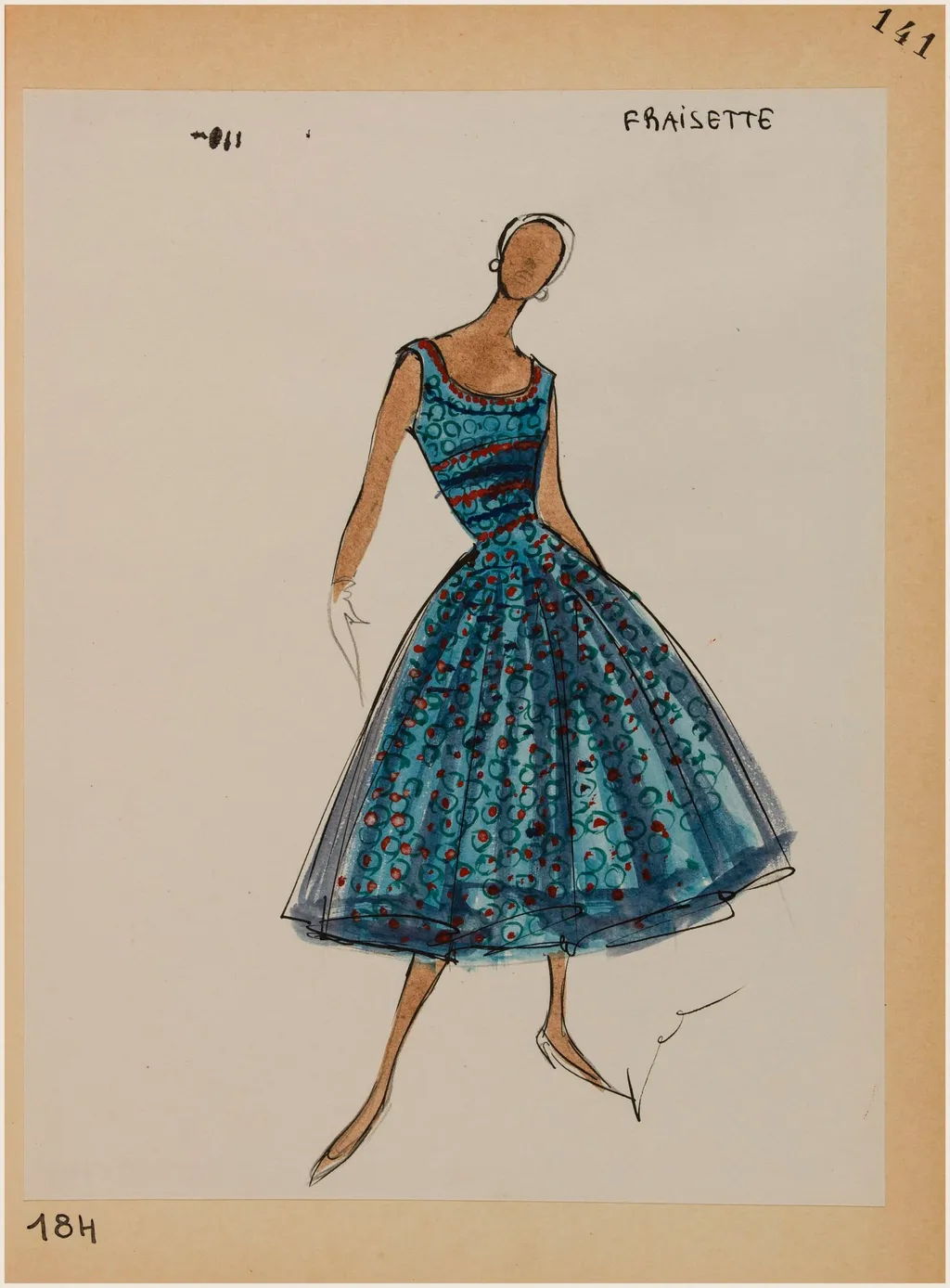
Fraisette is a drawing by Marie-Louise Carven. It dates from 1956 and is held in the collection of the Palais Galliera - Musée de la Mode de la Ville de Paris.
About this work
Overview
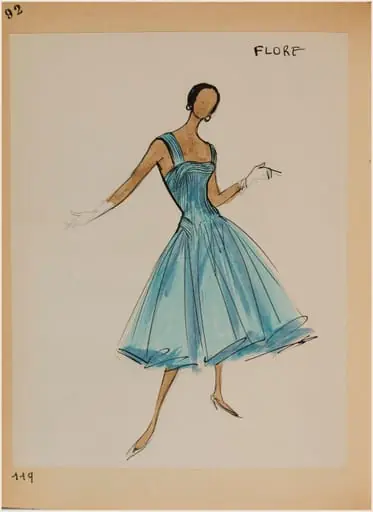
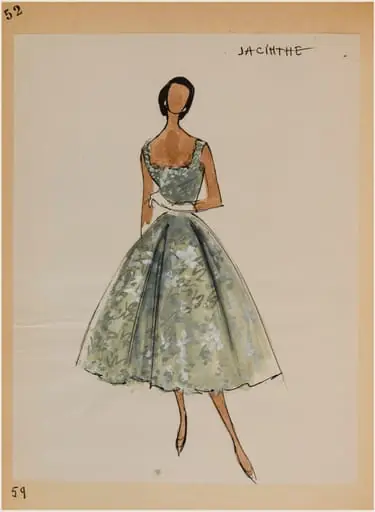
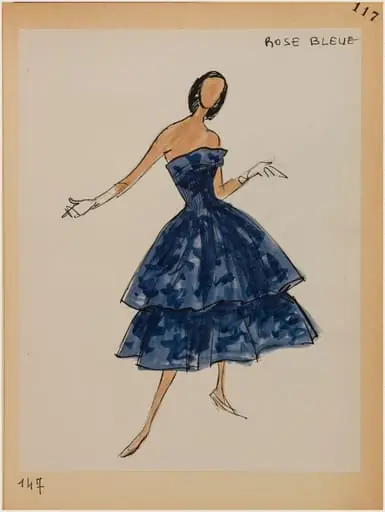
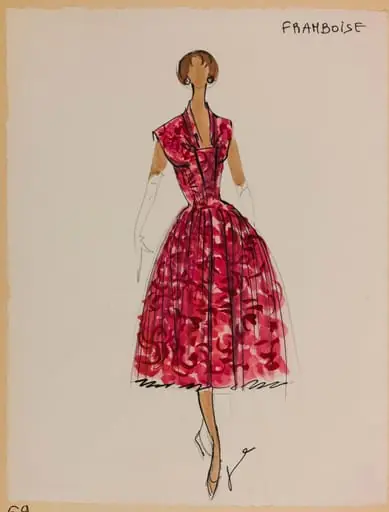
Executed in swift, assured lines, it captures a knee-length garment with a fitted bodice, red trim, and a teal background marked by scattered red circles.
Created in 1956 by French designer Marie-Louise Carven, *Fraisette* is a watercolor sketch depicting a dress design. Executed in swift, assured lines, it captures a knee-length garment with a fitted bodice, red trim, and a teal background marked by scattered red circles. The sketch, likely a working study, bears the dress’s name at the top and reflects Carven’s preference for light, youthful silhouettes. It resides in the Museum of Ethnography’s collection as part of a broader archive of mid-century fashion design.
Subject & Meaning
The figure in *Fraisette* is rendered without facial detail, emphasizing the garment over the wearer. The dress, with its loose fit and playful red-dot pattern, suggests a carefree, feminine aesthetic aligned with postwar French youth culture. The name *Fraisette*—a diminutive form of 'frais,' meaning fresh—hints at the design’s lightness and vitality. The simplicity of the shoes and pulled-back hair reinforces an unadorned, practical elegance.
Technique & Style
Carven used watercolor over ink to create *Fraisette*, applying color with spontaneity and minimal layering. The lines are fluid and immediate, conveying motion and confidence rather than precision. The background’s teal wash and scattered red dots add rhythmic contrast without overwhelming the form. This method reflects the sketch’s function as a rapid design tool, not a finished presentation piece, typical of couture studios preparing for production.
History & Provenance
Marie-Louise Carven founded her fashion house in 1945 and became known for catering to petite figures with delicate fabrics like lace and gingham. *Fraisette* dates from the period when she was pioneering ready-to-wear collections in Paris, bridging haute couture and accessible fashion. The sketch entered the Museum of Ethnography’s holdings as part of a documented effort to preserve design process artifacts, not merely final garments.
Context
In mid-1950s Paris, couture houses began adapting to changing social norms and economic realities by developing prêt-à-porter lines. Carven was among the first to embrace this shift, favoring wearable, affordable designs over elaborate tailoring. *Fraisette* exemplifies this transition: its informal technique and cheerful motif reflect a move toward everyday elegance, resonating with a generation seeking practical yet stylish clothing.
Legacy
Though not a final garment, *Fraisette* preserves the creative rhythm of Carven’s design process. Its survival in a museum collection underscores the growing recognition of fashion sketches as cultural artifacts. The work illustrates how couturiers translated aesthetic ideas into wearable forms, influencing later designers who valued simplicity, movement, and the quiet charm of everyday dress.
Artist & collection
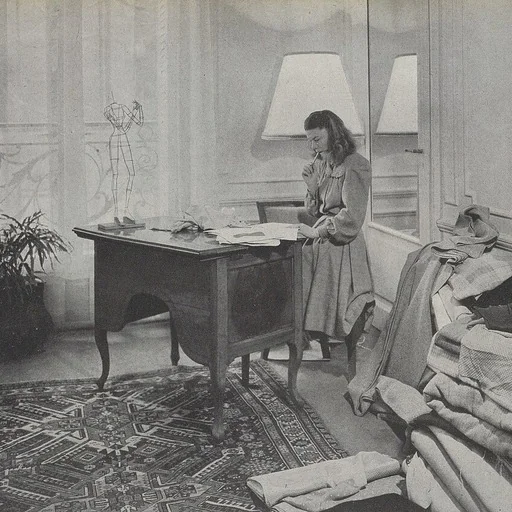
Artist
Marie-Louise Carven (31 August 1909 – 8 June 2015), born Carmen de Tommaso, was a French fashion designer who founded the house of Carven in 1945.
Museum
Palais Galliera - Musée de la Mode de la Ville de Paris
Continue through works from the same source collection.
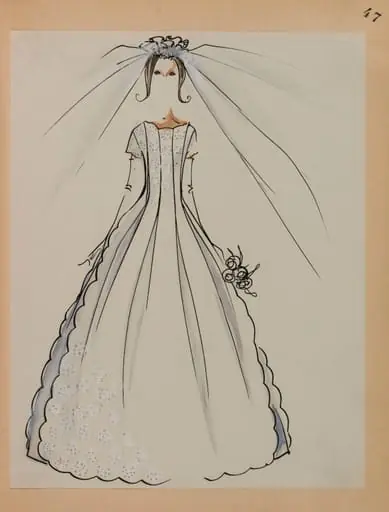 Robe de mariée festonnée et son voile
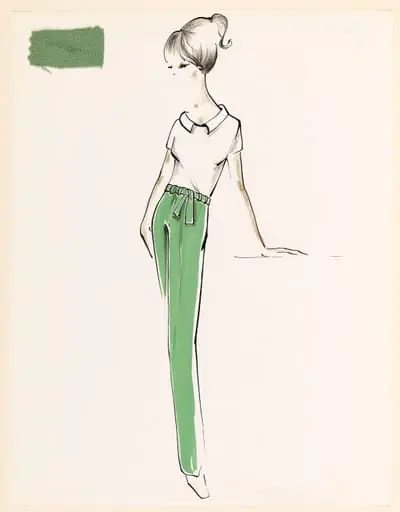 Haut blanc à manches courtes et pantalon vert à ceinture nouée
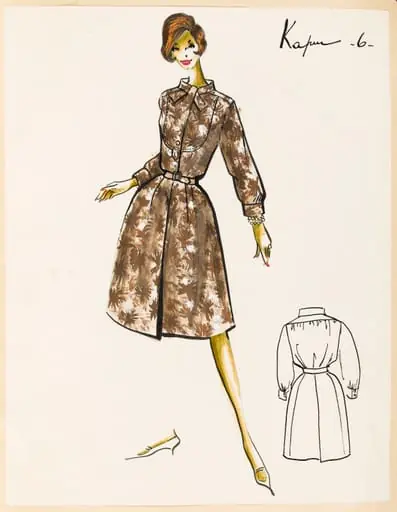 Kapur
Kapur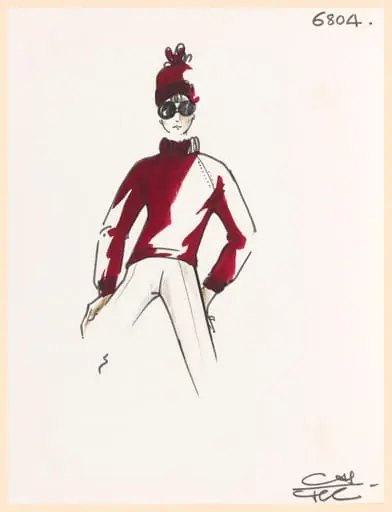 Pull-over à manches longues pourpre, bonnet assorti, pantalon et lunettes de soleil
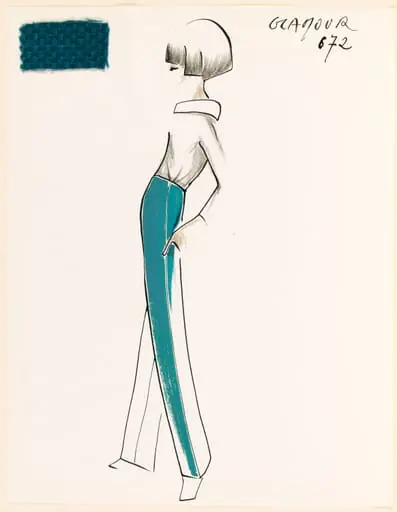 GLAMOUR
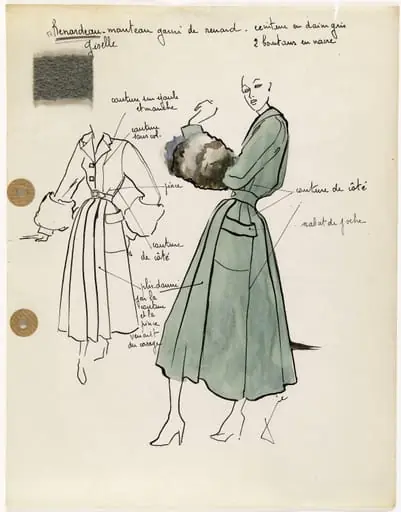 'Renardeau'
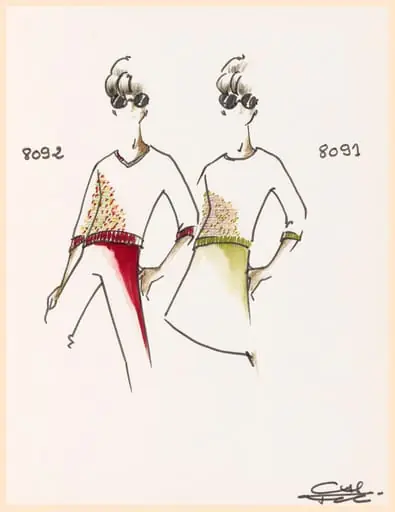 Pull-over à manches trois quarts et à encolure V à motifs multicolores, pantalon cerise et lunettes de soleil
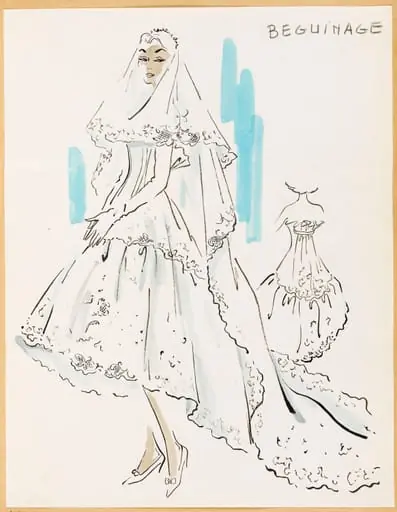 Béguinage