Artwork
'Kangourou'
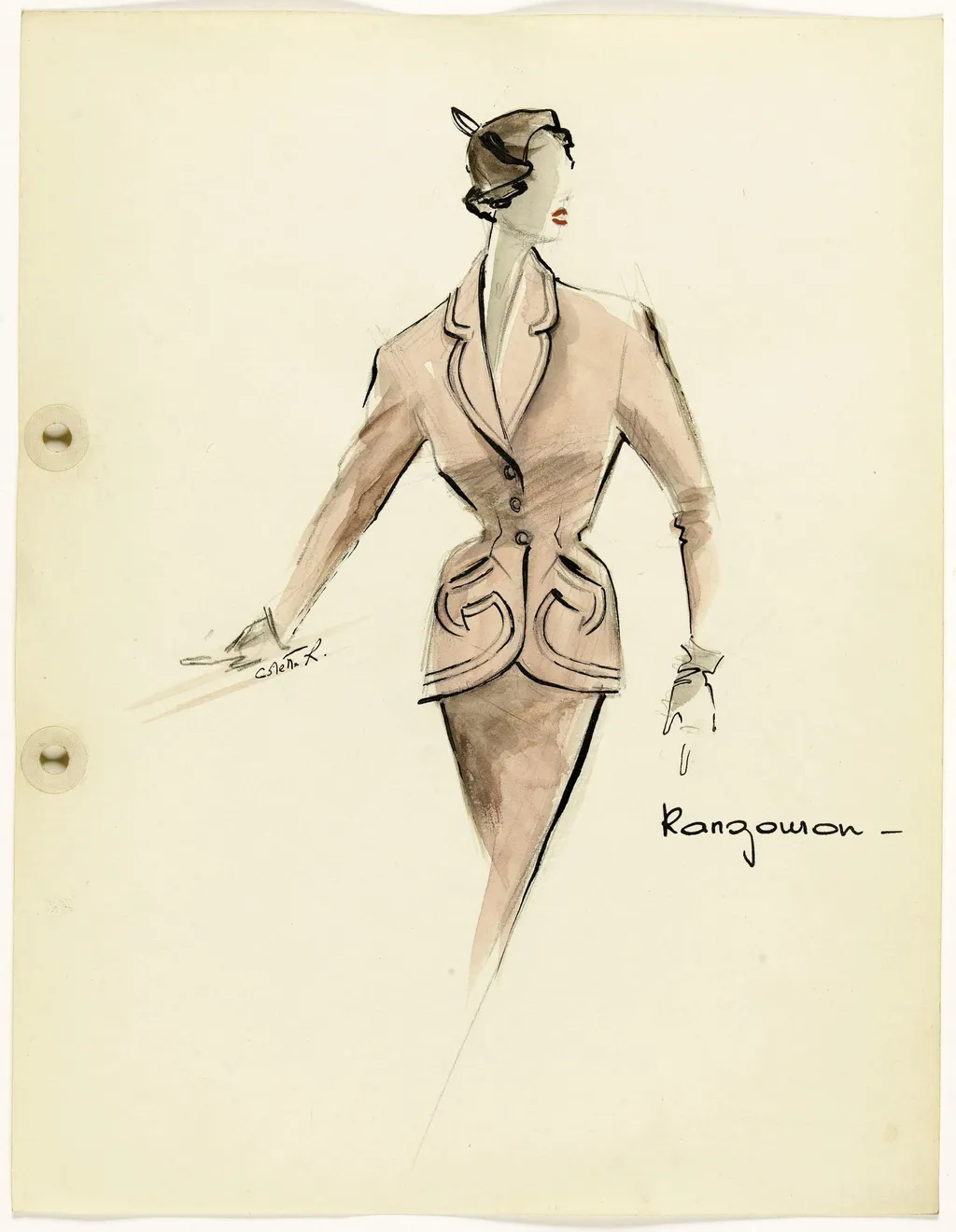
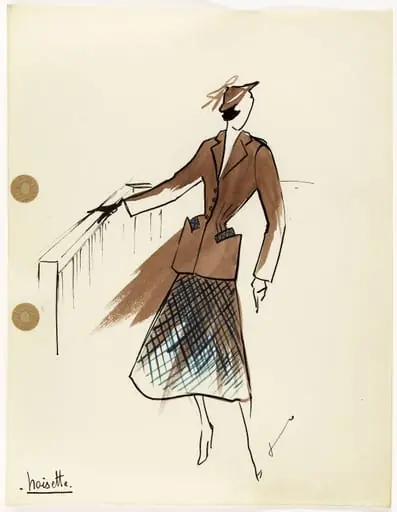
'Kangourou' is a drawing by Marie-Louise Carven. It dates from 1951 and is held in the collection of the Palais Galliera - Musée de la Mode de la Ville de Paris.
About this work
Overview
Created around 1951, *Kangourou* is a fashion illustration by Marie-Louise Carven, founder of the Parisian design house Carven established in 1945.
Created around 1951, *Kangourou* is a fashion illustration by Marie-Louise Carven, founder of the Parisian design house Carven established in 1945. The piece reflects her focus on refined, wearable designs for smaller frames and was produced during a period when she pioneered ready-to-wear collections in haute couture. Held in the Museum of Ethnography’s collection, the work bridges fashion design and graphic art, capturing a moment of postwar French style through a single, composed figure.
Subject & Meaning
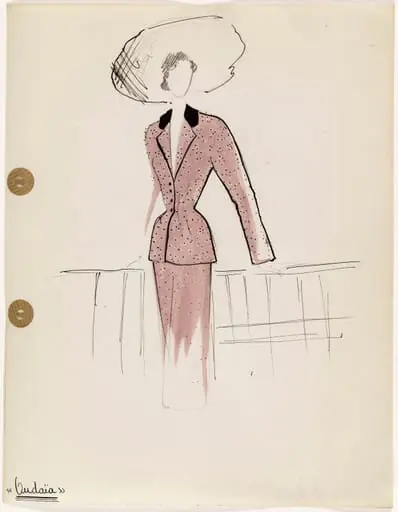
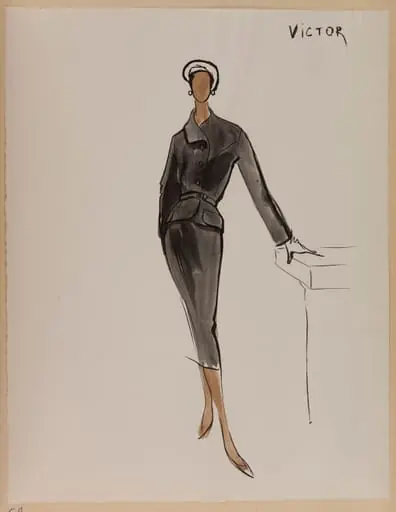
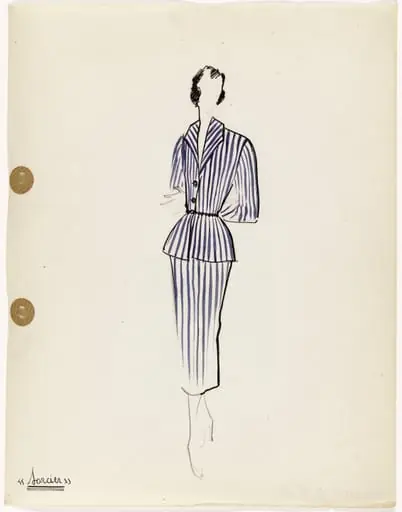
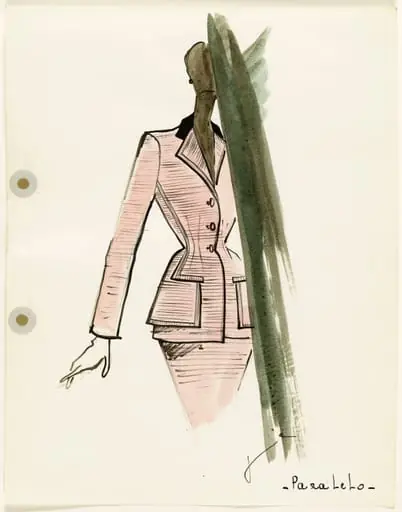
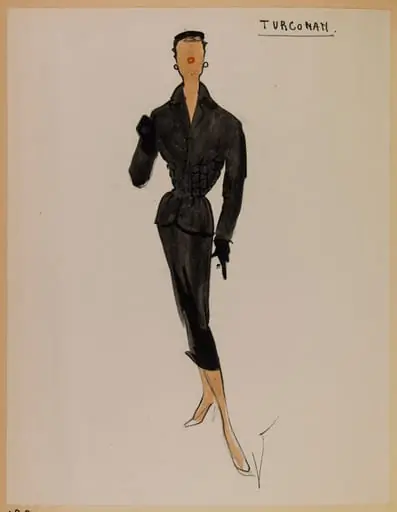
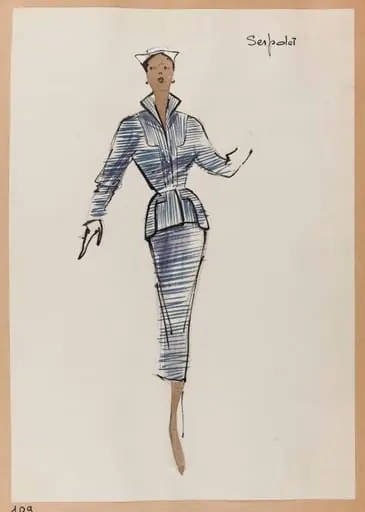
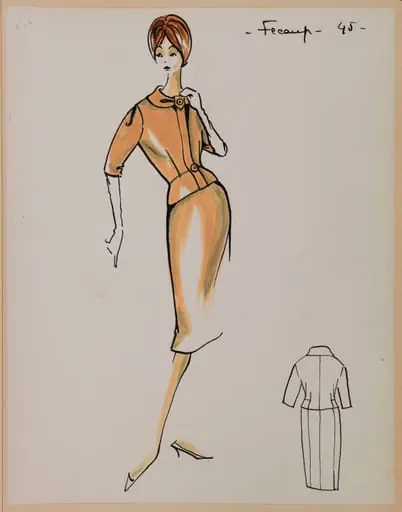
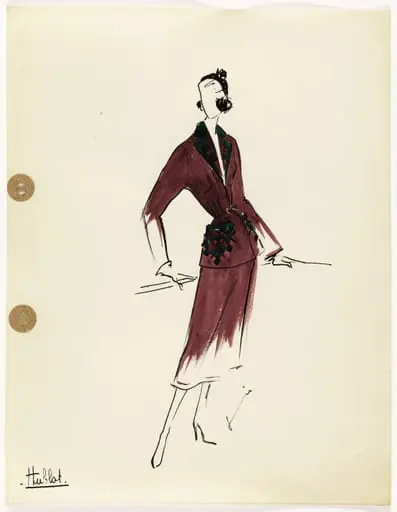
The illustration depicts a woman in a tailored jacket and skirt, standing with arms extended slightly, facing right. Her poised posture and neat updo convey quiet self-assurance, avoiding theatricality in favor of calm dignity. The title *Kangourou*—French for kangaroo—may allude to the garment’s functional pockets or the idea of carrying ease, though no literal animal reference appears. The image suggests a new ideal of modern femininity: practical, composed, and unadorned.
Technique & Style
Rendered in a restrained palette of soft grays and muted tones, the drawing uses subtle shading to define form without heavy contrast. Clean, precise lines outline the silhouette, emphasizing structure over ornament. The absence of background or detail focuses attention on the figure’s posture and clothing, aligning with Carven’s design philosophy of clarity and proportion. The technique reflects the precision of fashion illustration as a tool for communicating wearable elegance.
History & Provenance
Produced in the early 1950s, *Kangourou* emerged during Carven’s rise as a leader in democratizing Parisian fashion. While her label gained acclaim for its accessible prêt-à-porter lines, this illustration likely served as a design study or promotional piece. It entered the Museum of Ethnography’s collection as part of a broader effort to document everyday cultural expression through fashion, distinguishing it from traditional haute couture archives.
Context
In postwar France, fashion was redefining identity amid economic recovery and shifting gender roles. Carven’s designs responded to women’s desire for mobility and simplicity, contrasting with the more elaborate styles of contemporaries. *Kangourou* reflects this cultural shift—its understated form mirrors the rise of urban, active lifestyles and the growing market for clothing that balanced style with practicality.
Legacy
Though Carven’s name is less prominent today, her early adoption of ready-to-wear influenced the trajectory of 20th-century fashion. *Kangourou* endures as a quiet testament to her commitment to elegance without excess. Its presence in an ethnographic museum underscores its value not as high art, but as a cultural artifact—capturing the everyday aesthetics of a generation reimagining modern womanhood.
Artist & collection
Artist
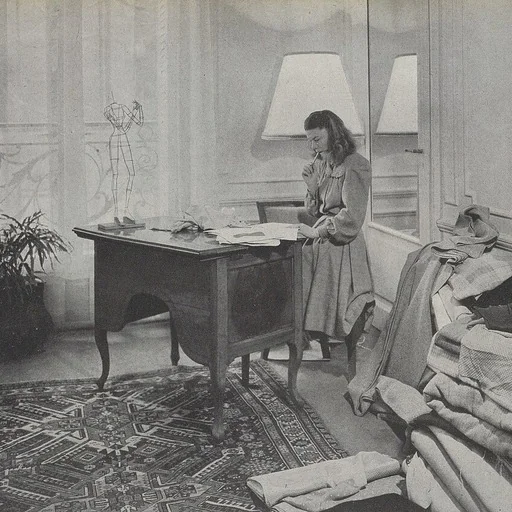
Marie-Louise Carven (31 August 1909 – 8 June 2015), born Carmen de Tommaso, was a French fashion designer who founded the house of Carven in 1945.
Museum
Palais Galliera - Musée de la Mode de la Ville de Paris
Continue through works from the same source collection.
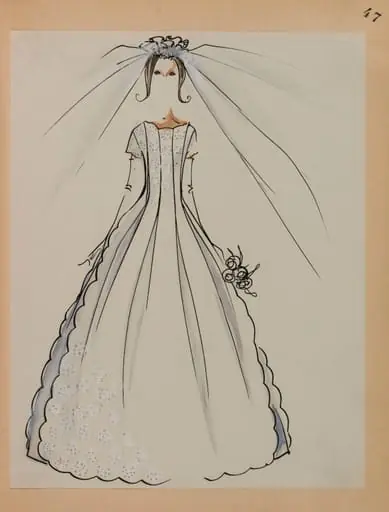 Robe de mariée festonnée et son voile
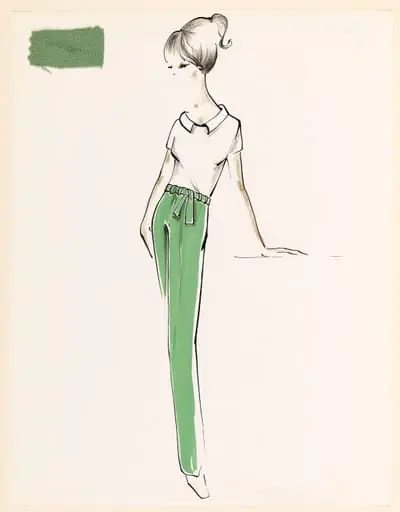 Haut blanc à manches courtes et pantalon vert à ceinture nouée
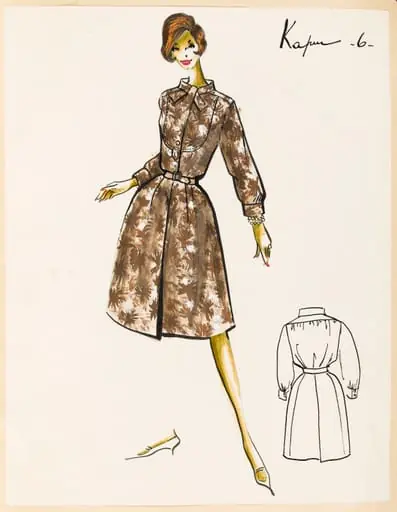 Kapur
Kapur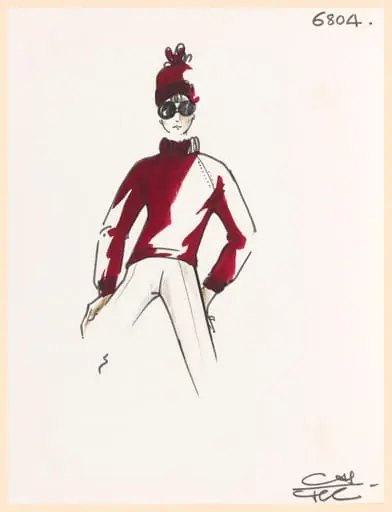 Pull-over à manches longues pourpre, bonnet assorti, pantalon et lunettes de soleil
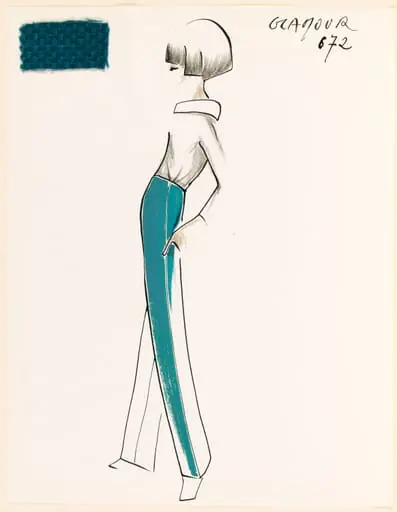 GLAMOUR
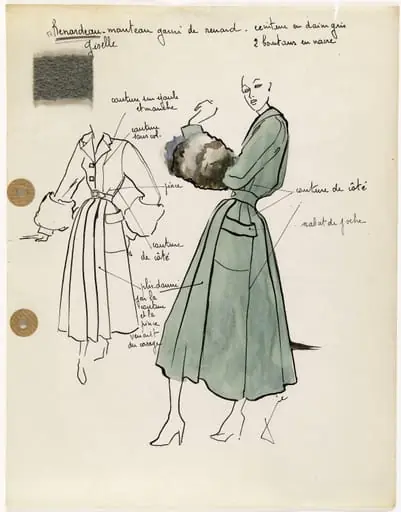 'Renardeau'
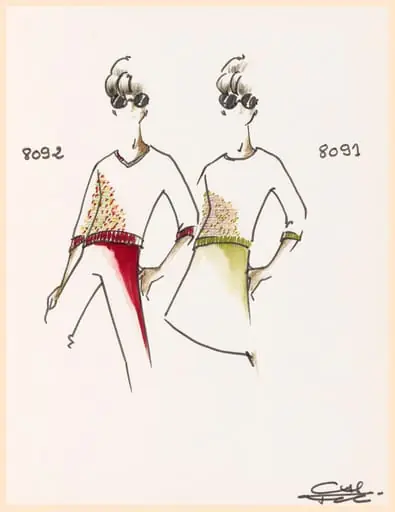 Pull-over à manches trois quarts et à encolure V à motifs multicolores, pantalon cerise et lunettes de soleil
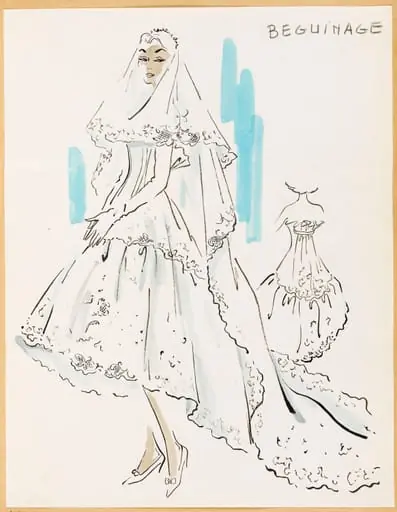 Béguinage