Artwork
La valse
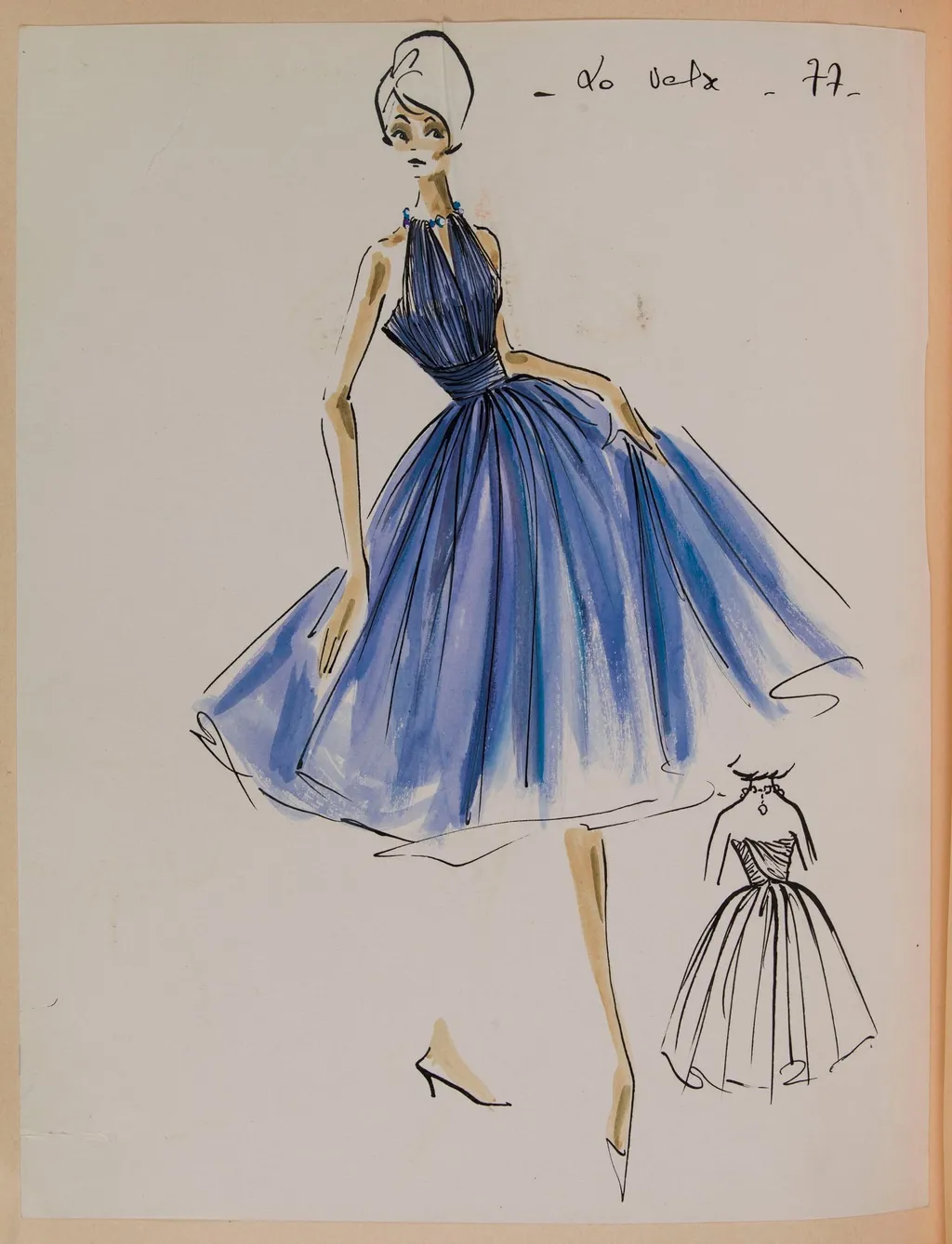
La valse is a drawing by Marie-Louise Carven. It dates from 1958 and is held in the collection of the Palais Galliera - Musée de la Mode de la Ville de Paris.
About this work
Overview
The work reflects Carven’s interest in lightweight, dynamic silhouettes and was likely produced as a design study for a garment.
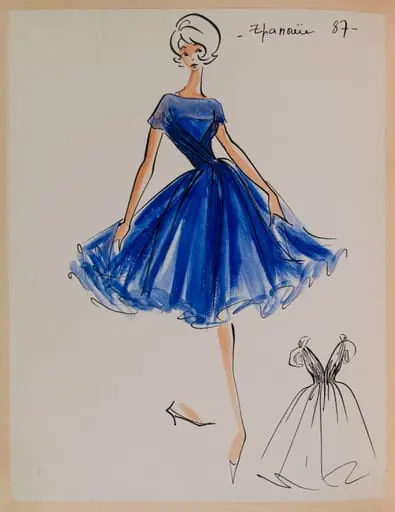
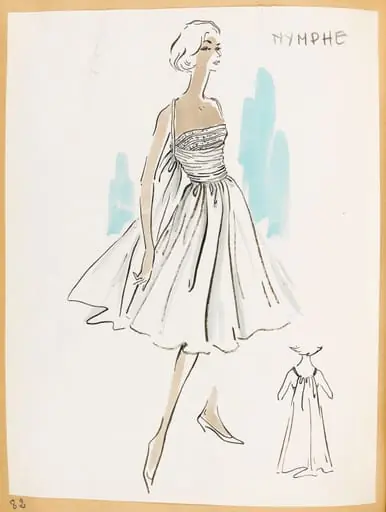
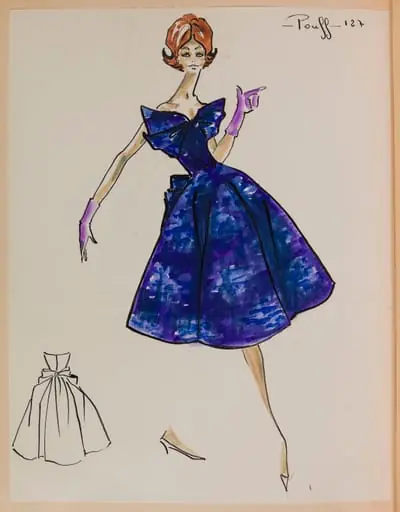
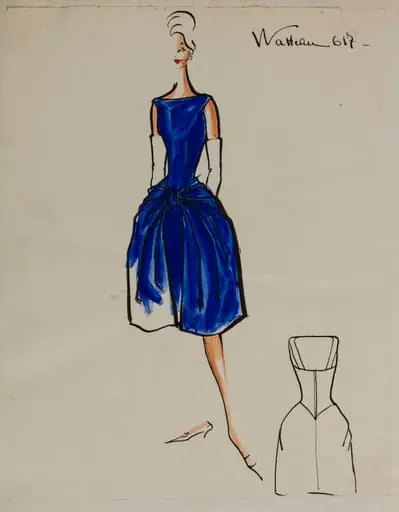
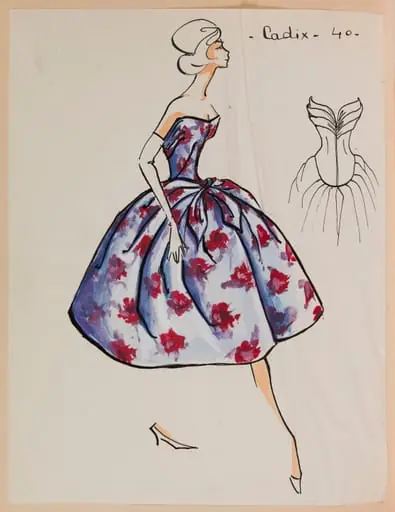
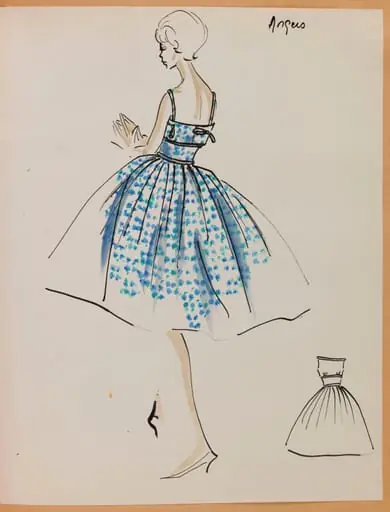
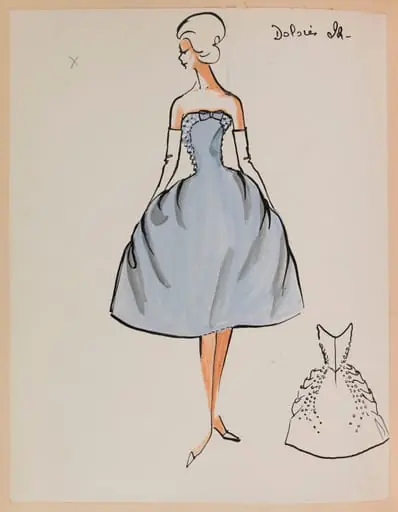
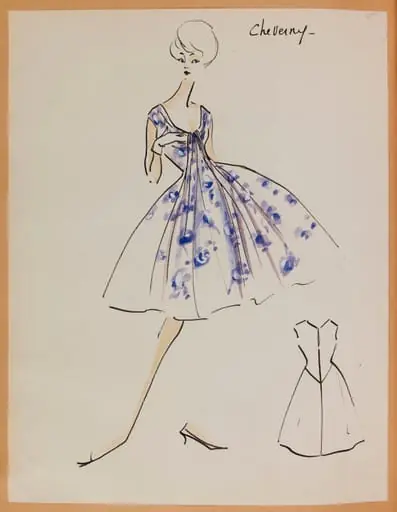
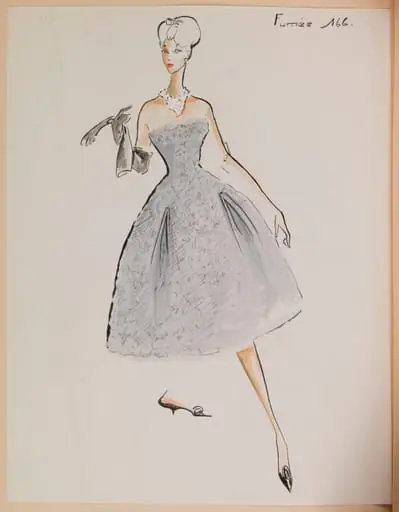
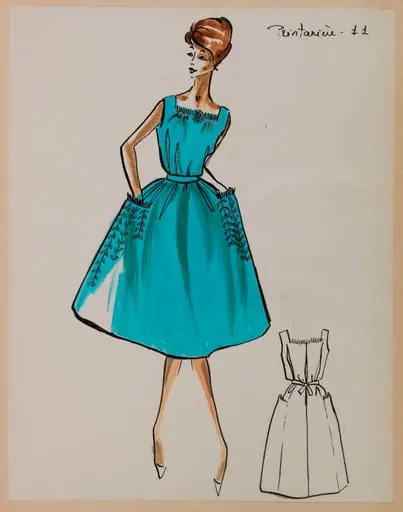
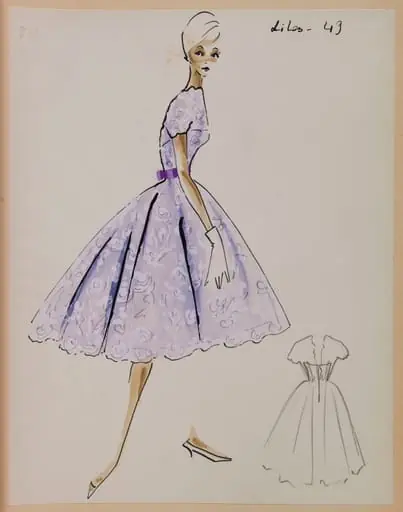
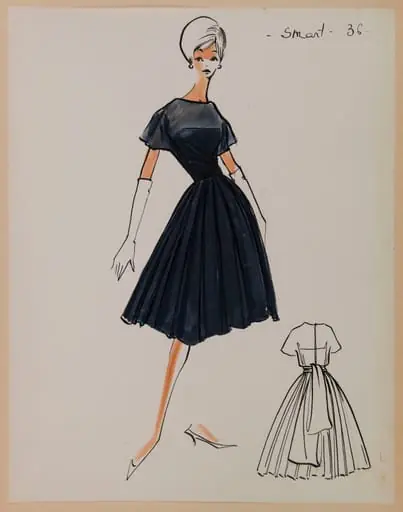
La valse is a watercolor sketch created around 1958 by French designer Marie-Louise Carven. It depicts a woman in motion, dressed in a flowing blue gown with a fitted bodice and flared skirt. Executed with loose, expressive brushwork, the drawing captures the rhythm of movement rather than precise detail. The work reflects Carven’s interest in lightweight, dynamic silhouettes and was likely produced as a design study for a garment.
Subject & Meaning
The figure in La valse suggests a dancer or woman in motion, evoking the gentle sway of a waltz. The simplicity of her attire—minimal jewelry, hair neatly pinned beneath a small hat—emphasizes grace over ornamentation. The repeated outline in the corner implies iterative design thinking, possibly a study for variations in draping or proportion. The piece conveys elegance through movement, aligning with Carven’s philosophy of wearable art for the active woman.
Technique & Style
Carven employed watercolor with swift, fluid strokes to suggest the fabric’s movement and luminosity. The blue dress emerges against a pale, unworked background, heightening its visual presence. The sketch’s spontaneity—visible brush trails, minimal outlines—reflects the immediacy of fashion illustration. A secondary, simplified contour in the corner indicates a process of refinement, typical of design development in couture ateliers of the period.
History & Provenance
Created during Carven’s tenure as a leading figure in postwar French fashion, La valse originated in her personal design archive. It entered the collection of the Museum of Ethnography, where it is preserved as an artifact of 20th-century textile design. Its presence in an ethnographic context underscores its significance as a cultural object reflecting evolving notions of femininity and daily dress in mid-century Europe.
Context
In the late 1950s, Carven was pioneering the transition from haute couture to ready-to-wear, making fashion more accessible. La valse embodies this shift: a hand-drawn concept that could be translated into mass-produced garments. The emphasis on light fabrics and movement aligned with changing lifestyles and the rise of urban, active women. The sketch stands as a quiet testament to the designer’s influence beyond the runway.
Legacy
La valse remains a representative example of Carven’s design ethos—elegant, unpretentious, and attuned to the female form in motion. Though not widely exhibited, its preservation in an ethnographic museum affirms its role as a cultural document. The sketch continues to inform studies of mid-century fashion illustration and the evolution of women’s wear from bespoke to everyday attire.
Artist & collection
Artist
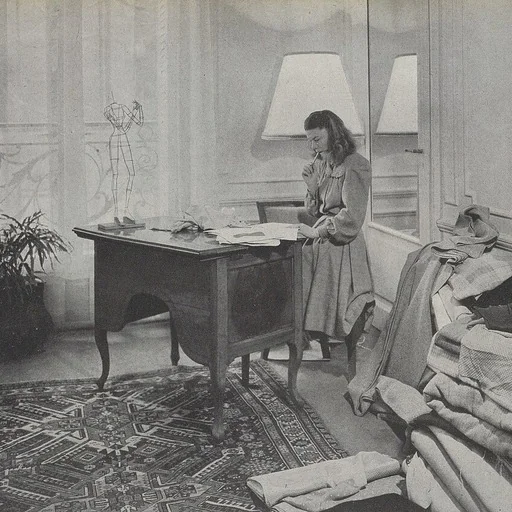
Marie-Louise Carven (31 August 1909 – 8 June 2015), born Carmen de Tommaso, was a French fashion designer who founded the house of Carven in 1945.
Museum
Palais Galliera - Musée de la Mode de la Ville de Paris
Continue through works from the same source collection.
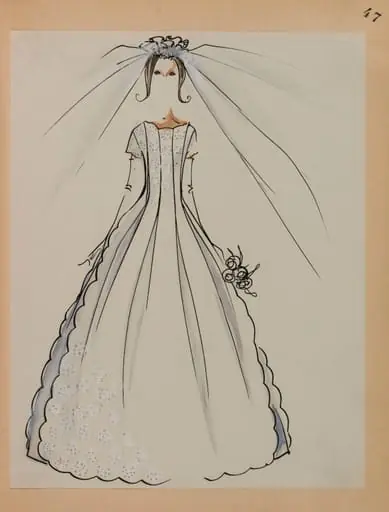 Robe de mariée festonnée et son voile
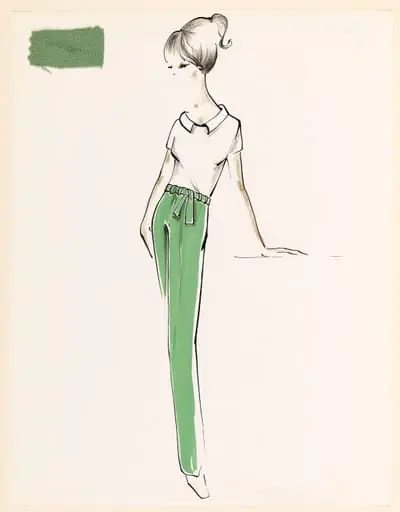 Haut blanc à manches courtes et pantalon vert à ceinture nouée
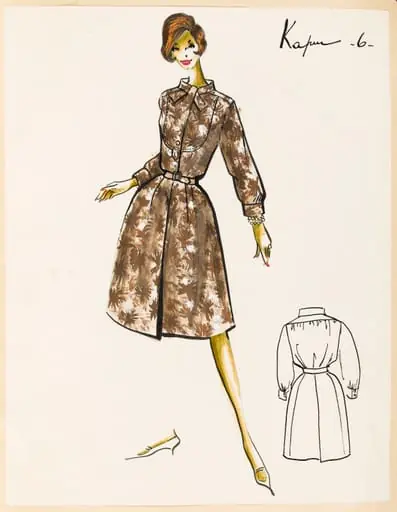 Kapur
Kapur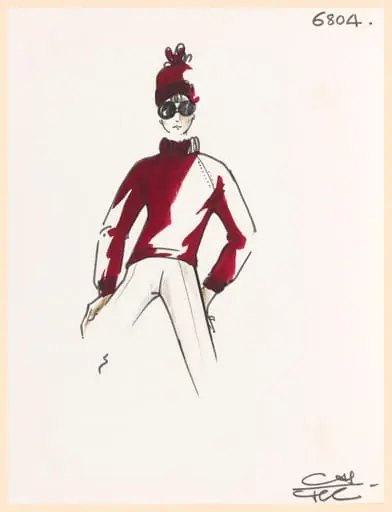 Pull-over à manches longues pourpre, bonnet assorti, pantalon et lunettes de soleil
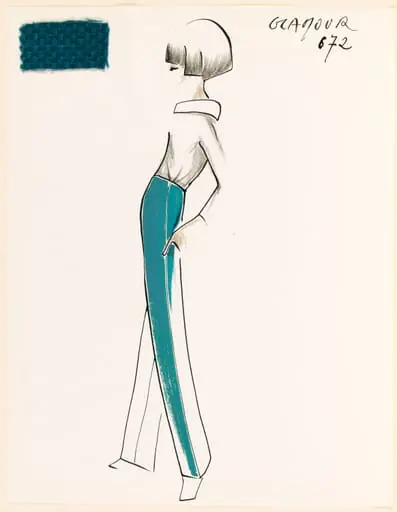 GLAMOUR
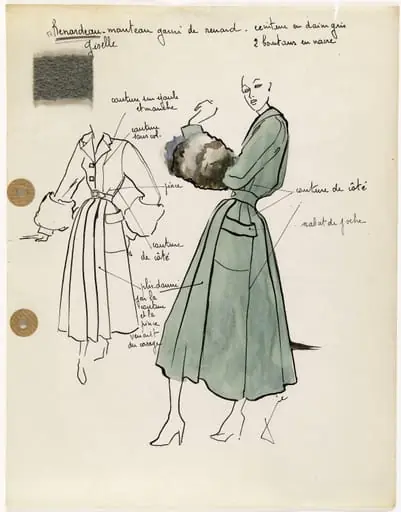 'Renardeau'
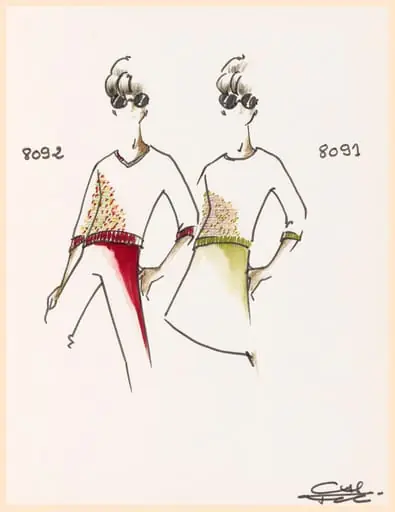 Pull-over à manches trois quarts et à encolure V à motifs multicolores, pantalon cerise et lunettes de soleil
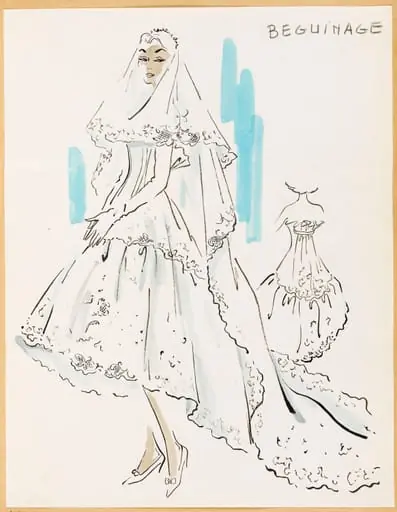 Béguinage