Artwork
Lazuli
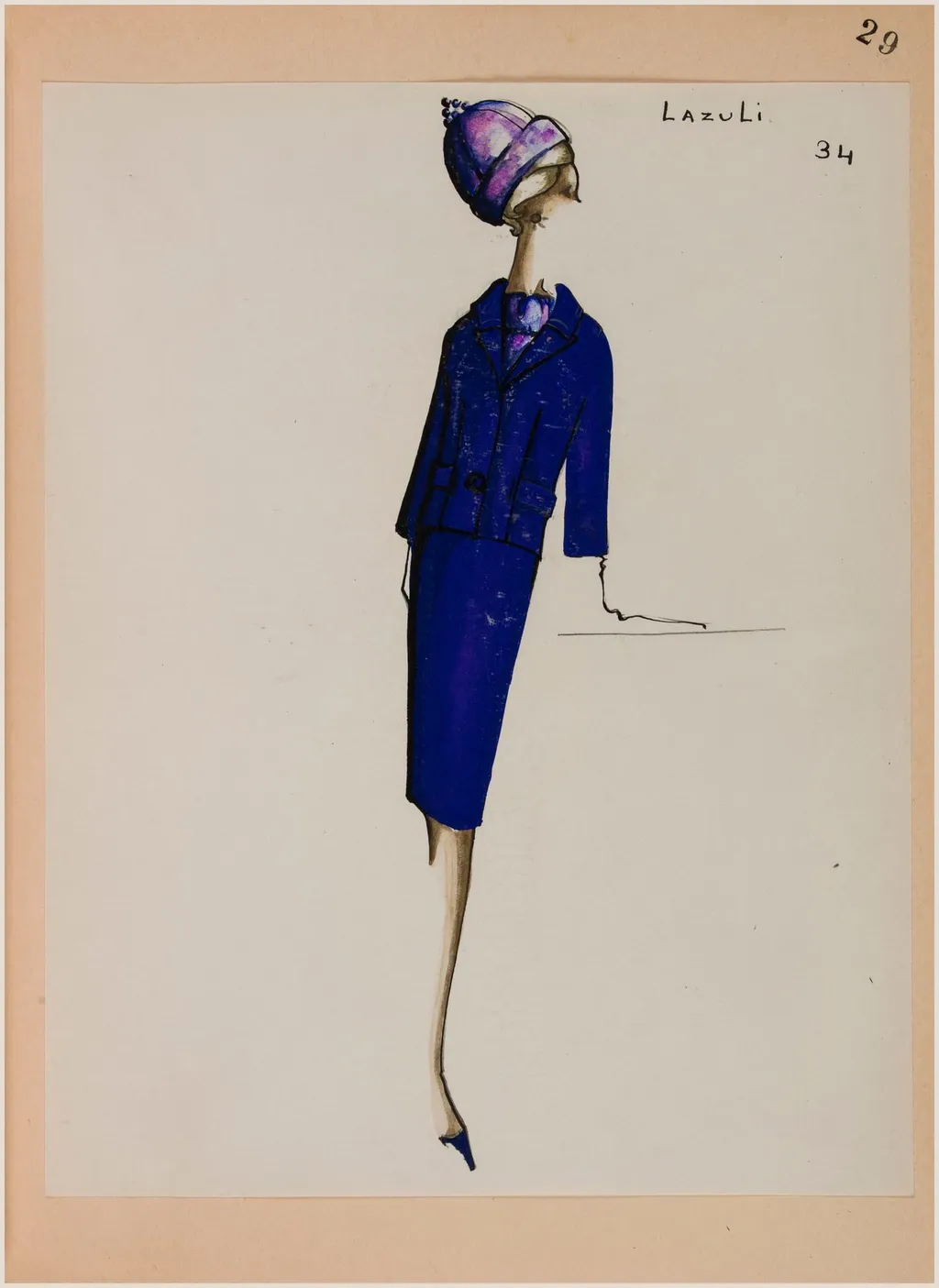
Lazuli is a drawing by Marie-Louise Carven. It dates from 1963 and is held in the collection of the Palais Galliera - Musée de la Mode de la Ville de Paris.
About this work
If you're interested in learning more about the artist's use of cross-hatching and stippling techniques, you might want to look up Marie-Louise Carven.
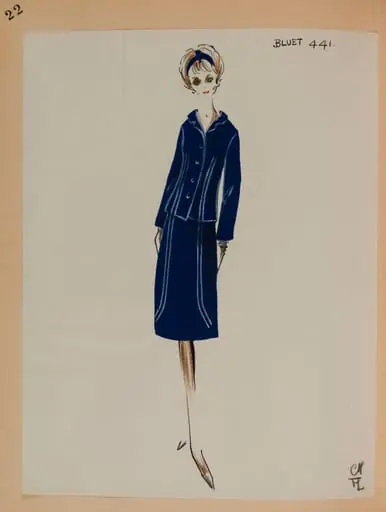
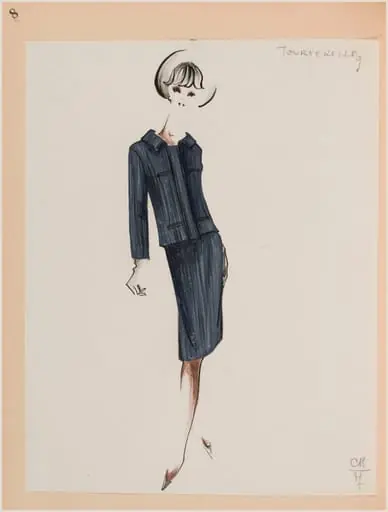
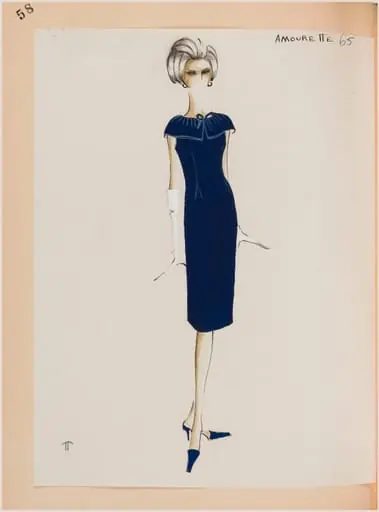
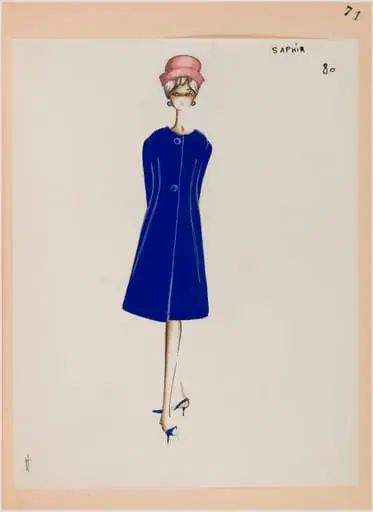
The image depicts a drawing of a woman wearing a blue suit and a purple hat. The suit consists of a jacket and a skirt, and the woman is also wearing high heels. The background of the drawing is a light beige color.
The drawing is titled "Lazuli" and was created by Marie-Louise Carven in 1963. It is a medium-sized drawing, and the artist has used a range of techniques to create depth and texture.
The drawing is held at the Museum of Ethnography, and it is a notable example of the artist's work. If you're interested in learning more about the artist's use of cross-hatching and stippling techniques, you might want to look up Marie-Louise Carven.
Overview
Created in 1963 by French designer Marie-Louise Carven, *Lazuli* is a medium-sized fashion illustration depicting a woman in a blue suit and purple hat. Though Carven is best known for her clothing designs, this drawing represents her work in visualizing garment concepts. It resides in the Museum of Ethnography, where it is preserved as part of a broader collection of design artifacts rather than fine art.
Subject & Meaning
The figure wears a tailored blue suit with a matching skirt, elevated by high heels and an accentuated purple hat. The composition reflects Carven’s signature focus on proportion and feminine silhouettes suited to petite frames. The title, *Lazuli*, suggests a reference to the deep blue pigment, aligning the garment’s hue with a sense of refined elegance rather than overt ornamentation.
Technique & Style
Carven employed fine linework, cross-hatching, and stippling to suggest texture and volume in the fabric and hat. The light beige background provides contrast without distraction, directing focus to the figure’s form. The rendering is precise yet restrained, characteristic of fashion sketches intended for production rather than exhibition, emphasizing clarity over artistic flourish.
History & Provenance
Carven founded her fashion house in 1945 and was among the earliest couturiers to develop a ready-to-wear line. *Lazuli* dates from the height of her influence in the early 1960s. The drawing entered the Museum of Ethnography’s collection as part of a broader effort to document 20th-century design practices, reflecting the cultural significance of fashion as material culture.
Context
In the early 1960s, Parisian fashion was shifting toward accessibility and modernity. Carven’s designs catered to a growing market of independent women seeking stylish, wearable clothing. *Lazuli* exemplifies this transition, merging couture precision with the practicality of prêt-à-porter, aligning with broader societal changes in gender roles and consumer habits.
Legacy
Though Carven’s innovations in garment construction and marketing are better documented, *Lazuli* remains a tangible example of her design process. Its preservation in an ethnographic context underscores how fashion drawings functioned as both creative tools and cultural records, bridging artisanal craft and industrial production in postwar Europe.
Artist & collection
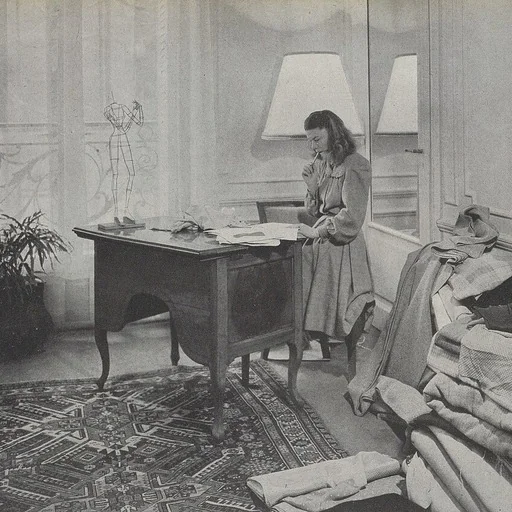
Artist
Marie-Louise Carven (31 August 1909 – 8 June 2015), born Carmen de Tommaso, was a French fashion designer who founded the house of Carven in 1945.
Museum
Palais Galliera - Musée de la Mode de la Ville de Paris
Continue through works from the same source collection.
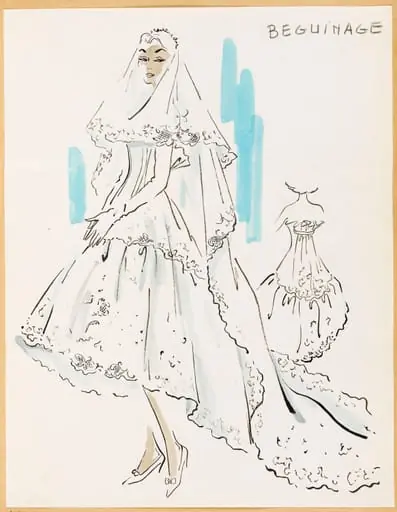
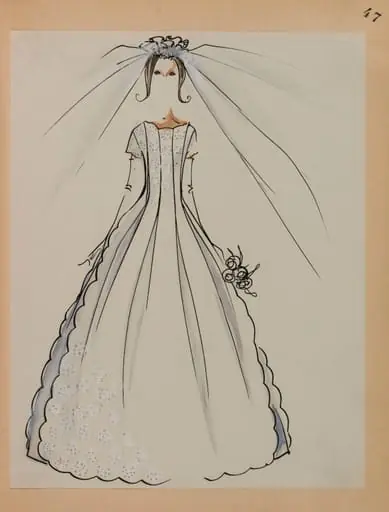 Robe de mariée festonnée et son voile
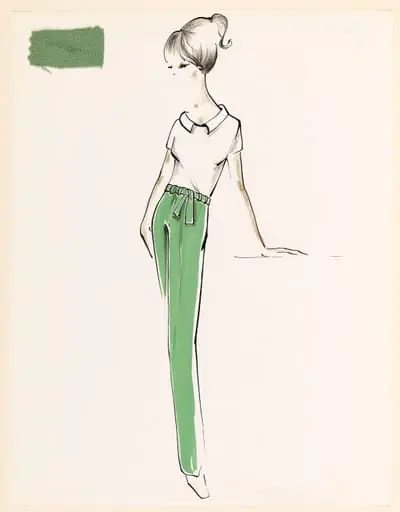 Haut blanc à manches courtes et pantalon vert à ceinture nouée
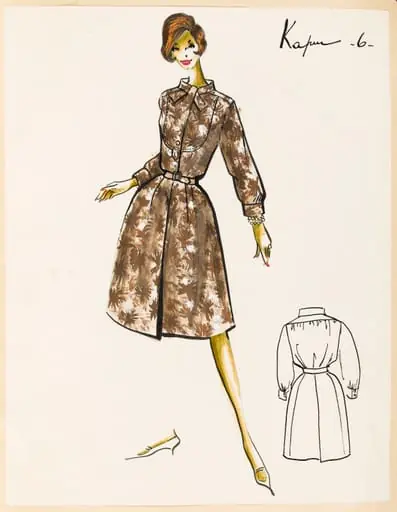 Kapur
Kapur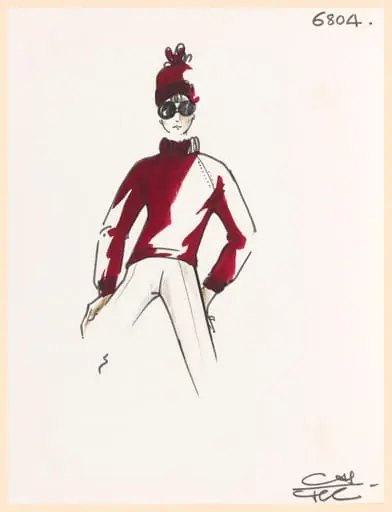 Pull-over à manches longues pourpre, bonnet assorti, pantalon et lunettes de soleil
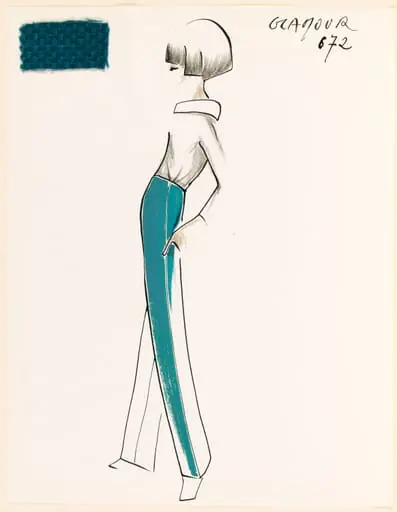 GLAMOUR
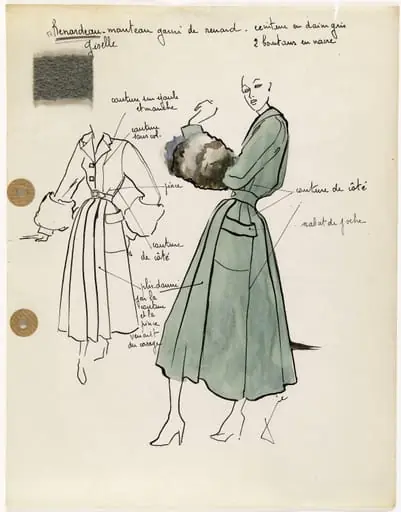 'Renardeau'
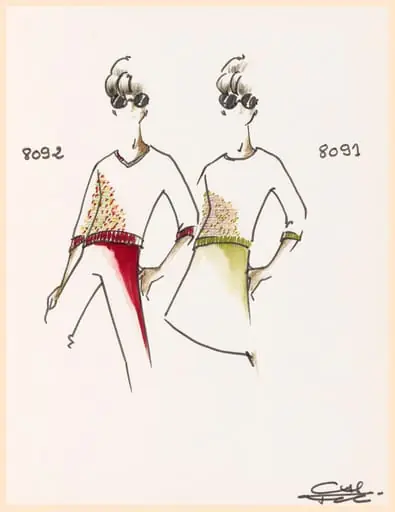 Pull-over à manches trois quarts et à encolure V à motifs multicolores, pantalon cerise et lunettes de soleil
 Béguinage