Artwork
Luciole
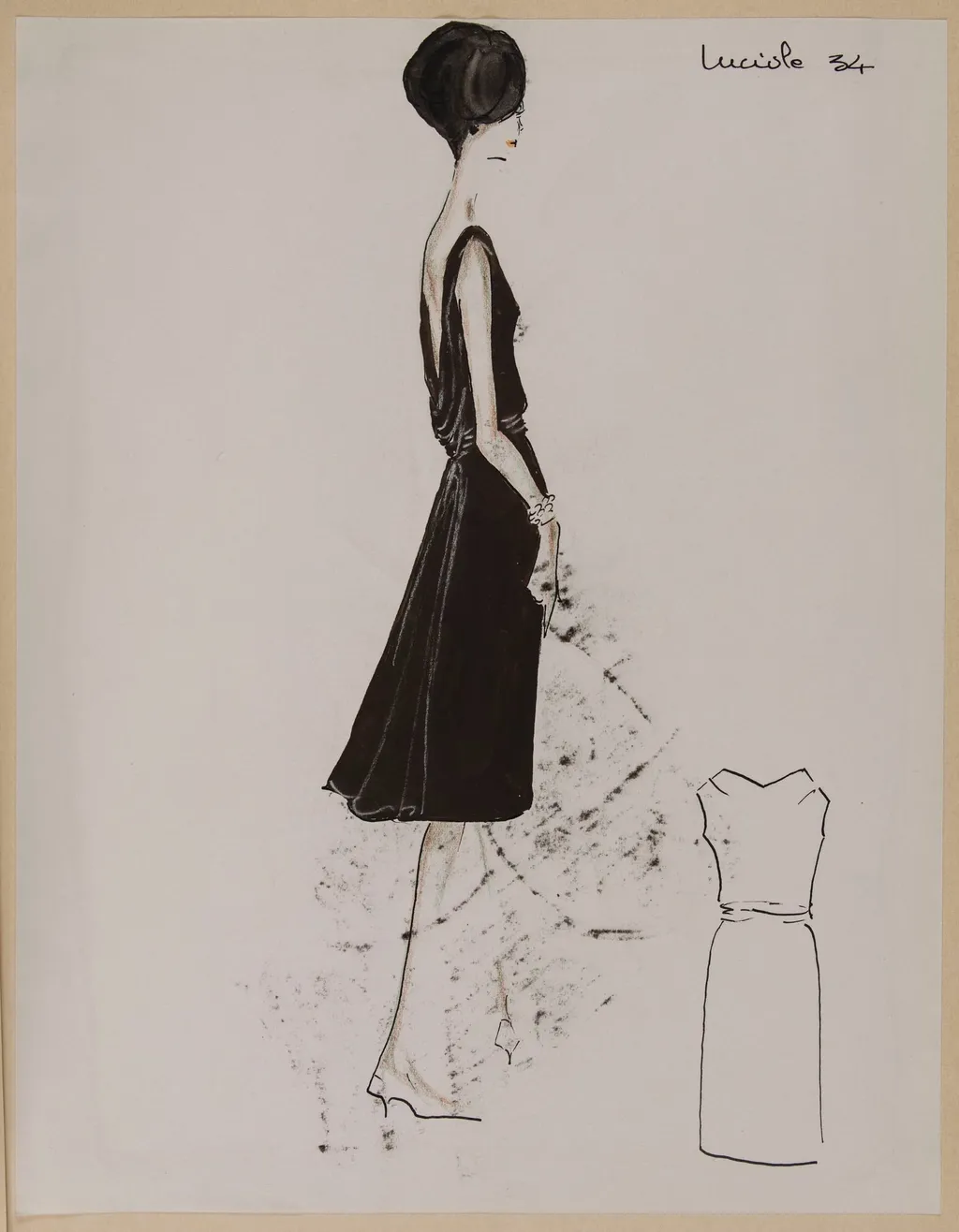
Luciole is a drawing by Marie-Louise Carven. It dates from 1960 and is held in the collection of the Palais Galliera - Musée de la Mode de la Ville de Paris.
About this work
Overview
It belongs to a collection held by the Museum of Ethnography and reflects Carven’s approach to design that emphasized refined simplicity and wearability.
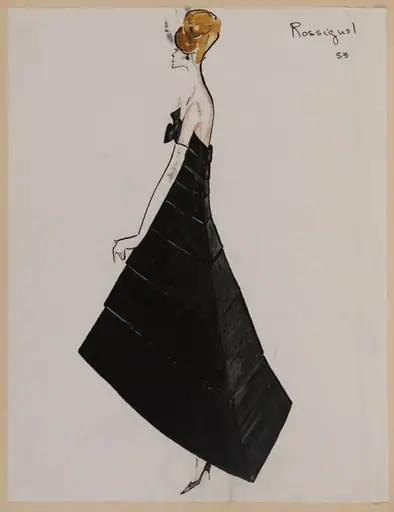
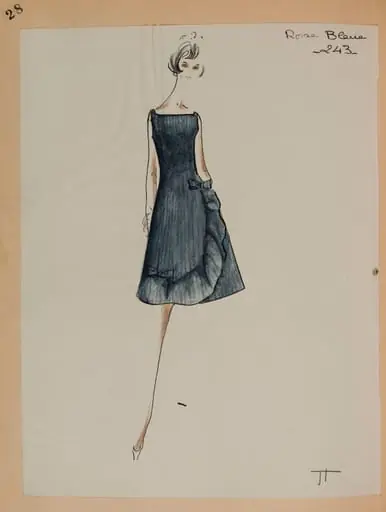
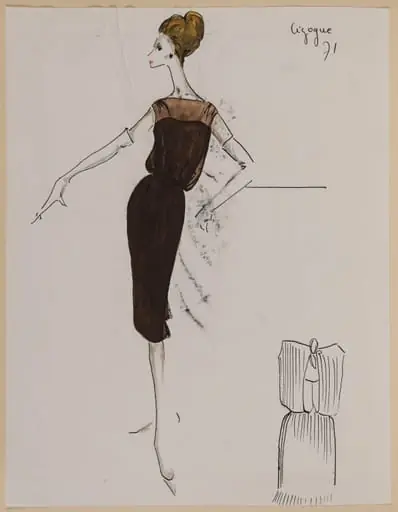
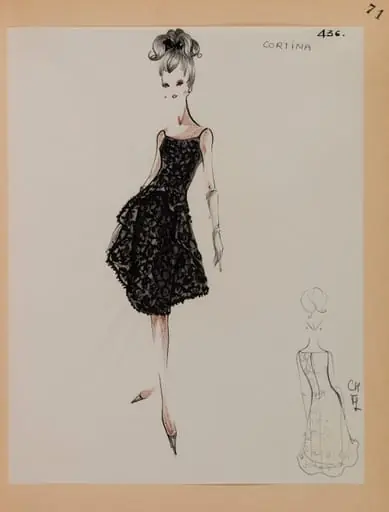
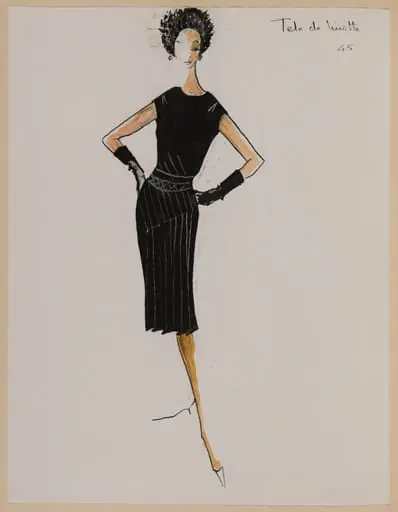
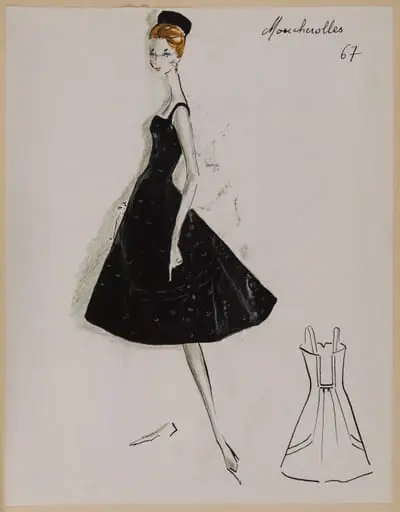
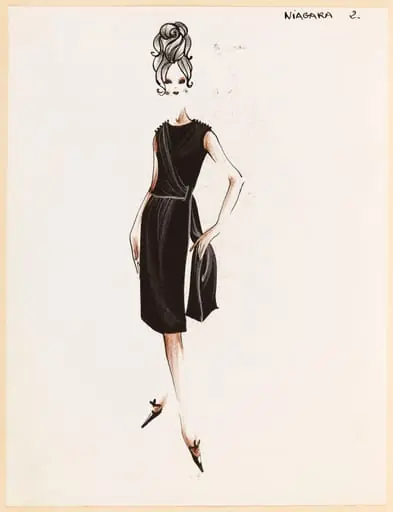
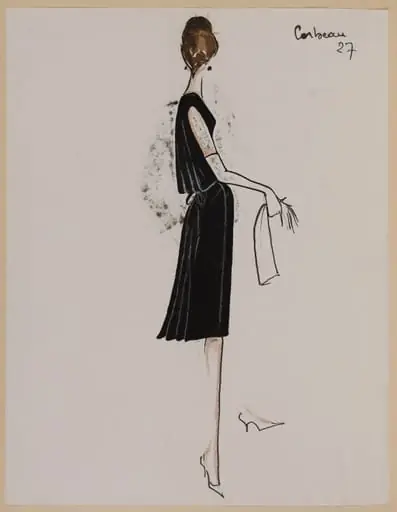
Luciole is a mid-20th century fashion illustration attributed to the French designer Marie-Louise Carven, created around 1960. It belongs to a collection held by the Museum of Ethnography and reflects Carven’s approach to design that emphasized refined simplicity and wearability. The image combines a stylized portrait of a woman in evening attire with a schematic rendering of the garment, suggesting its function as both artistic expression and design documentation.
Subject & Meaning
The illustration depicts a woman in a sleek, sleeveless black dress with a low back and subtle train, facing right. Her short dark hair and high heels convey a quiet modernity. Beside her, a minimalist line drawing of the same dress on a mannequin serves as a technical complement. Together, they frame the garment as both an object of personal elegance and a product of deliberate design, aligning with Carven’s focus on accessible sophistication for the contemporary woman.
Technique & Style
The image employs a restrained palette of black, beige, and muted tones. The woman’s dress is rendered with smooth, reflective surfaces suggesting satin or silk, while the mannequin sketch is reduced to essential contours. The background is unadorned, directing focus to the figure and garment. This combination of detailed realism and schematic abstraction reflects a design studio’s dual need to communicate aesthetic appeal and structural clarity.
History & Provenance
Created during the height of Carven’s career, Luciole is part of a body of work produced after she founded her label in 1945. The piece entered the Museum of Ethnography’s collection as an artifact of postwar French fashion, illustrating the rise of ready-to-wear design. Its preservation underscores its role not merely as fashion imagery but as a cultural document of mid-century women’s style and production practices.
Context
In the 1950s and 60s, French fashion houses increasingly shifted toward prêt-à-porter, making high-quality design accessible beyond haute couture clients. Carven, known for catering to petite figures and using delicate fabrics, was among the pioneers of this movement. Luciole reflects this transition, merging artistic presentation with functional design intent, mirroring broader societal changes in how women engaged with fashion.
Legacy
Luciole endures as a quiet testament to Carven’s influence on democratizing elegance. Its restrained aesthetic and dual presentation of garment and wearer anticipate modern fashion visualization techniques. Though not widely publicized, such illustrations remain vital to understanding how mid-century designers communicated their vision beyond the runway, shaping how fashion is archived and interpreted today.
Artist & collection
Artist
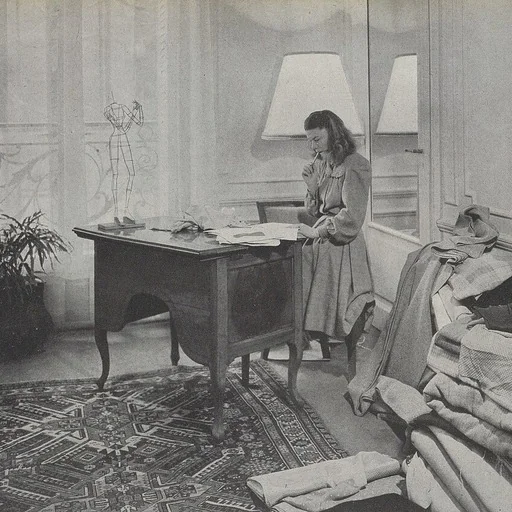
Marie-Louise Carven (31 August 1909 – 8 June 2015), born Carmen de Tommaso, was a French fashion designer who founded the house of Carven in 1945.
Museum
Palais Galliera - Musée de la Mode de la Ville de Paris
Continue through works from the same source collection.
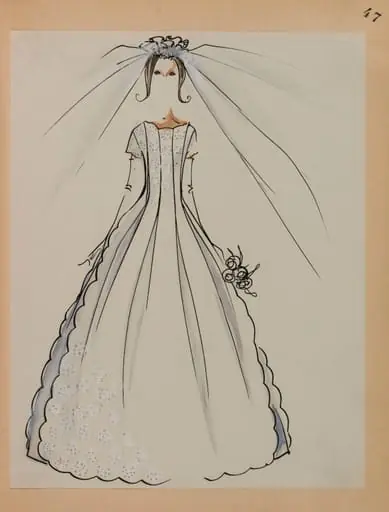 Robe de mariée festonnée et son voile
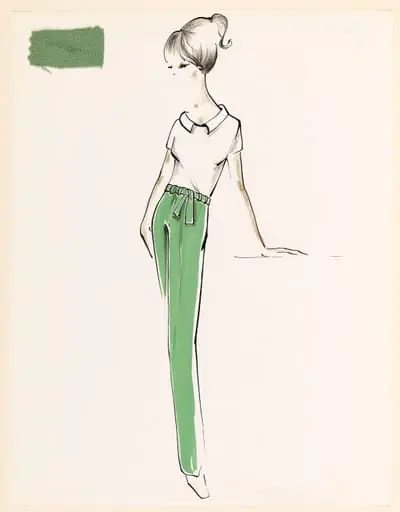 Haut blanc à manches courtes et pantalon vert à ceinture nouée
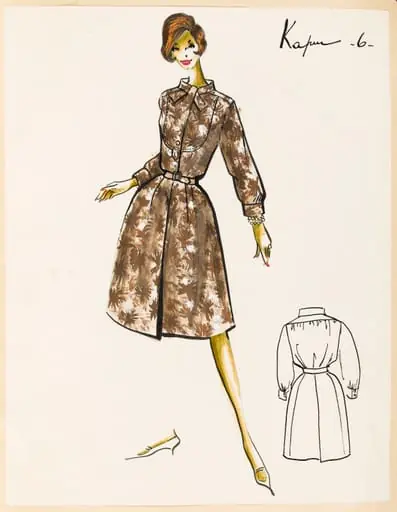 Kapur
Kapur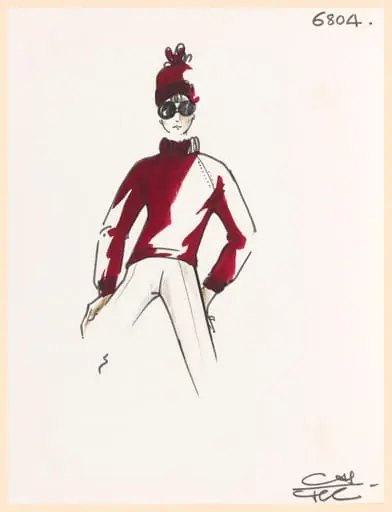 Pull-over à manches longues pourpre, bonnet assorti, pantalon et lunettes de soleil
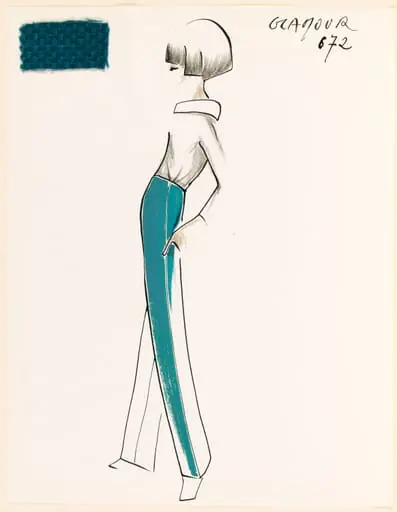 GLAMOUR
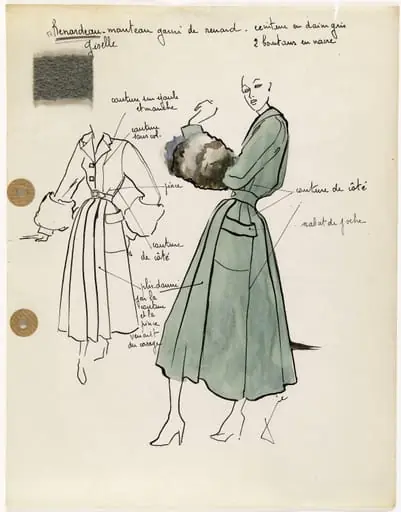 'Renardeau'
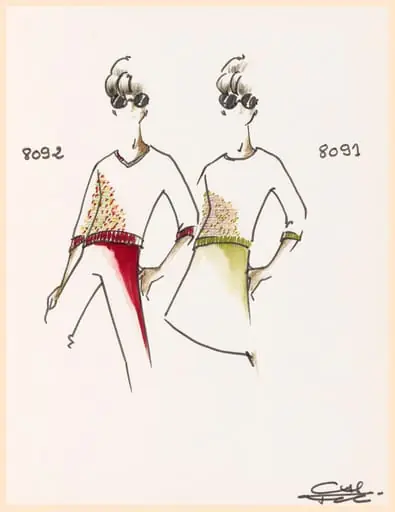 Pull-over à manches trois quarts et à encolure V à motifs multicolores, pantalon cerise et lunettes de soleil
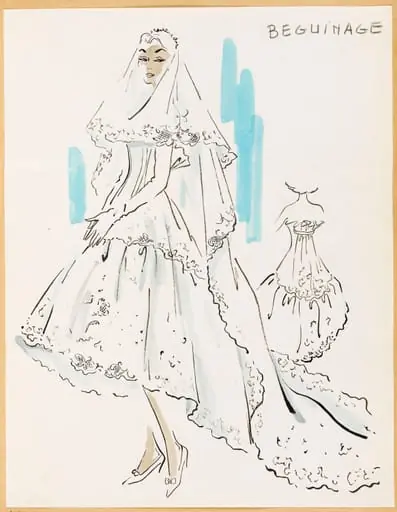 Béguinage