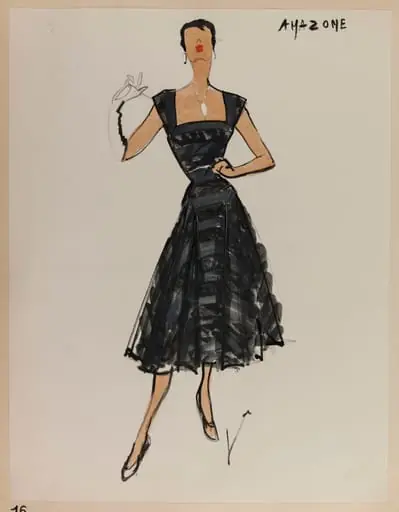
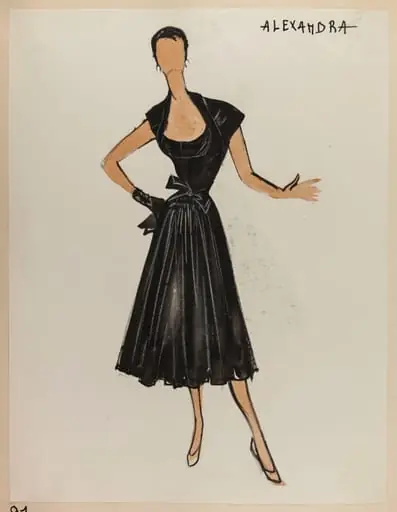
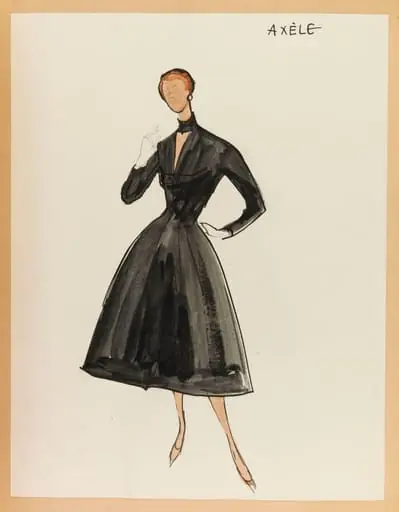
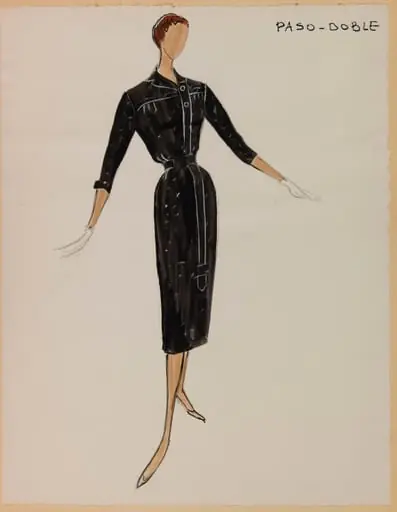
Artwork
Marcassite
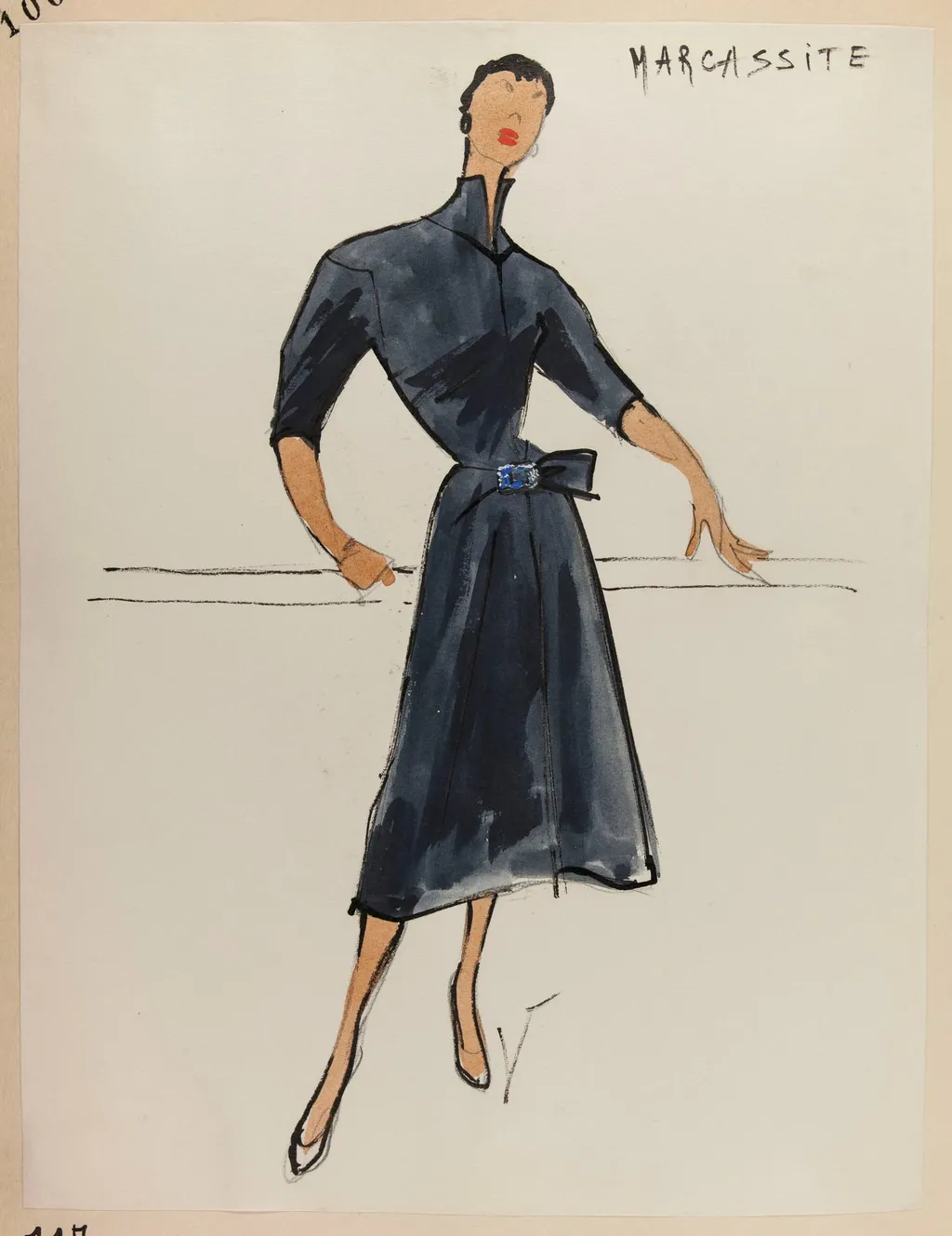
Marcassite is a drawing by Marie-Louise Carven. It dates from 1952 and is held in the collection of the Palais Galliera - Musée de la Mode de la Ville de Paris.
About this work
Overview
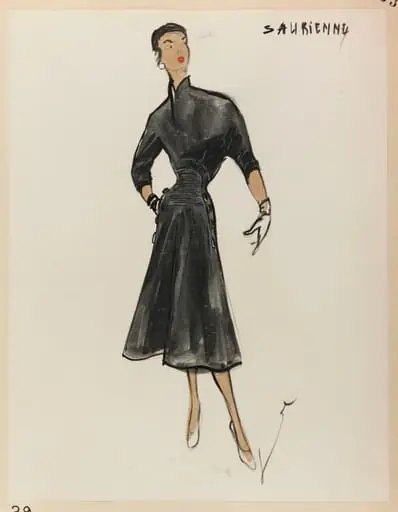
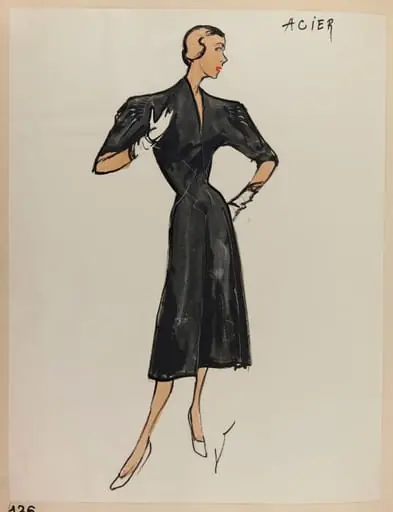
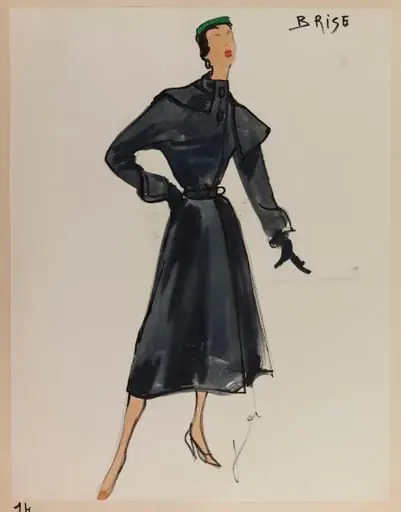
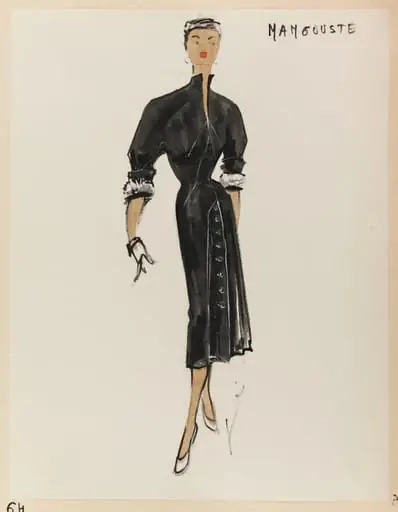
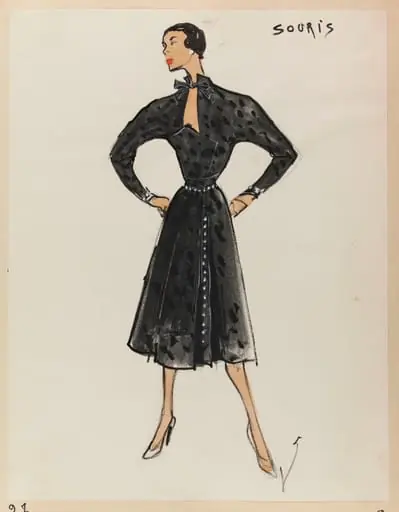
The drawing captures a woman in a tailored, dark dress with long sleeves and a small bow detail, rendered in loose, expressive lines with subtle shading.
Created around 1952, *Marcassite* is a pencil sketch by French designer Marie-Louise Carven, likely a preparatory study for a garment in her namesake fashion house. The drawing captures a woman in a tailored, dark dress with long sleeves and a small bow detail, rendered in loose, expressive lines with subtle shading. Its informal quality suggests it was made during the design process, not as a final presentation. The sketch is part of the Museum of Ethnography’s collection, reflecting its significance in documenting mid-century fashion development.
Subject & Meaning
The figure in *Marcassite* wears a minimalist dress designed for a petite frame, emphasizing structure over ornamentation. The belt and bow add subtle refinement without excess, aligning with Carven’s focus on practical elegance. The pose—standing with one hand resting—suggests quiet poise, reinforcing the garment’s suitability for everyday wear. The title, inscribed in the corner, implies the design was conceived as a distinct piece within a seasonal collection, possibly named for its metallic or textured fabric reference.
Technique & Style
Carven employed quick, fluid pencil strokes to define form, using light shading to suggest volume and the play of natural light. The lines are unpolished, revealing the immediacy of the design process. There is no color, no elaborate rendering—only essential contours and subtle tonal shifts. This approach reflects a working method common among couturiers who prioritized clarity and efficiency in translating ideas from mind to fabric, favoring function over theatrical presentation.
History & Provenance
Marie-Louise Carven founded her fashion house in 1945 and was among the earliest French designers to develop a prêt-à-porter line, making high fashion more accessible. *Marcassite* dates from the early years of this expansion, capturing a transitional moment in postwar fashion. The sketch entered the Museum of Ethnography’s collection as part of a broader effort to document the material culture of 20th-century dress, preserving not just garments but the design process behind them.
Context
In the early 1950s, Parisian fashion was redefining itself after wartime austerity. Carven’s designs stood apart by prioritizing comfort and proportion for smaller frames, countering the voluminous silhouettes of the era. *Marcassite* reflects this ethos: restrained, wearable, and thoughtful. Its existence as a sketch rather than a finished garment underscores how design thinking was increasingly valued as a cultural artifact, not merely a step toward production.
Legacy
The sketch preserves a moment in the evolution of modern fashion design, where the line between artisanal craft and industrial production began to blur. Carven’s emphasis on accessible, well-proportioned clothing influenced later generations of designers focused on ready-to-wear. *Marcassite*, though modest in scale, contributes to understanding how innovation in fashion often emerges from quiet, deliberate studies rather than grand displays.
Artist & collection
Artist
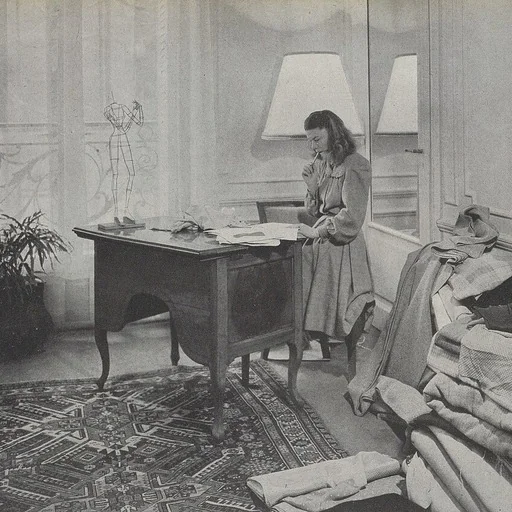
Marie-Louise Carven (31 August 1909 – 8 June 2015), born Carmen de Tommaso, was a French fashion designer who founded the house of Carven in 1945.
Museum
Palais Galliera - Musée de la Mode de la Ville de Paris
Continue through works from the same source collection.
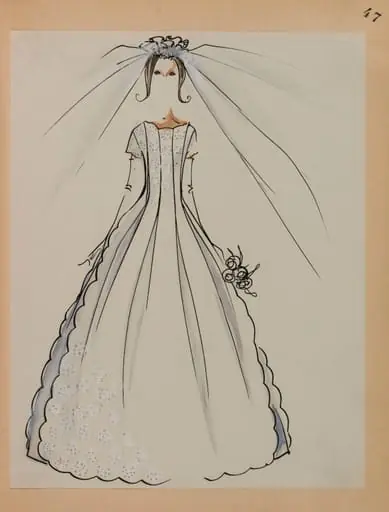 Robe de mariée festonnée et son voile
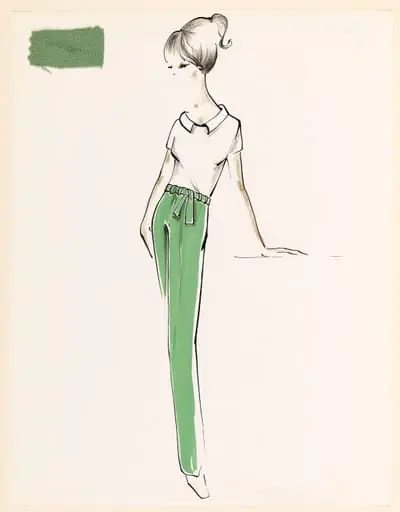 Haut blanc à manches courtes et pantalon vert à ceinture nouée
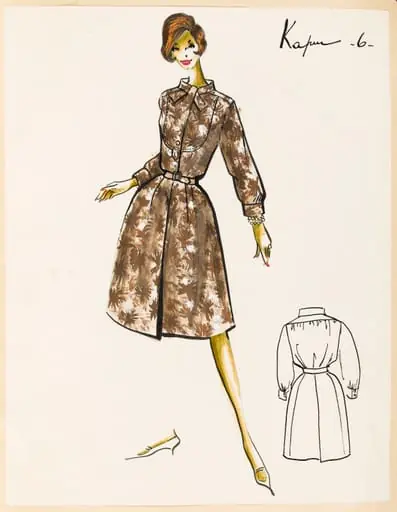 Kapur
Kapur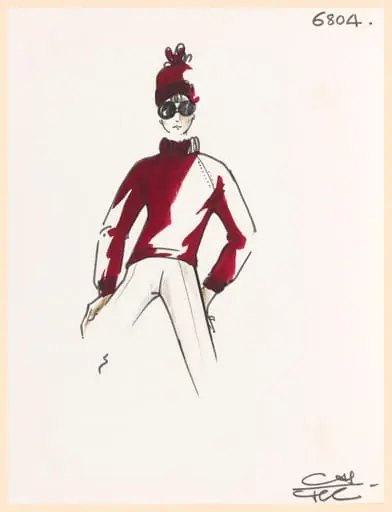 Pull-over à manches longues pourpre, bonnet assorti, pantalon et lunettes de soleil
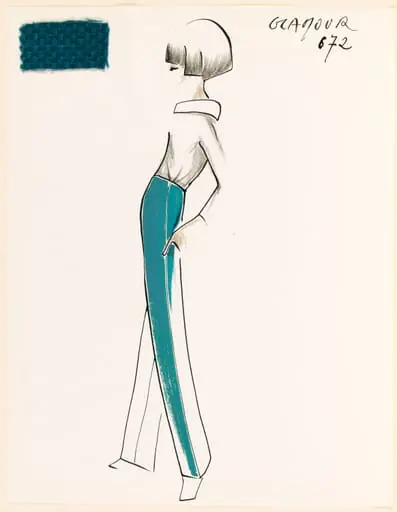 GLAMOUR
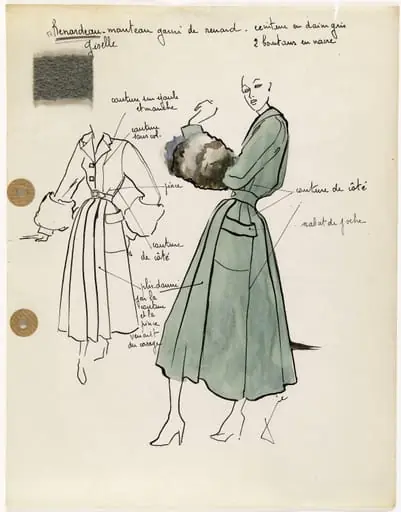 'Renardeau'
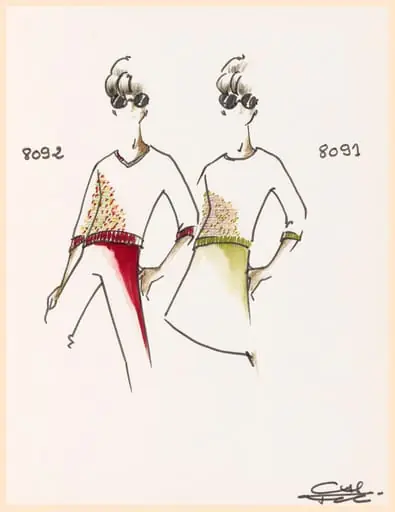 Pull-over à manches trois quarts et à encolure V à motifs multicolores, pantalon cerise et lunettes de soleil
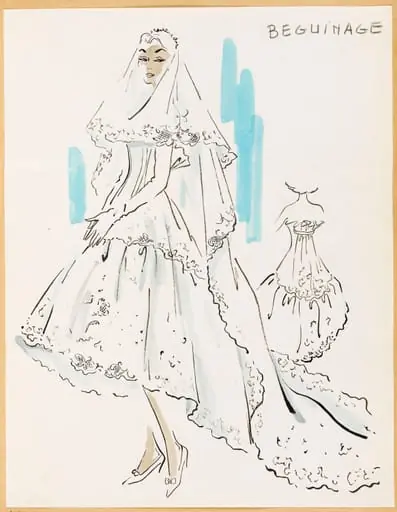 Béguinage