Artwork
Martin pêcheur
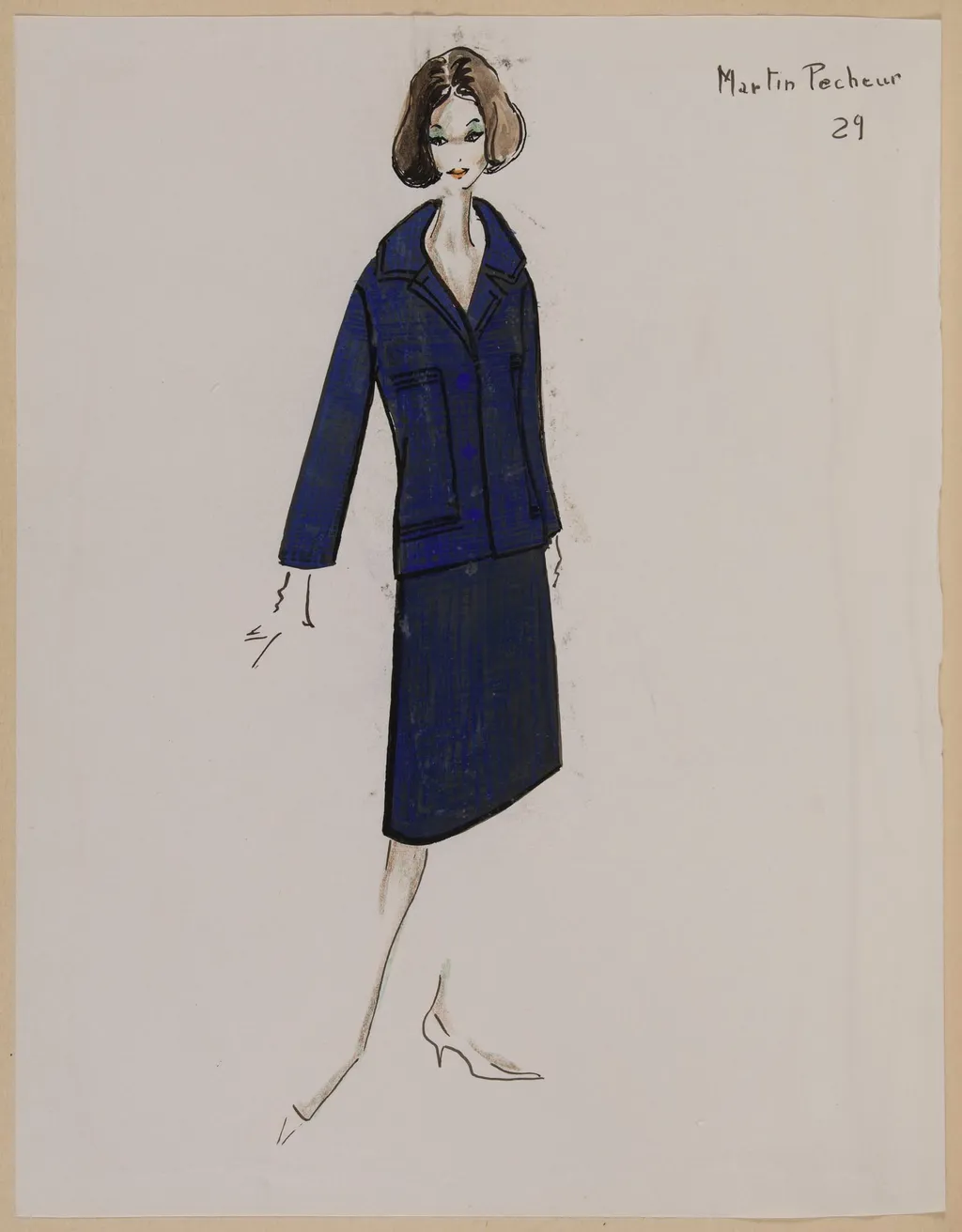
Martin pêcheur is a drawing by Marie-Louise Carven. It dates from 1960 and is held in the collection of the Palais Galliera - Musée de la Mode de la Ville de Paris.
About this work
Overview
Though labeled as an artwork, it functions as a design study—part of Carven’s process in developing wearable, practical clothing.
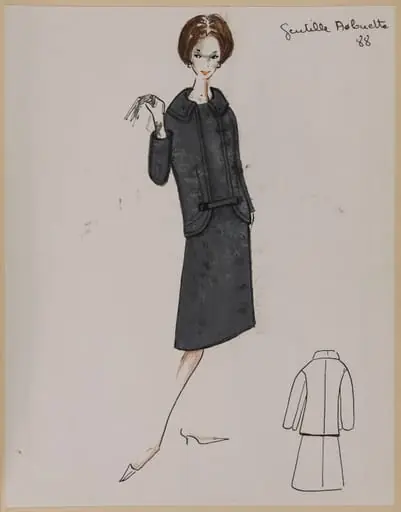
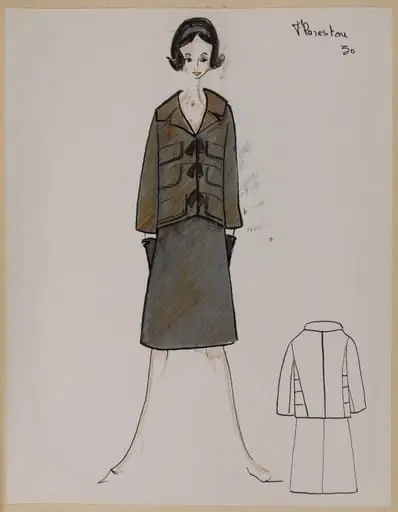
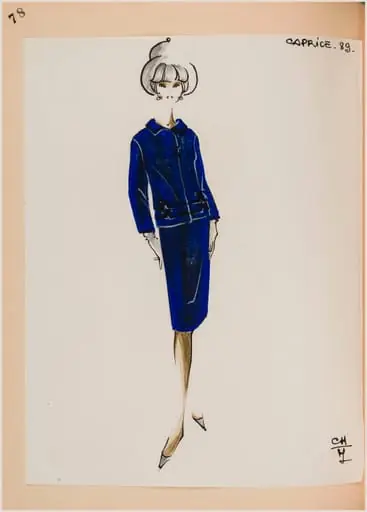
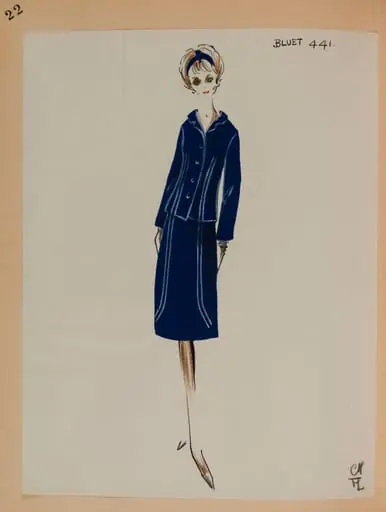
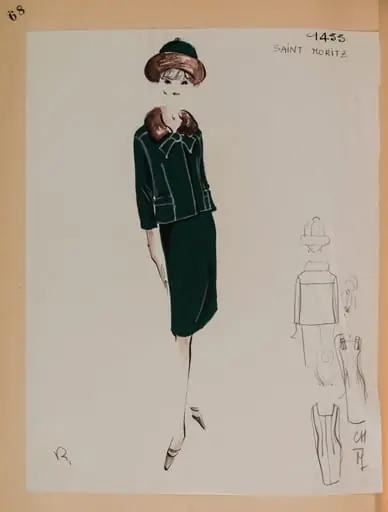
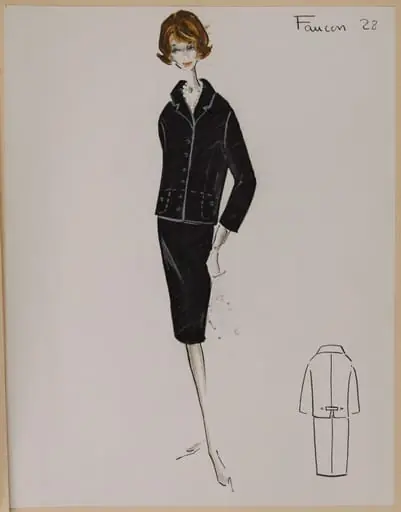
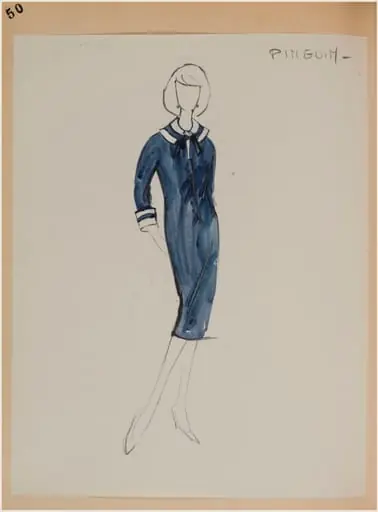
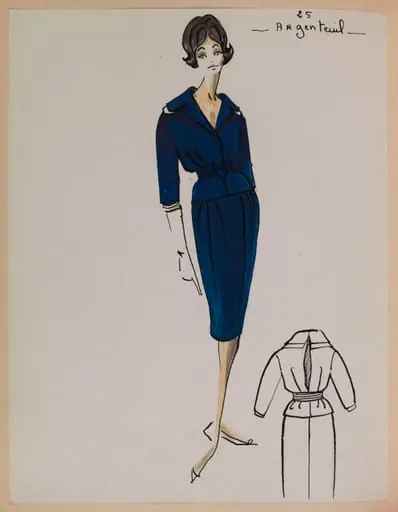
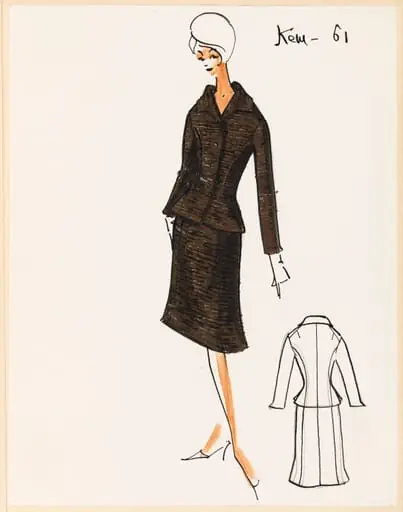
Created around 1960, *Martin pêcheur* is a pencil sketch by French designer Marie-Louise Carven. It depicts a woman in modest, everyday attire, rendered with loose, minimal lines that suggest movement rather than finish. Though labeled as an artwork, it functions as a design study—part of Carven’s process in developing wearable, practical clothing. The piece resides in the Museum of Ethnography, reflecting its cultural significance beyond fashion alone.
Subject & Meaning
The figure is a quiet, unadorned woman dressed in a buttoned jacket and matching skirt, her hair neatly pinned and shoes low-heeled. There is no ornamentation or theatricality—only functional form. This represents Carven’s philosophy of dressing the modern woman with dignity and ease. The title, referencing the kingfisher bird, may allude to subtle color or movement, but the image itself emphasizes restraint and quiet grace.
Technique & Style
Executed in light pencil, the sketch avoids heavy shading or detail, relying on fluid, economical lines to suggest posture and fabric. The absence of facial features and precise contours reinforces its role as a working drawing. This approach aligns with Carven’s broader aesthetic: clarity over elaboration, simplicity over spectacle. The technique mirrors the immediacy of design thinking, capturing form before refinement.
History & Provenance
Marie-Louise Carven founded her fashion house in 1945 and was among the earliest French couturiers to develop a ready-to-wear line. *Martin pêcheur* emerged during this period of transition in fashion, when design moved from exclusive ateliers toward accessible clothing. The sketch entered the Museum of Ethnography’s collection as an artifact of postwar French domestic life and evolving gendered dress norms.
Context
In postwar France, practicality and modesty dominated women’s fashion as society rebuilt. Carven’s designs responded to this climate, favoring lightweight fabrics and proportions suited to petite frames. *Martin pêcheur* reflects a broader cultural shift: fashion no longer solely for the elite, but for the everyday woman. The sketch’s unpretentiousness aligns with the era’s emphasis on utility and quiet elegance.
Legacy
Though not widely exhibited, the sketch endures as a quiet testament to Carven’s influence on democratizing fashion. Her integration of ready-to-wear into haute couture paved the way for modern design practices. *Martin pêcheur* stands as a document of this shift—not as a finished garment, but as a glimpse into the thoughtful, understated process behind accessible clothing.
Artist & collection
Artist
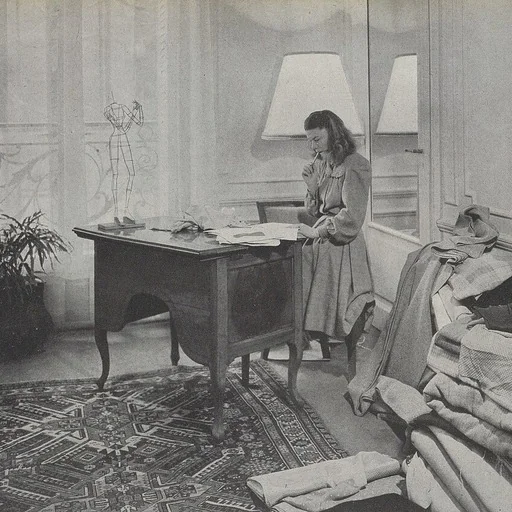
Marie-Louise Carven (31 August 1909 – 8 June 2015), born Carmen de Tommaso, was a French fashion designer who founded the house of Carven in 1945.
Museum
Palais Galliera - Musée de la Mode de la Ville de Paris
Continue through works from the same source collection.
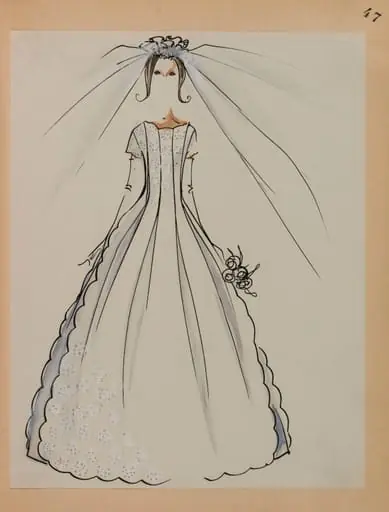 Robe de mariée festonnée et son voile
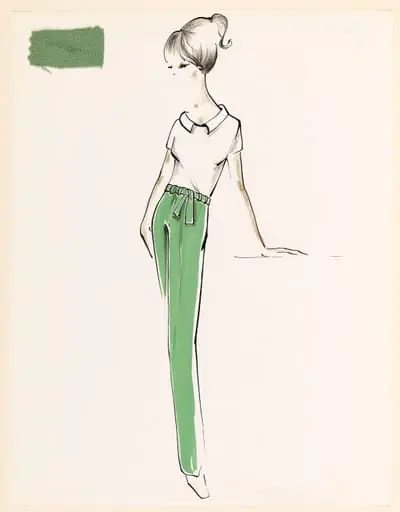 Haut blanc à manches courtes et pantalon vert à ceinture nouée
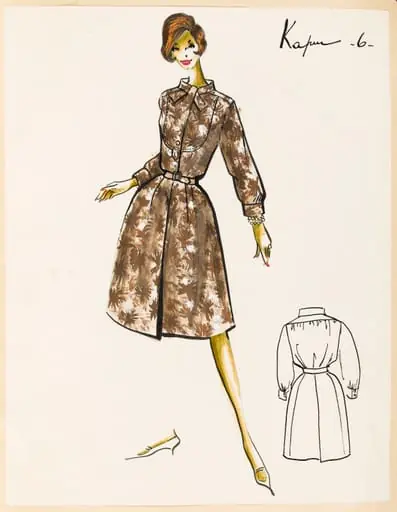 Kapur
Kapur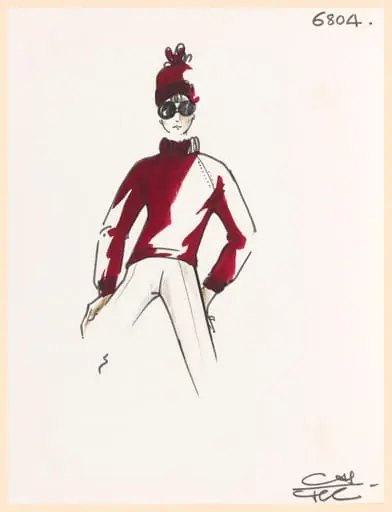 Pull-over à manches longues pourpre, bonnet assorti, pantalon et lunettes de soleil
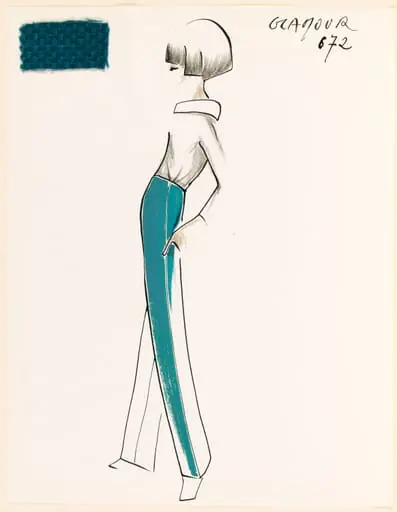 GLAMOUR
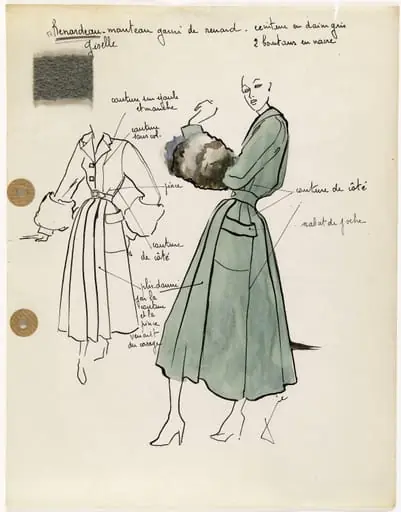 'Renardeau'
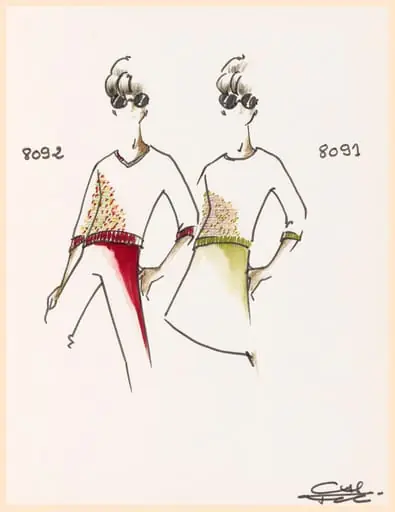 Pull-over à manches trois quarts et à encolure V à motifs multicolores, pantalon cerise et lunettes de soleil
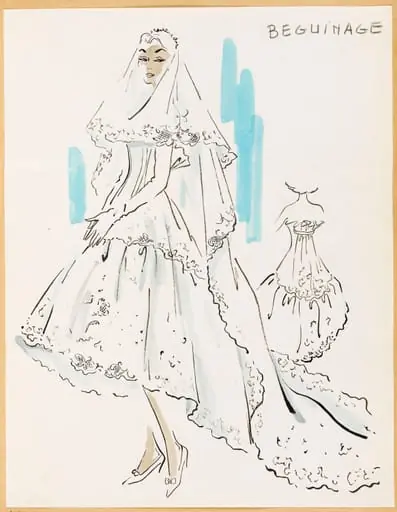 Béguinage