Artwork
'Monte Carlo'
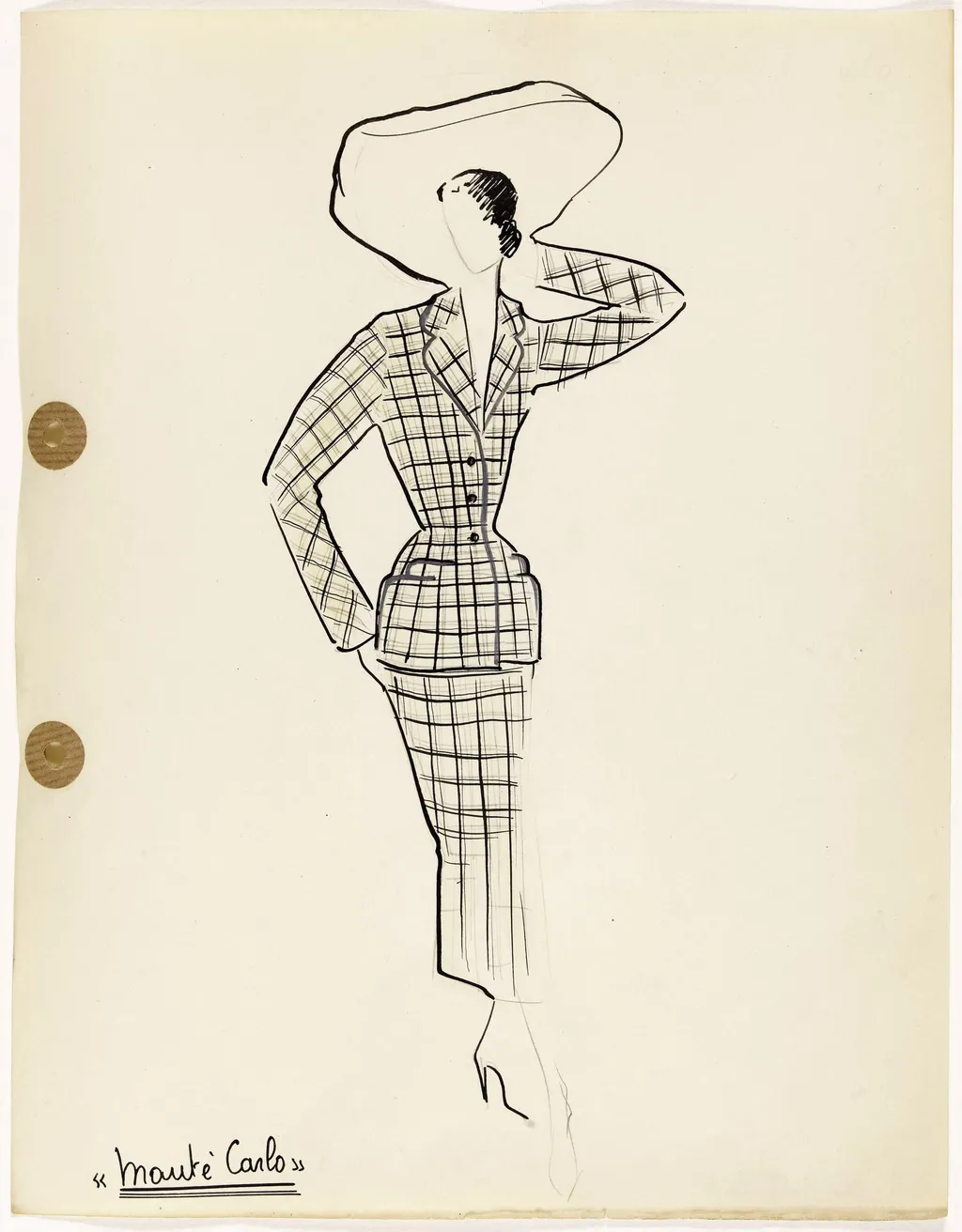
'Monte Carlo' is a drawing by Marie-Louise Carven. It dates from 1949 and is held in the collection of the Palais Galliera - Musée de la Mode de la Ville de Paris.
About this work
Overview
Created in 1949, 'Monte Carlo' is a pencil drawing by French designer Marie-Louise Carven, reflecting her approach to fashion as both art and wearable form.
Created in 1949, 'Monte Carlo' is a pencil drawing by French designer Marie-Louise Carven, reflecting her approach to fashion as both art and wearable form. Though not a traditional artwork, it functions as a design study, capturing the silhouette and texture of a garment intended for everyday elegance. Carven, who founded her house in 1945, often used such illustrations to communicate her vision to clients and ateliers.
Subject & Meaning
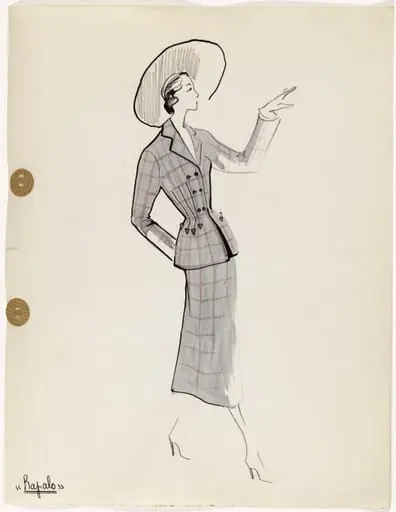
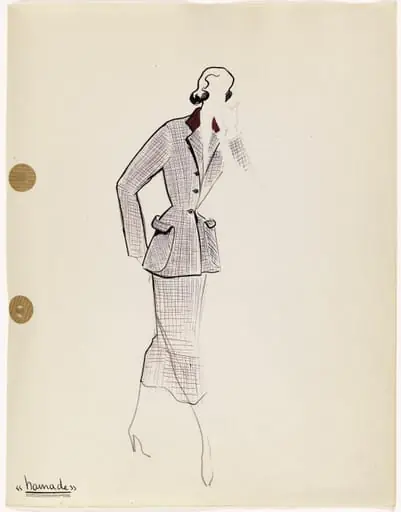
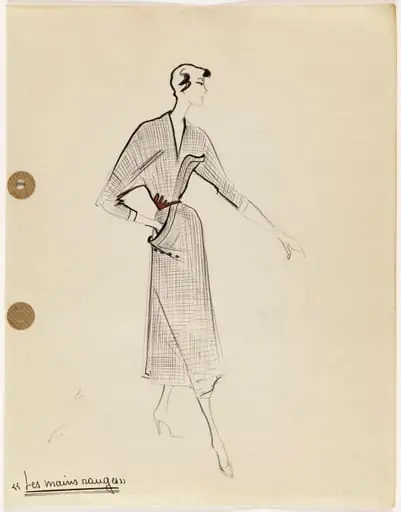
The drawing portrays a woman in a coordinated plaid jacket and skirt, standing with poised informality—one hand on her hip, the other near her head. The large hat and high heels suggest a refined yet accessible urban style, evoking the leisurely sophistication associated with the Riviera. The pose conveys confidence without grandeur, aligning with Carven’s philosophy of dressing the modern, active woman rather than the ceremonial elite.
Technique & Style
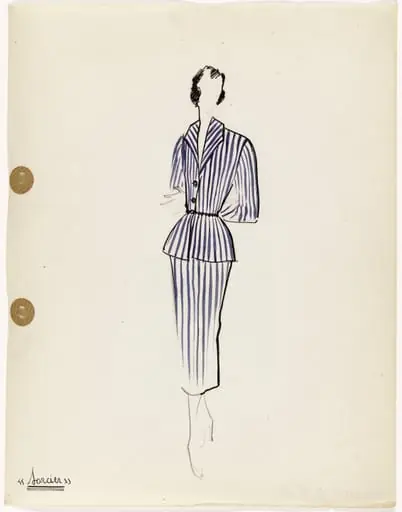
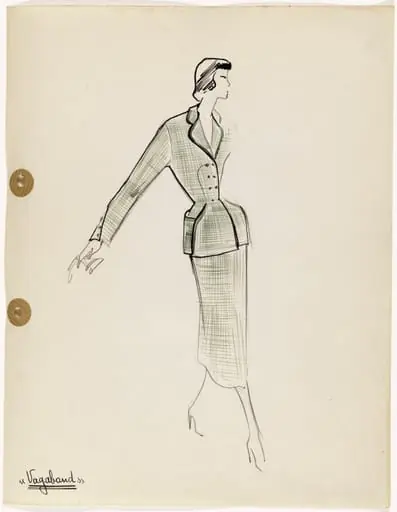
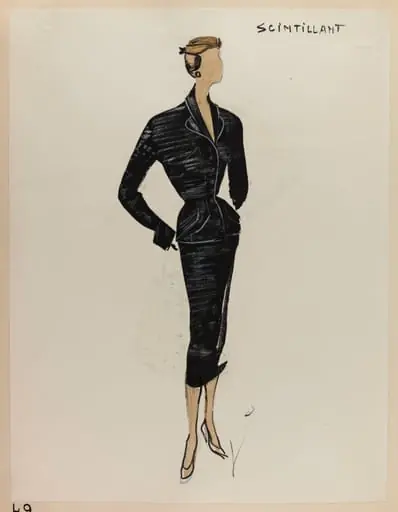
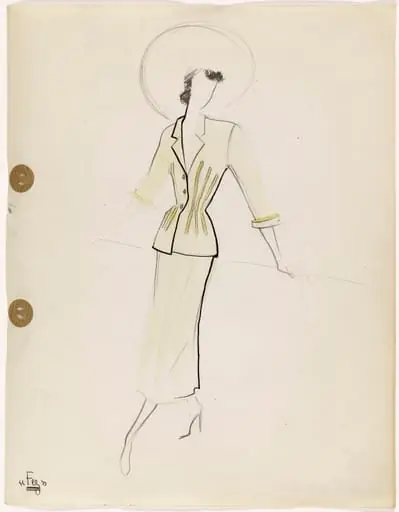
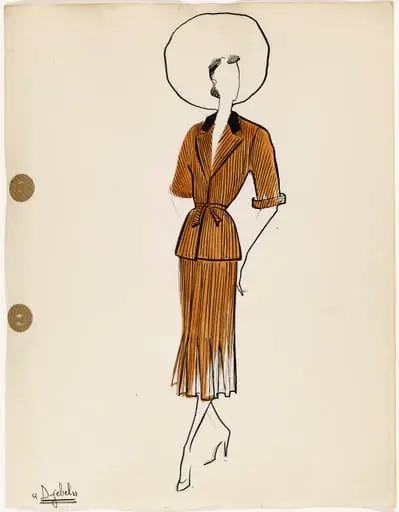
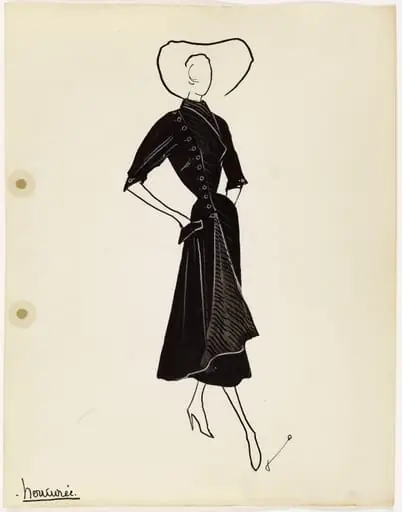
Executed in fine, controlled lines with minimal shading, the drawing emphasizes form over detail. Fabric folds are suggested through rhythmic contours rather than heavy rendering, highlighting Carven’s sensitivity to textile behavior. The absence of background or facial features directs focus to the garment’s structure and movement, a hallmark of her design methodology—clarity and restraint as tools of elegance.
History & Provenance
Produced during the early years of Carven’s prêt-à-porter initiative, 'Monte Carlo' likely served as a design reference or promotional sketch. As one of the first Parisian couturiers to embrace ready-to-wear, Carven used such drawings to bridge haute couture precision with mass-market practicality. The piece remains a tangible artifact of this transitional moment in 20th-century fashion production.
Context
In postwar France, fashion was redefining itself around accessibility and livability. Carven’s work responded to a growing demand for stylish, affordable clothing suited to women’s changing roles. 'Monte Carlo' reflects this shift—not through overt rebellion, but through quiet refinement: a plaid ensemble that balances structure with ease, mirroring the era’s desire for grace without constraint.
Legacy
The drawing exemplifies Carven’s influence in democratizing Parisian style. Her integration of couture-level detail into ready-to-wear helped reshape industry standards. Though not widely exhibited as fine art, works like 'Monte Carlo' endure as key documents in the history of modern fashion design, illustrating how aesthetic precision could serve everyday life.
Artist & collection
Artist
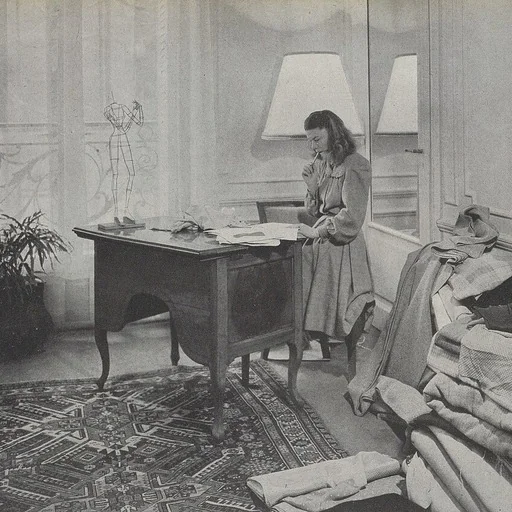
Marie-Louise Carven (31 August 1909 – 8 June 2015), born Carmen de Tommaso, was a French fashion designer who founded the house of Carven in 1945.
Museum
Palais Galliera - Musée de la Mode de la Ville de Paris
Continue through works from the same source collection.
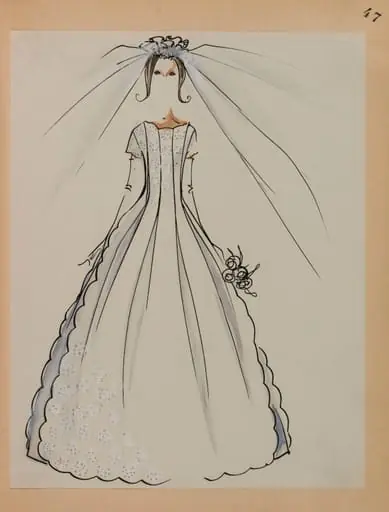 Robe de mariée festonnée et son voile
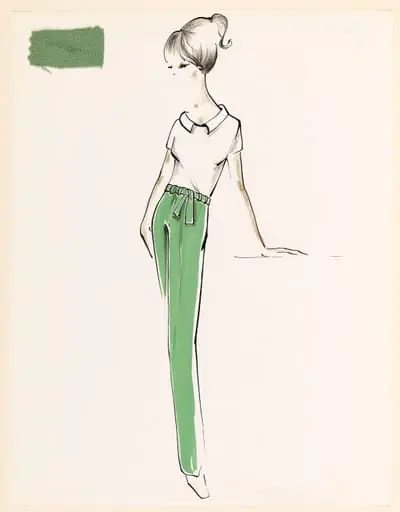 Haut blanc à manches courtes et pantalon vert à ceinture nouée
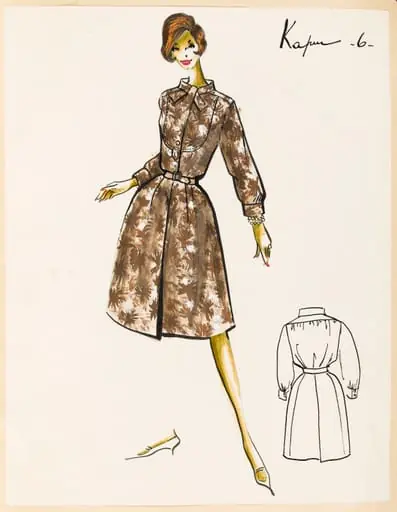 Kapur
Kapur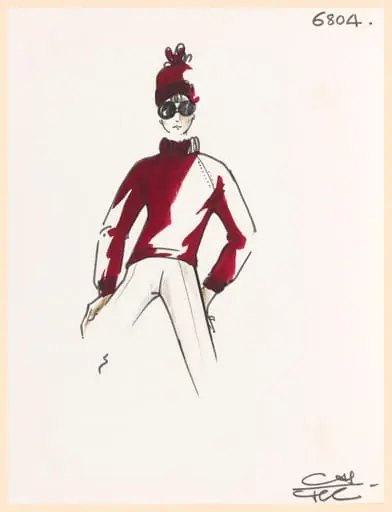 Pull-over à manches longues pourpre, bonnet assorti, pantalon et lunettes de soleil
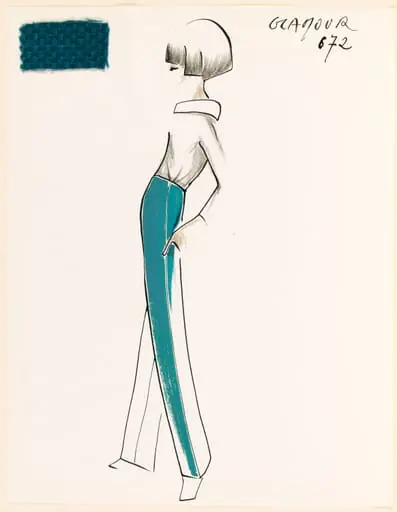 GLAMOUR
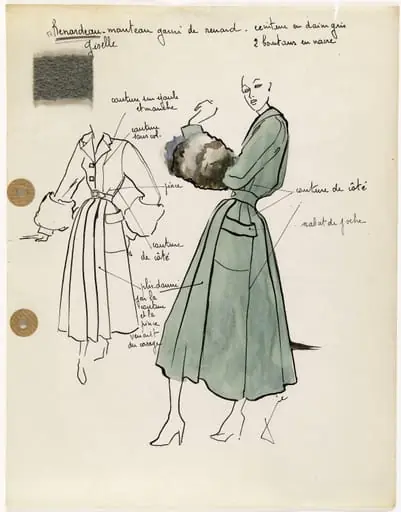 'Renardeau'
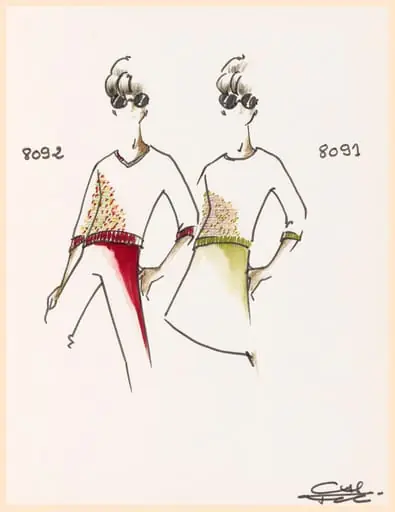 Pull-over à manches trois quarts et à encolure V à motifs multicolores, pantalon cerise et lunettes de soleil
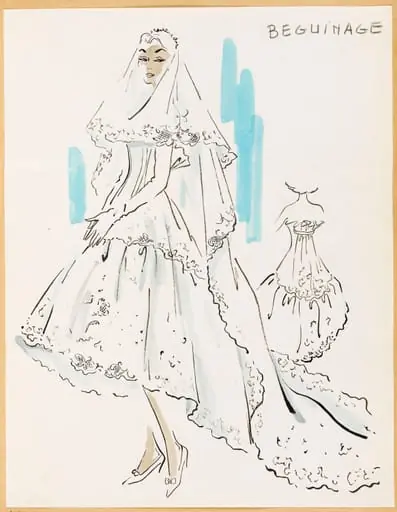 Béguinage