Artwork
Ortie
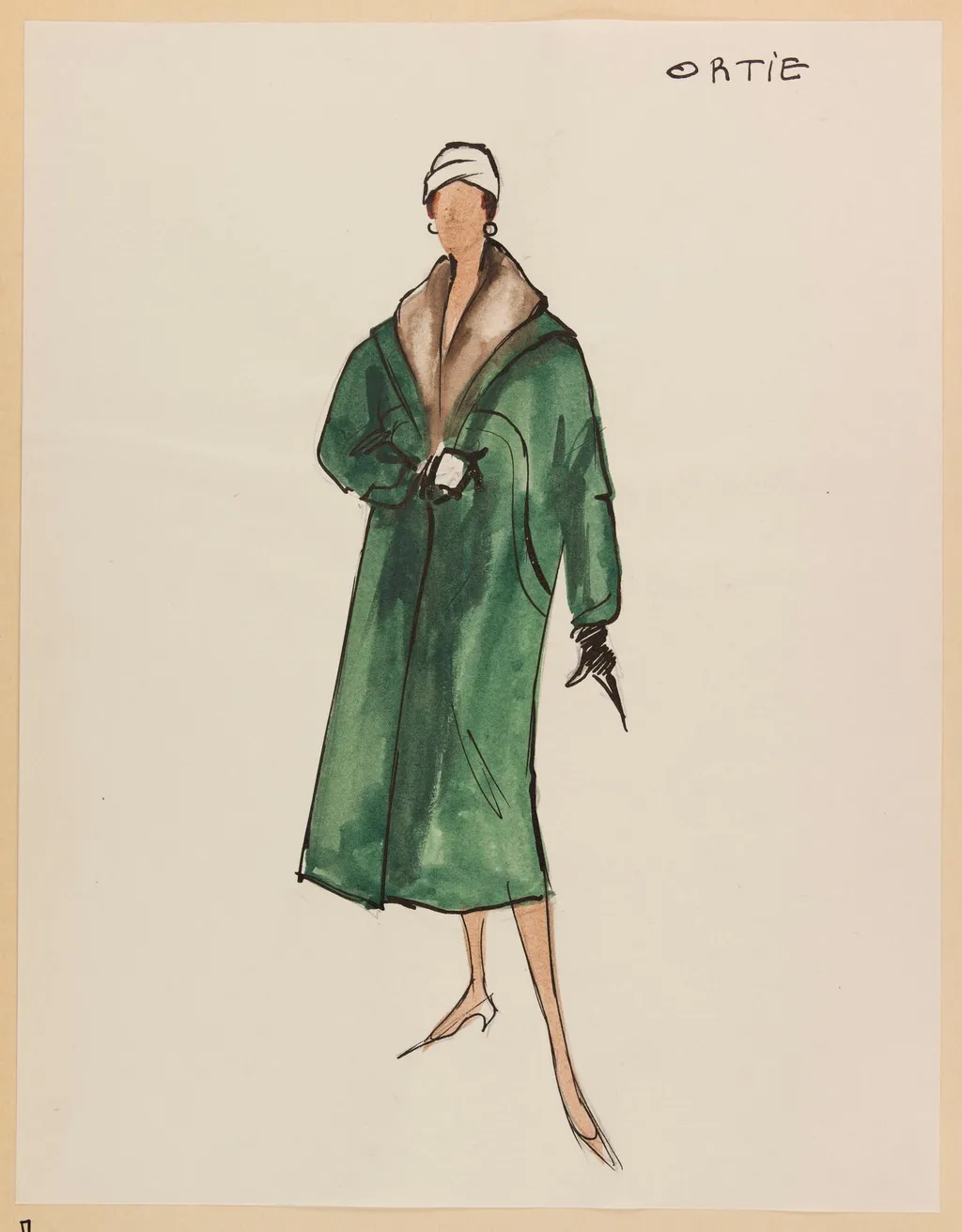
Ortie is a drawing by Marie-Louise Carven. It dates from 1955 and is held in the collection of the Palais Galliera - Musée de la Mode de la Ville de Paris.
About this work
Overview
The work originates from the Museum of Ethnography’s holdings and exemplifies Carven’s integration of artistic draftsmanship into commercial fashion.
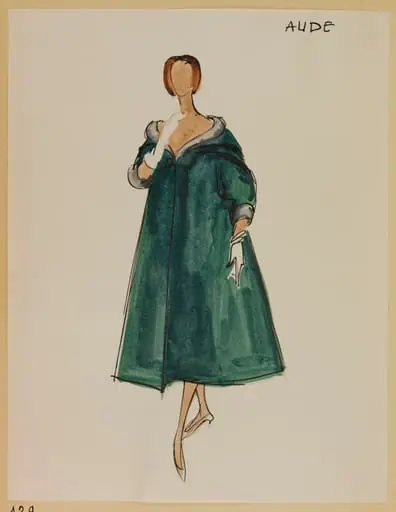
Ortie is a fashion illustration created around 1955 by Marie-Louise Carven, a French designer known for her refined, petite-focused collections. The work originates from the Museum of Ethnography’s holdings and exemplifies Carven’s integration of artistic draftsmanship into commercial fashion. Rendered in restrained tones and precise linework, it captures a moment of quiet elegance, reflecting the designer’s emphasis on wearable sophistication over theatricality.
Subject & Meaning
The illustration depicts a woman in a long green coat with a fur-trimmed hood and collar, paired with a white hat, gloves, and heels. Her posture—hands gently crossed before her—conveys poise and restraint. The attire suggests urban winter wear, calibrated for both function and grace. Carven’s choice of modest gesture and tailored silhouette underscores her philosophy: fashion as an extension of daily life, not performance.
Technique & Style
Executed in a minimalist draftsmanship, Ortie relies on clean, uncluttered lines and muted coloration to define form. The green coat dominates the composition, while subtle shading suggests volume without heavy modeling. The lack of facial detail and sparse background focus attention on the garment’s structure and silhouette. This restrained aesthetic aligns with mid-century illustration practices that prioritized clarity and wearability over ornamental flourish.
History & Provenance
Marie-Louise Carven, born Carmen de Tommaso in 1909, founded her fashion house in Paris in 1945. Known for catering to smaller frames and introducing accessible prêt-à-porter lines, she gained recognition for blending couture sensibility with practicality. Ortie likely served as a design reference or promotional piece within her studio. Its presence in the Museum of Ethnography suggests its value as a cultural artifact of postwar French fashion.
Context
In the 1950s, Parisian fashion was transitioning from haute couture dominance toward ready-to-wear markets. Carven was among the pioneers adapting couture techniques for broader audiences. Ortie reflects this shift—its simplicity and realism contrast with the elaborate illustrations of high fashion magazines, instead offering a grounded vision of modern womanhood rooted in everyday elegance and accessible style.
Legacy
Ortie endures as a quiet testament to Carven’s influence on democratizing fashion. Her emphasis on proportion, comfort, and understated beauty resonated with a generation seeking practical luxury. Though not widely exhibited, works like this illustrate how design drawings functioned as both artistic expression and commercial tools, preserving the ethos of a designer who redefined femininity in postwar clothing.
Artist & collection
Artist
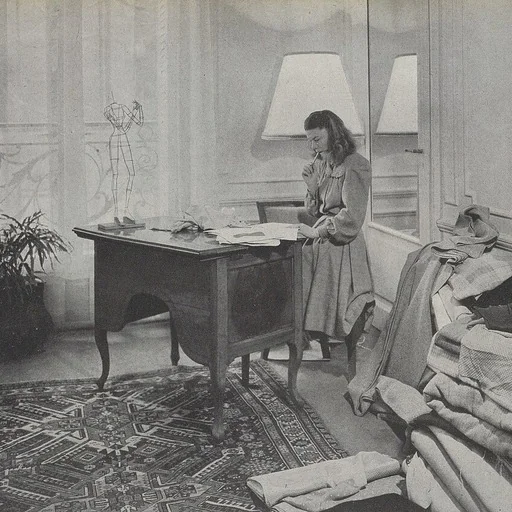
Marie-Louise Carven (31 August 1909 – 8 June 2015), born Carmen de Tommaso, was a French fashion designer who founded the house of Carven in 1945.
Museum
Palais Galliera - Musée de la Mode de la Ville de Paris
Continue through works from the same source collection.
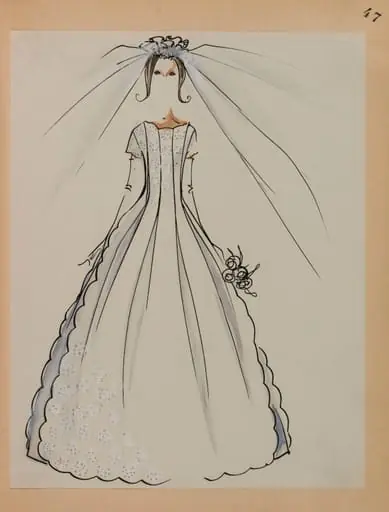 Robe de mariée festonnée et son voile
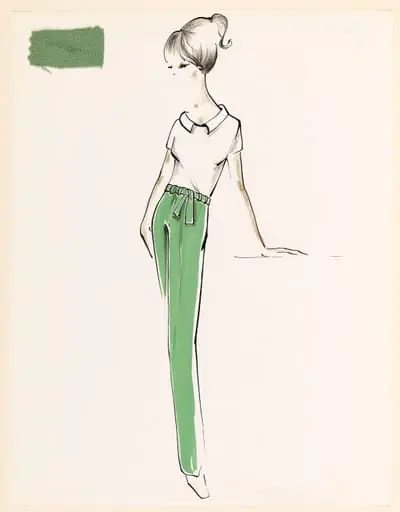 Haut blanc à manches courtes et pantalon vert à ceinture nouée
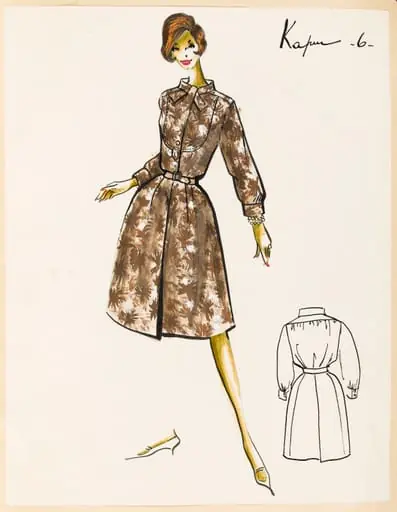 Kapur
Kapur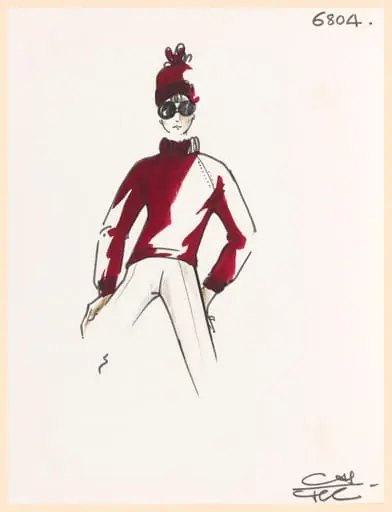 Pull-over à manches longues pourpre, bonnet assorti, pantalon et lunettes de soleil
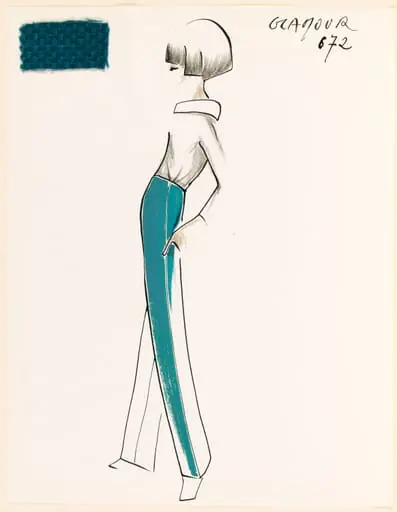 GLAMOUR
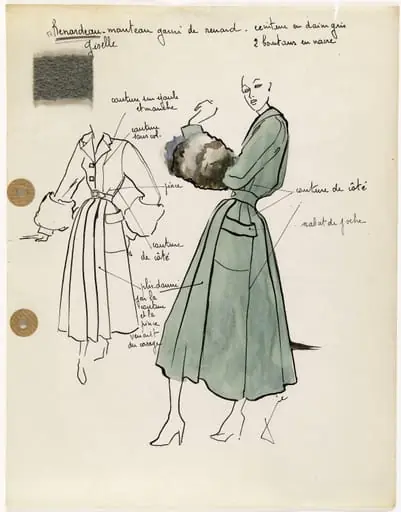 'Renardeau'
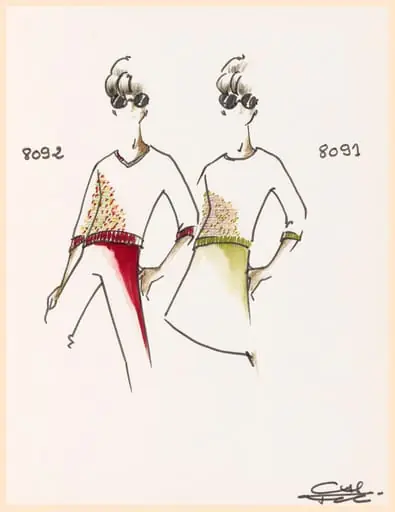 Pull-over à manches trois quarts et à encolure V à motifs multicolores, pantalon cerise et lunettes de soleil
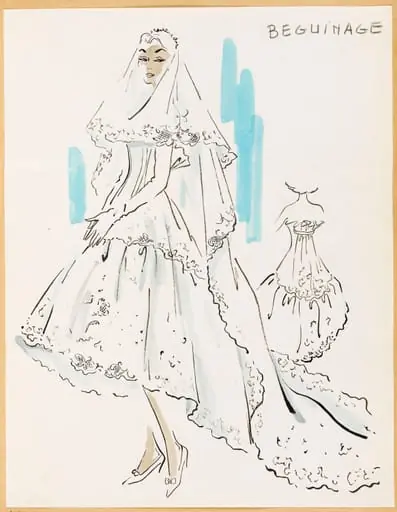 Béguinage