Artwork
Oscar
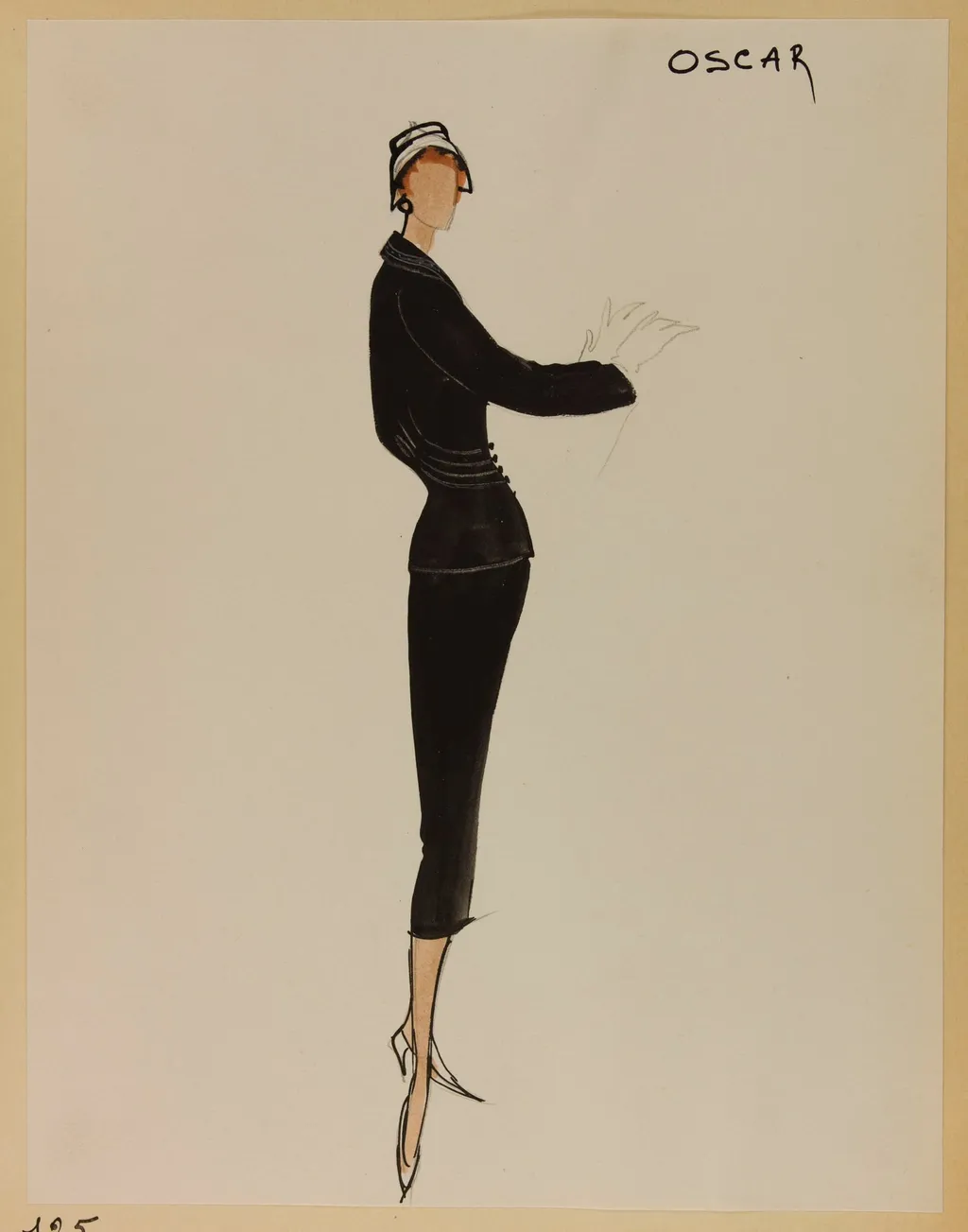
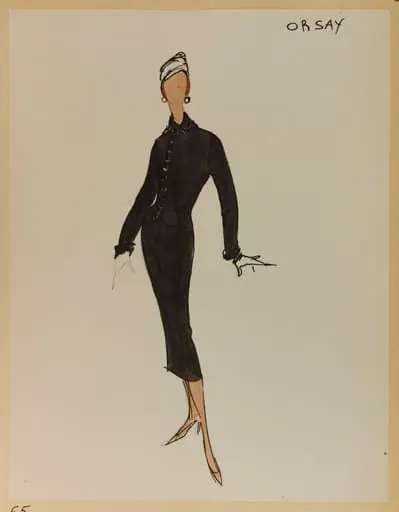
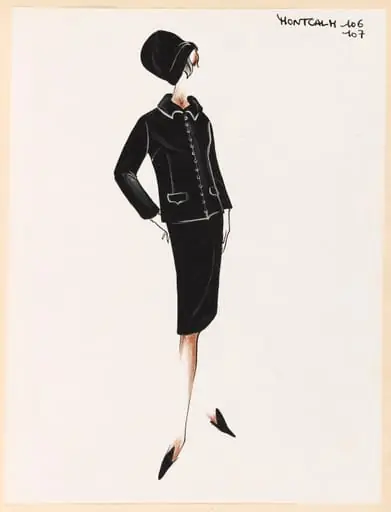
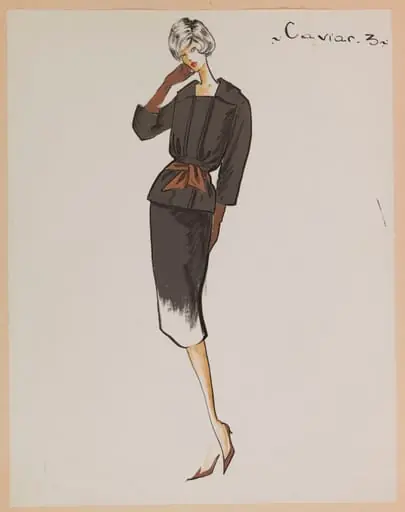
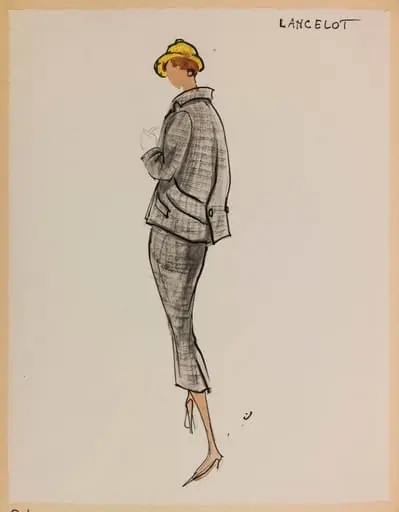
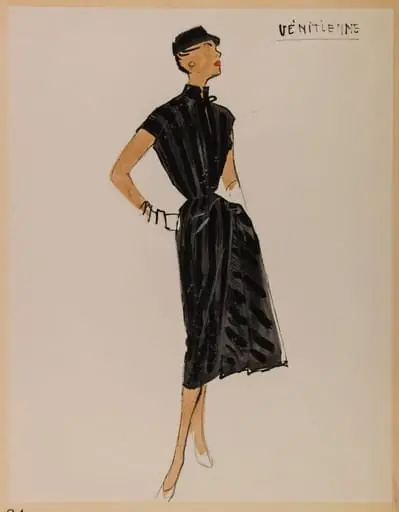
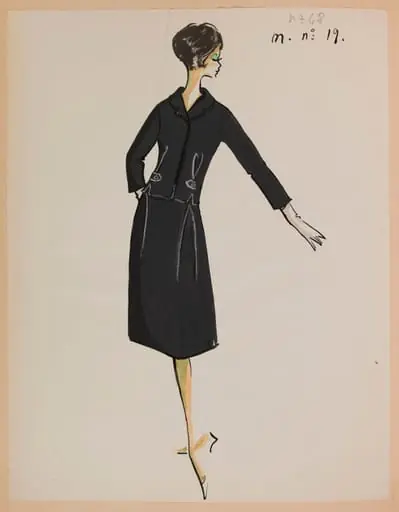
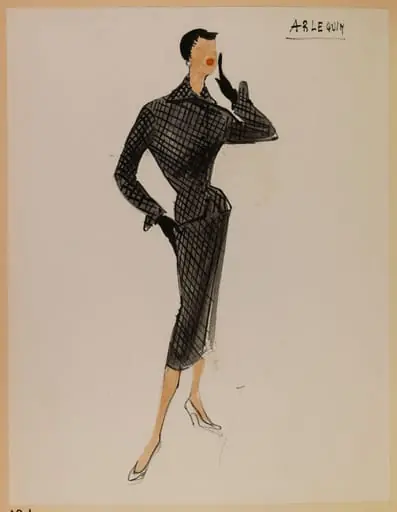
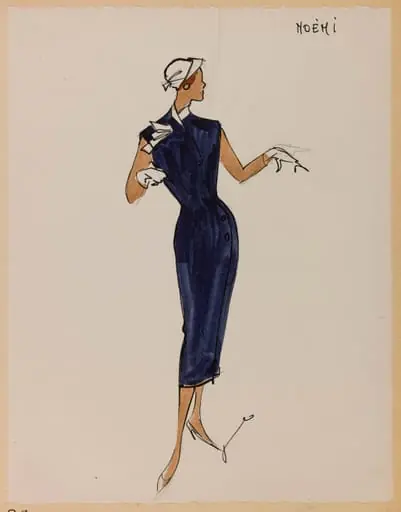
Oscar is a drawing by Marie-Louise Carven. It dates from 1955 and is held in the collection of the Palais Galliera - Musée de la Mode de la Ville de Paris.
About this work
Overview
Executed with fluid, unrefined lines, the drawing captures movement and posture over detail.
Created around 1955 by French designer Marie-Louise Carven, this ink sketch depicts a woman in a minimalist black ensemble—coat, hat, and gloves—standing sideways with hands clasped. Executed with fluid, unrefined lines, the drawing captures movement and posture over detail. It is held in the Museum of Ethnography’s collection, reflecting Carven’s broader interest in documenting everyday elegance rather than formal couture presentation.
Subject & Meaning
The figure, labeled 'Oscar' in the corner, may represent a real person or a fictional archetype. Dressed in subdued, tailored clothing, she embodies Carven’s focus on practical, understated femininity. The pose suggests quiet composure, aligning with the designer’s ethos of clothing designed for active, modern women rather than theatrical display. The nickname adds a personal, intimate layer to what might otherwise be a generic study.
Technique & Style
Carven rendered the figure with rapid, confident strokes, favoring silhouette over precision. The sketch’s lightness and openness suggest spontaneity, possibly made as a quick reference or personal note. Ink lines vary in weight to suggest volume and fold, but no shading or texture is added. This approach reflects a designer’s eye for form rather than an artist’s pursuit of finish, emphasizing function over ornament.
History & Provenance
Marie-Louise Carven founded her fashion house in 1945 and later pioneered ready-to-wear in Parisian couture. This sketch, dated circa 1955, likely originated in her studio during a period of transition toward accessible design. Its presence in the Museum of Ethnography suggests its value as a cultural artifact of mid-century women’s fashion practice, preserved not for its rarity but for its insight into daily design processes.
Context
In postwar Paris, fashion was shifting from exclusive ateliers to mass-produced garments. Carven’s embrace of prêt-à-porter and her focus on petite figures positioned her as a pragmatic innovator. This sketch, unadorned and intimate, mirrors that ethos—prioritizing wearability and quiet dignity. It stands apart from the grand presentations of haute couture, offering a glimpse into the quieter, observational side of design work.
Legacy
Though not a finished garment, the sketch endures as evidence of Carven’s design philosophy: simplicity, functionality, and attention to the real woman’s body. Its preservation in a museum of ethnography underscores its role as a cultural document rather than a commercial product. It invites reflection on how everyday design choices shape broader social norms around dress and identity.
Artist & collection
Artist
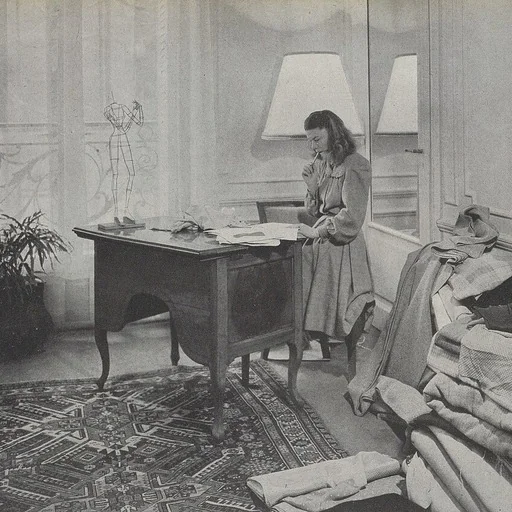
Marie-Louise Carven (31 August 1909 – 8 June 2015), born Carmen de Tommaso, was a French fashion designer who founded the house of Carven in 1945.
Museum
Palais Galliera - Musée de la Mode de la Ville de Paris
Continue through works from the same source collection.
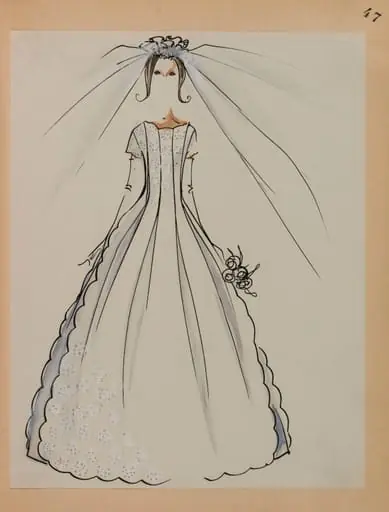 Robe de mariée festonnée et son voile
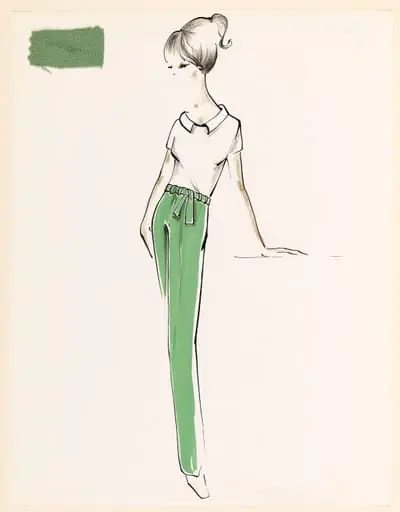 Haut blanc à manches courtes et pantalon vert à ceinture nouée
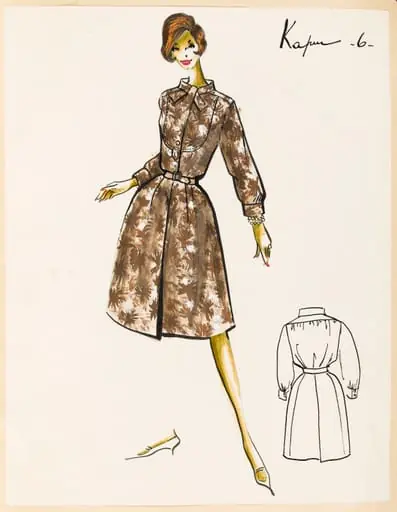 Kapur
Kapur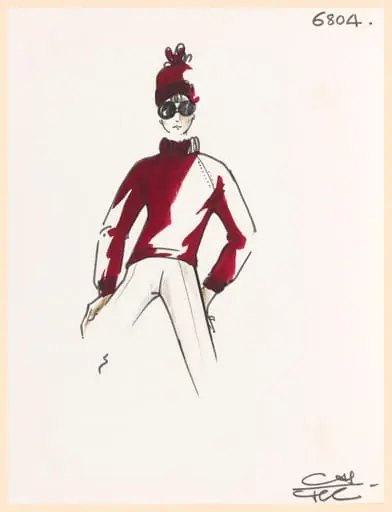 Pull-over à manches longues pourpre, bonnet assorti, pantalon et lunettes de soleil
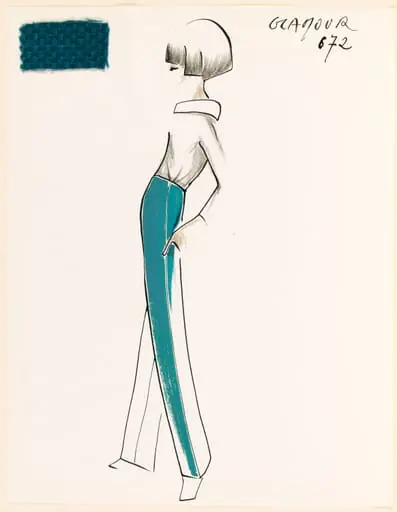 GLAMOUR
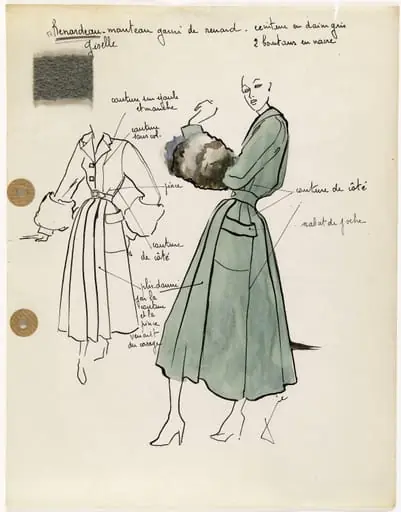 'Renardeau'
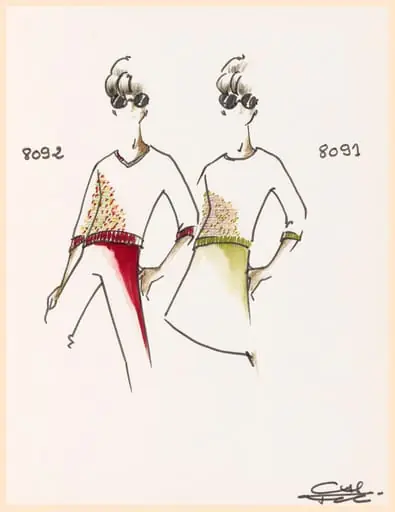 Pull-over à manches trois quarts et à encolure V à motifs multicolores, pantalon cerise et lunettes de soleil
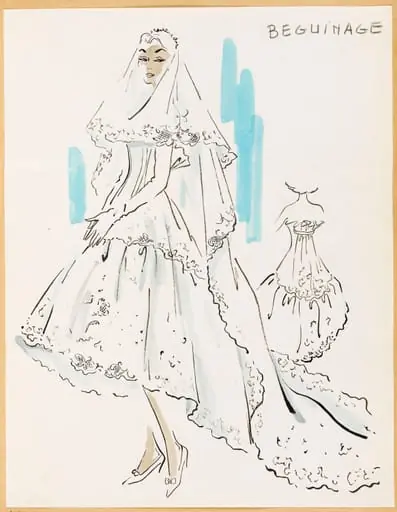 Béguinage