Artwork
Vénitienne
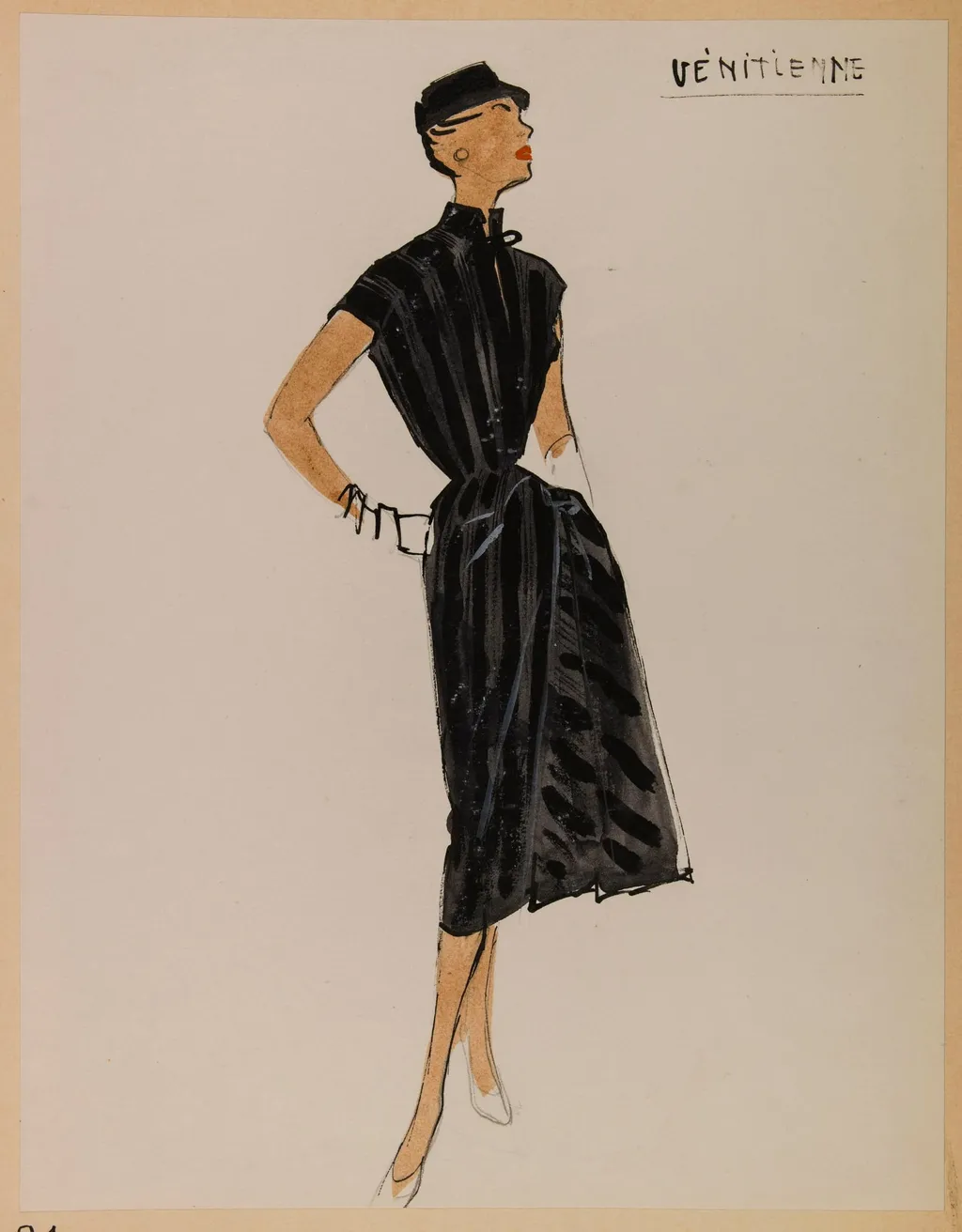
Vénitienne is a drawing by Marie-Louise Carven. It dates from 1953 and is held in the collection of the Palais Galliera - Musée de la Mode de la Ville de Paris.
About this work
Overview
Created around 1953 by French designer Marie-Louise Carven, *Vénitienne* is a fashion sketch that captures a minimalist evening dress.
Created around 1953 by French designer Marie-Louise Carven, *Vénitienne* is a fashion sketch that captures a minimalist evening dress. Carven, who founded her namesake house in 1945, was notable for pioneering ready-to-wear fashion in Paris. This drawing, part of the Museum of Ethnography’s collection, reflects her focus on wearable elegance for smaller frames, emphasizing silhouette over ornamentation.
Subject & Meaning
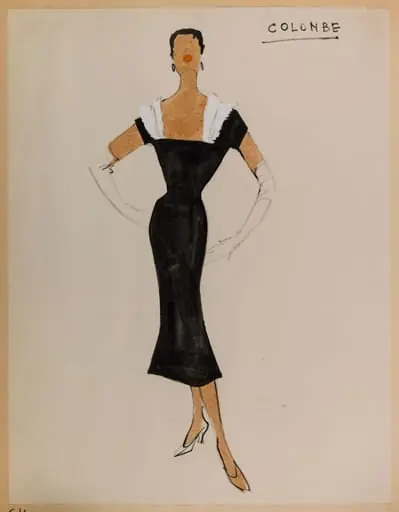
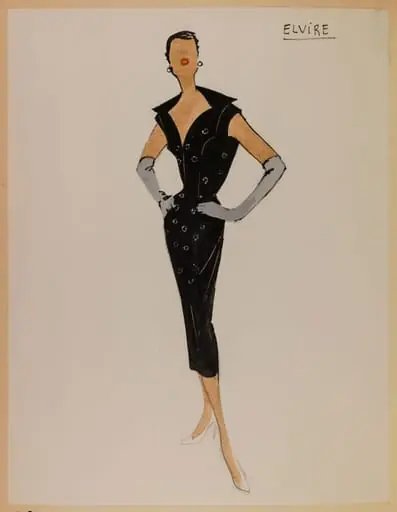
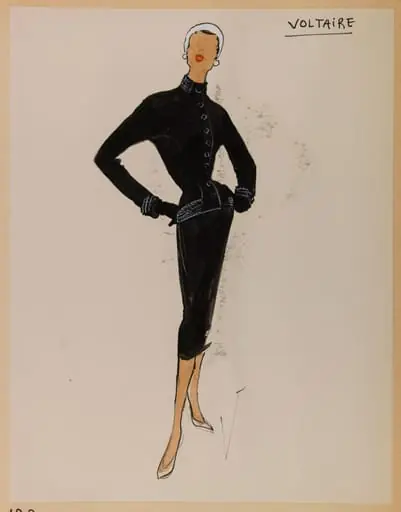
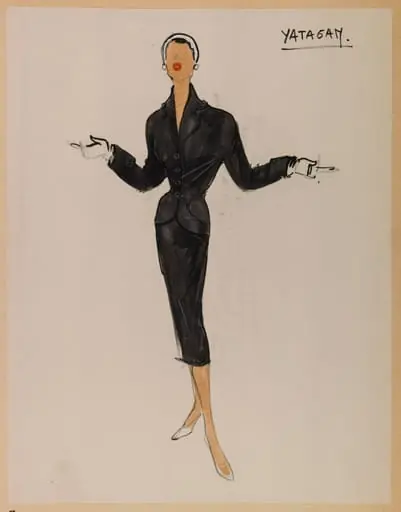
The figure in *Vénitienne* wears a black dress with vertical striping on the bodice and a fluid, unstructured skirt. The absence of facial detail shifts attention to the garment’s form and motion. The title suggests a Venetian influence, possibly evoking the city’s theatricality or the lightness of its textiles, though the design remains restrained. Gloves and a small hat imply formal occasion, anchoring the piece in mid-century eveningwear conventions.
Technique & Style
Carven rendered the sketch with swift, assured lines that convey movement rather than precision. The arms and legs are suggested with minimal strokes, while the dress’s flow is indicated through loose, rhythmic contours. The lack of shading or texture emphasizes structure and drape. This approach prioritizes the garment’s behavior on the body, aligning with her design philosophy of functionality and grace.
History & Provenance
The drawing entered the collection of the Museum of Ethnography as part of a broader effort to document fashion as cultural artifact. Though Carven’s label was commercially successful, this sketch was preserved not for its market value but for its insight into postwar French design practices. Its survival reflects growing institutional interest in fashion as a medium of social and aesthetic expression.
Context
In the early 1950s, Parisian couture was still dominated by bespoke tailoring, but Carven’s move toward prêt-à-porter challenged norms. *Vénitienne* emerged during a period when women sought practical yet refined clothing. The sketch’s simplicity contrasts with the elaborate silhouettes of contemporaries, signaling a shift toward understated modernity in postwar fashion.
Legacy
Carven’s emphasis on accessible design and body-conscious cuts influenced later generations of designers who prioritized wearability. *Vénitienne* stands as a quiet example of how fashion sketches functioned as both design tools and cultural records. Its preservation underscores the evolving recognition of fashion design as a legitimate field of artistic and historical study.
Artist & collection
Artist
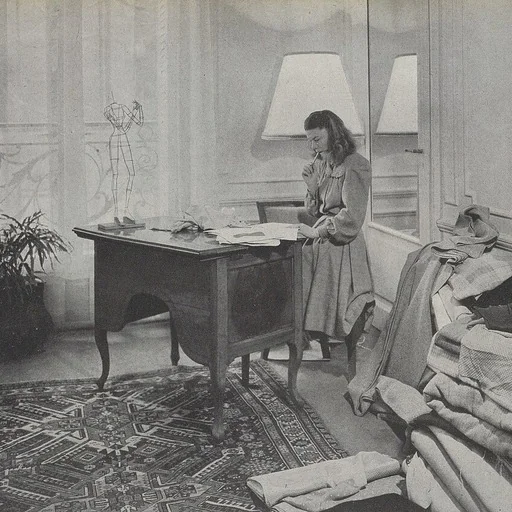
Marie-Louise Carven (31 August 1909 – 8 June 2015), born Carmen de Tommaso, was a French fashion designer who founded the house of Carven in 1945.
Museum
Palais Galliera - Musée de la Mode de la Ville de Paris
Continue through works from the same source collection.
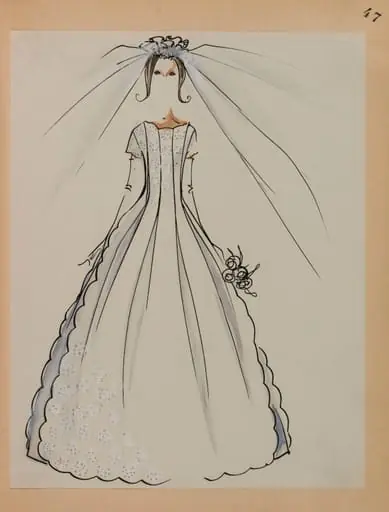 Robe de mariée festonnée et son voile
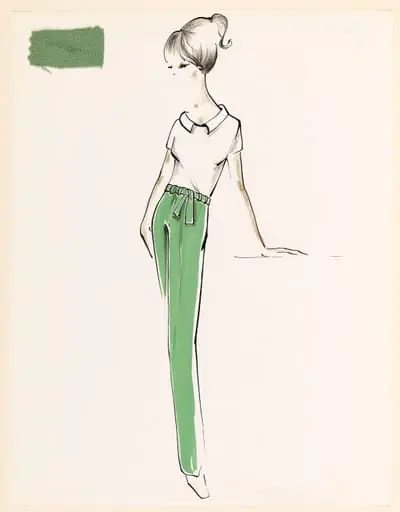 Haut blanc à manches courtes et pantalon vert à ceinture nouée
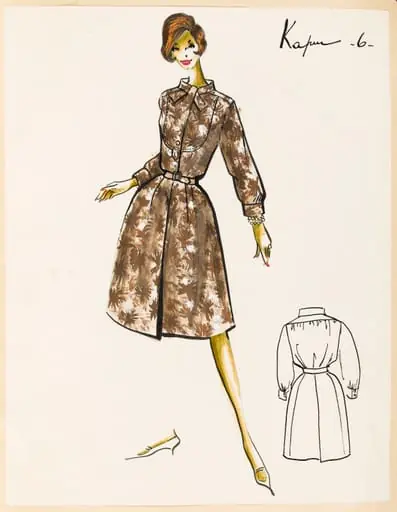 Kapur
Kapur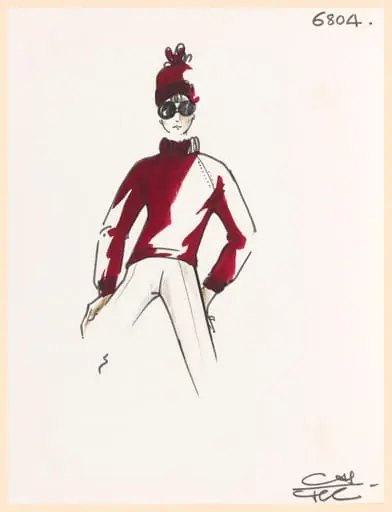 Pull-over à manches longues pourpre, bonnet assorti, pantalon et lunettes de soleil
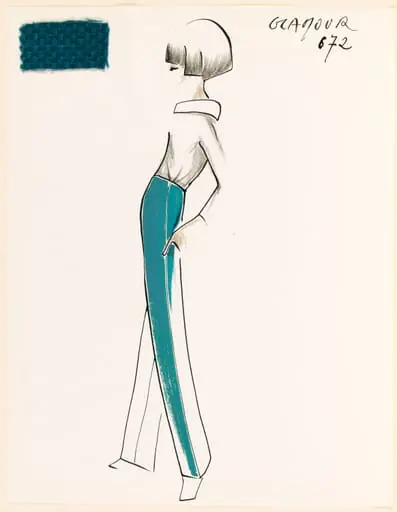 GLAMOUR
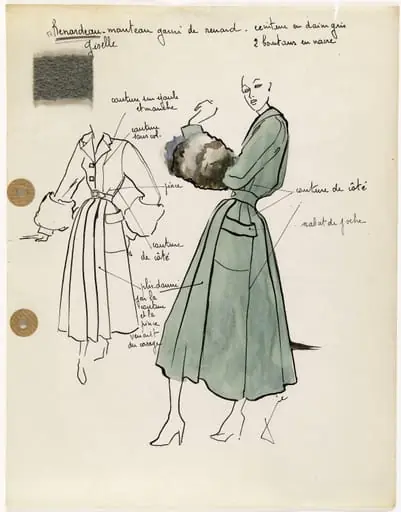 'Renardeau'
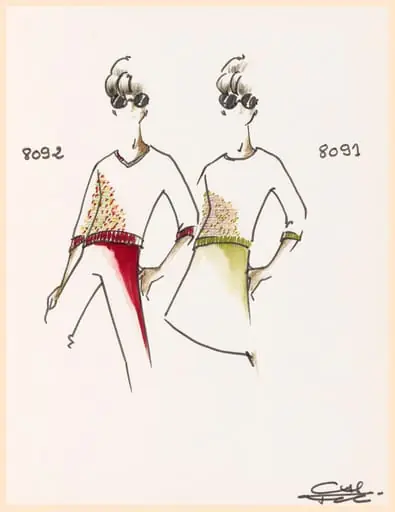 Pull-over à manches trois quarts et à encolure V à motifs multicolores, pantalon cerise et lunettes de soleil
 Béguinage