Artwork
'Pèlerin'
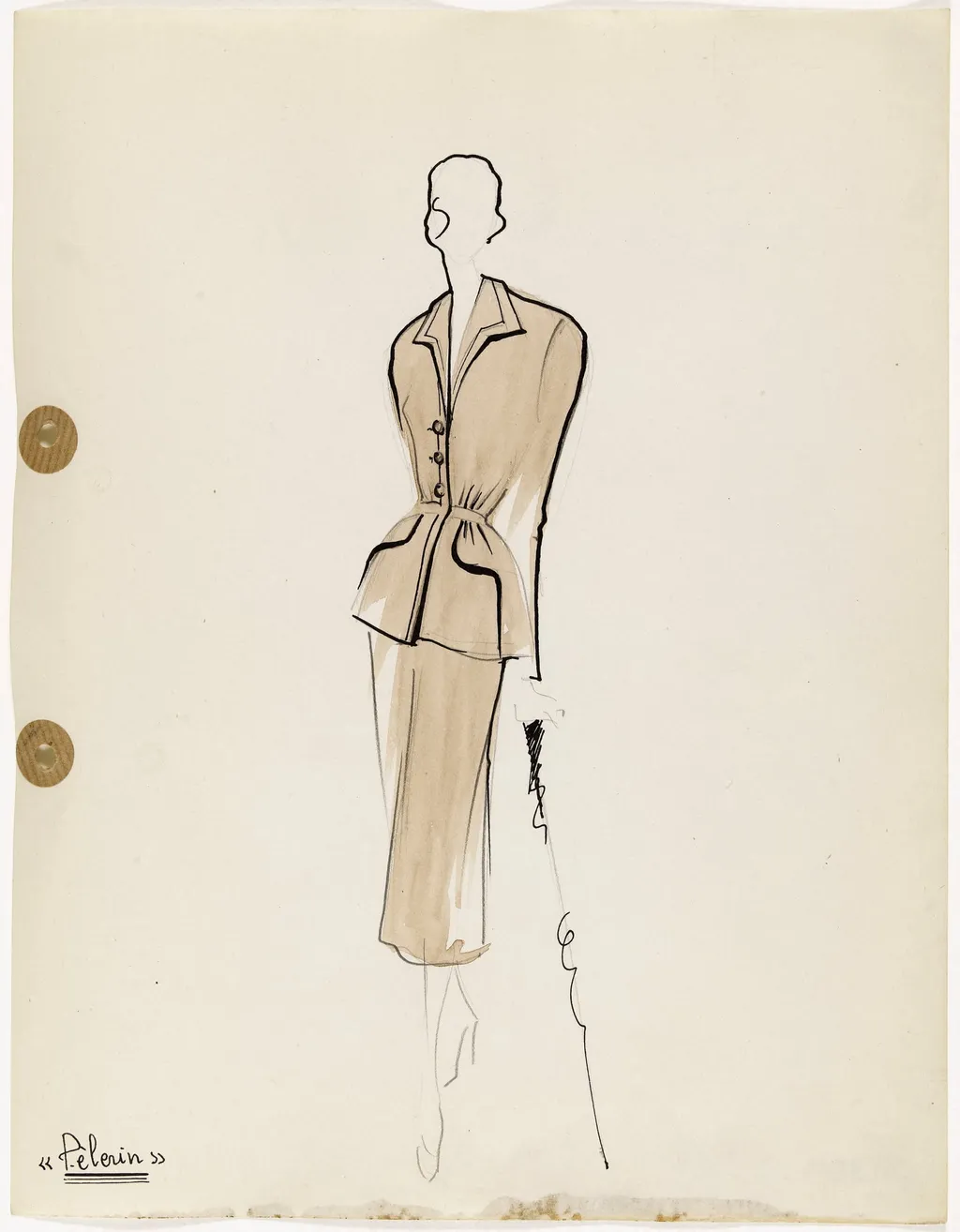
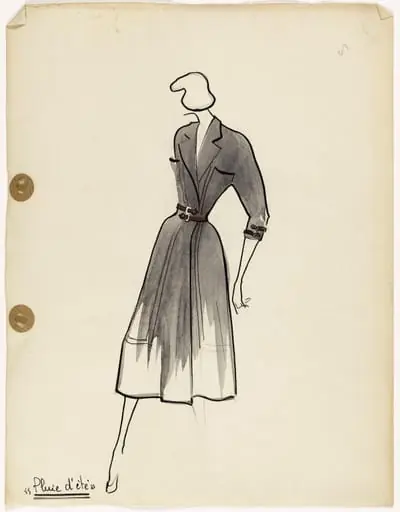
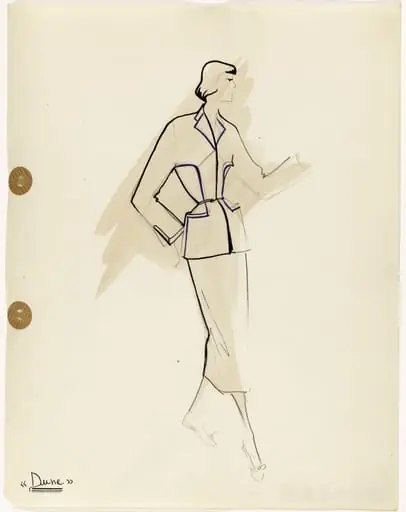
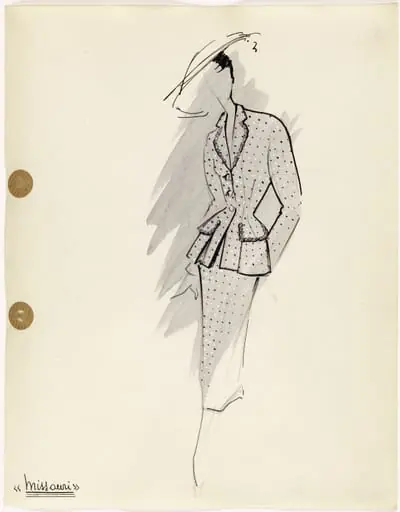
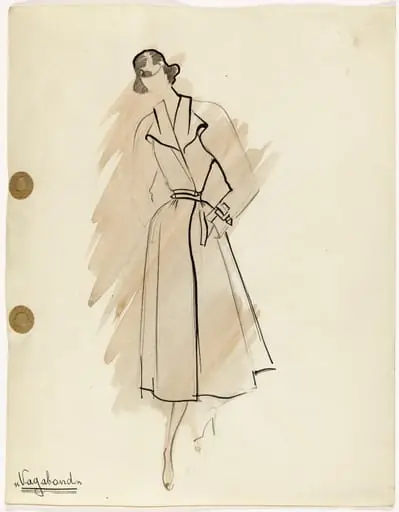
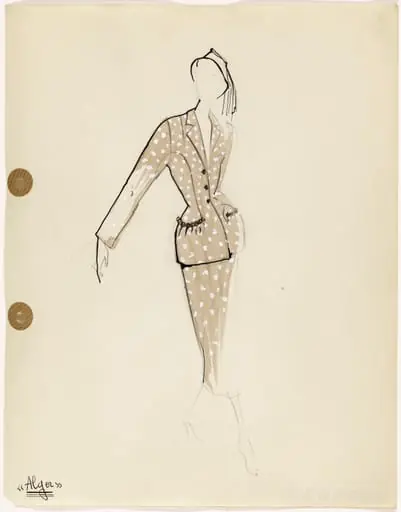
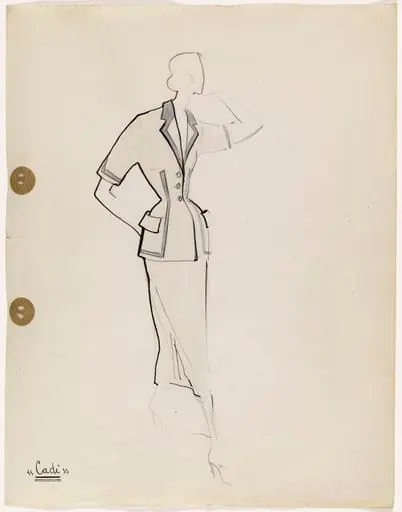
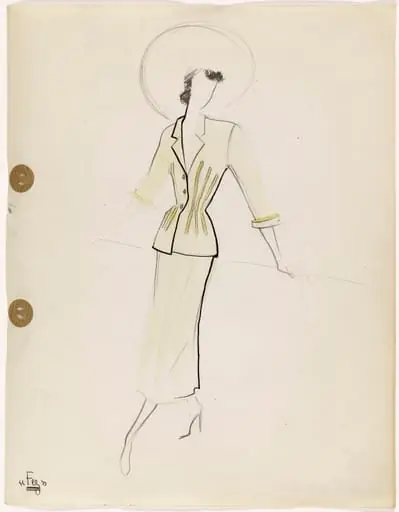
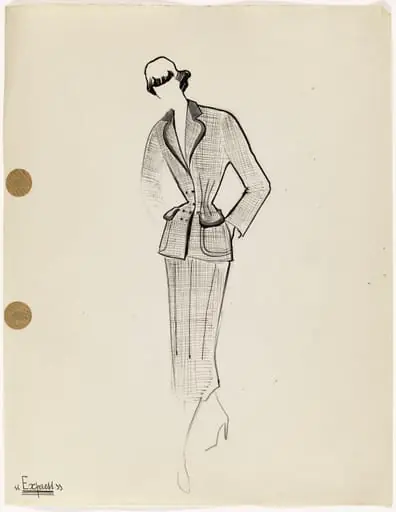
'Pèlerin' is a drawing by Marie-Louise Carven. It dates from 1949 and is held in the collection of the Palais Galliera - Musée de la Mode de la Ville de Paris.
About this work
Overview
This piece resides in the collection of the Museum of Ethnography, reflecting its significance beyond fashion into cultural documentation.
Pèlerin is a 1949 fashion illustration by Marie-Louise Carven, founder of the Parisian fashion house Carven established in 1945. The work depicts a woman in a structured ensemble of jacket and skirt, rendered with precise linework and subtle shading. Though often associated with textile design, Carven also produced detailed drawings to communicate her aesthetic. This piece resides in the collection of the Museum of Ethnography, reflecting its significance beyond fashion into cultural documentation.
Subject & Meaning
The figure in Pèlerin embodies a quiet, refined femininity characteristic of postwar French style. The outfit suggests practicality fused with elegance—tailored lines, visible buttons, and a defined waist convey both structure and restraint. The title, meaning 'pilgrim,' may allude to movement or modesty, though the garment itself is secular. The illustration captures an ideal of daily sophistication, aligning with Carven’s focus on wearable, petite-friendly designs for modern women.
Technique & Style
Carven employed fine, controlled lines to define the silhouette and intricate details like belt buckles and button placements. Shading is applied sparingly to suggest fabric weight and fold, avoiding overt realism in favor of stylized clarity. The drawing’s economy of mark-making reflects a designer’s eye—focused on form and function rather than decorative flourish. The medium, likely ink or pencil on paper, prioritizes legibility for garment construction and presentation.
History & Provenance
Created in 1949, Pèlerin emerged during Carven’s early expansion into prêt-à-porter, a move that democratized high fashion. The illustration likely served as a design reference or presentation piece for clients or manufacturers. Its inclusion in the Museum of Ethnography suggests recognition of fashion as cultural artifact. The drawing entered the collection through documented acquisition, though specific provenance details prior to museum custody remain unrecorded in public sources.
Context
In postwar France, fashion was redefining identity amid economic recovery and shifting gender roles. Carven’s designs catered to women seeking autonomy through well-fitted, accessible clothing. Pèlerin reflects this ethos—neither extravagant nor utilitarian, but balanced. The illustration aligns with broader trends in mid-century design that valued clarity and restraint, distinguishing Carven from more theatrical contemporaries like Dior.
Legacy
Pèlerin stands as a testament to Carven’s role in bridging haute couture and ready-to-wear. While not widely exhibited, its preservation in an ethnographic context underscores fashion’s cultural weight. The drawing exemplifies how designers used illustration not merely as promotion but as a tool for articulating new standards of everyday elegance. Carven’s influence persists in contemporary approaches to proportion and wearable design.
Artist & collection
Artist
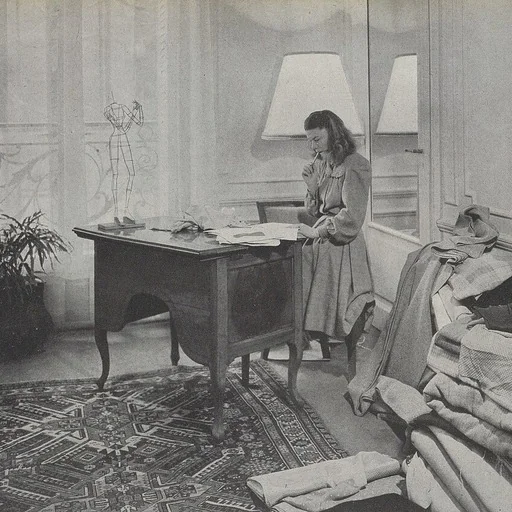
Marie-Louise Carven (31 August 1909 – 8 June 2015), born Carmen de Tommaso, was a French fashion designer who founded the house of Carven in 1945.
Museum
Palais Galliera - Musée de la Mode de la Ville de Paris
Continue through works from the same source collection.
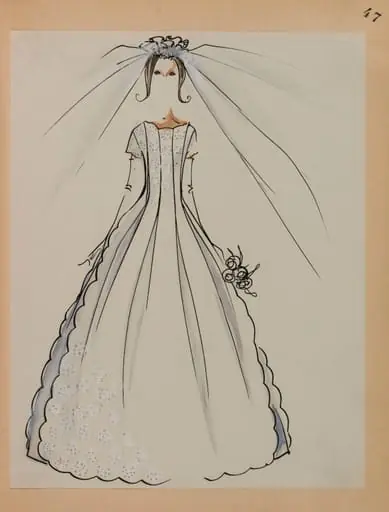 Robe de mariée festonnée et son voile
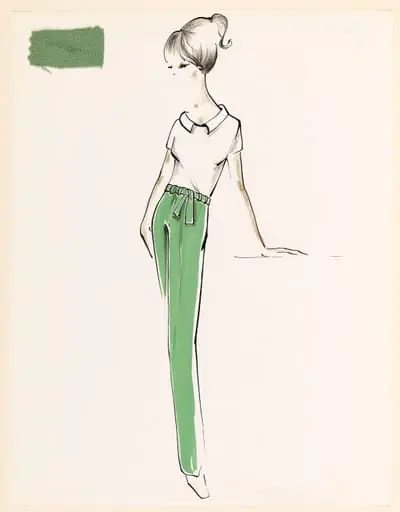 Haut blanc à manches courtes et pantalon vert à ceinture nouée
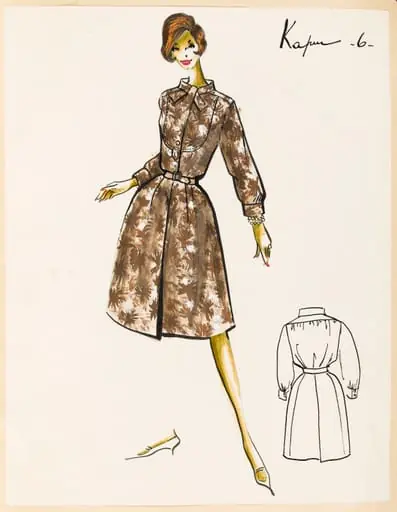 Kapur
Kapur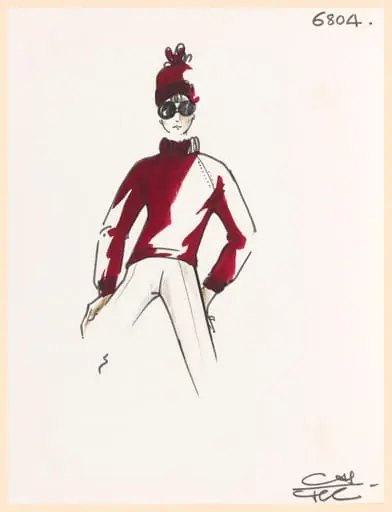 Pull-over à manches longues pourpre, bonnet assorti, pantalon et lunettes de soleil
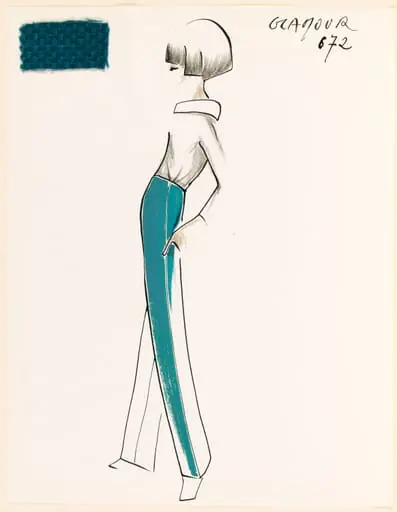 GLAMOUR
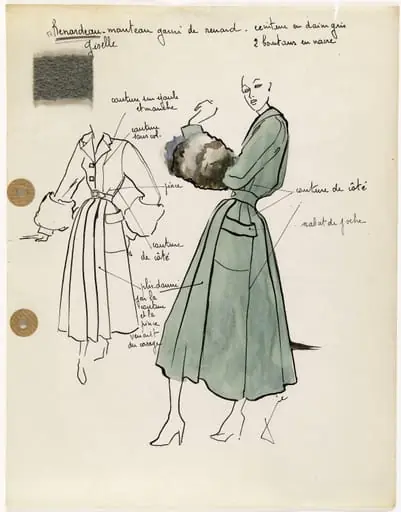 'Renardeau'
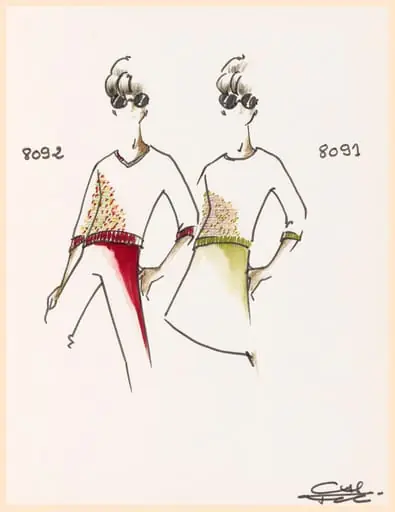 Pull-over à manches trois quarts et à encolure V à motifs multicolores, pantalon cerise et lunettes de soleil
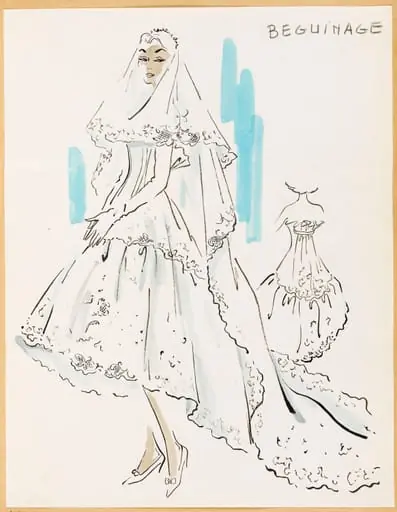 Béguinage