Artwork
Pantalon rose et bas de la jambe marron
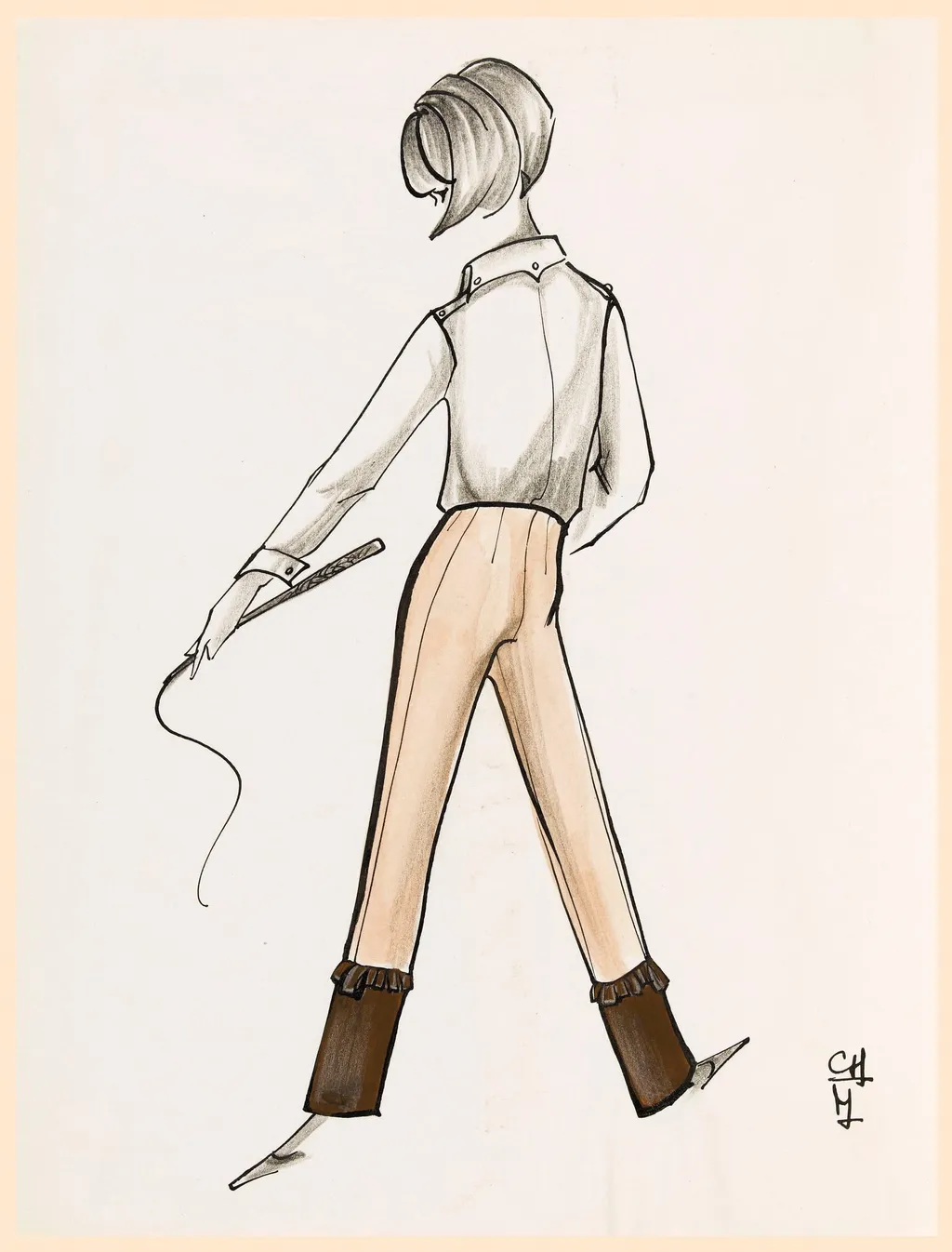
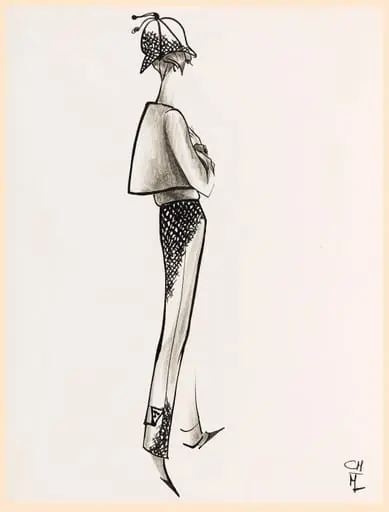
Pantalon rose et bas de la jambe marron is a drawing by Marie-Louise Carven. It dates from 1963 and is held in the collection of the Palais Galliera - Musée de la Mode de la Ville de Paris.
About this work
Overview
It reflects Carven’s interest in practical, youthful silhouettes and was produced as part of her broader design documentation, not as a standalone artwork.
Created around 1963 by French designer Marie-Louise Carven, this fashion illustration captures a lower-body view of a woman in motion. Rendered in ink or pencil, the drawing emphasizes the silhouette of wide-legged pink trousers and brown footwear, with minimal detail above the waist. It reflects Carven’s interest in practical, youthful silhouettes and was produced as part of her broader design documentation, not as a standalone artwork.
Subject & Meaning
The figure is depicted from behind, walking with casual ease. The focus on the legs and feet suggests an emphasis on movement and proportion rather than identity. The loose fit of the trousers and the subtle heel of the shoes convey a modern, relaxed posture. The obscured face and simplified arms reinforce the design’s functional intent: to communicate cut and drape, not personality or narrative.
Technique & Style
The illustration employs clean, economical lines to define form. The trousers’ volume is suggested through gentle curves and the way fabric gathers at the ankle, while the shoes are rendered with slight shading to indicate depth. Background and upper body are left sparse, directing attention to the lower half. This restrained approach aligns with mid-century fashion drawing conventions that prioritized clarity over ornamentation.
History & Provenance
The piece originates from Carven’s design archive, created during the early years of her prêt-à-porter line, which she launched in 1945. It entered the collection of the Museum of Ethnography as part of a broader effort to document everyday fashion as cultural artifact. Its inclusion reflects institutional interest in postwar women’s wear as a reflection of social change, not merely high fashion.
Context
In the early 1960s, Parisian designers were redefining women’s clothing for active, urban lifestyles. Carven’s wide-leg trousers, though unconventional for formal couture, aligned with emerging trends toward comfort and mobility. This drawing captures a moment when trousers transitioned from private wear to public style, particularly among younger women seeking practicality without sacrificing elegance.
Legacy
The illustration stands as a quiet record of a design shift in women’s fashion — away from structured silhouettes toward fluid, wearable forms. Though not widely exhibited, its preservation in an ethnographic context underscores its value as evidence of everyday dress evolution. Carven’s emphasis on proportion and movement influenced later designers who prioritized ease and realism over theatricality.
Artist & collection
Artist
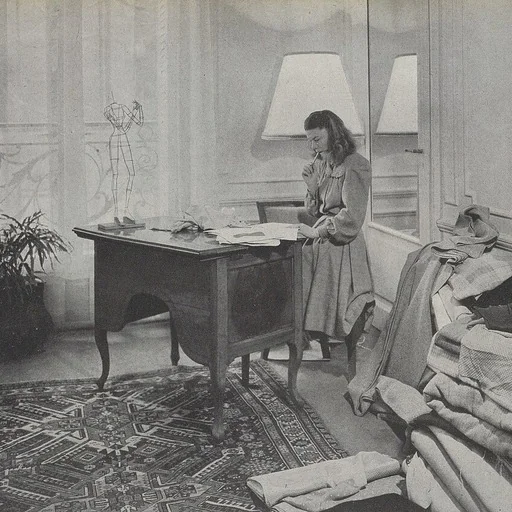
Marie-Louise Carven (31 August 1909 – 8 June 2015), born Carmen de Tommaso, was a French fashion designer who founded the house of Carven in 1945.

Museum
Palais Galliera - Musée de la Mode de la Ville de Paris
Continue through works from the same source collection.
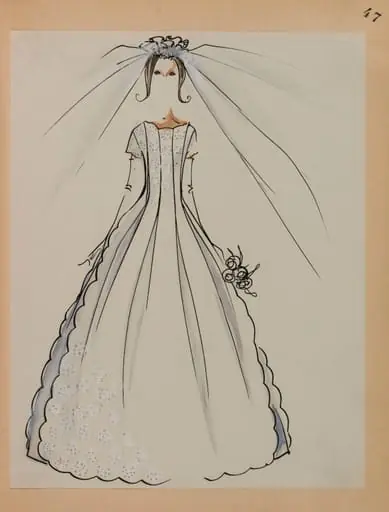 Robe de mariée festonnée et son voile
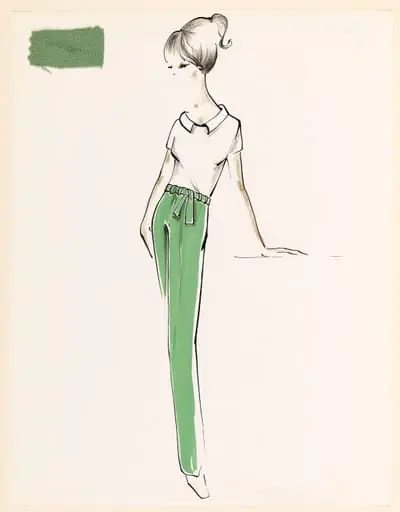 Haut blanc à manches courtes et pantalon vert à ceinture nouée
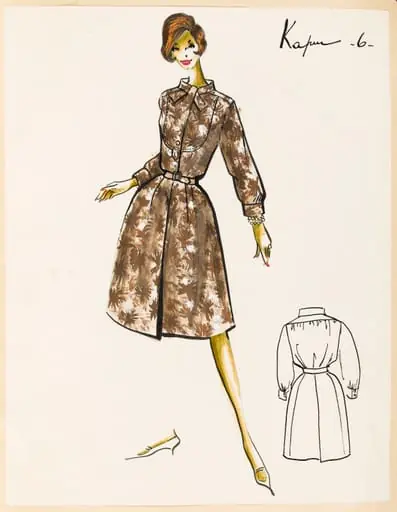 Kapur
Kapur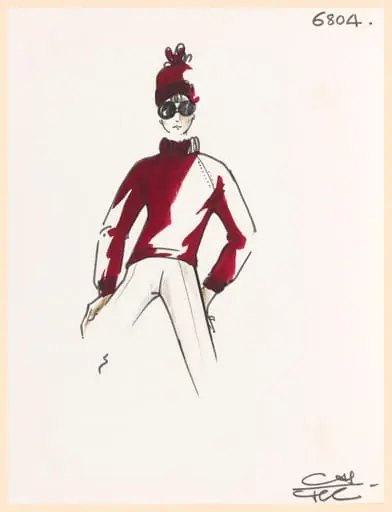 Pull-over à manches longues pourpre, bonnet assorti, pantalon et lunettes de soleil
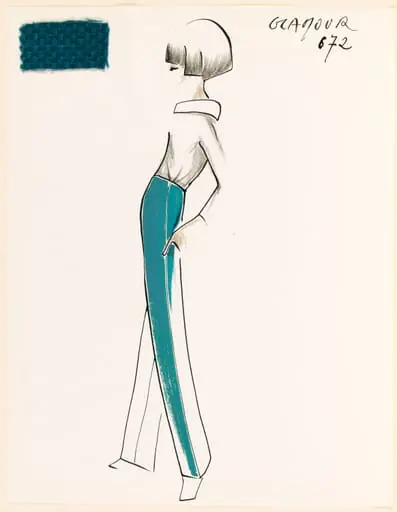 GLAMOUR
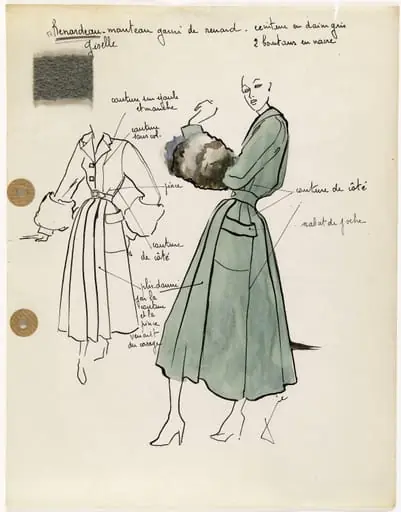 'Renardeau'
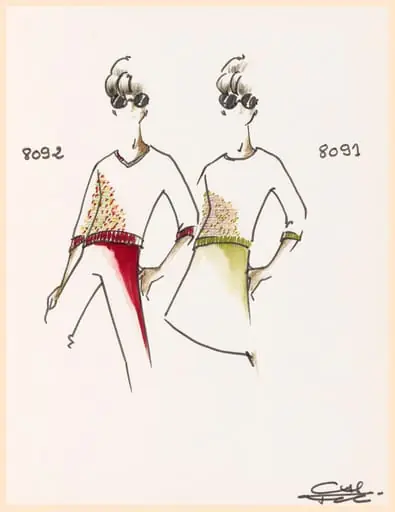 Pull-over à manches trois quarts et à encolure V à motifs multicolores, pantalon cerise et lunettes de soleil
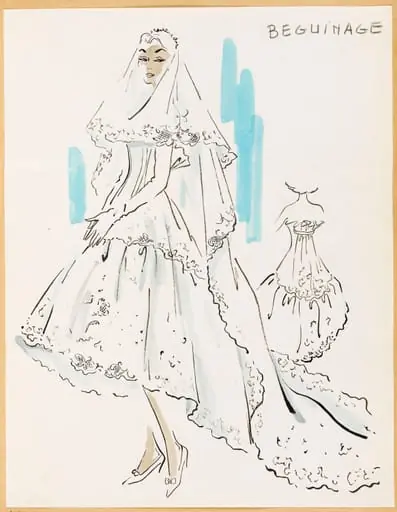 Béguinage
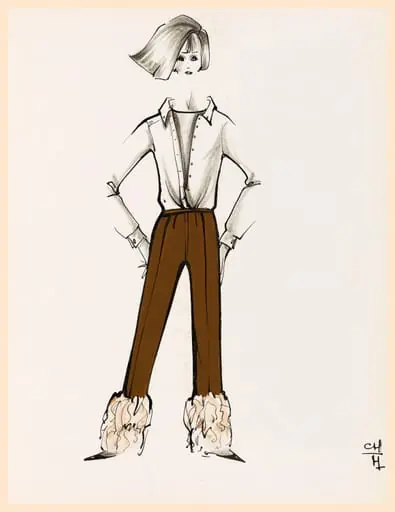 Pantalon marron avec fourrure blanche au bas de la jambe
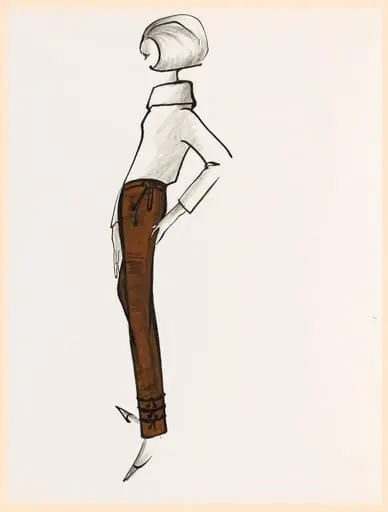 Pantalon marron avec applications sur le bas de la jambe
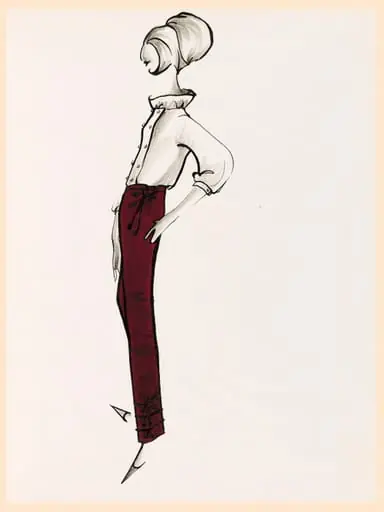 Pantalon bordeaux avec applications en bas de la jambe
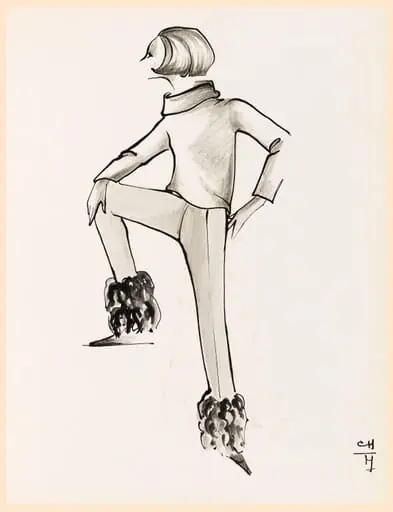 Pantalon avec fourrure au bas de la jambe
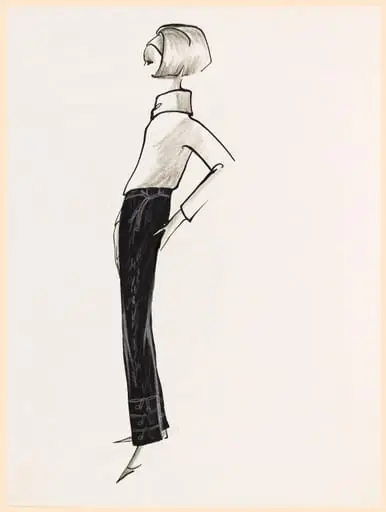 Pantalon noir avec applications sur le bas de la jambe
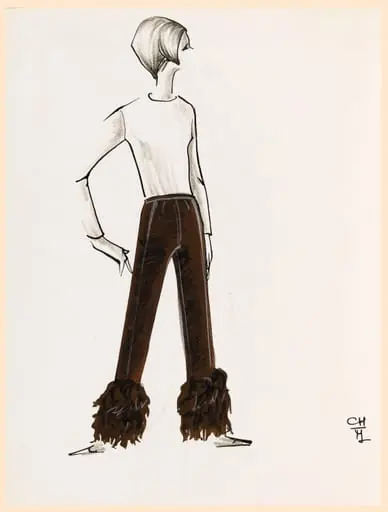 Pantalon marron avec fourrure de la même couleur au bas de la jambe
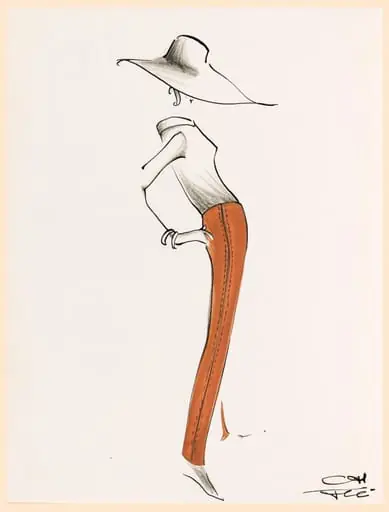 Pantalon marron avec surpiqûres le long de la jambe
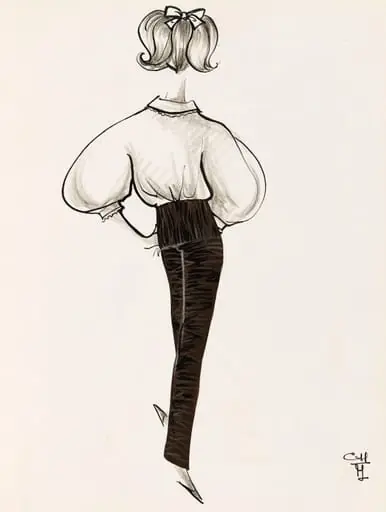 Pantalon marron à large ceinture
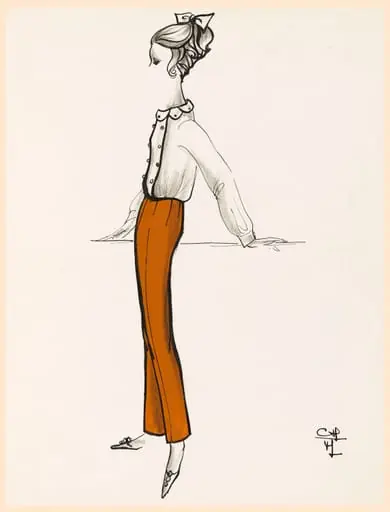 Pantalon marron
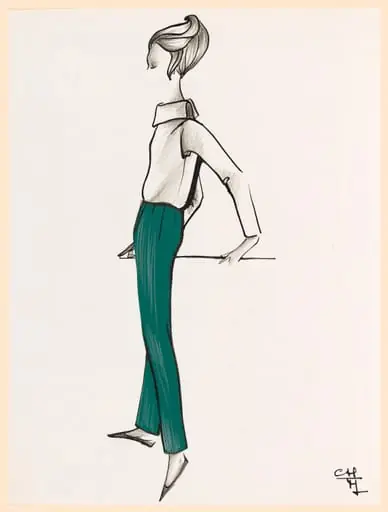 Pantalon vert sapin
 Pantalon à motif noir