Artwork
Parme
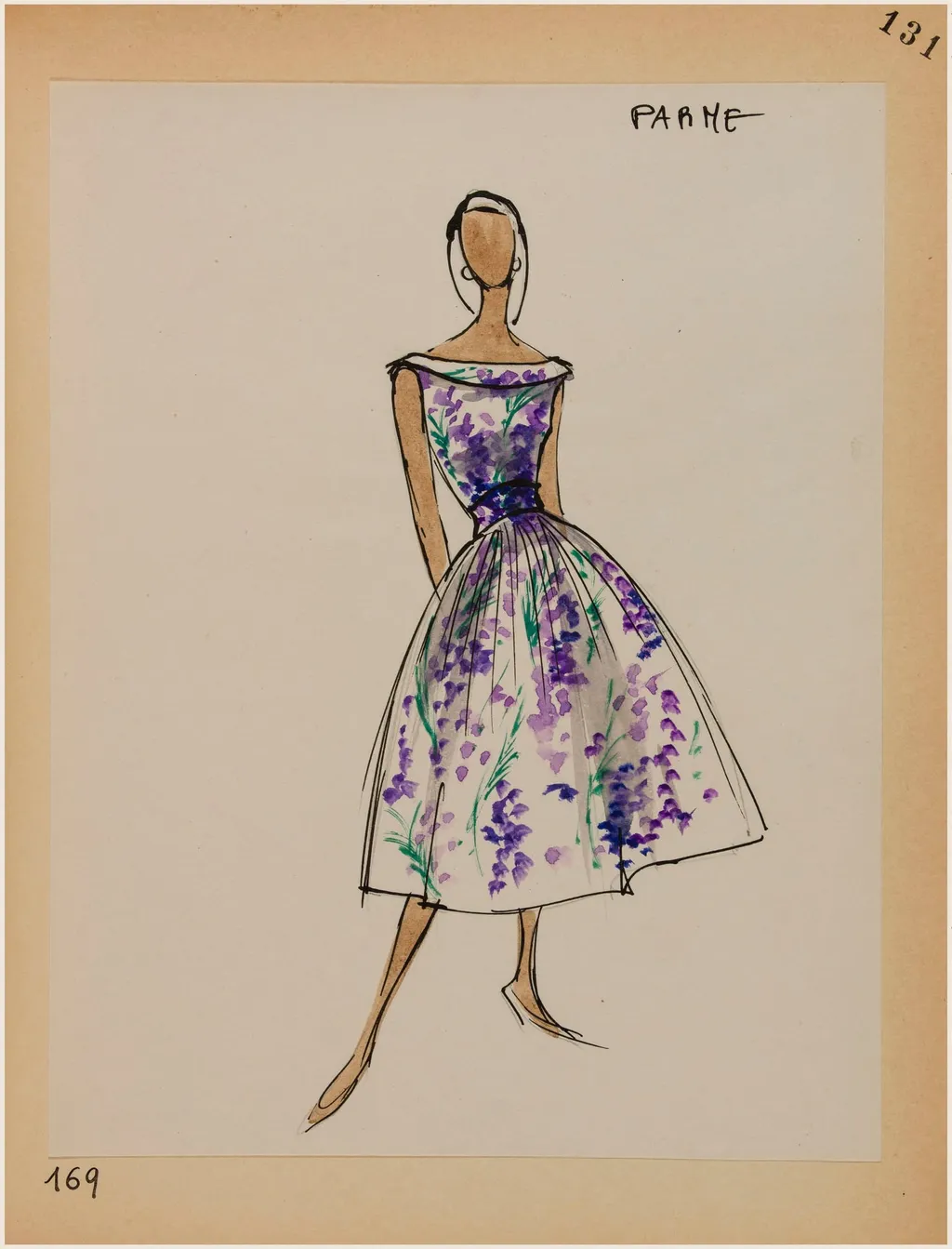
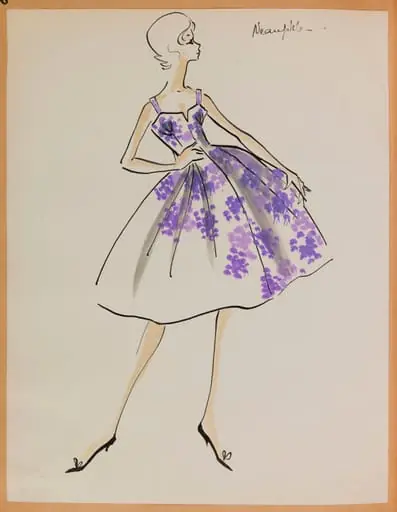
Parme is a drawing by Marie-Louise Carven. It dates from 1956 and is held in the collection of the Palais Galliera - Musée de la Mode de la Ville de Paris.
About this work
Overview
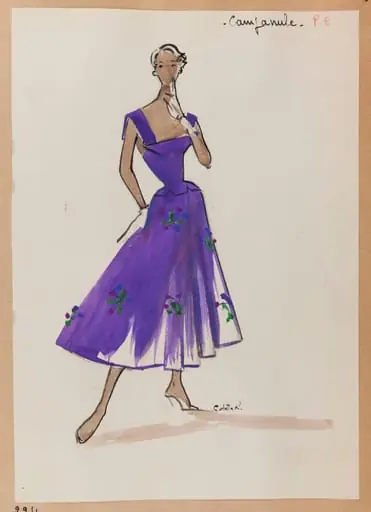
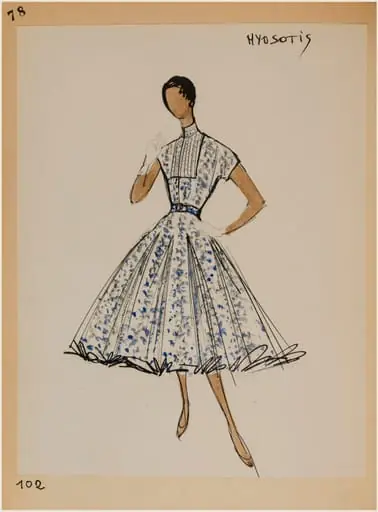
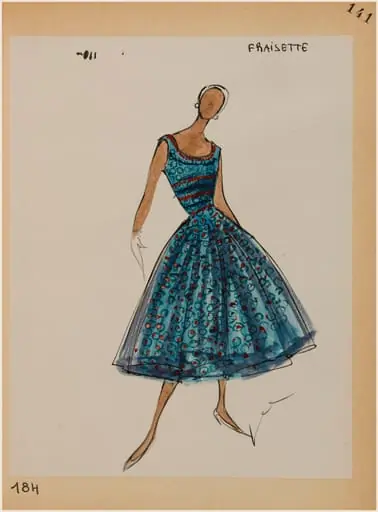
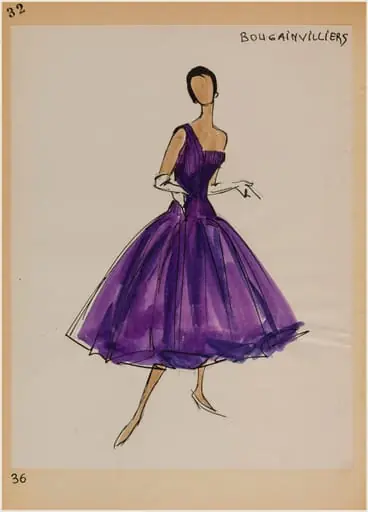
Created in 1956 by French designer Marie-Louise Carven, *Parme* is a fashion sketch produced during the early years of her prêt-à-porter line.
Created in 1956 by French designer Marie-Louise Carven, *Parme* is a fashion sketch produced during the early years of her prêt-à-porter line. Executed in ink and watercolor, it captures a dress design intended for lightweight, everyday wear. The sketch resides in the Museum of Ethnography’s collection, reflecting its role as both a design artifact and a document of mid-century French fashion practice.
Subject & Meaning
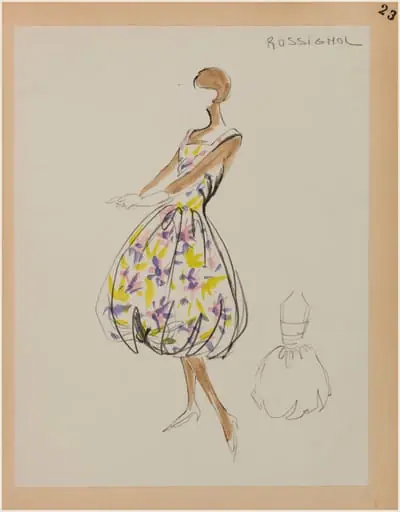
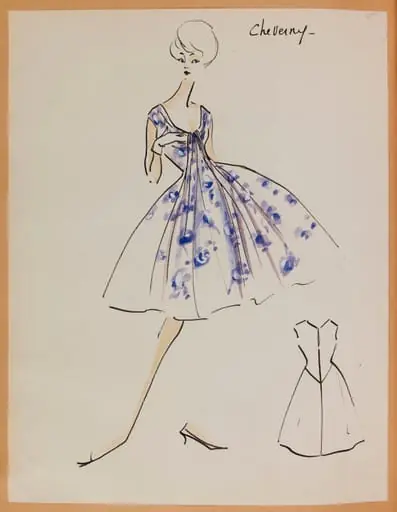
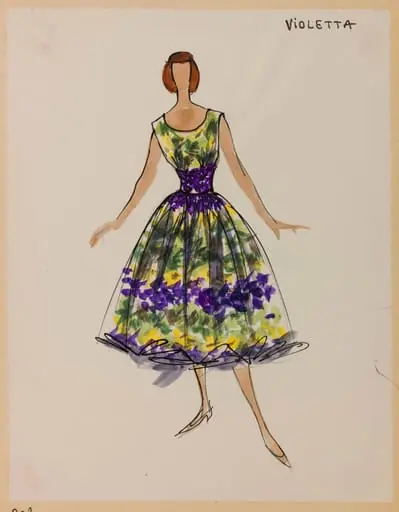
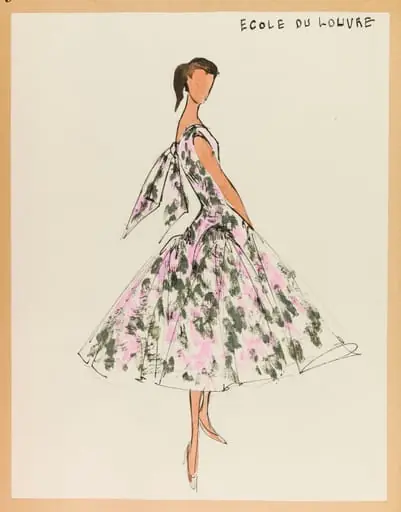
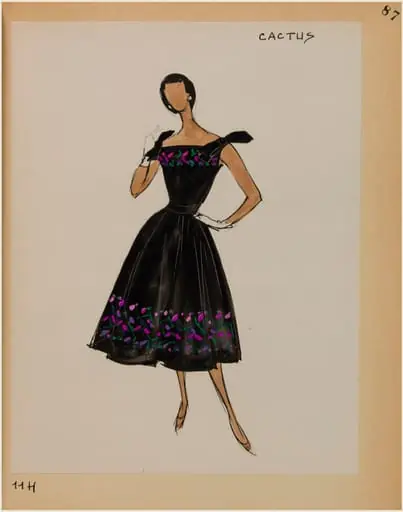
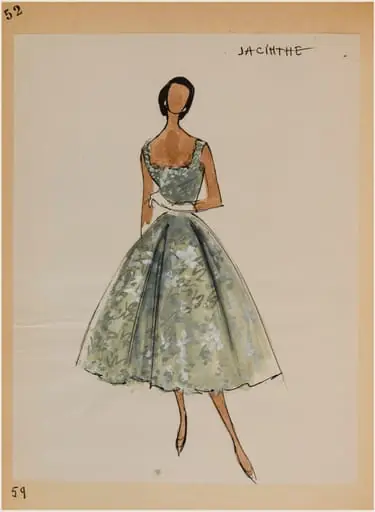
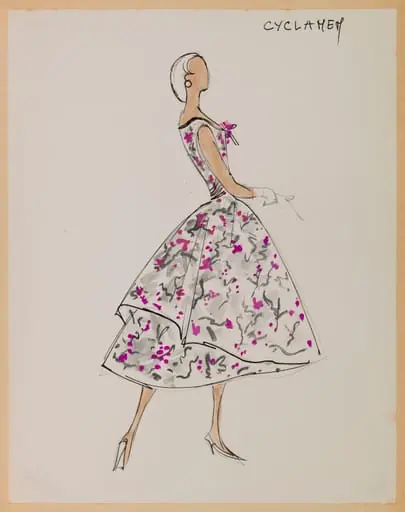
The design features a short, off-the-shoulder bodice and a gently flared skirt, tailored for petite figures. Decorated with abstract floral motifs in purple and green, the pattern suggests a playful, informal elegance rather than ornate luxury. The name 'Parme' likely served as an internal identifier, hinting at the dress’s intended mood—light, breezy, and unpretentious—consistent with Carven’s focus on accessible femininity.
Technique & Style
Carven rendered the sketch with loose, confident brushwork, using minimal lines to suggest form and movement. The floral pattern is not detailed but implied through swift, gestural strokes, functioning as a visual note for textile production. Cross-hatching and sparse shading define volume without heavy modeling, emphasizing speed and clarity over finish—typical of design drafts meant for patternmakers.
History & Provenance
Marie-Louise Carven founded her eponymous house in 1945 and pioneered ready-to-wear in Parisian couture circles. *Parme* emerged during a period when her studio was expanding beyond custom fittings into mass-producible lines. The sketch entered the Museum of Ethnography’s holdings as part of a broader effort to document fashion as cultural material, not merely high art.
Context
In the mid-1950s, Parisian designers began responding to postwar demand for affordable, wearable clothing. Carven’s approach—emphasizing simplicity, proportion, and light fabrics—aligned with shifting social norms around women’s mobility and daily life. *Parme* reflects this transition, bridging haute couture craftsmanship with the practicalities of emerging ready-to-wear markets.
Legacy
Though not widely exhibited, *Parme* remains a representative example of Carven’s influence on democratizing fashion. Its unadorned aesthetic and functional design anticipate later movements toward minimalist, wearable clothing. As a working sketch, it preserves the iterative process behind fashion production, offering insight into how ideas moved from concept to cloth.
Artist & collection
Artist
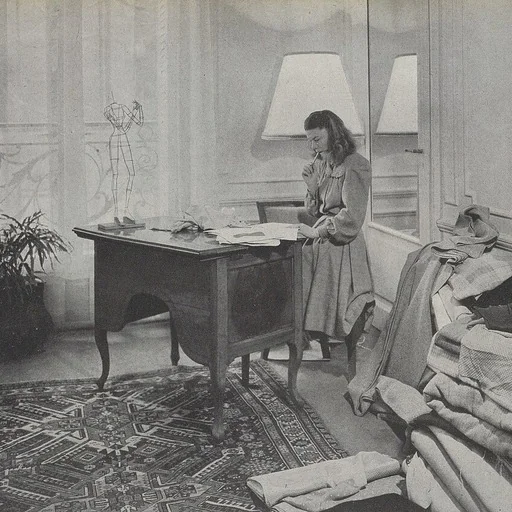
Marie-Louise Carven (31 August 1909 – 8 June 2015), born Carmen de Tommaso, was a French fashion designer who founded the house of Carven in 1945.
Museum
Palais Galliera - Musée de la Mode de la Ville de Paris
Continue through works from the same source collection.
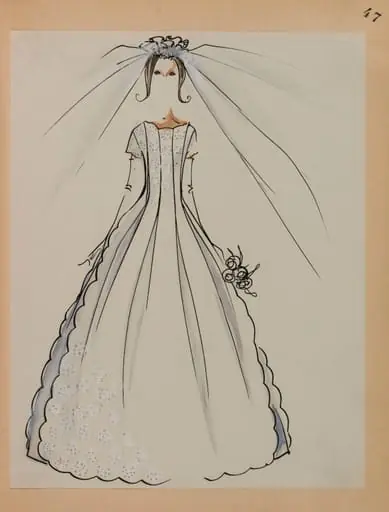 Robe de mariée festonnée et son voile
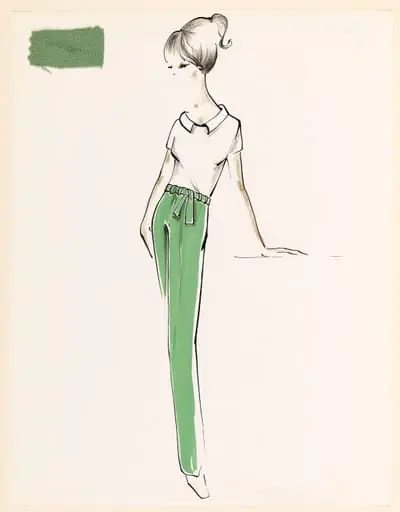 Haut blanc à manches courtes et pantalon vert à ceinture nouée
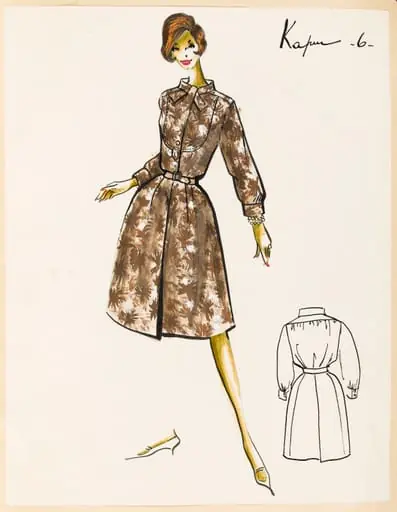 Kapur
Kapur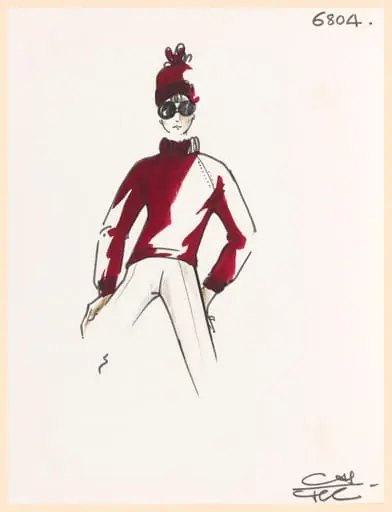 Pull-over à manches longues pourpre, bonnet assorti, pantalon et lunettes de soleil
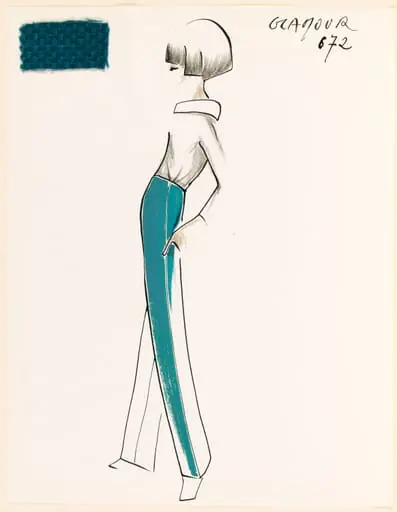 GLAMOUR
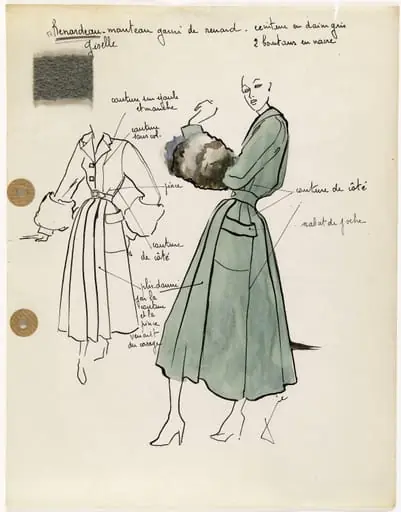 'Renardeau'
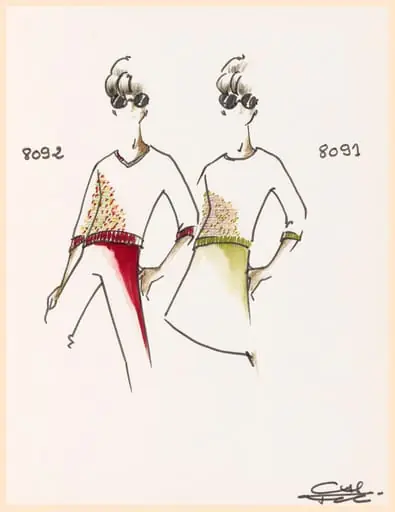 Pull-over à manches trois quarts et à encolure V à motifs multicolores, pantalon cerise et lunettes de soleil
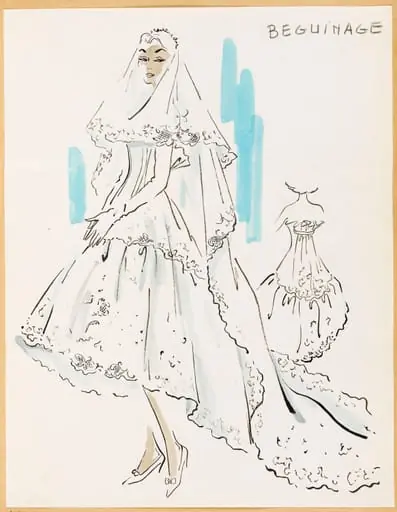 Béguinage