Artwork
Pie grièche
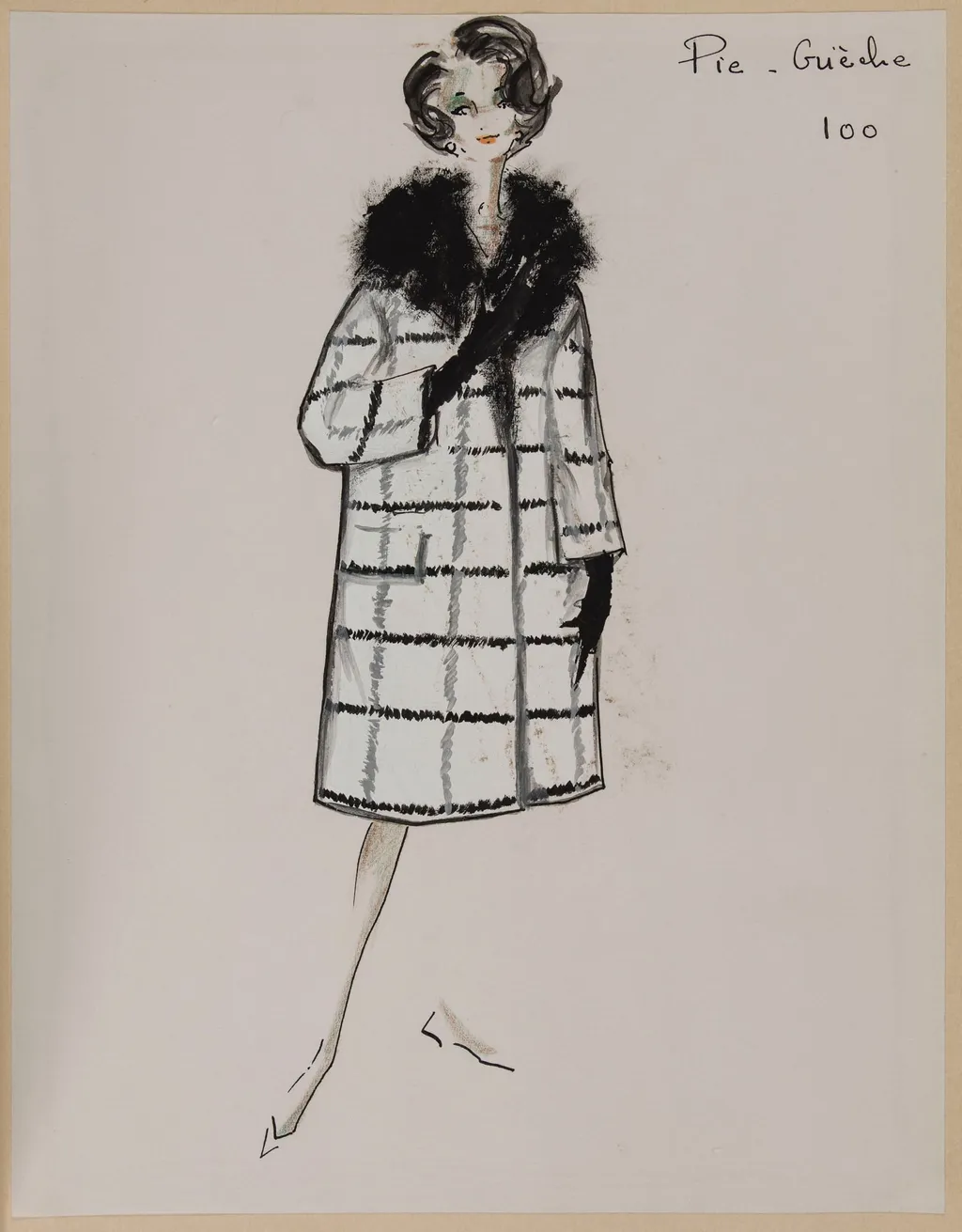
Pie grièche is a drawing by Marie-Louise Carven. It dates from 1960 and is held in the collection of the Palais Galliera - Musée de la Mode de la Ville de Paris.
About this work
Overview
The drawing, executed with loose, expressive lines and subtle shading, reflects Carven’s interest in wearable, modest silhouettes.
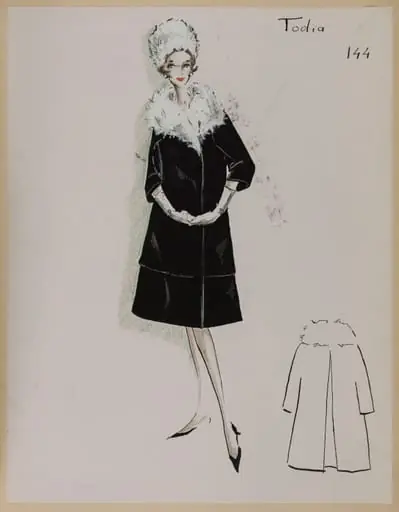
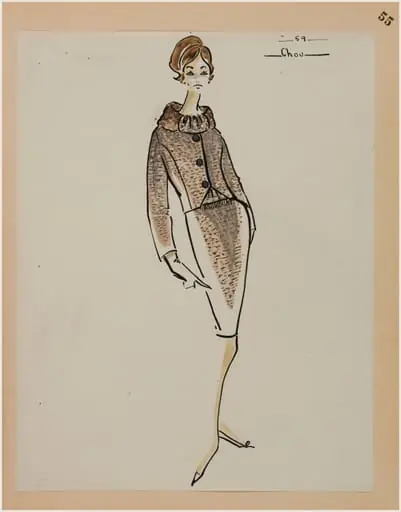
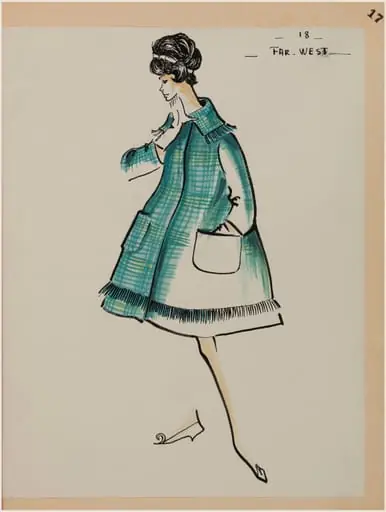
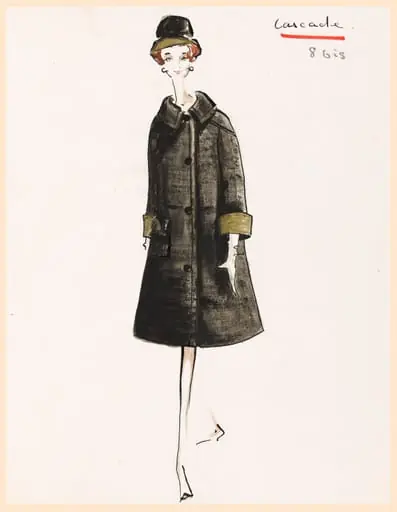
Created around 1960, *Pie grièche* is a pencil sketch by French fashion designer Marie-Louise Carven. It depicts a woman in a long, boxy coat with striped fabric, a high collar, and fur trim. The drawing, executed with loose, expressive lines and subtle shading, reflects Carven’s interest in wearable, modest silhouettes. Though labeled as an image, it functions as a design study from her personal archive, later acquired by the Museum of Ethnography.
Subject & Meaning
The figure in the sketch wears a coat reminiscent of early 20th-century styles, suggesting a deliberate nod to historical dress. The restrained details—neatly pulled-back hair, a single necklace—emphasize simplicity over ornamentation. The title, *Pie grièche*, refers to a type of shrike bird, possibly symbolizing the sharp, angular lines of the garment or evoking a sense of quiet, watchful elegance. The subject’s anonymity reinforces the focus on form rather than identity.
Technique & Style
Carven rendered the sketch with swift, confident pencil strokes, capturing the weight and drape of fabric through minimal shading. The loose lines suggest spontaneity, as if drawn from life or memory. The coat’s structure is defined by contour rather than detail, with folds suggested by subtle tonal shifts. This approach aligns with her design philosophy: clarity and functionality prioritized over elaborate rendering.
History & Provenance
The sketch originates from Carven’s personal collection, likely used during the development of a garment for her label, founded in 1945. It entered the Museum of Ethnography’s holdings as part of a broader acquisition of design materials documenting 20th-century fashion. Its inclusion in an ethnographic context reflects an interest in clothing as cultural artifact, rather than merely aesthetic object.
Context
In the 1960s, Carven was pioneering accessible fashion through her prêt-à-porter line, challenging the exclusivity of haute couture. This sketch, with its unadorned silhouette and practical cut, embodies her commitment to designing for everyday women, particularly those with petite frames. The retro-inspired coat may reflect a broader postwar fascination with revisiting earlier decades’ elegance, reinterpreted for modern life.
Legacy
Though not widely exhibited, *Pie grièche* remains a quiet testament to Carven’s influence on democratic fashion. Its preservation in an ethnographic museum underscores how her designs bridged art, utility, and cultural memory. The sketch illustrates how a designer’s hand-drawn ideas could translate into garments that shaped women’s wardrobes without fanfare, leaving a lasting imprint on modern dress.
Artist & collection
Artist
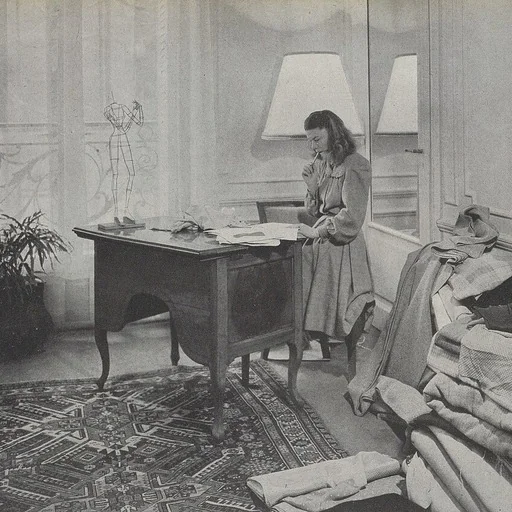
Marie-Louise Carven (31 August 1909 – 8 June 2015), born Carmen de Tommaso, was a French fashion designer who founded the house of Carven in 1945.
Museum
Palais Galliera - Musée de la Mode de la Ville de Paris
Continue through works from the same source collection.
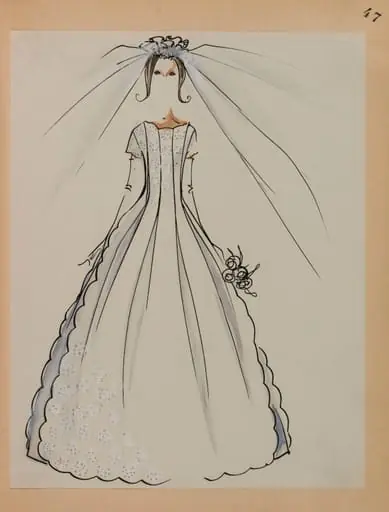 Robe de mariée festonnée et son voile
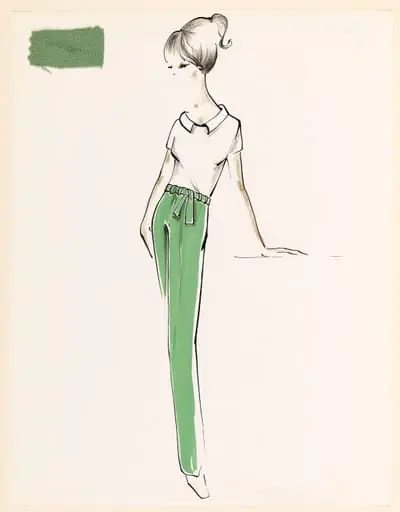 Haut blanc à manches courtes et pantalon vert à ceinture nouée
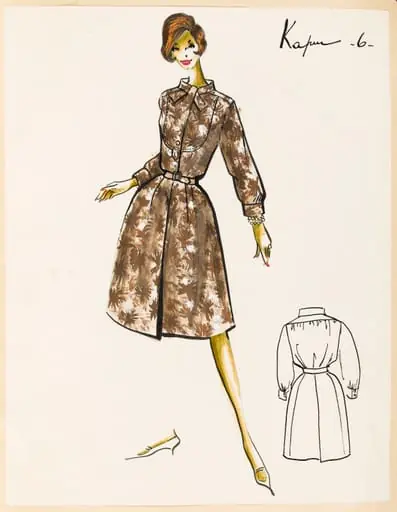 Kapur
Kapur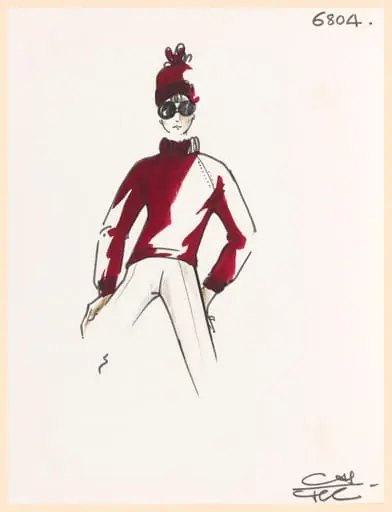 Pull-over à manches longues pourpre, bonnet assorti, pantalon et lunettes de soleil
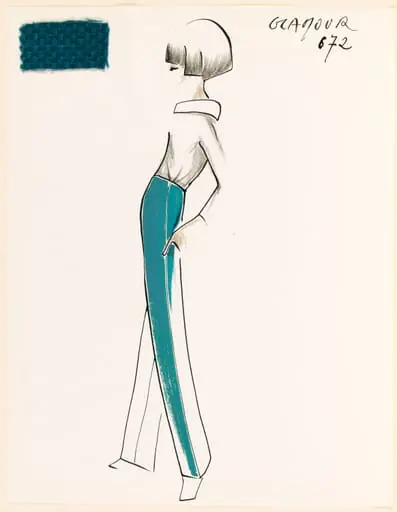 GLAMOUR
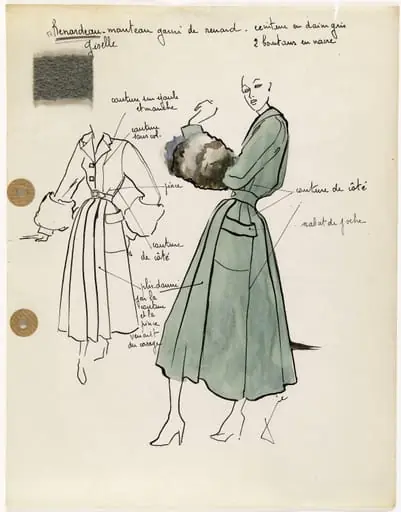 'Renardeau'
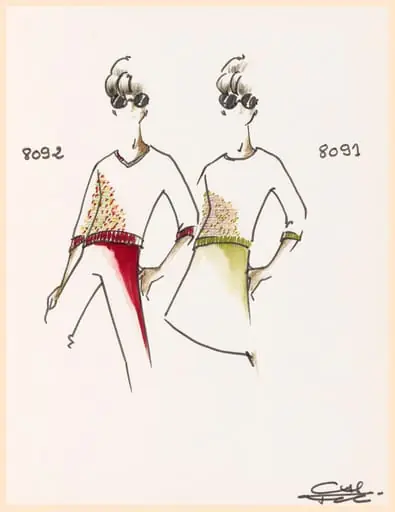 Pull-over à manches trois quarts et à encolure V à motifs multicolores, pantalon cerise et lunettes de soleil
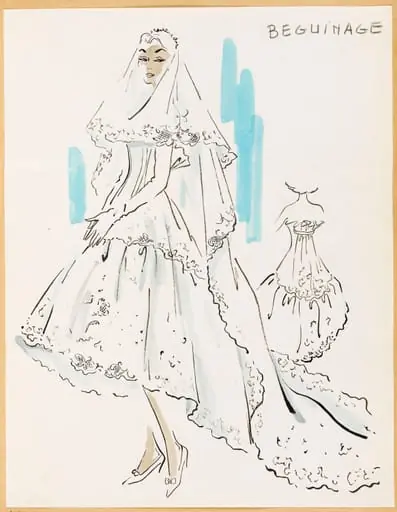 Béguinage