Artwork
Pistache
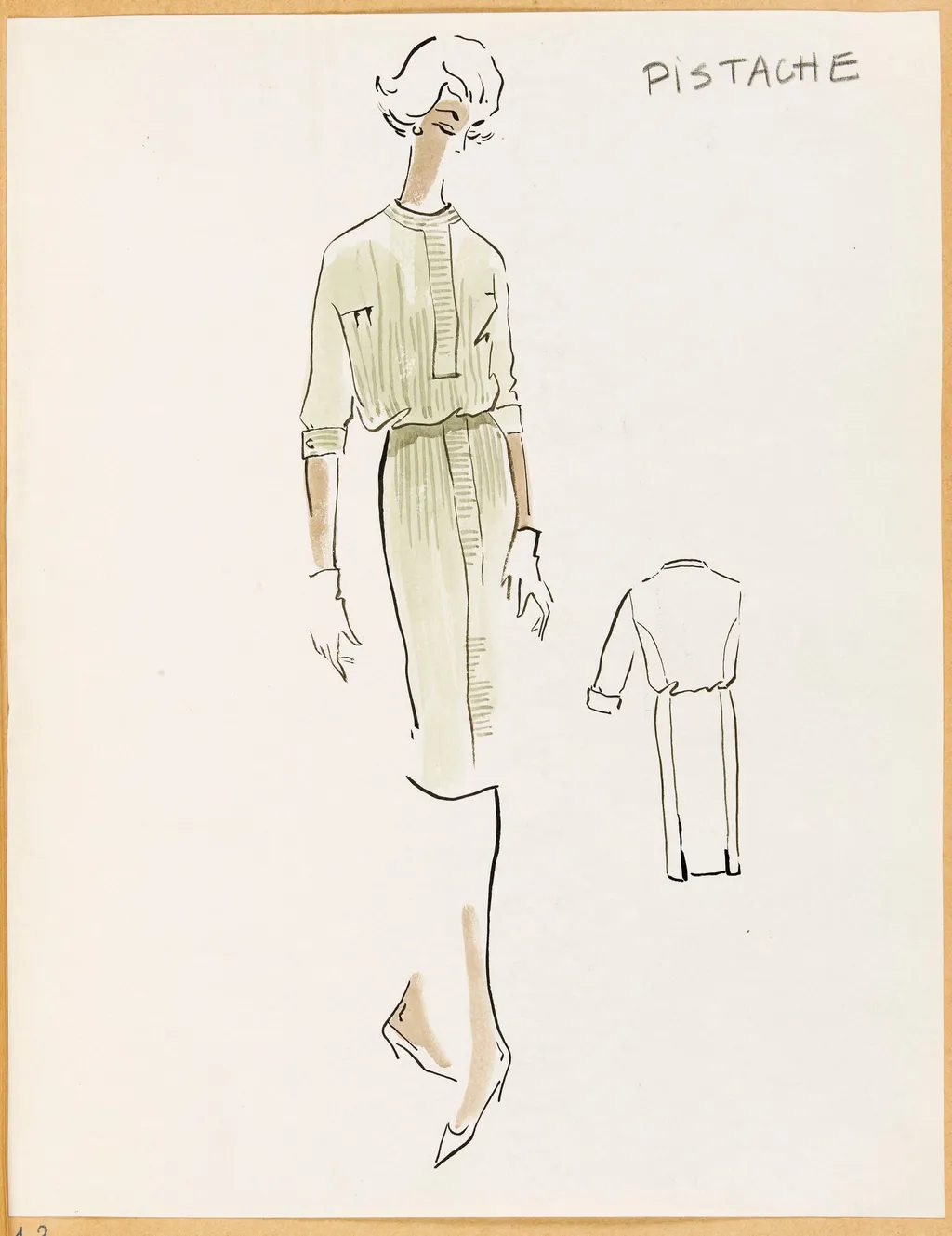
Pistache is a drawing by Marie-Louise Carven. It dates from 1957 and is held in the collection of the Palais Galliera - Musée de la Mode de la Ville de Paris.
About this work
Overview
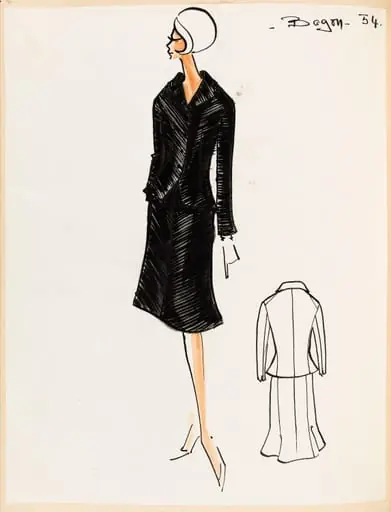
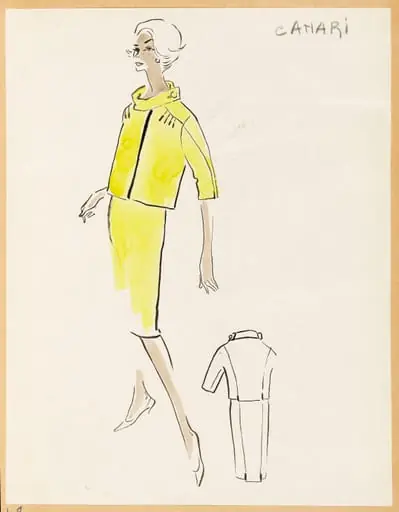
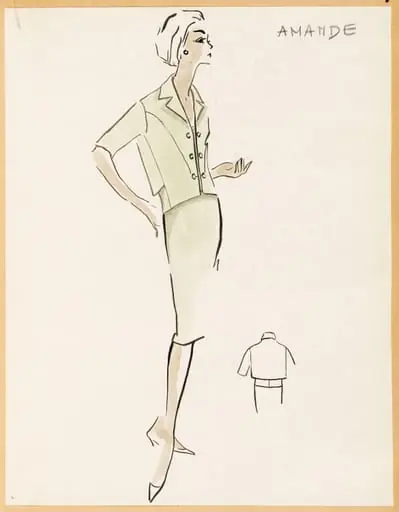
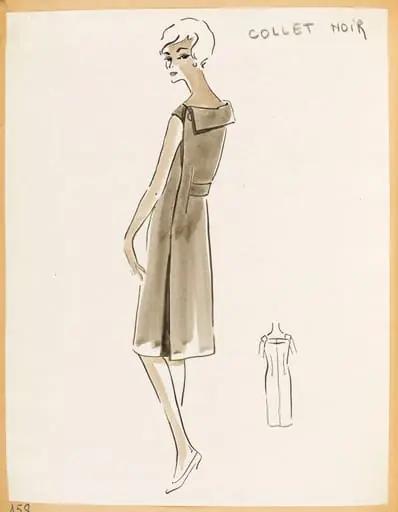
Created during the peak of her prêt-à-porter innovation, the drawing captures a coordinated ensemble of dress and jacket in a fluid, spontaneous style.
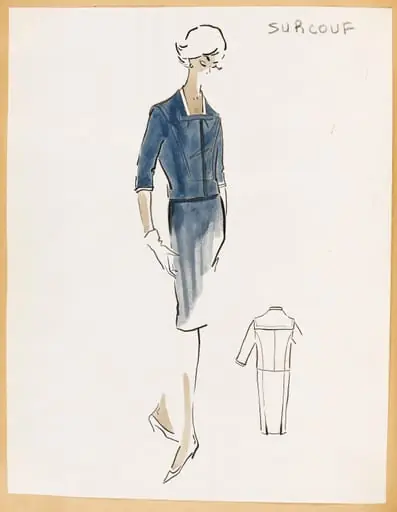
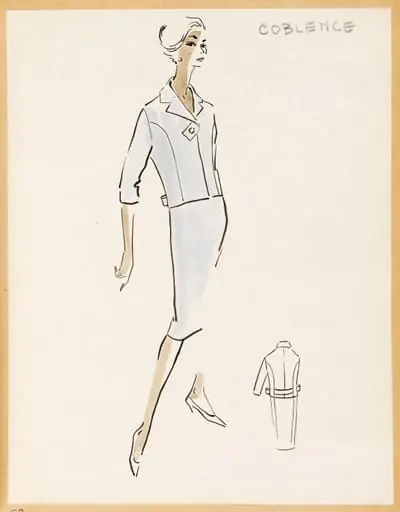
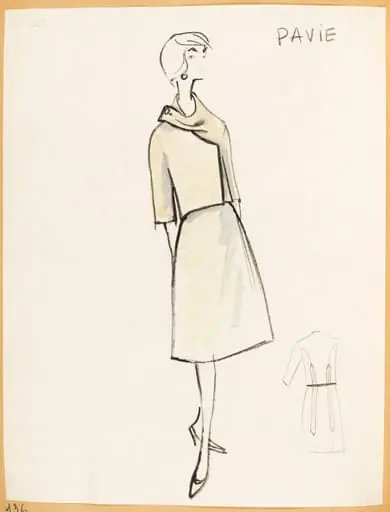
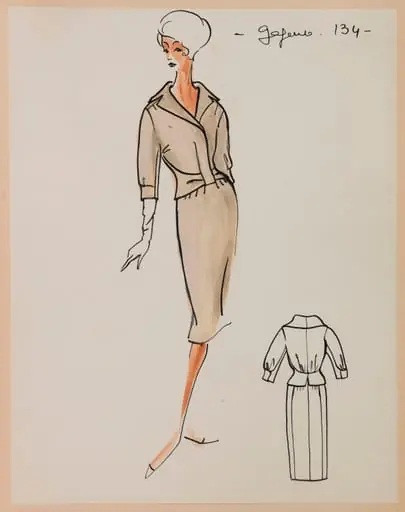
Pistache is a fashion sketch from around 1957, attributed to Marie-Louise Carven, founder of the Parisian label Carven. Created during the peak of her prêt-à-porter innovation, the drawing captures a coordinated ensemble of dress and jacket in a fluid, spontaneous style. It reflects Carven’s focus on wearable, feminine silhouettes tailored for smaller frames, executed with minimal detail but clear intent.
Subject & Meaning
The sketch depicts a woman in a belted dress and matching jacket, posed with one hand on her hip, suggesting ease and confidence. The figure’s short, tidy hair and upright stance convey a modern, understated elegance. The repetition of the jacket outline beside her implies a design study, emphasizing fit and proportion. The label 'Pistache' may reference the outfit’s color or serve as a poetic identifier, aligning with Carven’s affection for soft, natural tones.
Technique & Style
Executed in loose, rapid lines, the drawing prioritizes movement and form over precision. Light washes and minimal shading suggest volume without heavy rendering. The outline of the jacket, drawn adjacent to the figure, functions as both a design reference and a compositional device. This approach reveals Carven’s working method: intuitive, efficient, and focused on the garment’s essential structure rather than ornamental detail.
History & Provenance
Pistache originates from Carven’s personal archive during the late 1950s, a period when her label was expanding its ready-to-wear offerings. As one of the first French designers to champion prêt-à-porter, Carven produced numerous such sketches to guide production. The piece likely served as an internal design tool, passed among tailors and patternmakers, and was preserved as part of the house’s historical records.
Context
In postwar Paris, fashion was shifting from haute couture exclusivity toward accessible, mass-produced clothing. Carven responded by designing for everyday women, favoring light fabrics like gingham and lace, and emphasizing comfort without sacrificing refinement. Pistache embodies this philosophy—simple, practical, and quietly stylish—reflecting the broader cultural move toward democratic fashion in mid-century Europe.
Legacy
Pistache exemplifies Carven’s role in redefining women’s wear through functional design and subtle femininity. Her sketches, like this one, helped establish a new standard for ready-to-wear development in France. Though not widely exhibited, such drawings remain vital artifacts of a design ethos that prioritized wearability and quiet elegance, influencing later generations of designers who valued restraint over ornament.
Artist & collection
Artist
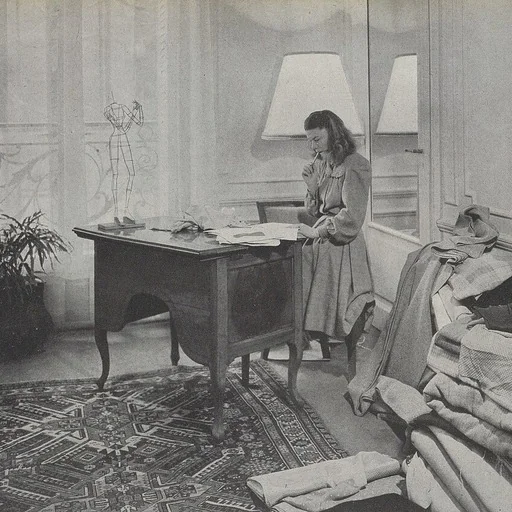
Marie-Louise Carven (31 August 1909 – 8 June 2015), born Carmen de Tommaso, was a French fashion designer who founded the house of Carven in 1945.
Museum
Palais Galliera - Musée de la Mode de la Ville de Paris
Continue through works from the same source collection.
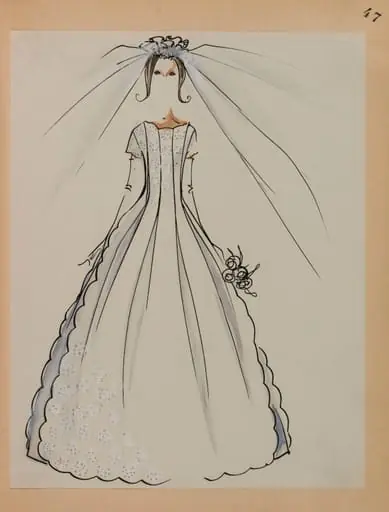 Robe de mariée festonnée et son voile
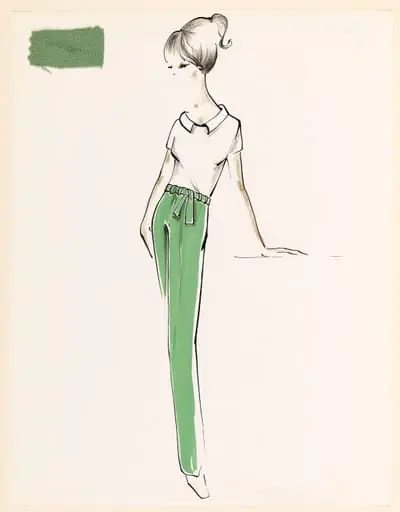 Haut blanc à manches courtes et pantalon vert à ceinture nouée
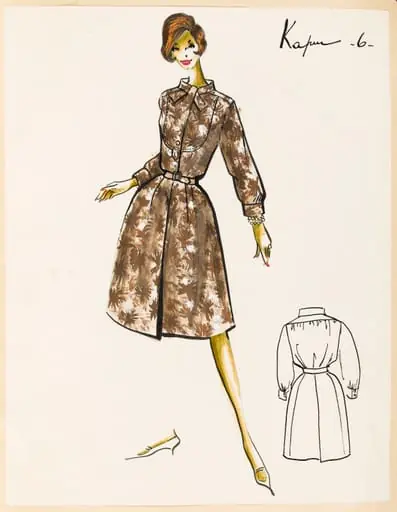 Kapur
Kapur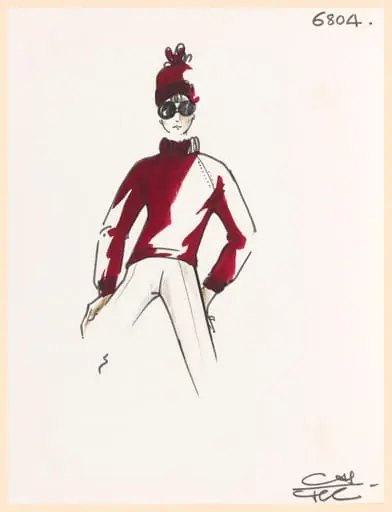 Pull-over à manches longues pourpre, bonnet assorti, pantalon et lunettes de soleil
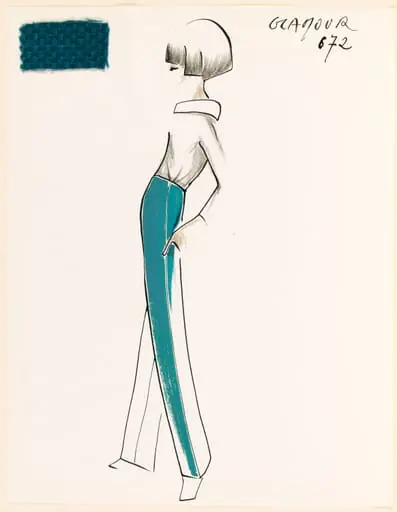 GLAMOUR
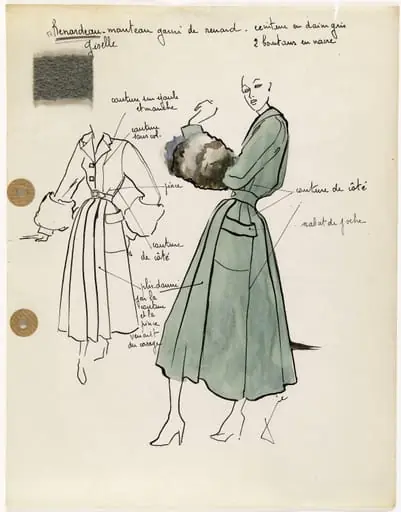 'Renardeau'
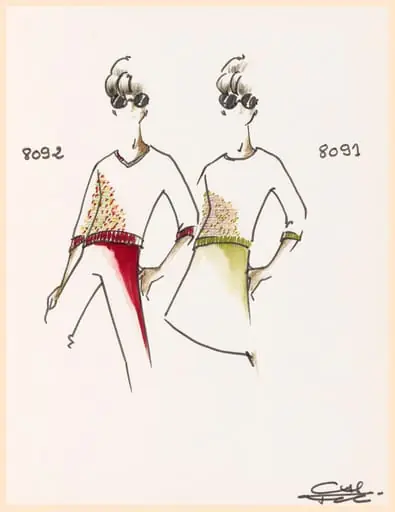 Pull-over à manches trois quarts et à encolure V à motifs multicolores, pantalon cerise et lunettes de soleil
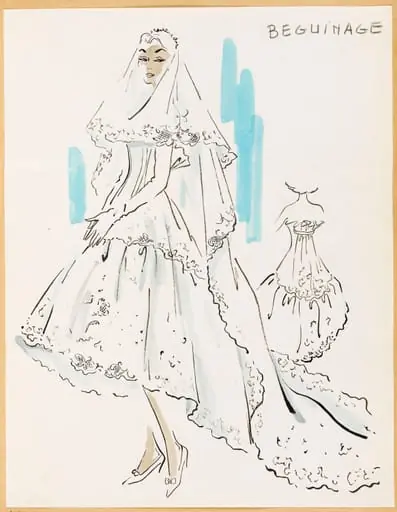 Béguinage