Artwork
Pomme d'api
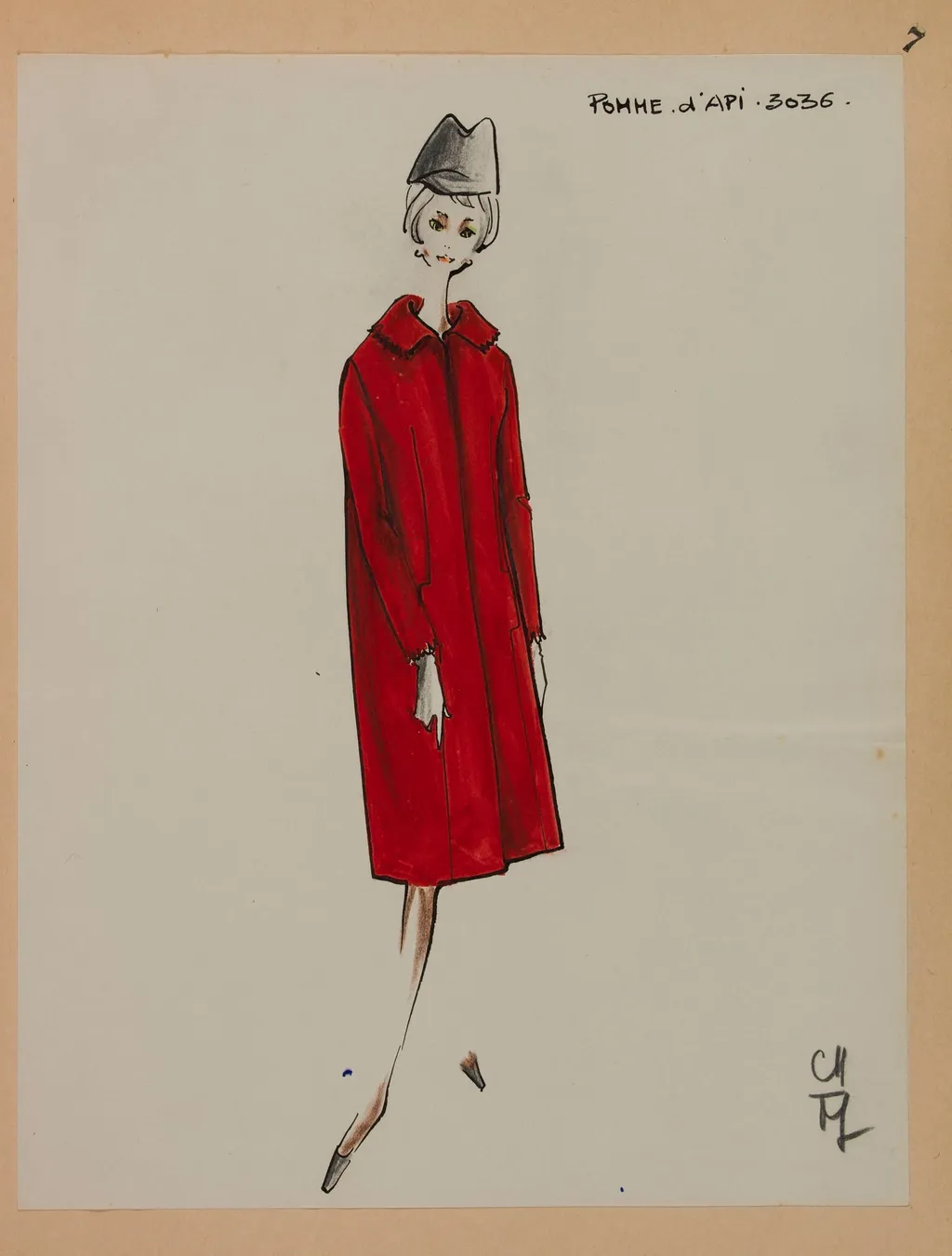
Pomme d'api is a drawing by Marie-Louise Carven. It dates from 1963 and is held in the collection of the Palais Galliera - Musée de la Mode de la Ville de Paris.
About this work
Overview
It belongs to the collection of the Museum of Ethnography, reflecting its role as a document of mid-century design rather than a finished garment.
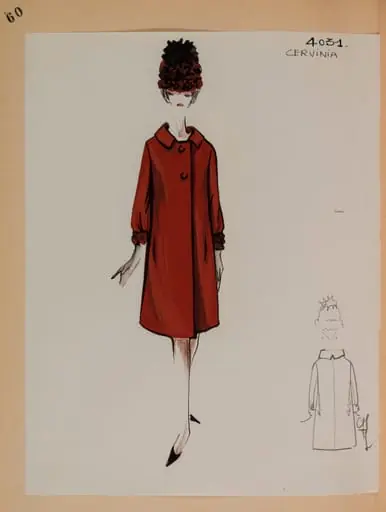
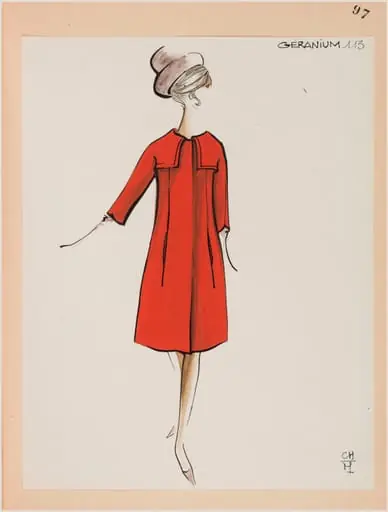
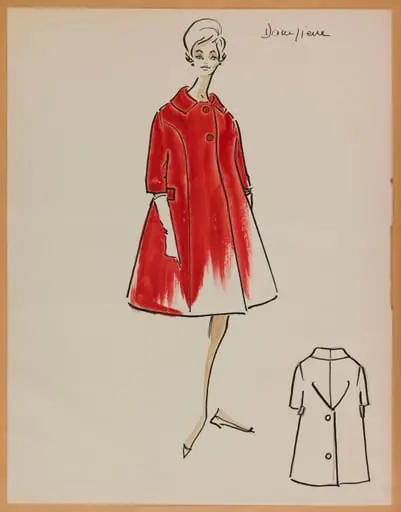
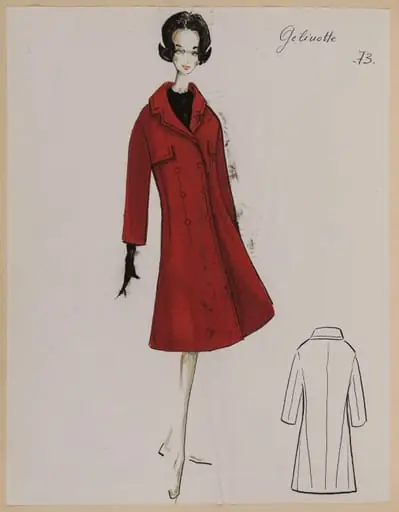
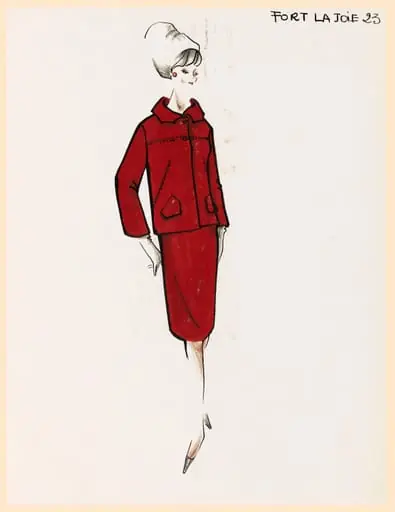
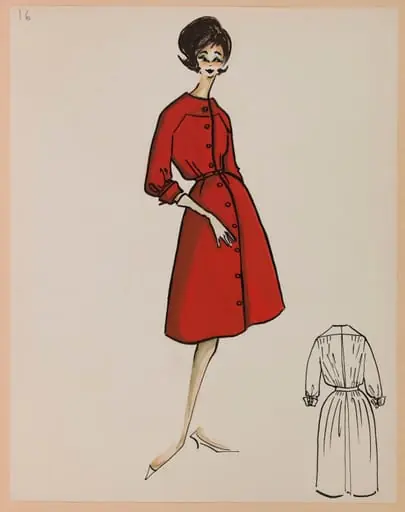
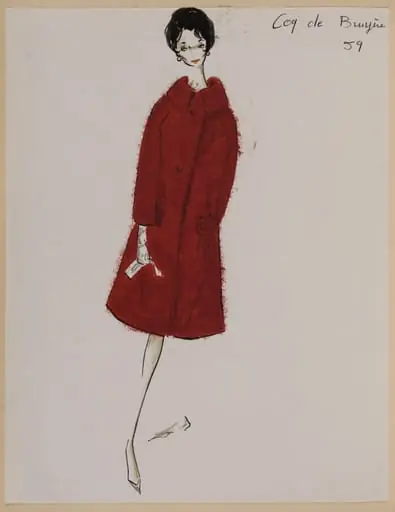
Pomme d'api is a fashion sketch created around 1963 by Marie-Louise Carven, founder of the French fashion house Carven. Executed in ink and flat color, it depicts a woman in a tailored red coat with a high collar and matching hat. The drawing is minimal in detail but precise in form, emphasizing silhouette and posture. It belongs to the collection of the Museum of Ethnography, reflecting its role as a document of mid-century design rather than a finished garment.
Subject & Meaning
The figure in Pomme d'api embodies a refined, compact elegance suited to Carven’s focus on petite proportions. The long red coat, cinched at the waist, suggests structure and grace without excess. The small white purse and coordinated hat imply a cohesive, intentional outfit. The image conveys practicality and poise, aligning with Carven’s philosophy of clothing designed for everyday movement and modern femininity.
Technique & Style
Carven rendered the sketch with bold, clean lines and unmodulated color, avoiding shading or texture. The red coat dominates the composition against a neutral background, creating strong visual focus. The figure’s stance is simplified but deliberate, with attention to the coat’s drape and the hat’s alignment. This approach prioritizes clarity and wearability over ornamentation, reflecting the designer’s functional aesthetic.
History & Provenance
Created during Carven’s active years as a couturier and early adopter of prêt-à-porter, Pomme d'api likely served as a design reference or presentation piece. It entered the Museum of Ethnography’s collection as part of a broader effort to preserve fashion as cultural artifact. The sketch’s preservation underscores its significance as a record of postwar French design practices and the evolution of accessible fashion.
Context
In the early 1960s, fashion was shifting toward democratization, and Carven was among the first to bridge haute couture with ready-to-wear. Her designs catered to women seeking tailored, wearable clothing without the formality of traditional ateliers. Pomme d'api reflects this transition—its simplicity, color, and structure align with emerging trends in urban dressing and the growing market for accessible, well-made garments.
Legacy
Though not a finished garment, Pomme d'api endures as a testament to Carven’s influence on modern fashion design. Her emphasis on proportion, functionality, and accessible elegance helped redefine women’s wardrobes in postwar Europe. The sketch remains a quiet but clear example of how design thinking—focused on the wearer’s experience—shaped the direction of 20th-century fashion.
Artist & collection
Artist
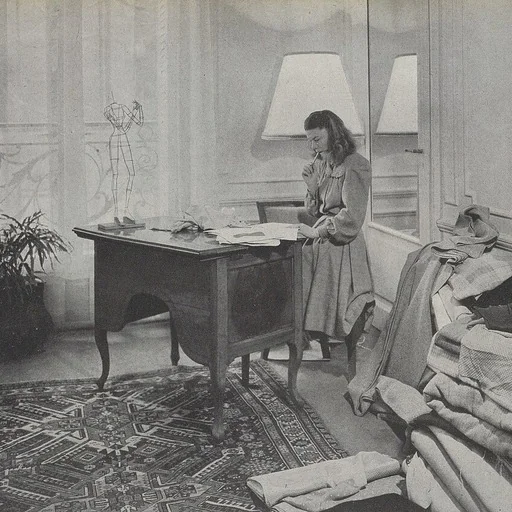
Marie-Louise Carven (31 August 1909 – 8 June 2015), born Carmen de Tommaso, was a French fashion designer who founded the house of Carven in 1945.
Museum
Palais Galliera - Musée de la Mode de la Ville de Paris
Continue through works from the same source collection.
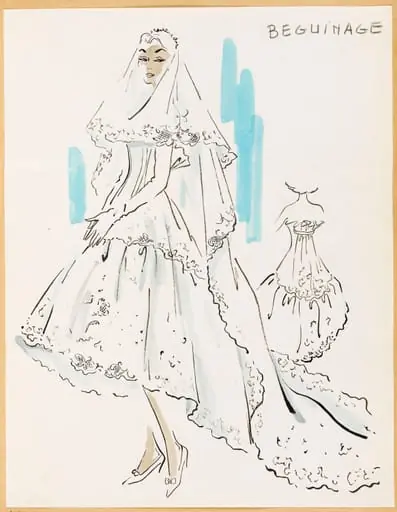
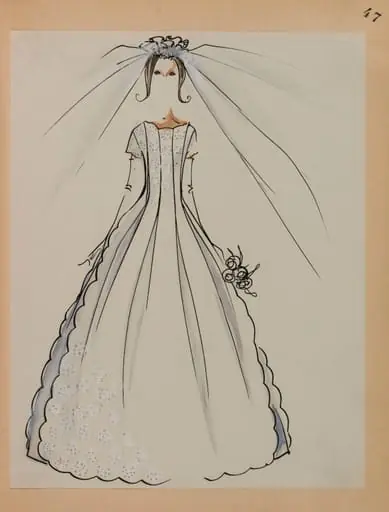 Robe de mariée festonnée et son voile
 Haut blanc à manches courtes et pantalon vert à ceinture nouée
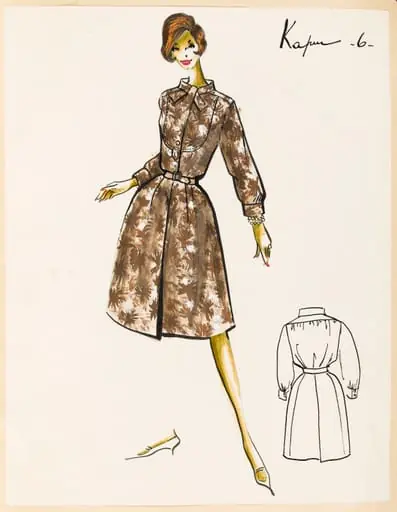 Kapur
Kapur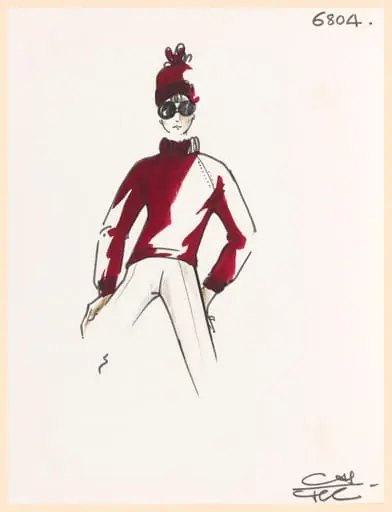 Pull-over à manches longues pourpre, bonnet assorti, pantalon et lunettes de soleil
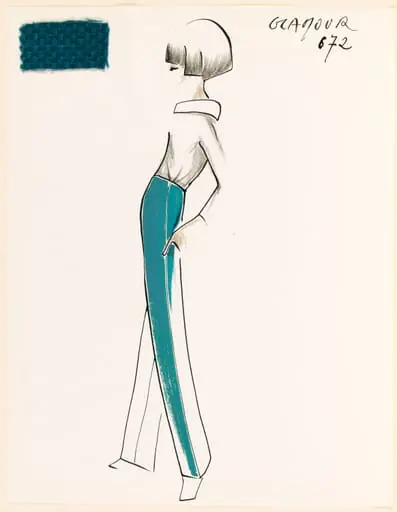 GLAMOUR
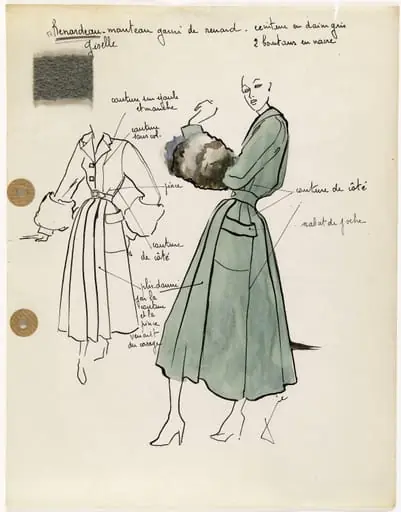 'Renardeau'
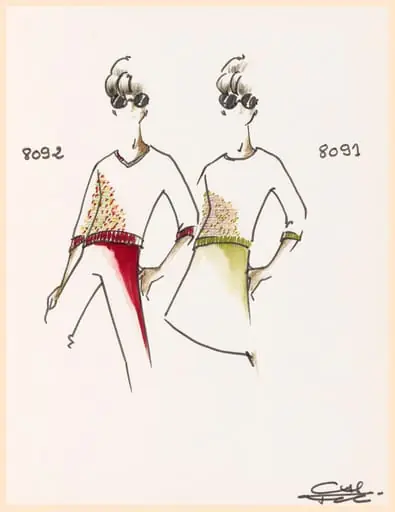 Pull-over à manches trois quarts et à encolure V à motifs multicolores, pantalon cerise et lunettes de soleil
 Béguinage