Artwork
Porte des Lilas
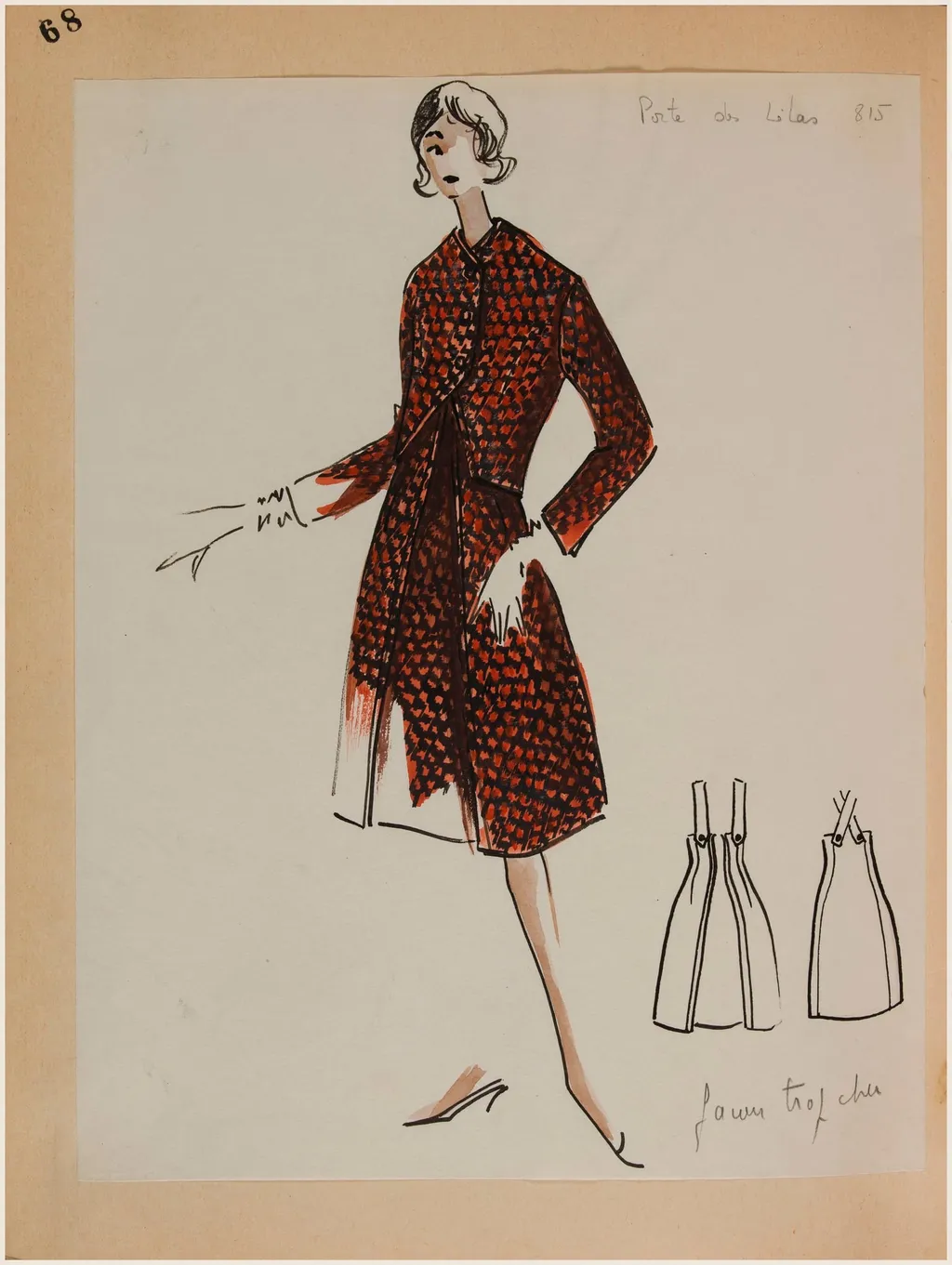
Porte des Lilas is a drawing by Marie-Louise Carven. It dates from 1958 and is held in the collection of the Palais Galliera - Musée de la Mode de la Ville de Paris.
About this work
Overview
The work bears a catalog number and handwritten annotations, suggesting its function as a working document rather than a finished piece.
Created around 1958, this sketch by Marie-Louise Carven is part of a personal archive of fashion studies. Executed in ink and pencil on paper, it captures a moment of urban leisure with minimal detail. The work bears a catalog number and handwritten annotations, suggesting its function as a working document rather than a finished piece. It resides in the Museum of Ethnography, where it is contextualized within the material culture of mid-century French fashion design.
Subject & Meaning
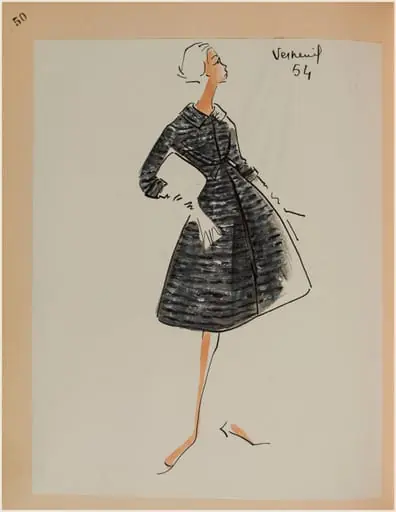
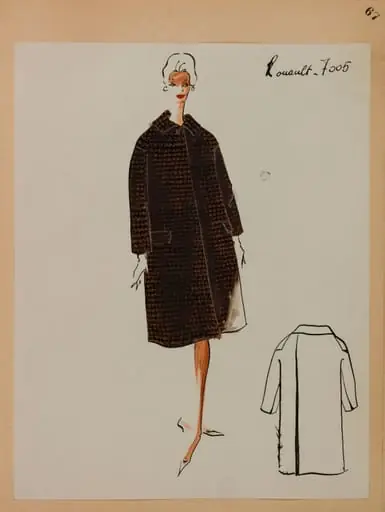
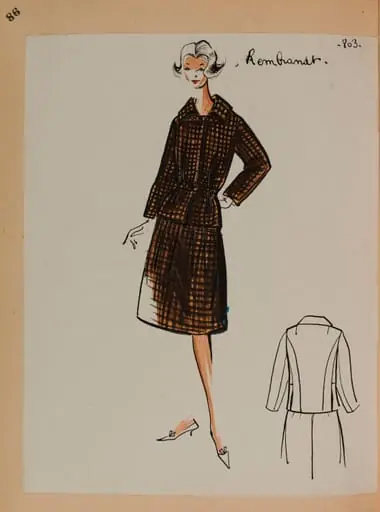
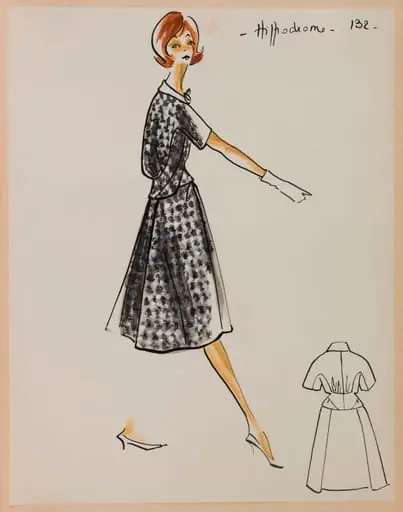
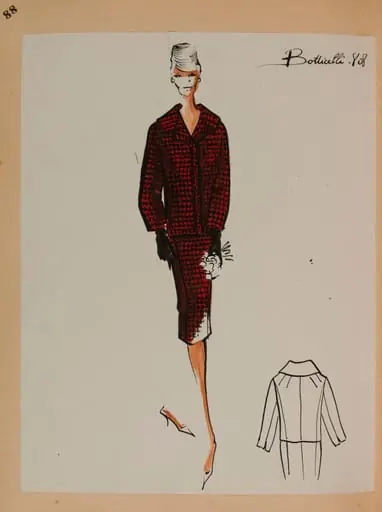
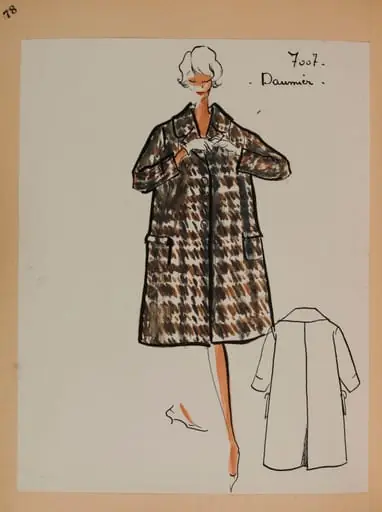
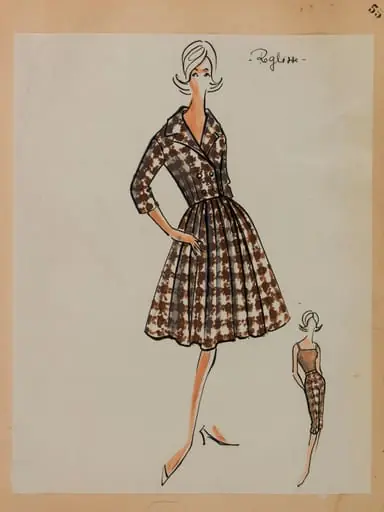
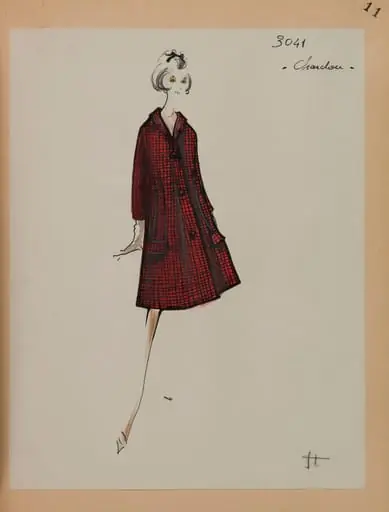
The figure is a woman in a casual, patterned dress, standing with a cigarette and small purse—details signaling everyday autonomy. Her short hair and plain footwear reflect a restrained, modern aesthetic. The inclusion of two additional dress sketches beside her implies a process of design iteration. The scene evokes neither glamour nor performance, but the quiet rhythm of postwar urban life, aligning with Carven’s focus on practical elegance for the active woman.
Technique & Style
The drawing employs loose, rapid linework with visible smudges and erasures, suggesting spontaneity and immediacy. Details like the zipper on one dress are noted with economical strokes. The ink is applied with varying pressure, and the paper bears the faint texture of hand-drawn contours. Handwriting in the corner and the numbered top-left corner indicate this was part of a systematic study, likely used for internal reference or client presentation.
History & Provenance
This sketch originates from Carven’s personal design archive, compiled during her tenure as founder of the House of Carven, established in 1945. It was likely retained by the designer or her studio before entering institutional collection. Its presence in the Museum of Ethnography reflects a broader curatorial interest in fashion as cultural artifact, rather than solely as high art or luxury object.
Context
In the late 1950s, Carven was pioneering accessible ready-to-wear fashion in France, challenging the dominance of haute couture. Her designs emphasized lightweight fabrics and fit for smaller frames, catering to a growing demographic of working women. This sketch, with its focus on functional details and unidealized posture, aligns with her philosophy: fashion as lived experience, not spectacle.
Legacy
Carven’s sketches, including this one, document a shift in fashion production toward democratized design. They reveal the quiet labor behind clothing that became widely worn. While not widely exhibited, such works inform contemporary understandings of how mid-century designers translated daily life into wearable form, influencing later approaches to functional, human-centered fashion.
Artist & collection
Artist
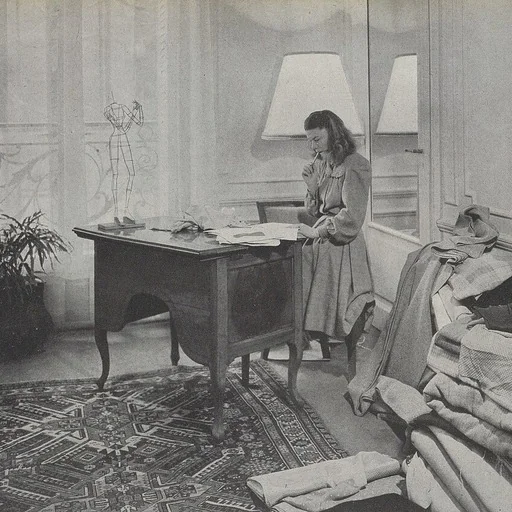
Marie-Louise Carven (31 August 1909 – 8 June 2015), born Carmen de Tommaso, was a French fashion designer who founded the house of Carven in 1945.
Museum
Palais Galliera - Musée de la Mode de la Ville de Paris
Continue through works from the same source collection.
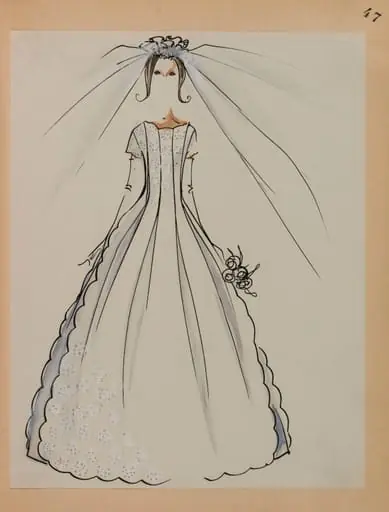 Robe de mariée festonnée et son voile
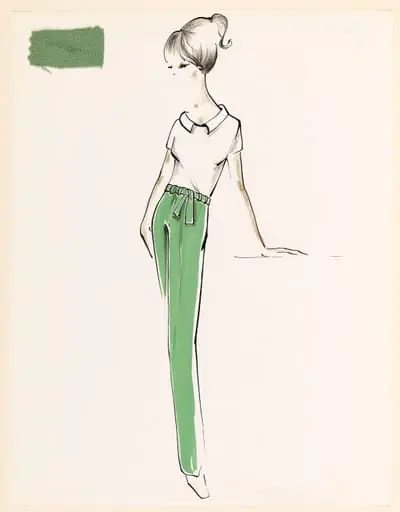 Haut blanc à manches courtes et pantalon vert à ceinture nouée
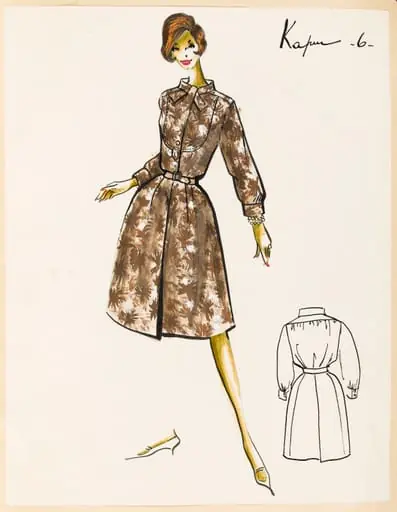 Kapur
Kapur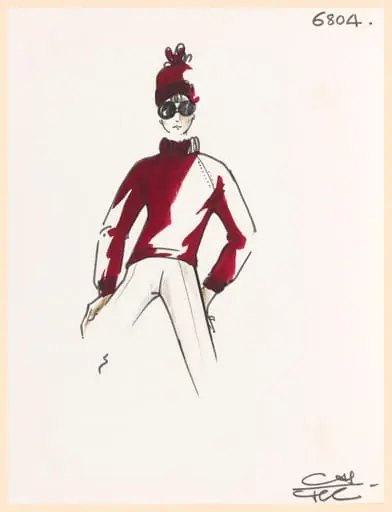 Pull-over à manches longues pourpre, bonnet assorti, pantalon et lunettes de soleil
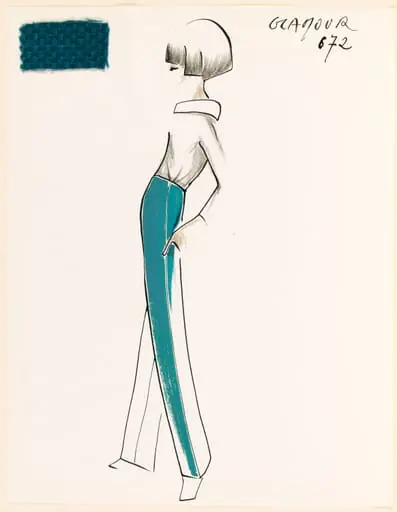 GLAMOUR
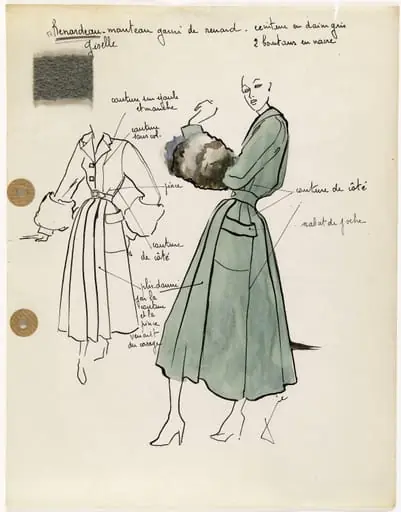 'Renardeau'
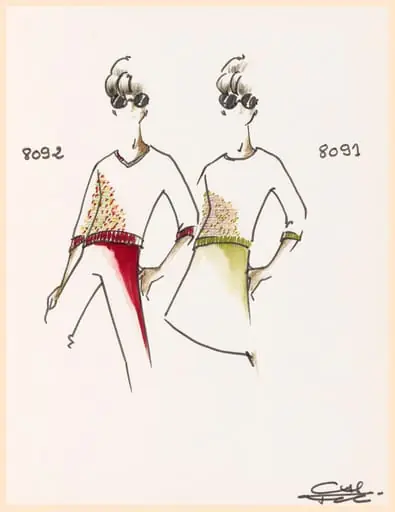 Pull-over à manches trois quarts et à encolure V à motifs multicolores, pantalon cerise et lunettes de soleil
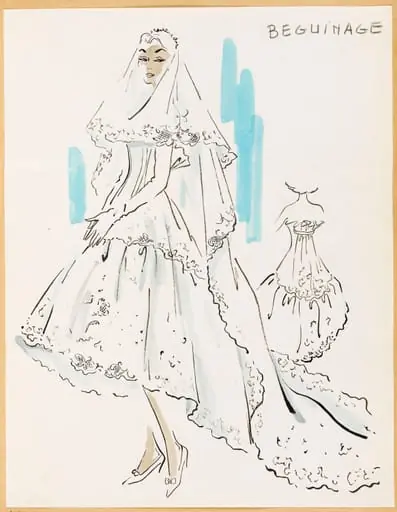 Béguinage