Artwork
Robe à manche courtes à motif bleu et ruban partant de la poitrine
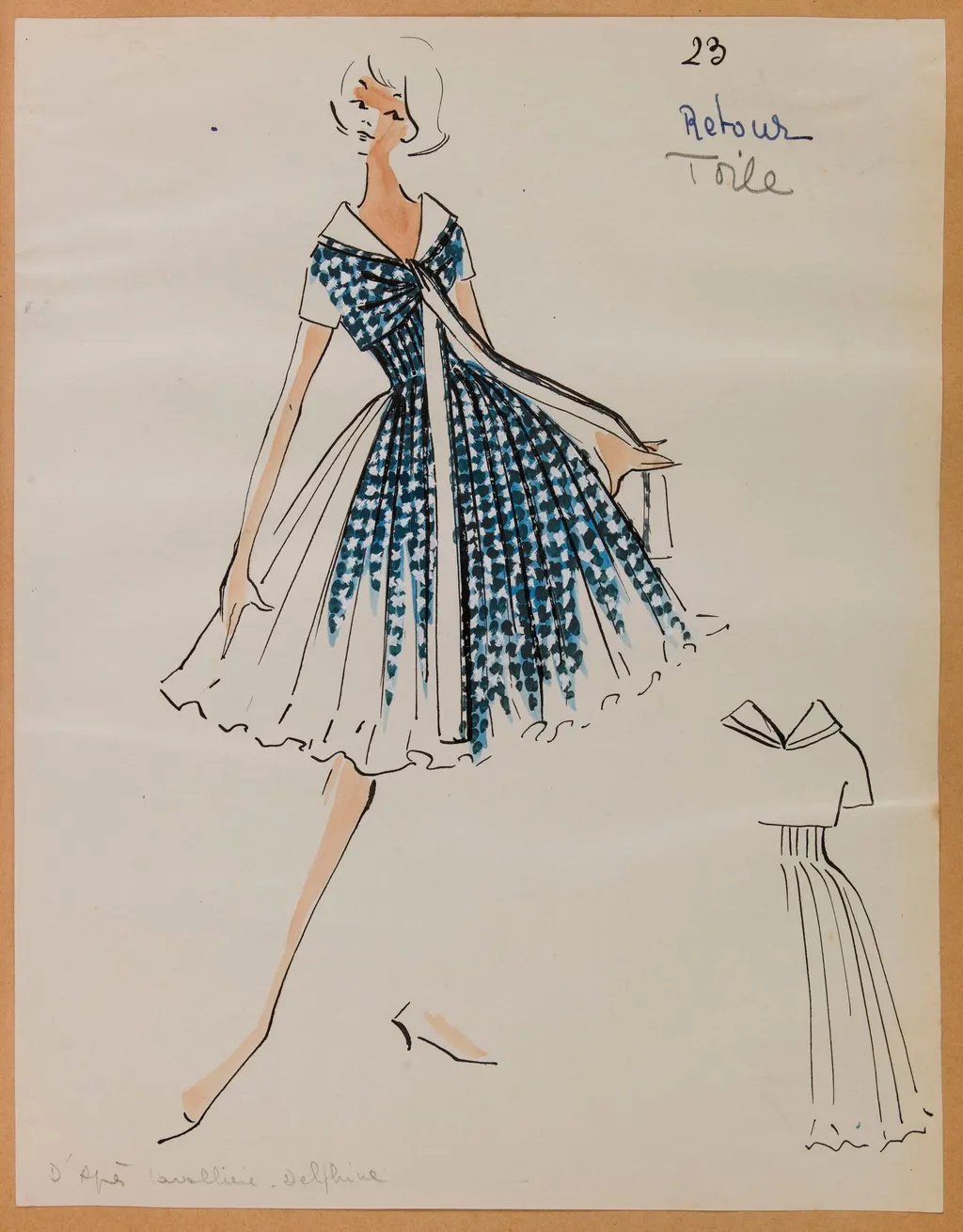
Robe à manche courtes à motif bleu et ruban partant de la poitrine is a drawing by Marie-Louise Carven. It dates from 1957 and is held in the collection of the Palais Galliera - Musée de la Mode de la Ville de Paris.
About this work
Overview
The notation 'Rétour Toile' in the corner hints at a preparatory stage, possibly indicating adjustments to the fabric prototype.
Created around 1957 by French designer Marie-Louise Carven, this garment sketch depicts a short-sleeved dress with a blue-patterned fabric and a ribbon detail originating at the chest. Rendered in pencil and watercolor, the drawing captures the fluidity of the skirt’s flare and the relaxed posture of the wearer, suggesting a focus on movement and ease. The notation 'Rétour Toile' in the corner hints at a preparatory stage, possibly indicating adjustments to the fabric prototype.
Subject & Meaning
The design centers on a feminine silhouette that balances structure and softness: the flared skirt suggests grace, while the chest ribbon adds a subtle decorative anchor. The absence of excessive ornamentation reflects Carven’s preference for restrained elegance. The garment’s proportions cater to petite frames, aligning with her broader mission to create wearable, refined clothing for everyday life rather than theatrical display.
Technique & Style
The sketch employs loose pencil lines and translucent watercolor washes to convey texture and volume without heavy definition. This light, rapid handling suggests it was a working drawing, not a finished presentation piece. The flowing lines of the skirt and the delicate rendering of the ribbon reveal Carven’s attention to how fabric behaves in motion, emphasizing practicality within aesthetic refinement.
History & Provenance
Marie-Louise Carven founded her couture house in 1945 and became known for pioneering ready-to-wear in postwar France. This sketch likely originated in her atelier during a period when she was refining designs for a broader market. The notation 'Rétour Toile' implies it was part of a development cycle, possibly linked to a season’s collection, though its exact provenance within her archives remains undocumented.
Context
In the late 1950s, Parisian fashion was transitioning from haute couture exclusivity toward accessible design. Carven’s work stood apart by prioritizing comfort and proportion for smaller bodies, countering the era’s trend toward volume and formality. Her use of light fabrics and subtle embellishments aligned with a growing demand for clothing that was both stylish and suited to modern, active lifestyles.
Legacy
Carven’s approach influenced later designers who valued wearable elegance over spectacle. Her integration of couture details into ready-to-wear helped redefine postwar fashion’s accessibility. Though this sketch is a private working document, it encapsulates her enduring philosophy: beauty in simplicity, and function as a form of refinement.
Artist & collection
Artist
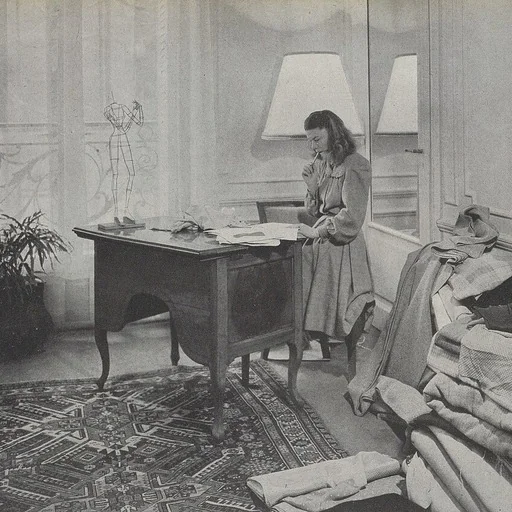
Marie-Louise Carven (31 August 1909 – 8 June 2015), born Carmen de Tommaso, was a French fashion designer who founded the house of Carven in 1945.
Museum
Palais Galliera - Musée de la Mode de la Ville de Paris
Continue through works from the same source collection.
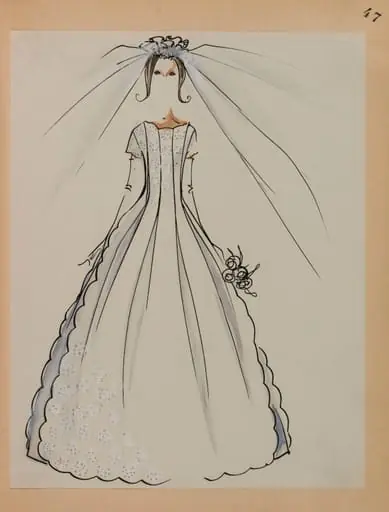 Robe de mariée festonnée et son voile
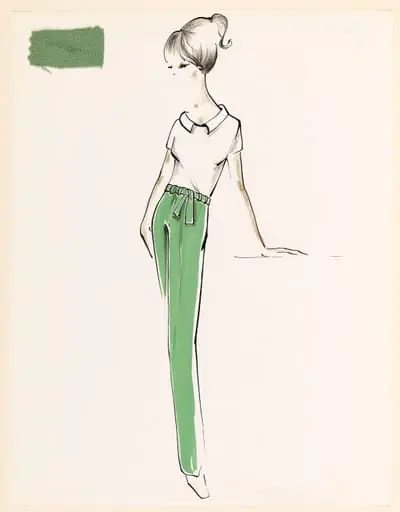 Haut blanc à manches courtes et pantalon vert à ceinture nouée
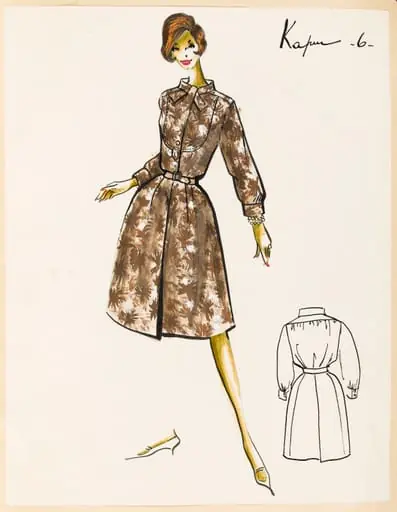 Kapur
Kapur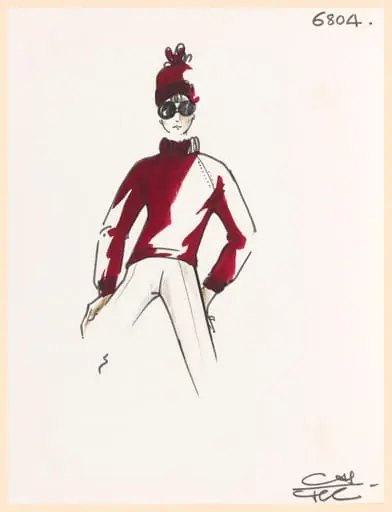 Pull-over à manches longues pourpre, bonnet assorti, pantalon et lunettes de soleil
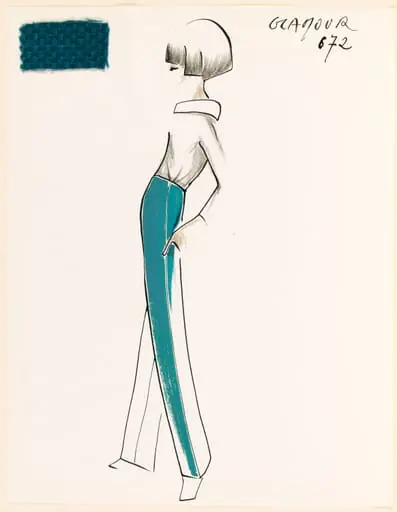 GLAMOUR
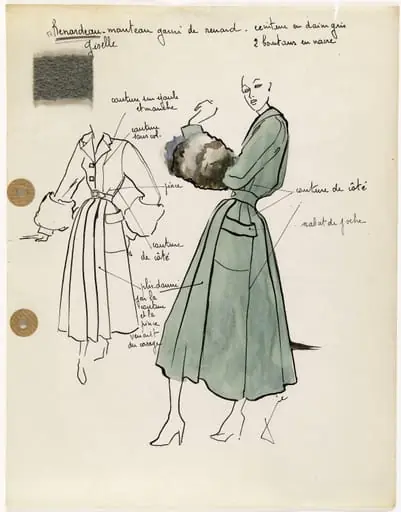 'Renardeau'
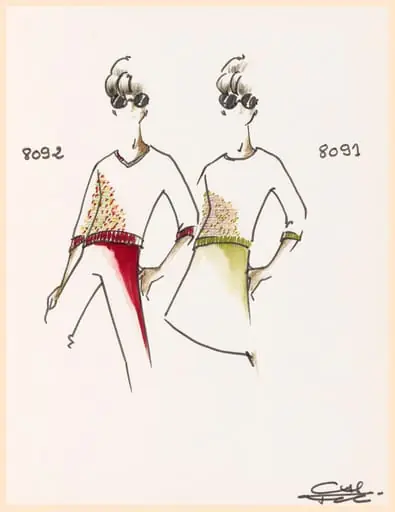 Pull-over à manches trois quarts et à encolure V à motifs multicolores, pantalon cerise et lunettes de soleil
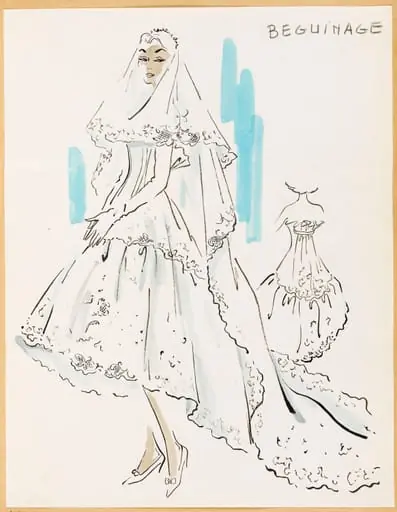 Béguinage
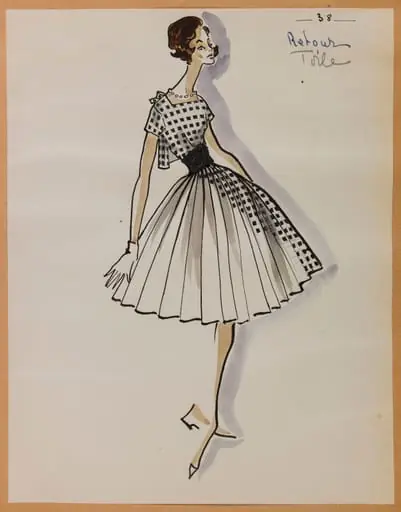 Robe plissée blanche à motif de carré noir
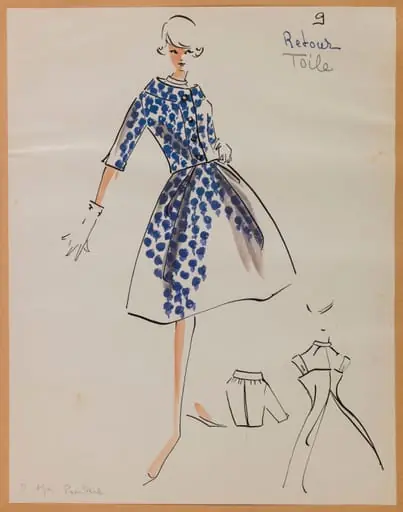 Tailleur à motif bleu
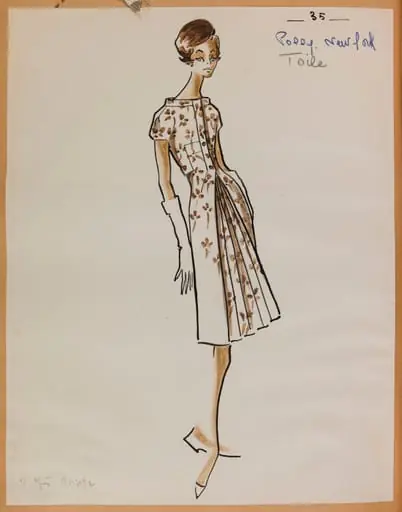 Robe blanche à motif marron plissée sur le devant
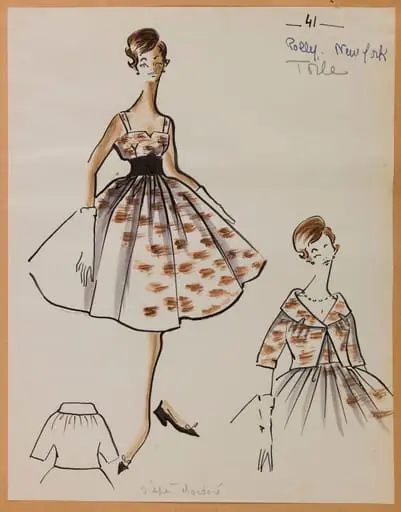 Robe à fines bretelles blanche à motif marron
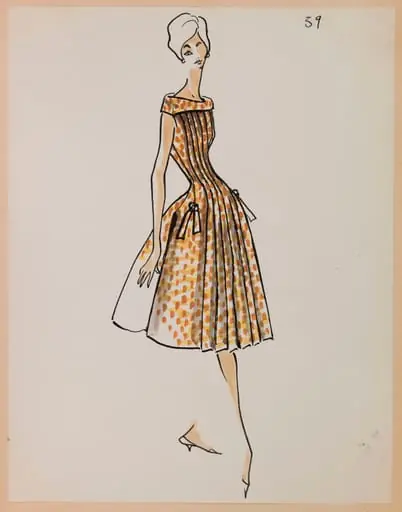 Robe à motif marron plissée sur le devant
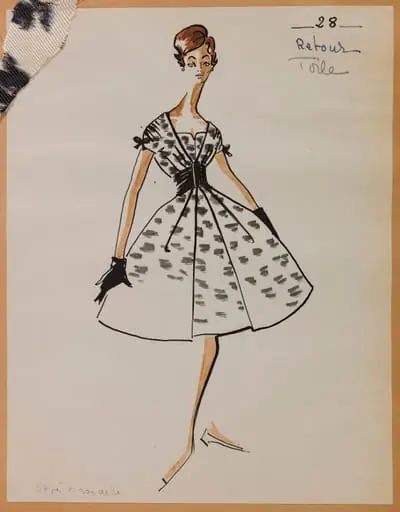 Robe blanche à motif noir avec large ceinture et noeuds aux épaules
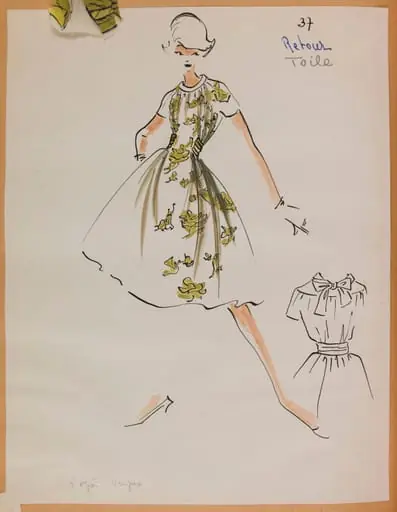 Robe à manches blanche à motif de feuille
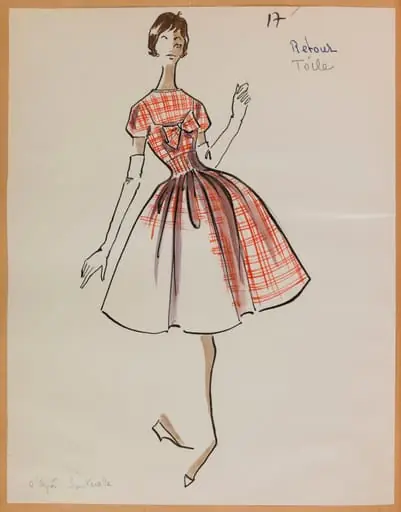 Robe à carreaux rouge avec noeud sur la poitrine
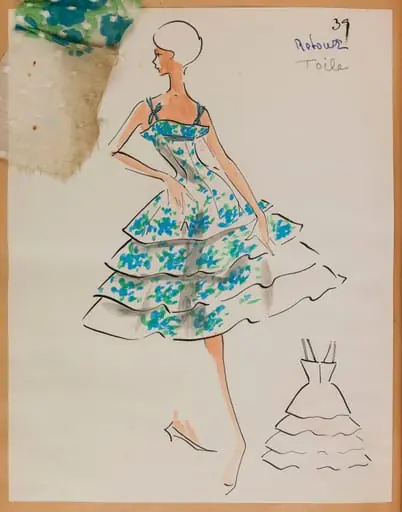 Robe à volants à motif de fleur bleue